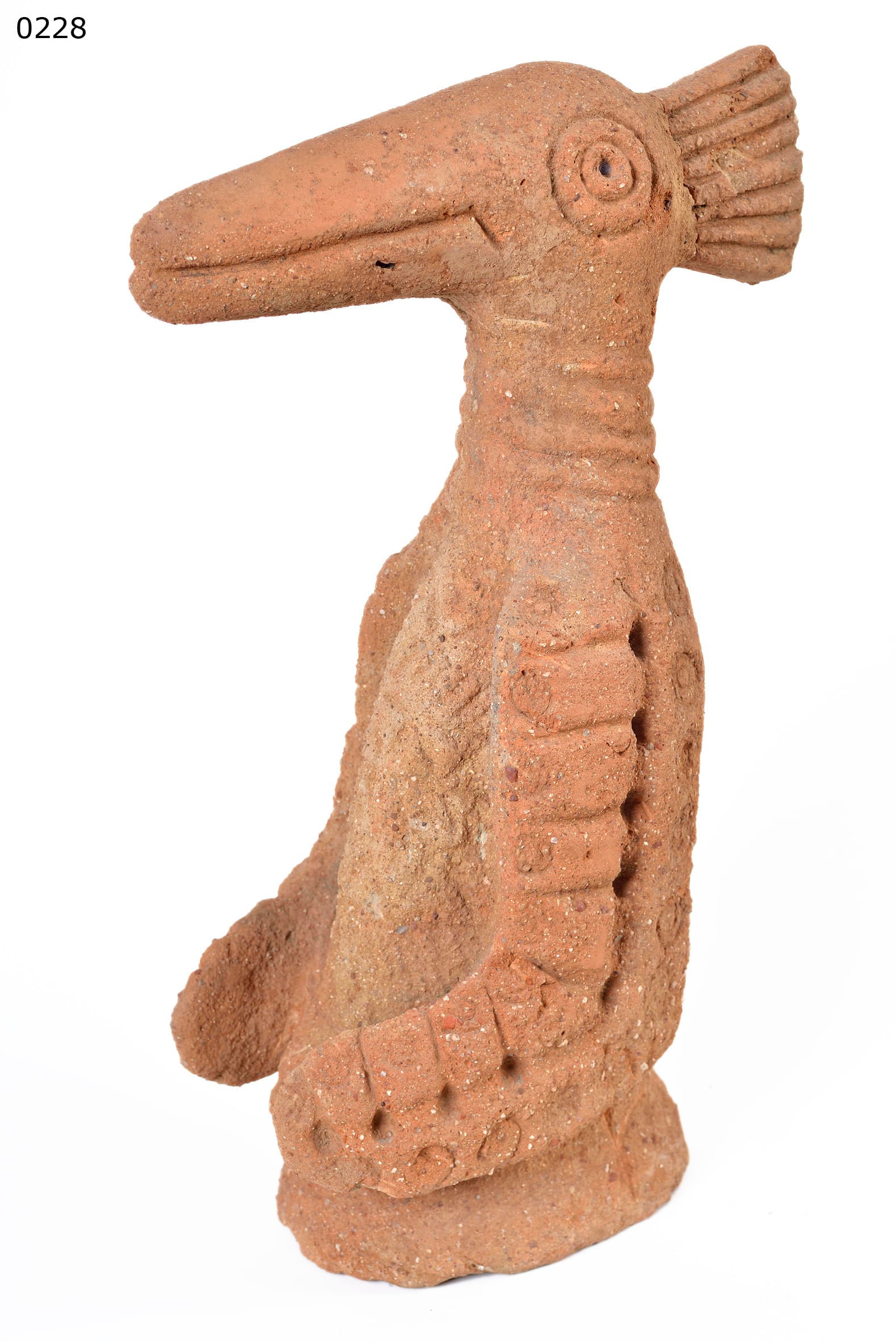
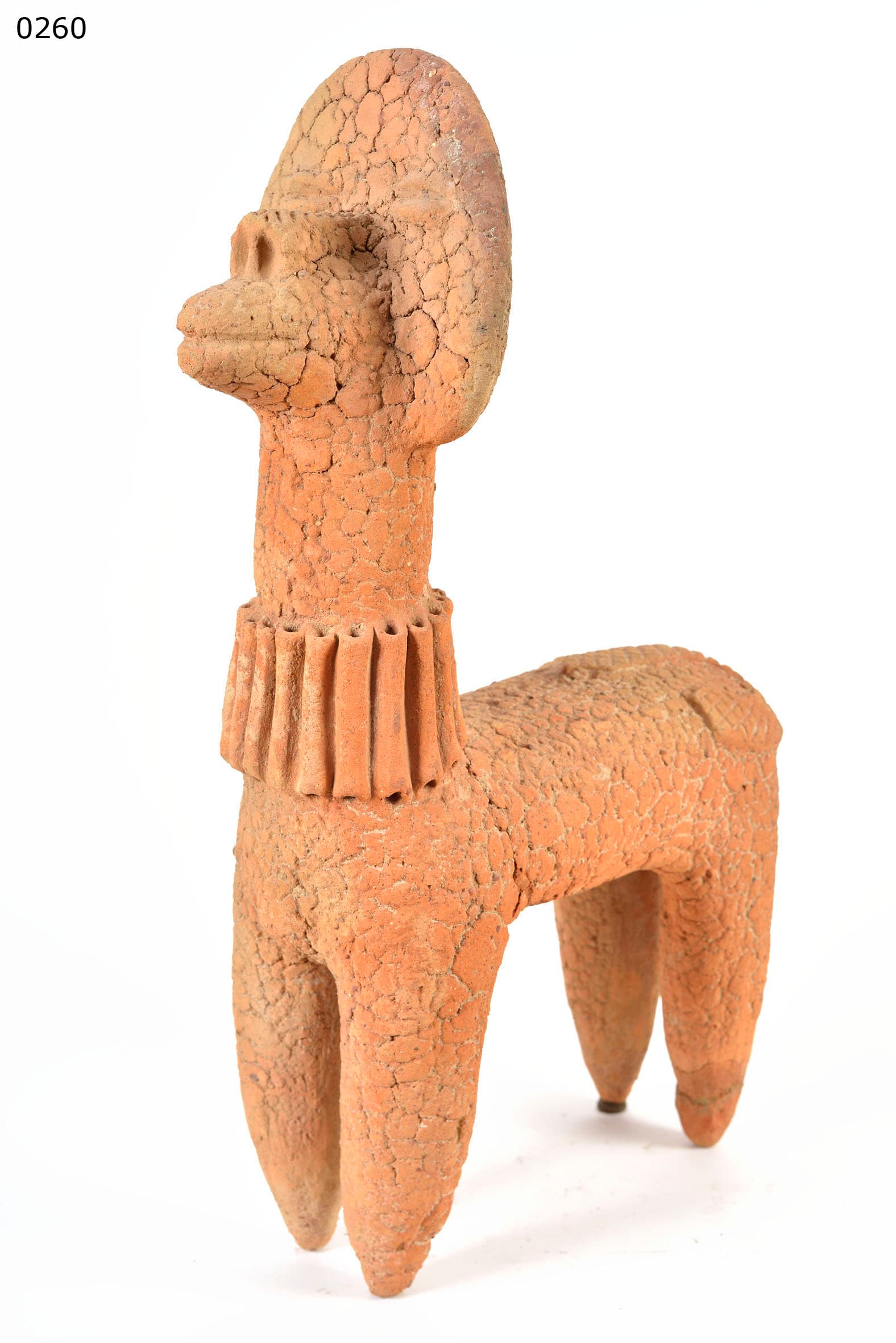
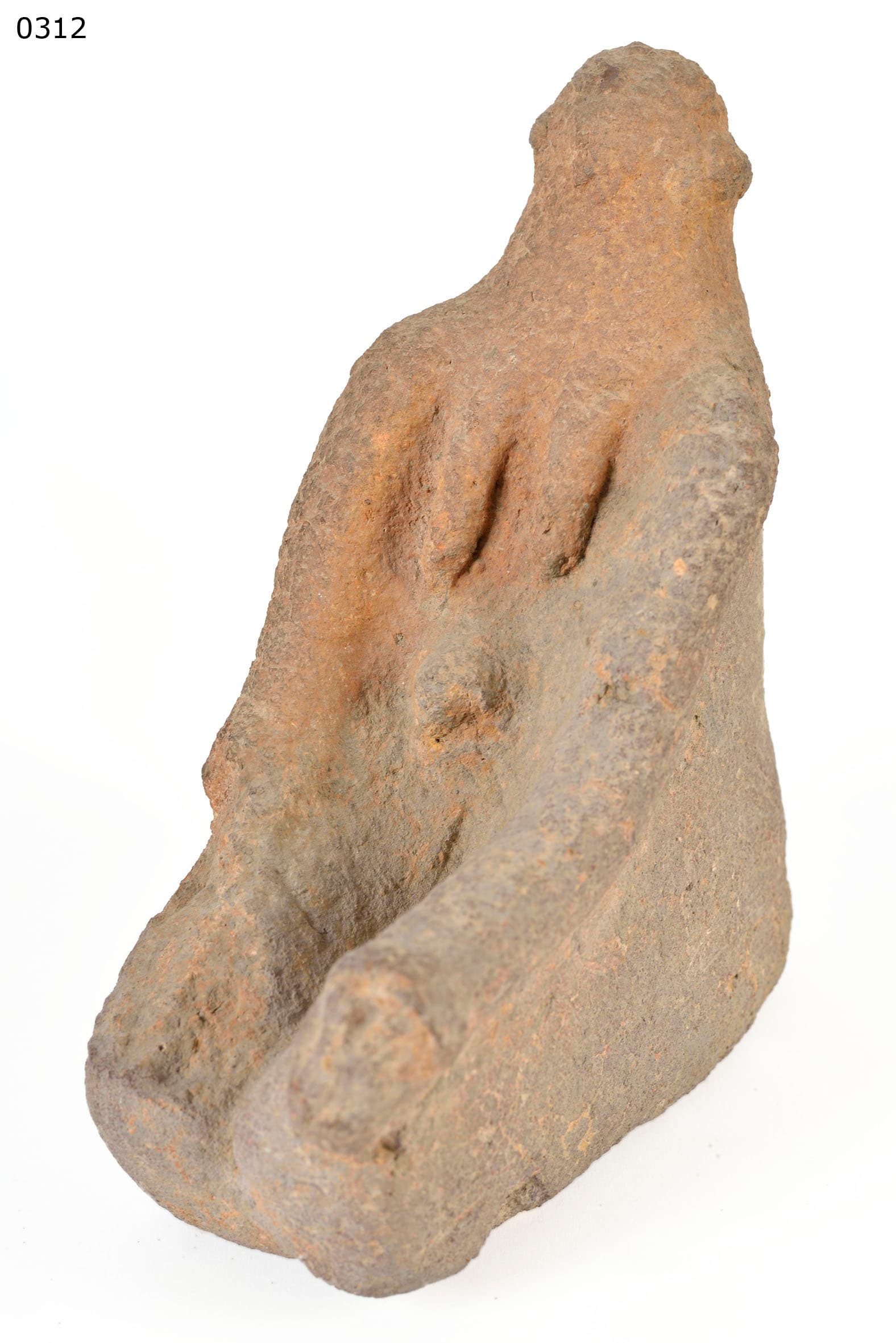
An archaeological terracotta kneeling female (attributed to the 12th–16th C., 31 cm) associated with the Djenne-Djeno culture of Mali — elongated stylized head, prominent lips, intricate bodily scarifications, the heavily pitted chalky surface carrying significant soil encrustations consistent with centuries of burial.
1. Masterworks of the inland Niger delta
These rare terracotta figures are associated with the ancient Inland Niger Delta region of Mali centered around the historical city of Djenne-Djeno.
- Medieval Civilization: Flourishing between the 12th and 16th centuries, this culture produced highly complex ceramics.
- Classic Djenne Signatures: Tubular elongated heads, bulging eyes, and heavily adorned bodies — a characteristic visual language associated with the ancient Mali Empire's ritual elite.
2. The posture of reverence and disease
The kneeling posture is a universal West African gesture with a specific Djenne inflection.
- Supplication and Prayer: Kneeling is the canonical posture of devotion and mourning across the ancient Sahel.
- Possible Curative Function: Many Djenne figures feature raised welts, swollen limbs, or contorted expressions interpreted as representations of disease (leprosy, yaws). They may have been created for curative shrines — surrogates to draw illness out of a human patient or to appease earth deities responsible for epidemics.
3. Archaeological stratigraphy and taphonomy
The surface shows characteristics consistent with extreme antiquity.
- Calcified Fabric: Long-term burial in the floodplains of the Niger is consistent with the calcified and pitted state of the fired clay.
- TL-Test Signature: The thick chalky soil encrustations fused into the microscopic pores are consistent with those that develop naturally over centuries, showing taphonomic traits compatible with thermoluminescence authentication.
Summary
This Djenne terracotta is a well-preserved survival from one of Africa's notable ancient civilizations. Its deeply encrusted archaeological surface and characteristic stylistic traits make it a significant historical object of the Sahel.
Written with AI assistance from the collection appraisal, object photography and our own research; editorially reviewed. Mistakes are possible — corrections are welcome. How we work →