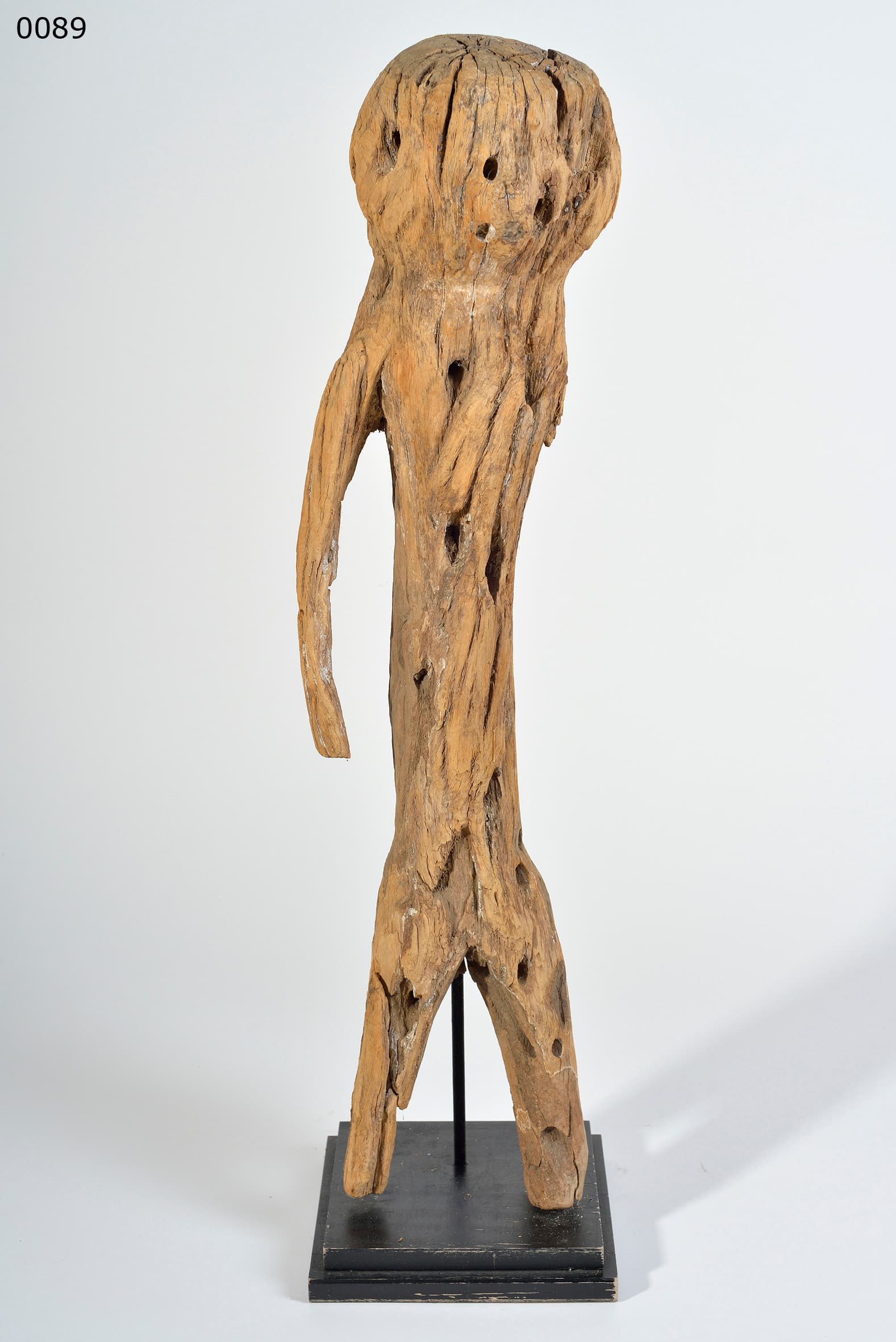
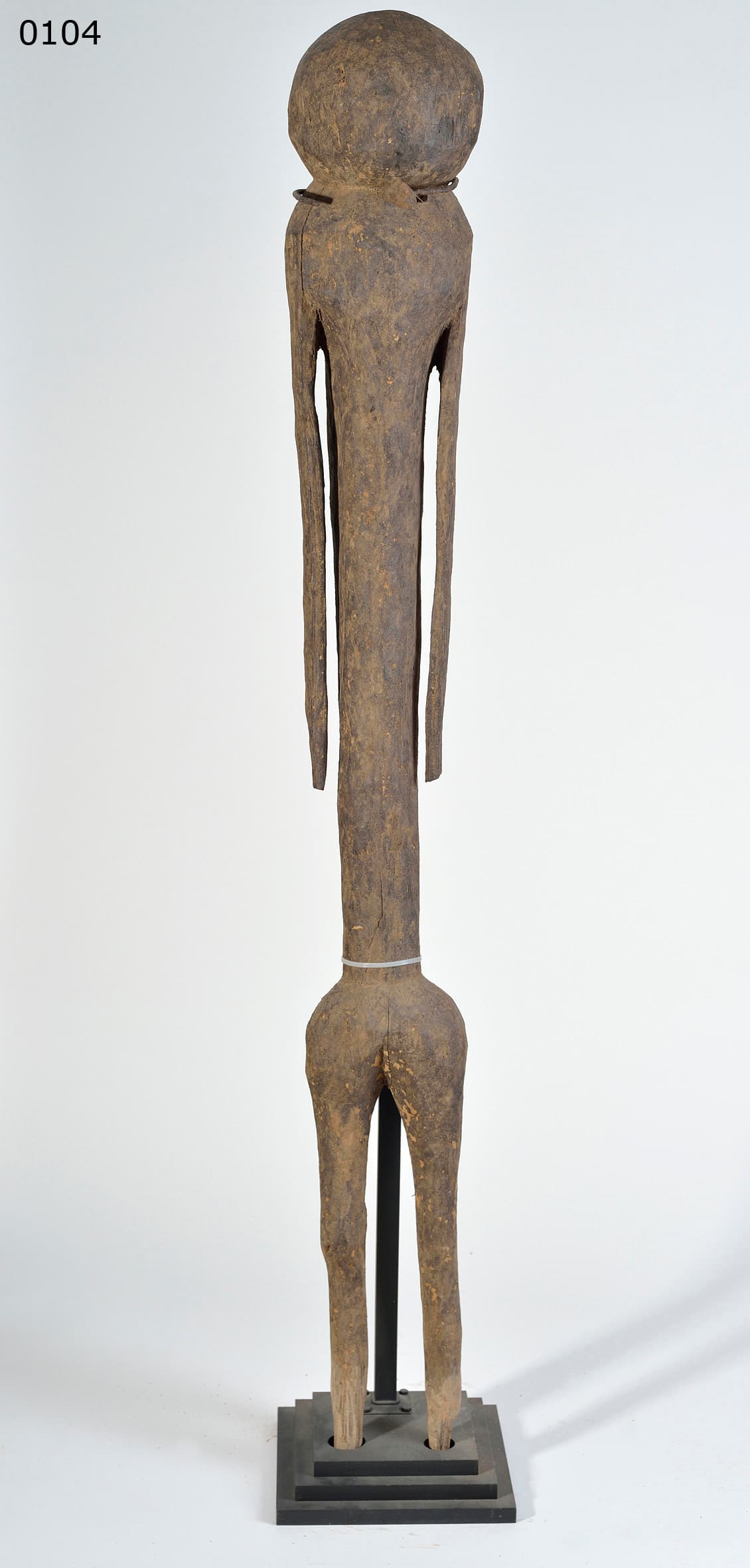
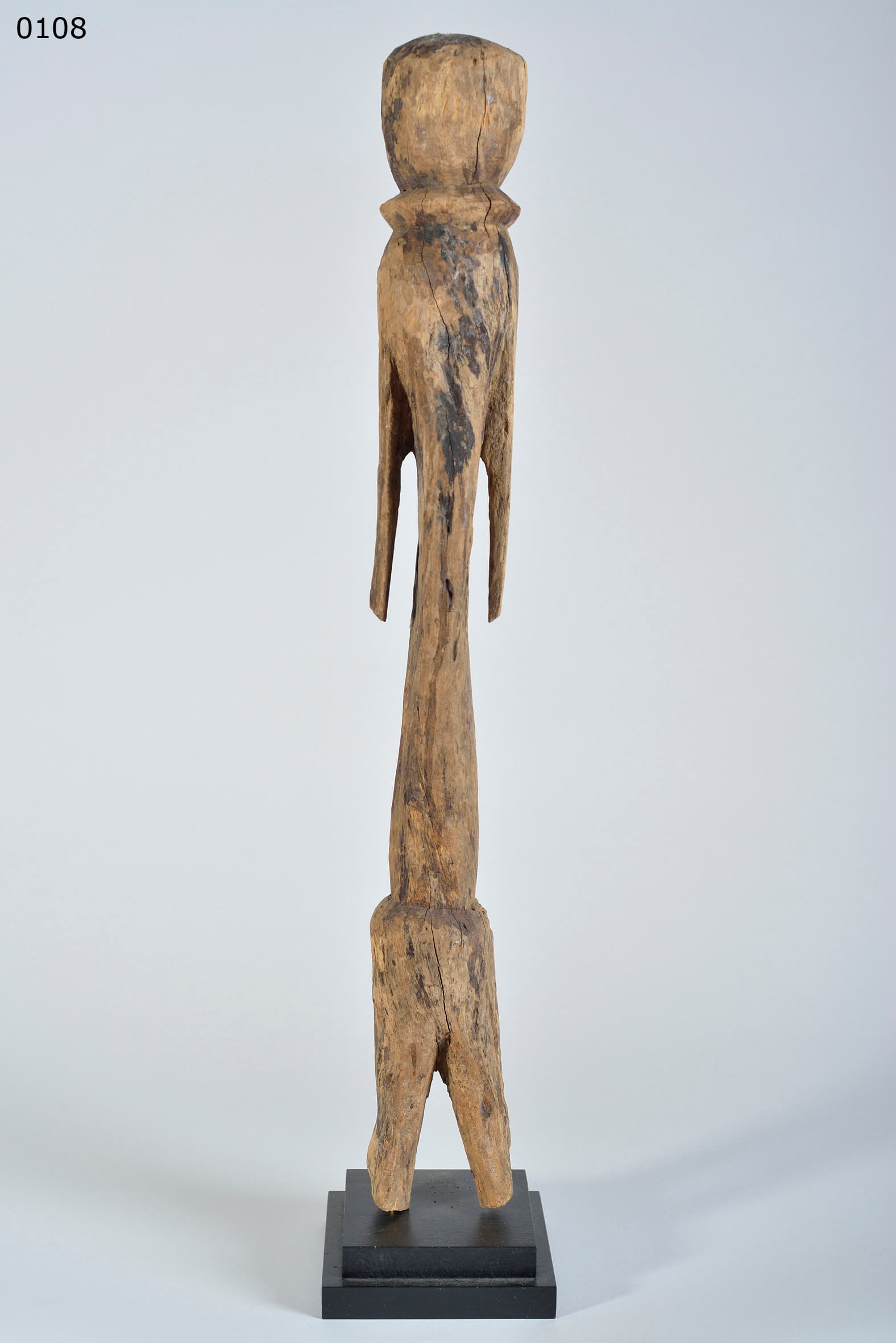
This pair of highly stylized, minimalist figures is carved from solid ivory, featuring featureless, spherical heads, elongated torsos, and arms that merge seamlessly into the body without hands. The ivory exhibits a warm, honey-colored patina with a network of deep, natural age-craquelure.
1. Aesthetic style — pure minimalism and the tchitcheri typology
The Moba people of Togo are globally celebrated for their tchitcheri, ancestral figures that represent the reduction of the human body. These two ivory figures clearly encapsulate this aesthetic: facial features, hands, and feet are entirely eliminated. The focus is placed solely on the vertical axis and the sweeping, uninterrupted curve of the limbs. By stripping away all individualizing details, the carver forces the figure to represent the generalized, timeless concept of the "ancestor," rather than a specific portrait of a deceased human.
2. Ritual function — Ivory as a medium of elite protection
While standard tchitcheri sakka (large protective figures) are carved from specific sacred woods and planted in the ground, diminutive figures carved from precious ivory represent an entirely different echelon of social power. Ivory was a highly restricted, luxury material associated with chiefly authority and immense wealth. These small talismans were likely owned by a chief or a successful diviner. They would have been carried on the person or placed on a private domestic altar to ensure personal safety and the continued prosperity of the ruling lineage.
3. Physical patina — age craquelure and lipid absorption
The physical condition of the ivory is consistent with an early 20th-century origin. Both figures have developed a deep, honey-gold and reddish-brown patination. This color shift occurs only as ivory naturally absorbs human lipids (sweat and oils) over decades of constant handling. Furthermore, the material displays a dense network of dark, natural age-craquelure (fine cracking) across the grain, suggesting prolonged environmental desiccation that is difficult to replicate artificially.
Summary
Distilling the human form into a highly stylized, featureless silhouette, these twin Moba tchitcheri represent a notable tradition of Togolese minimalist carving. Their warm, lipid-soaked patina and extensive age craquelure support their attribution as personal ivory talismans.
Written with AI assistance from the collection appraisal, object photography and our own research; editorially reviewed. Mistakes are possible — corrections are welcome. How we work →