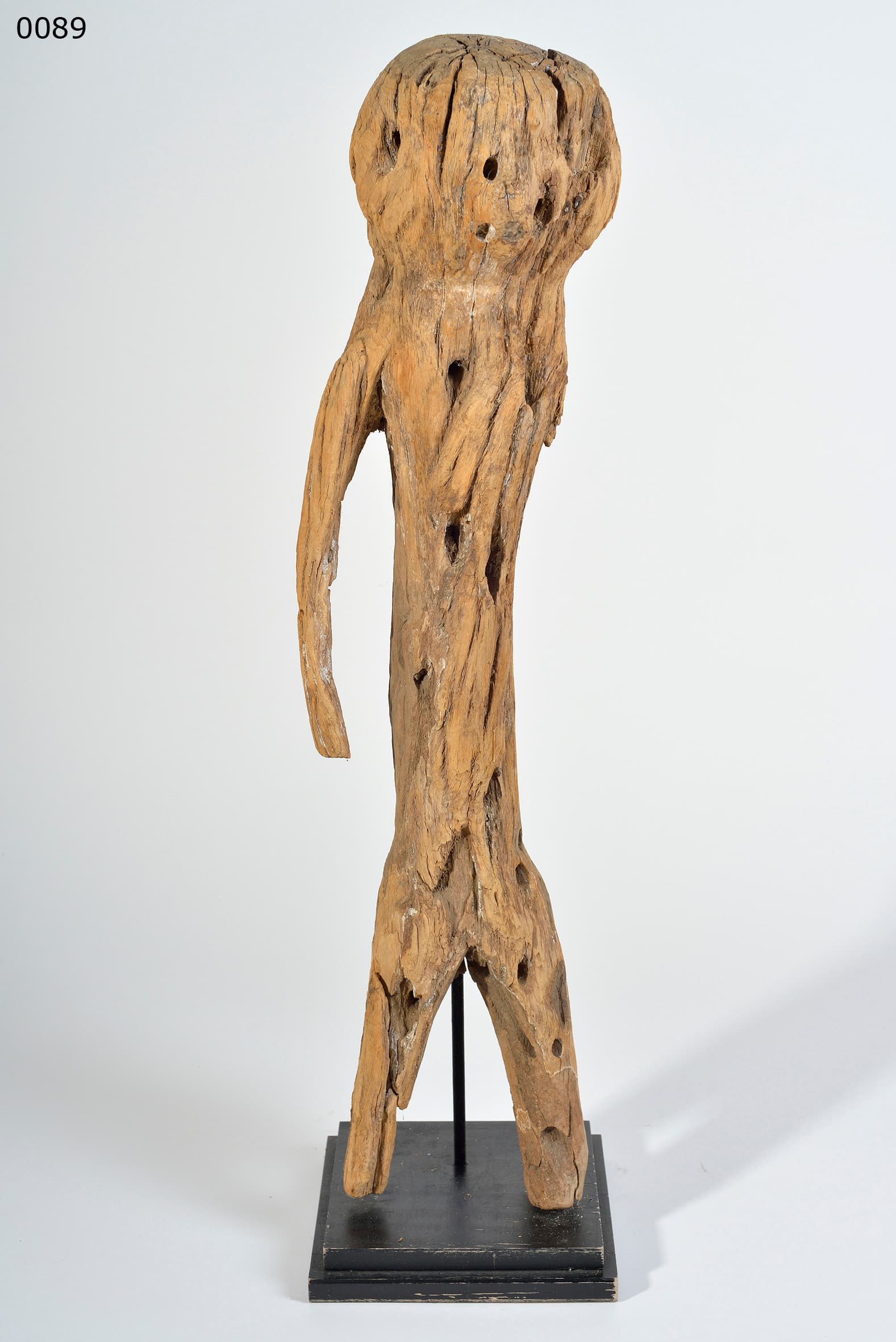
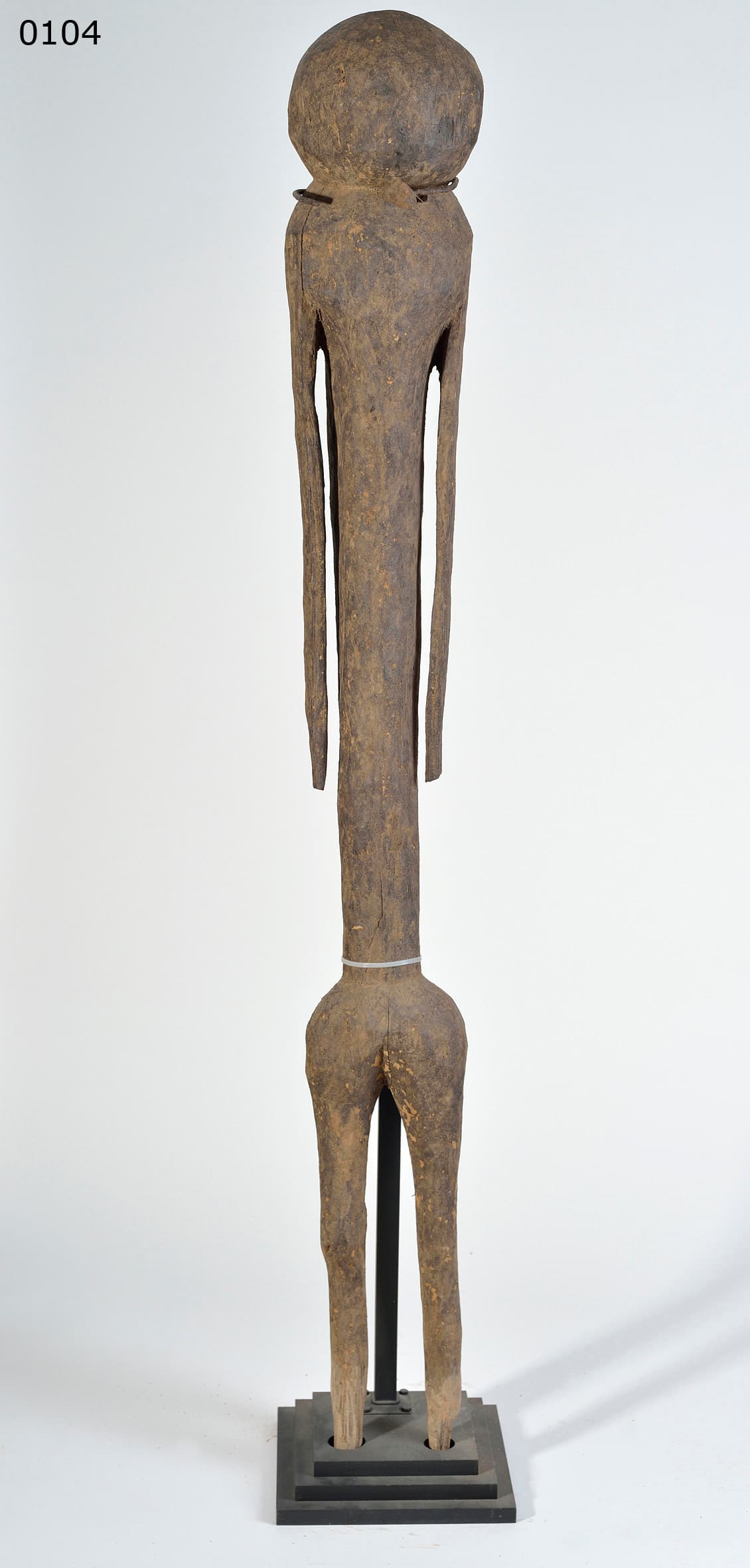
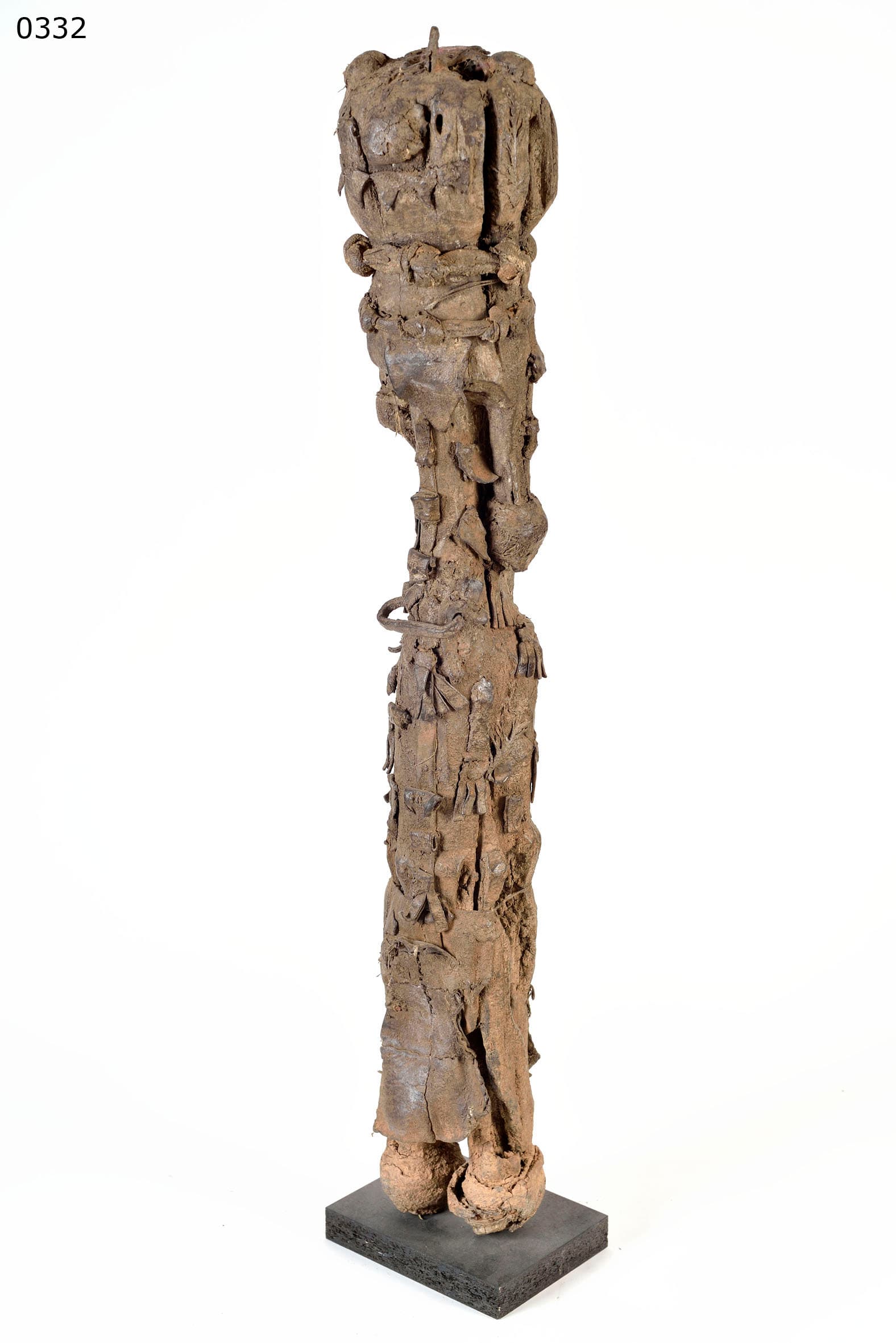
A towering, severely abstracted wooden ancestor figure (1st half 20th C., ca. 140 cm) from the Moba of Togo — a spherical featureless head on an elongated trunk-like body, with arms reduced to straight parallel lines at the sides.
1. The clan anchor
This Tchitcheri is the material embodiment of a founding ancestor.
- Named but Faceless: Each figure carries the identity of a specific, named clan founder, yet is visually anonymous.
- Continuity Across Generations: The figure remains at the shrine long after the carver, the priest, and the commissioning descendants are themselves dead — a continuous presence across generations.
2. The silent sentinel
The minimalism is not aesthetic restraint — it is protective strategy.
- Refuses Spirit Possession: A featureless face cannot be hijacked by wandering ghosts or malevolent bush spirits.
- Fixed Occupant: Only the ancestor invoked through specific incantations and offerings is permitted to inhabit the wood.
3. Weathering as proof of service
A Moba figure lives outdoors and accumulates its history on its surface.
- Earthen Base: The leg ends are rough and eroded where they have been driven into the ground for decades.
- Layered Libations: The body surface holds decades of millet-beer, blood, and dust, compressing the shrine's history into a tactile crust.
Summary
This Moba Tchitcheri is a silent monument to a founding ancestor. Its severe, featureless form is a defensive shield and a permanent anchor, holding the clan's identity in place while seasons and generations pass around it.
Written with AI assistance from the collection appraisal, object photography and our own research; editorially reviewed. Mistakes are possible — corrections are welcome. How we work →