This diminutive (12 cm) ivory sculpture features a seated female figure with classic, serene facial features and a crested coiffure, nursing a small child held tightly across her lap. The ivory exhibits a mottled, pale cream-to-brown patina with deep cracks along the back.
1. Aesthetic style — the translation of wood to precious Ivory
The Baule people of the Ivory Coast are famous for their refined, highly polished wooden statuary. To find a classic Baule maternity figure carved from solid ivory is highly unusual. The carver has successfully translated the hallmark Baule aesthetic — the serene, downcast, meditative face, the arching eyebrows, and the finely grooved, crested hairstyle — into this much harder, more prestigious material. The serene posture of the mother nursing her child emphasizes the highly civilized, composed nature of Baule spiritual ideals, projecting calm and maternal grace.
2. Ritual function — asie usu, blolo bla, and elite status
In Baule culture, figures are typically carved to appease nature spirits (asie usu) or to represent a "spirit spouse" (blolo bla). A maternity figure in wood often serves a fertility function. However, the execution of this figure in luxury ivory profoundly changes its social context. It was likely commissioned by an individual of significant wealth or a highly successful trance diviner (komien). The ivory served not just as a spiritual vessel, but as a conspicuous display of the owner's elevated social standing and economic power within the community.
3. Physical patina — Ivory fissures and atmospheric aging
The attribution of this early 20th-century piece is supported by the physical stress exhibited by the ivory. A large, prominent crack (desiccation fissure) runs vertically down the back and side of the figure. Ivory is highly responsive to its environment; as it ages and loses its internal moisture over decades, it shrinks and cracks along its natural grain. This deep fissuring, combined with the mottled brown oxidation in the crevices of the carving, is consistent with long-term atmospheric aging in West Africa.
Summary
Translating the serene, civilized beauty of Baule portraiture into prestigious ivory, this maternity figure is a notable example of Ivorian elite statuary. Its deep, natural desiccation fissures and mottled patina support its attribution as an early 20th-century luxury talisman.
Written with AI assistance from the collection appraisal, object photography and our own research; editorially reviewed. Mistakes are possible — corrections are welcome. How we work →

mask (collected in Abidjan)

mask (called GOLI)
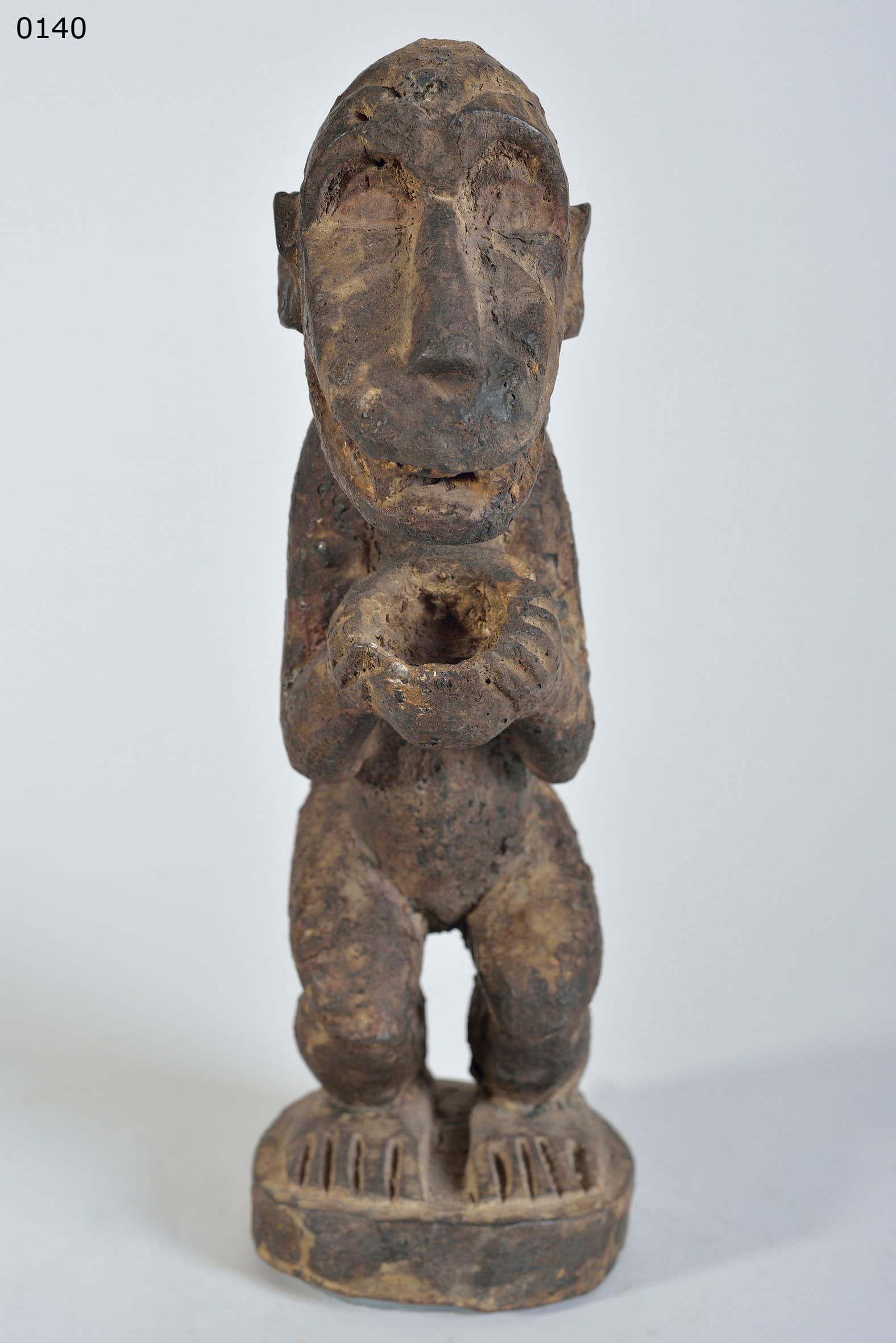
simian statue (called MBOTUMBO or GBEKRE)