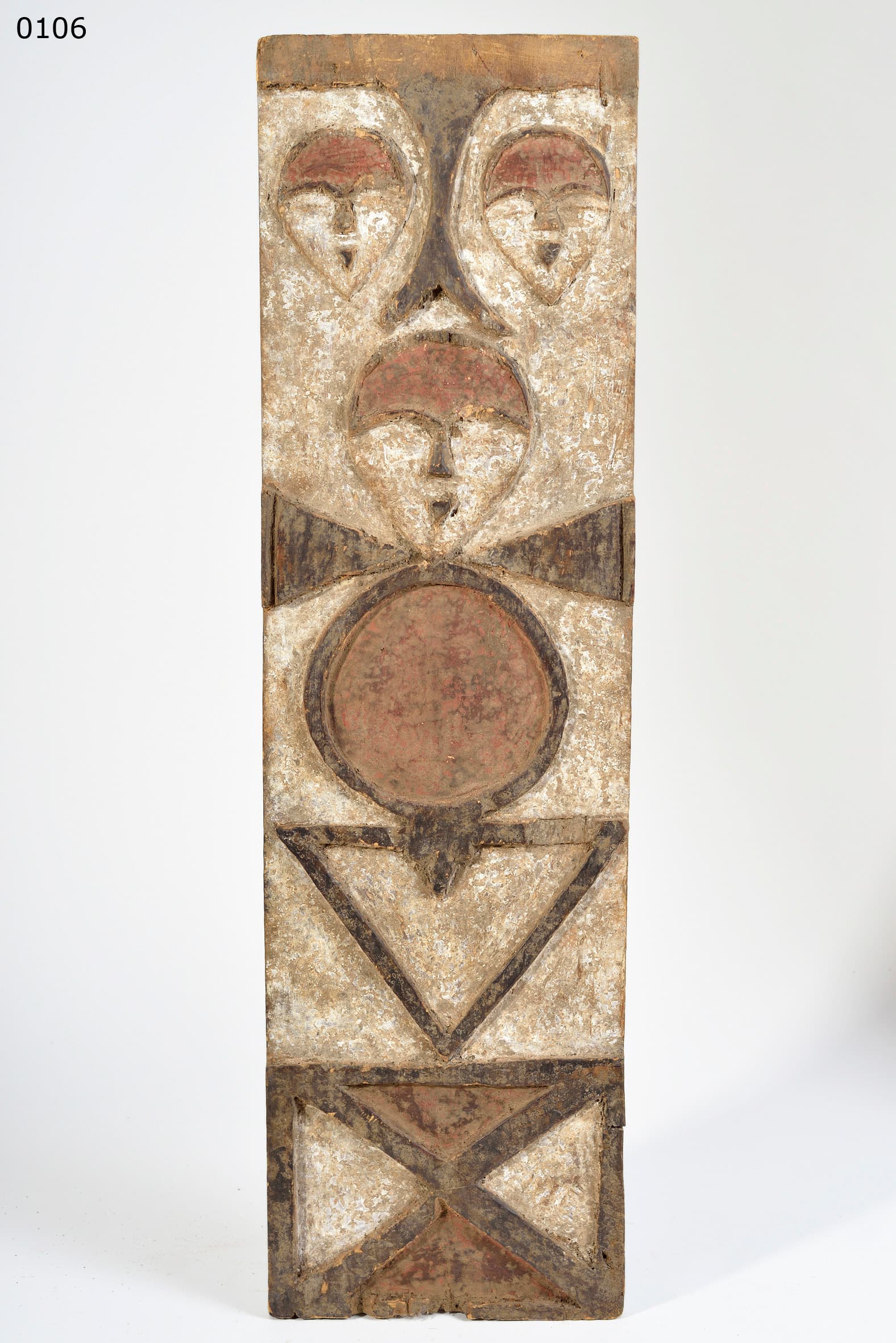
A flat rectangular wooden board (1st half 20th C., 112 cm) from the Tsogho of Gabon — deeply carved in bas-relief with a heart-shaped face, cosmic geometric motifs, and bold polychrome pigments.
1. The architecture of the Bwiti
The Tsogho (Mitsogho) use these panels as structural elements of their Bwiti temples (ebanza).
- Not a Door: The board is an interior shrine panel or central pillar rather than an entrance.
- Sacred Threshold: It visually and spiritually separates the inner sanctuary from the uninitiated world outside.
2. The face of the ancestors
The heart-shaped face with arched brows is a Gabonese hallmark shared with the Fang and Punu.
- The Iboga Context: The Bwiti religion involves ingestion of the psychoactive iboga plant.
- Spirit Guides: The carved faces represent omniscient ancestors watching over initiates and guiding them through their hallucinogenic, near-death spiritual journeys.
3. Sacred geometry and polychrome
The vivid patterns are a cosmic language.
- Sun, Moon, and Cycle: Large circles encode the sun, the moon, and the cyclical nature of life and death.
- Color as Power: Kaolin white signifies the spirit world and clairvoyance; vibrant red and black energize the board into a mesmerizing, glowing focal point during firelit nocturnal rituals.
Summary
This Tsogho shrine panel is a striking example of Gabonese architectural art. It combines serene ancestral portraiture with bold, psychoactive geometry, serving as a vivid wooden gateway to the profound visions of the Bwiti society.
Written with AI assistance from the collection appraisal, object photography and our own research; editorially reviewed. Mistakes are possible — corrections are welcome. How we work →