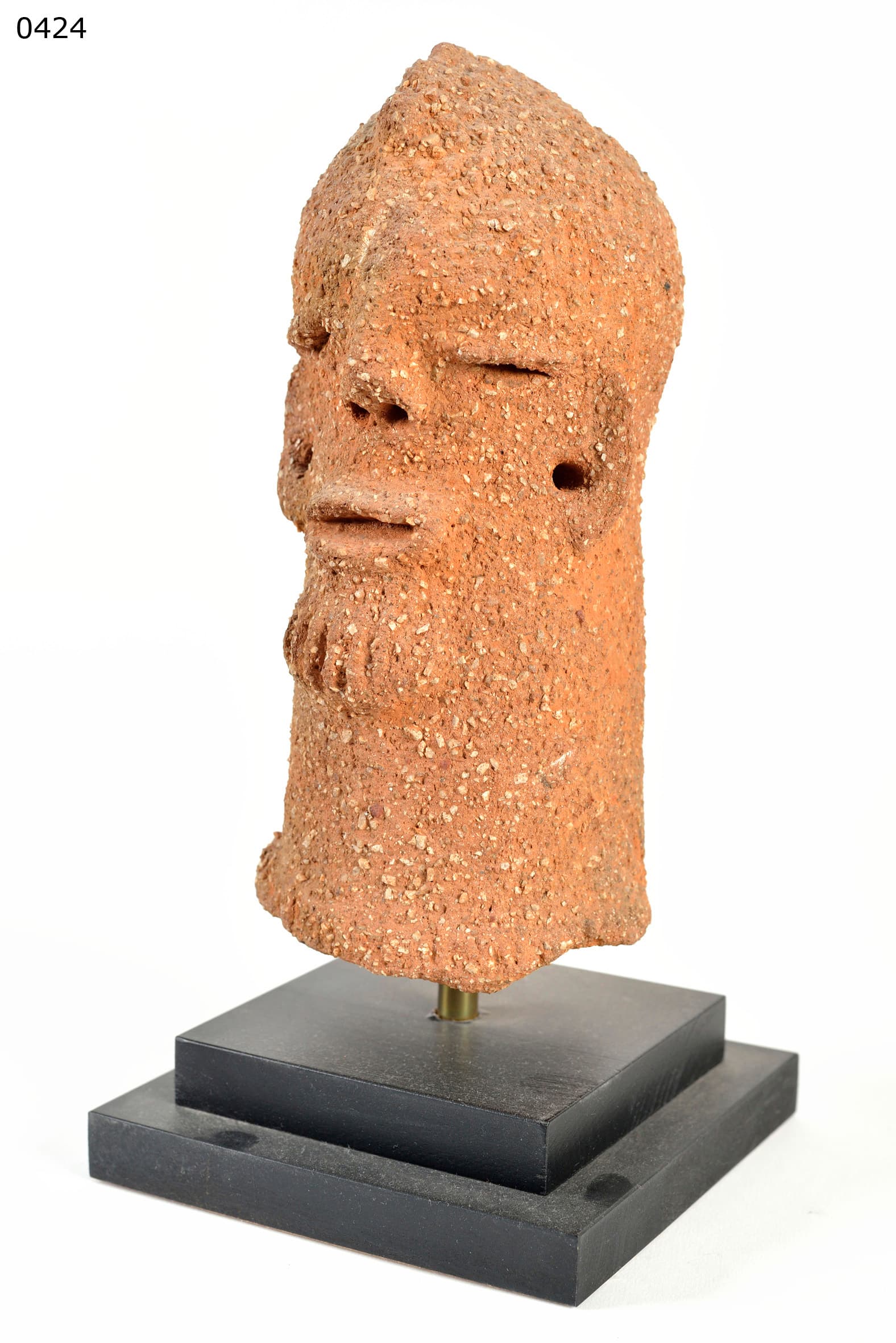
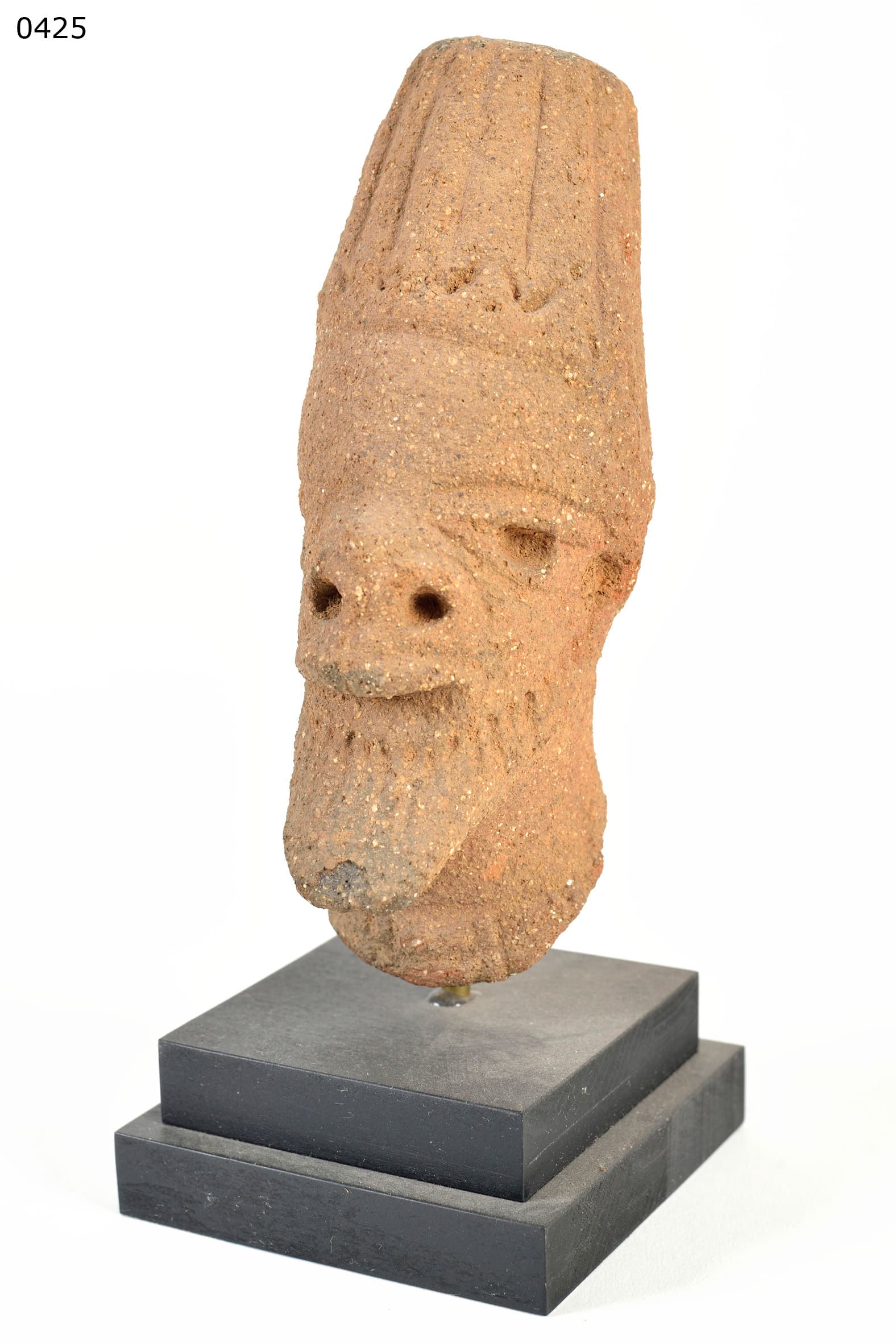
This 18 cm terracotta head features a rounded, helmet-like cranium, highly prominent, protruding spherical eyes, and a small, deeply pierced mouth. The clay matrix is extremely granular and heavily textured with coarse inclusions, showing severe archaeological erosion and a broken neck base.
1. Aesthetic style — the Yelwa/Sokoto stylistic complex
This fragmented head belongs to the broader archaeological grouping of ancient Northern Nigerian terracottas, often classified under the Yelwa, Sokoto, or Katsina traditions (flourishing concurrently with or slightly later than Nok). It is characterized by severe abstraction, particularly the heavy, overhanging brow and the dramatic, protruding spherical or cylindrical eyes. This bold, almost brutalist approach to facial geometry creates a stark, intimidating visage that contrasts with the more delicate, highly decorated features of classic Nok portraiture.
2. Ritual function — grave goods and ancestral veneration
Terracotta figures from the Yelwa/Sokoto region are predominantly found in burial mounds and ancient habitation sites. They are widely believed to represent powerful ancestors, nature spirits, or deities overseeing agricultural fertility. The heavy, protruding eyes suggest a state of intense spiritual vigilance or trance-like possession. Mounted on what was once a full-body vessel or standing figure, this head would have served as the focal point of a shrine, receiving offerings to ensure the prosperity of the ancient community.
3. Physical patina — granular matrix and severe erosion
The antiquity of this piece (attributed to circa 2000 years) is supported by the physical breakdown of its ceramic matrix. The clay is exceptionally coarse, heavily tempered with quartz or gravel inclusions that have been exposed as the softer surrounding clay eroded away over centuries of burial. The severity of this granular erosion, combined with the hard, calcified earth still clinging to the pierced mouth and the broken neckline, is consistent with an ancient, excavated fragment.
Summary
Characterized by intense, protruding eyes and brutalist abstraction, this Yelwa terracotta head is a haunting remnant of ancient Nigerian spiritual life. Its severely eroded, highly granular clay matrix is consistent with two millennia of subterranean burial.
Written with AI assistance from the collection appraisal, object photography and our own research; editorially reviewed. Mistakes are possible — corrections are welcome. How we work →