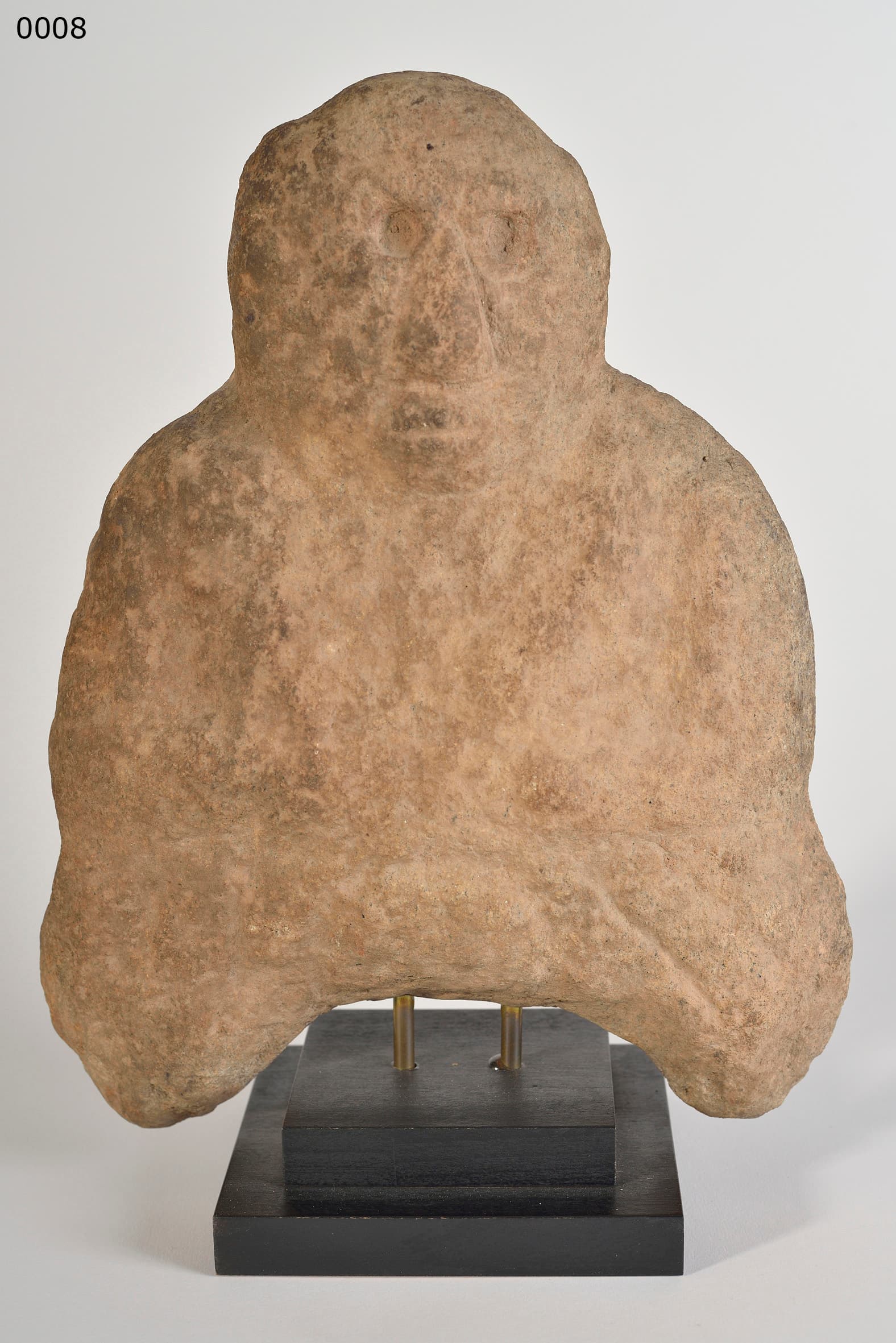
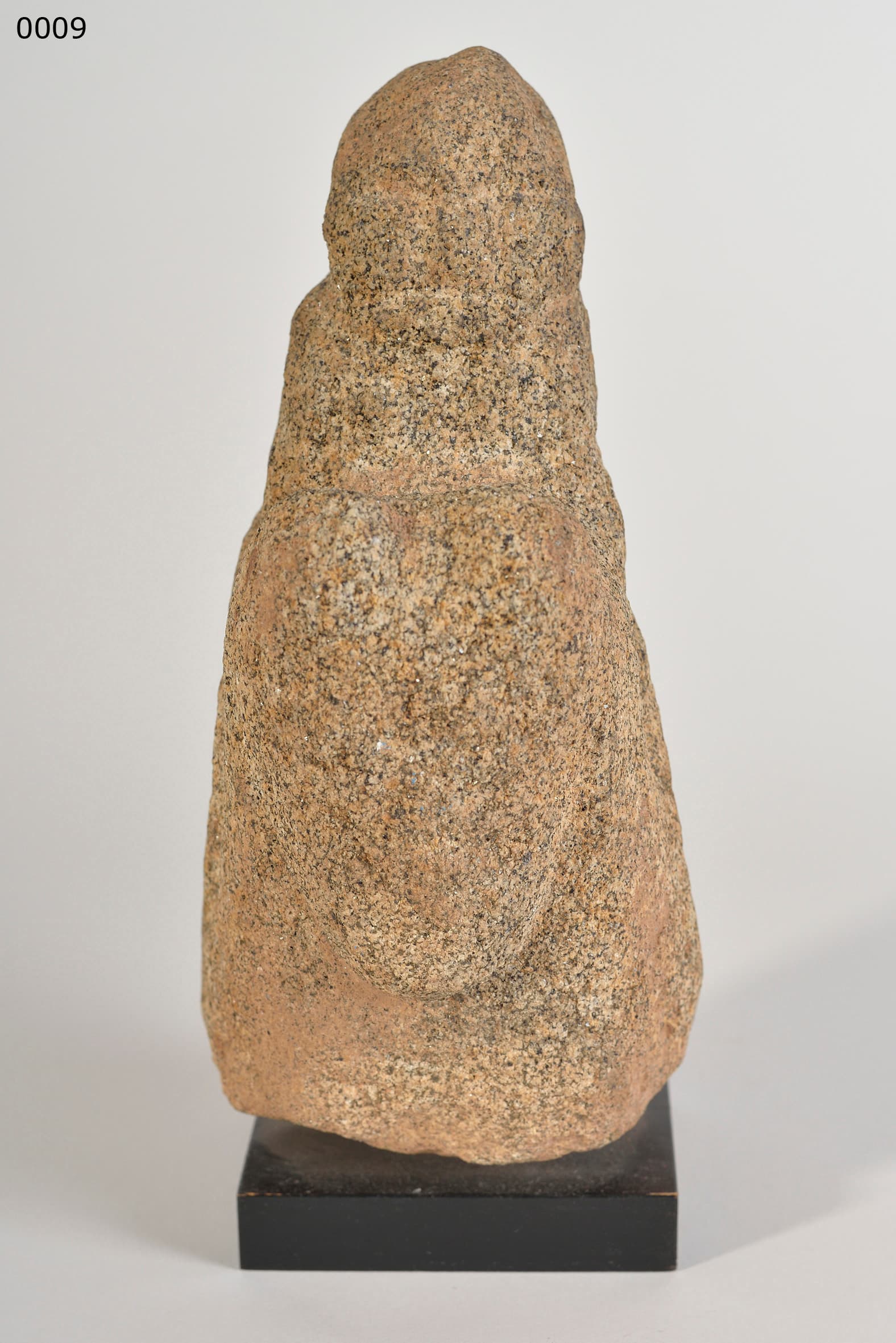
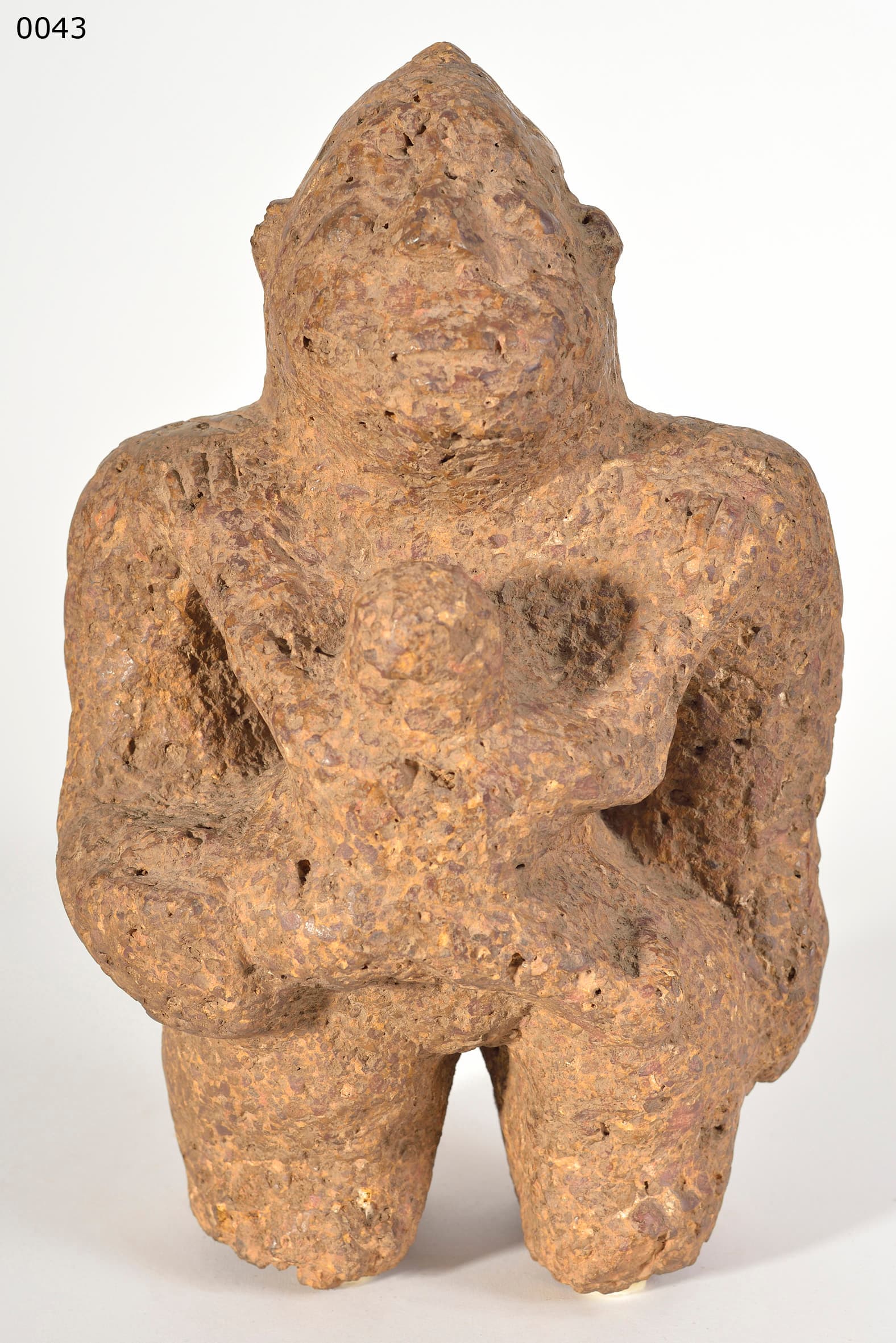
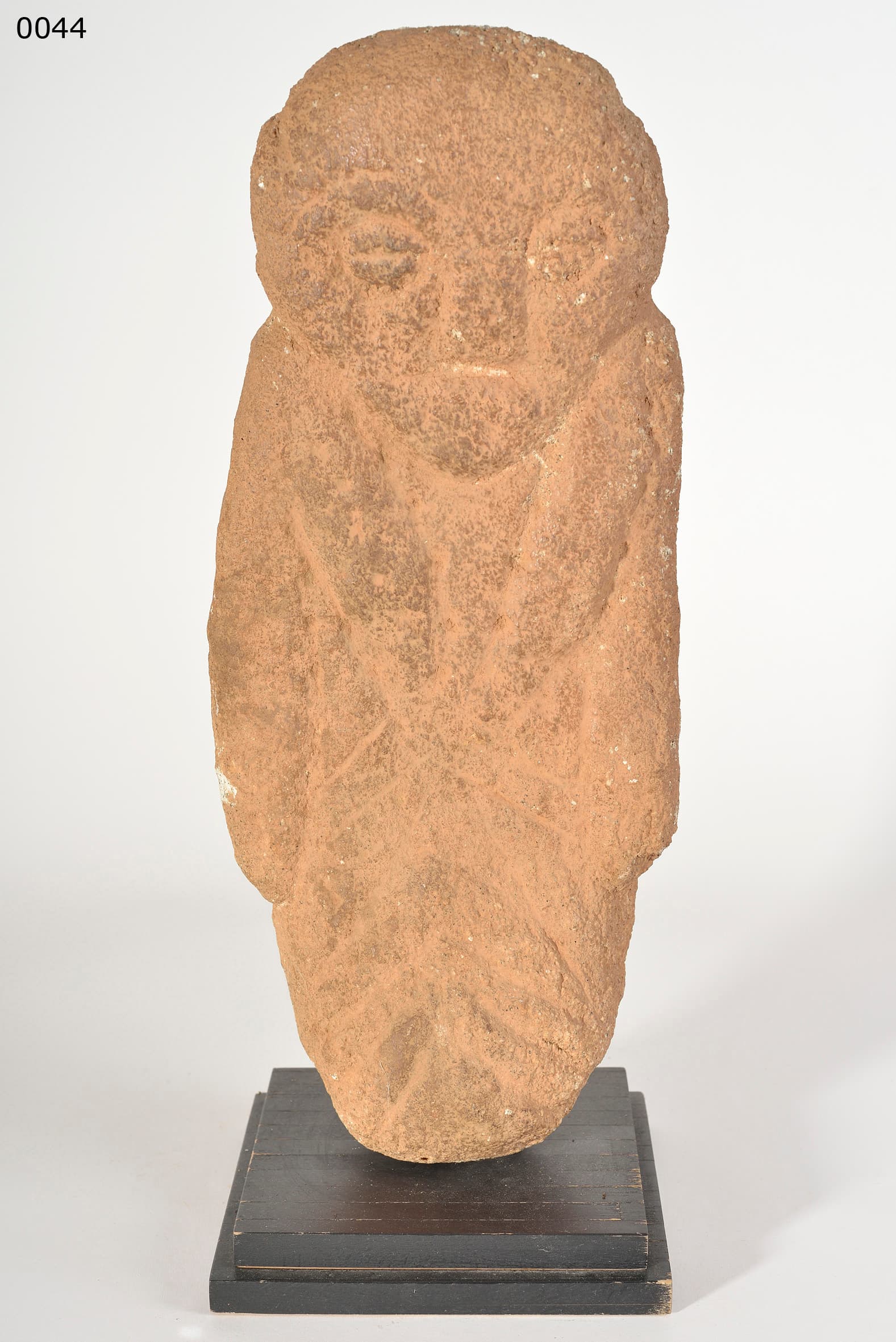
This 12 cm stone carving is a highly eroded, roughly cylindrical sculpture representing a seated or squatting figure. It features an indistinct, rounded head, a blocky torso with arms folded across the lap, and shortened legs. The stone surface is heavily pitted, degraded, and earth-toned.
1. Aesthetic style — Nyonyosi lithic antiquity
The Nyonyosi (often considered the aboriginal, pre-Mossi inhabitants of Burkina Faso) are credited with producing some of the most ancient and enigmatic stone carvings in West Africa. This small, columnar figure demonstrates their reductive, lithic aesthetic. Carving hard stone with rudimentary tools required immense labor, leading to a style that prioritizes solid, unbroken geometric blocks over fine detail. The figure is an exercise in extreme volumetric abbreviation, representing the eternal, immovable nature of the ancestors.
2. Ritual function — grave markers and ancestral veneration
These small stone figures are generally recovered from ancient, forgotten burial sites or sacred groves. They functioned as eternal, indestructible markers for the dead. Unlike wooden figures that inevitably succumb to termites and rot in the Sahel, stone guarantees permanence. Placed atop a tomb, this figure served as the terrestrial anchor for the deceased's soul, receiving sacrifices from descendants to ensure the spirit remained appeased and continued to bless the living lineage with rain and agricultural fertility.
3. Physical patina — profound geological weathering
The 12th–16th century dating is supported by the profound geological weathering of the stone itself. The surface has been severely eroded by centuries of driving wind, sand, and seasonal rains, erasing almost all original carved details and leaving a softly rounded, highly pitted, and granular surface. The deep integration of soil and minerals into the microscopic crevices of the stone is consistent with significant antiquity and long-term environmental exposure.
Summary
Carved from immutable stone, this severely reduced Nyonyosi figure represents the eternal, physical anchor of the ancient Burkinabe ancestors. Its profoundly eroded, wind-blasted geological surface is consistent with a 12th–16th century origin.
Written with AI assistance from the collection appraisal, object photography and our own research; editorially reviewed. Mistakes are possible — corrections are welcome. How we work →