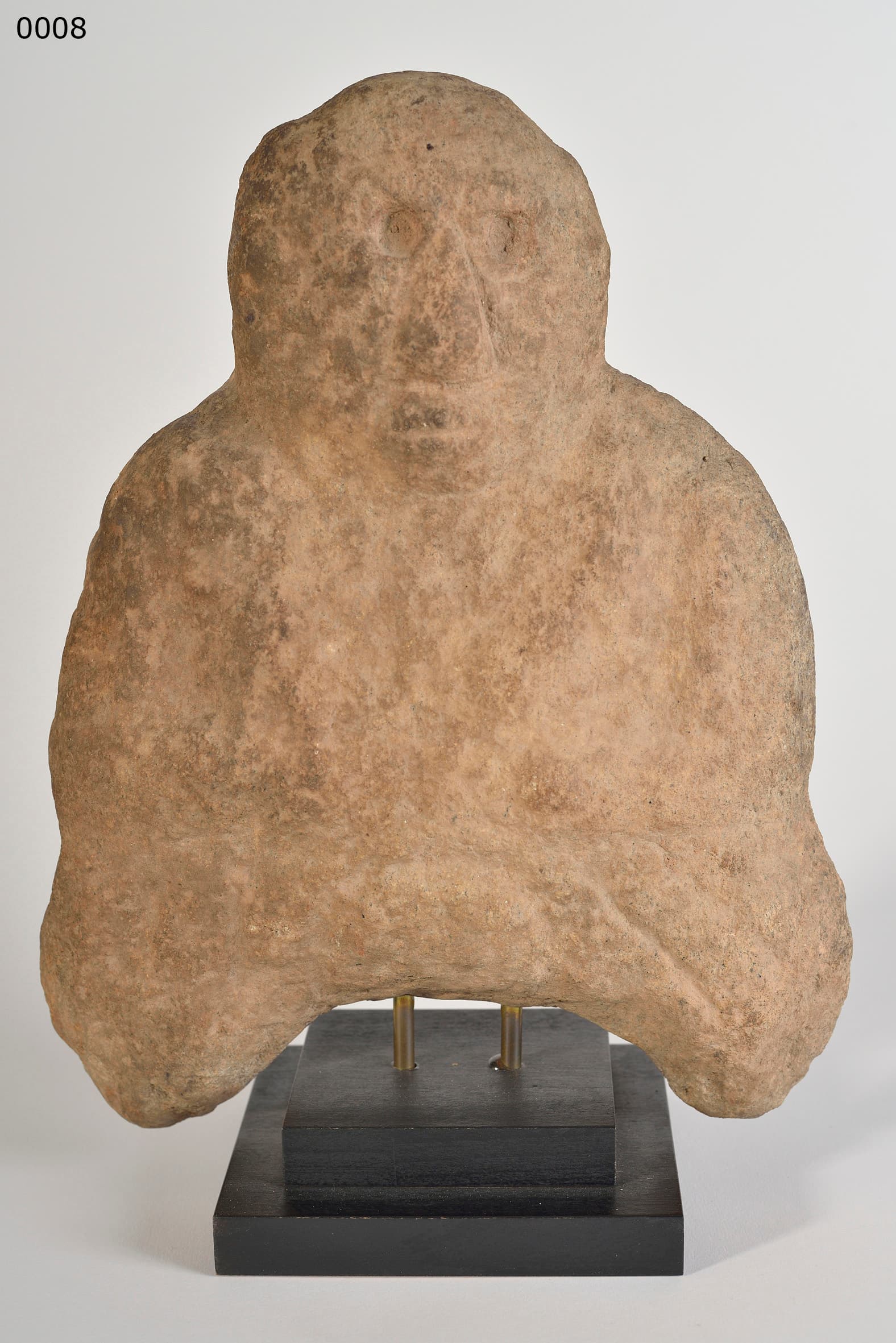
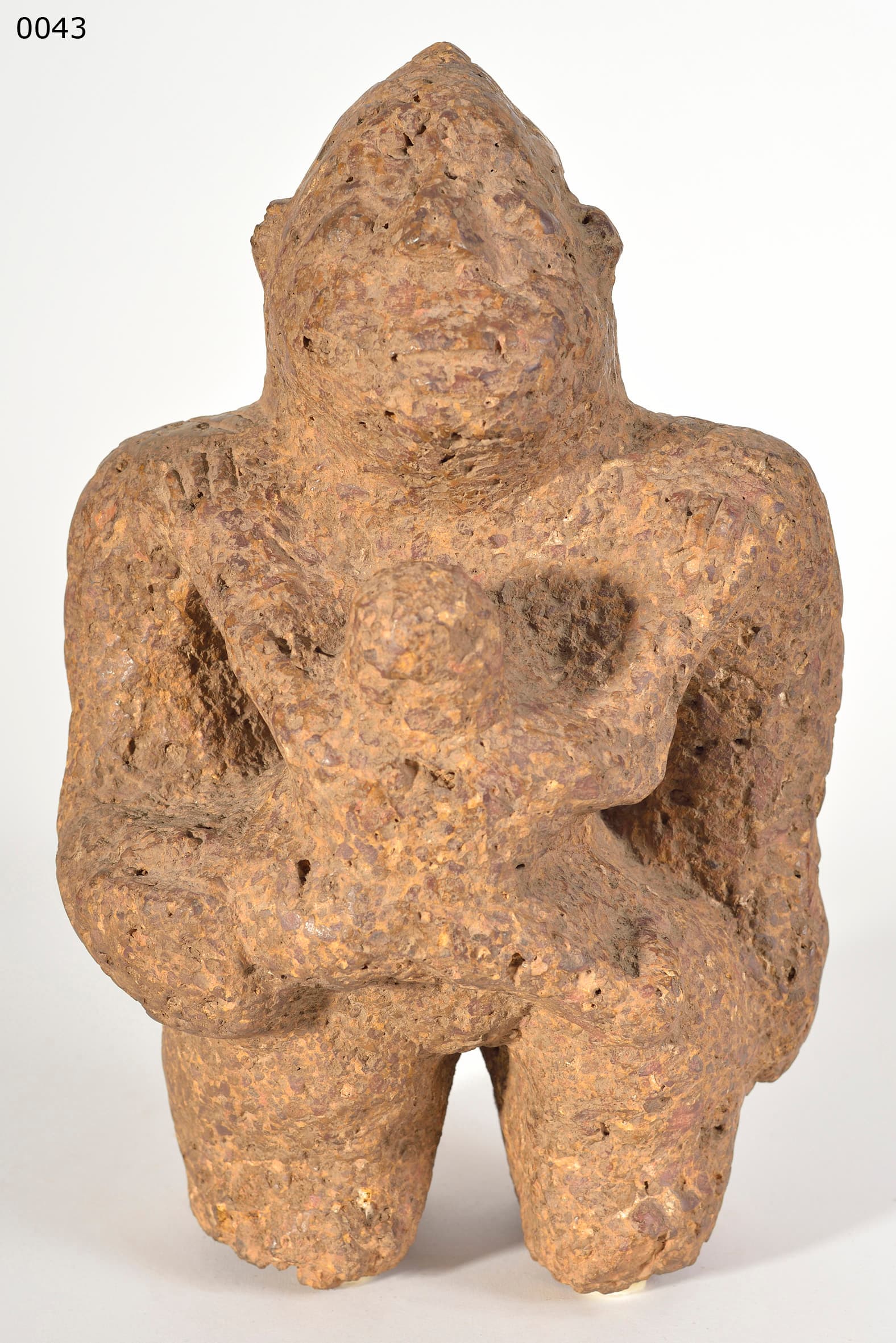
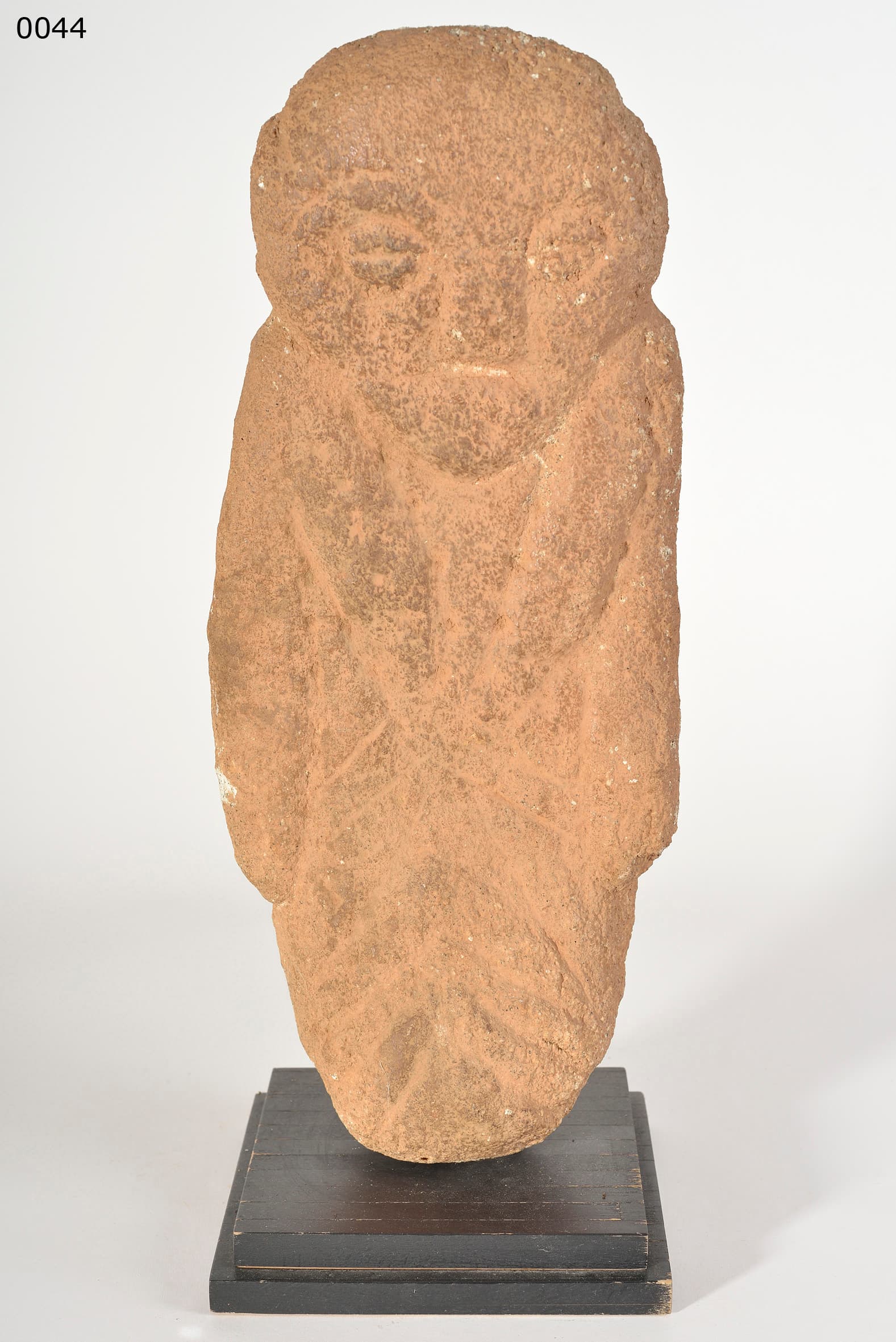
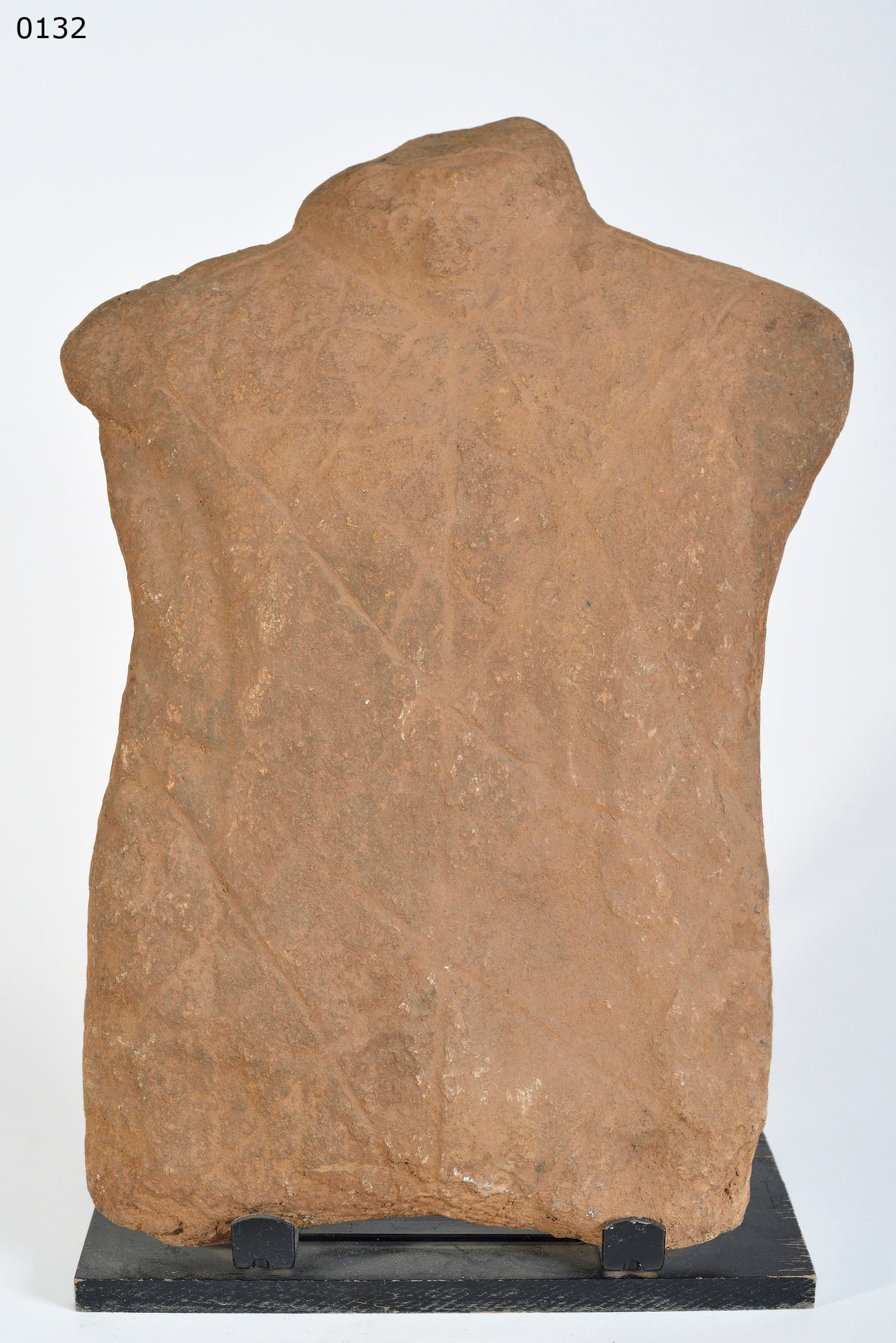
This is another example of a Nyonyosi (or Nyonyose) tomb figure from Burkina Faso, belonging to the same tradition as the previous piece (Image 0008).
While the previous figure had more recognizable facial features, this one represents the abstract form often associated with these historical West African stone monuments.
1. Comparative analysis: Abstraction vs. representation
In Nyonyosi art, there is a wide spectrum of representation. Some figures are quite "human" in appearance, while others—like this one—are reduced to a symbolic pillar.
- The Totemic Form: The figure is rendered as a simple, tapered column. The "head" is suggested by the rounded apex, and the "shoulders" or "arms" are indicated by a subtle widening of the central block.
- Spirit vs. Body: This level of abstraction suggests that the carver may have been less focused on depicting a physical human body and more on creating a "power object" or a permanent vessel for the soul, representing the deceased in their ancestral form.
2. Material and weathering
The material here appears to be a very coarse, grainy stone—likely a weathered granite or a heavily crystallized laterite.
- Surface Texture: The "pitted" and eroded surface shows wear consistent with long exposure to the Sahelian climate. Weathering over centuries has smoothed the original chisel marks, resulting in this soft, organic silhouette.
- Permanence: Just like the previous stone figure, the choice of material is traditionally understood as a deliberate ritual act. In a region where most art was made of wood, stone served as a durable medium.
3. Spiritual context: The "master of the earth"
As mentioned before, the Nyonyosi are traditionally regarded as the original inhabitants of this land before the Mossi arrived.
- Nandare: In some local traditions, these stone monuments are called nandare. They are understood not just as markers, but as active focal points of spiritual energy.
- Territorial Markers: Because the Nyonyosi are associated with the role of "Masters of the Earth," these figures are also believed to have served to mark the clan's spiritual connection to the land. Placing such a heavy, permanent object in the ground is thought to have anchored the family to the soil.
4. Historical significance
Documenting two of these together provides valuable context. They show the stylistic range of a culture traditionally associated with the 12th to 16th centuries. This piece, in particular, showcases an abstract aesthetic that recalls modern minimalist sculpture, conveying a sense of quiet strength.
Summary
This Nyonyosi figure is a compelling example of reductive sculpture. It simplifies the individual personality of the deceased to present a generalized image of an ancestor. It stands as a testament to the history of the Burkina Faso plateau, representing a tradition of artistic achievement from the pre-colonial era.
Written with AI assistance from the collection appraisal, object photography and our own research; editorially reviewed. Mistakes are possible — corrections are welcome. How we work →