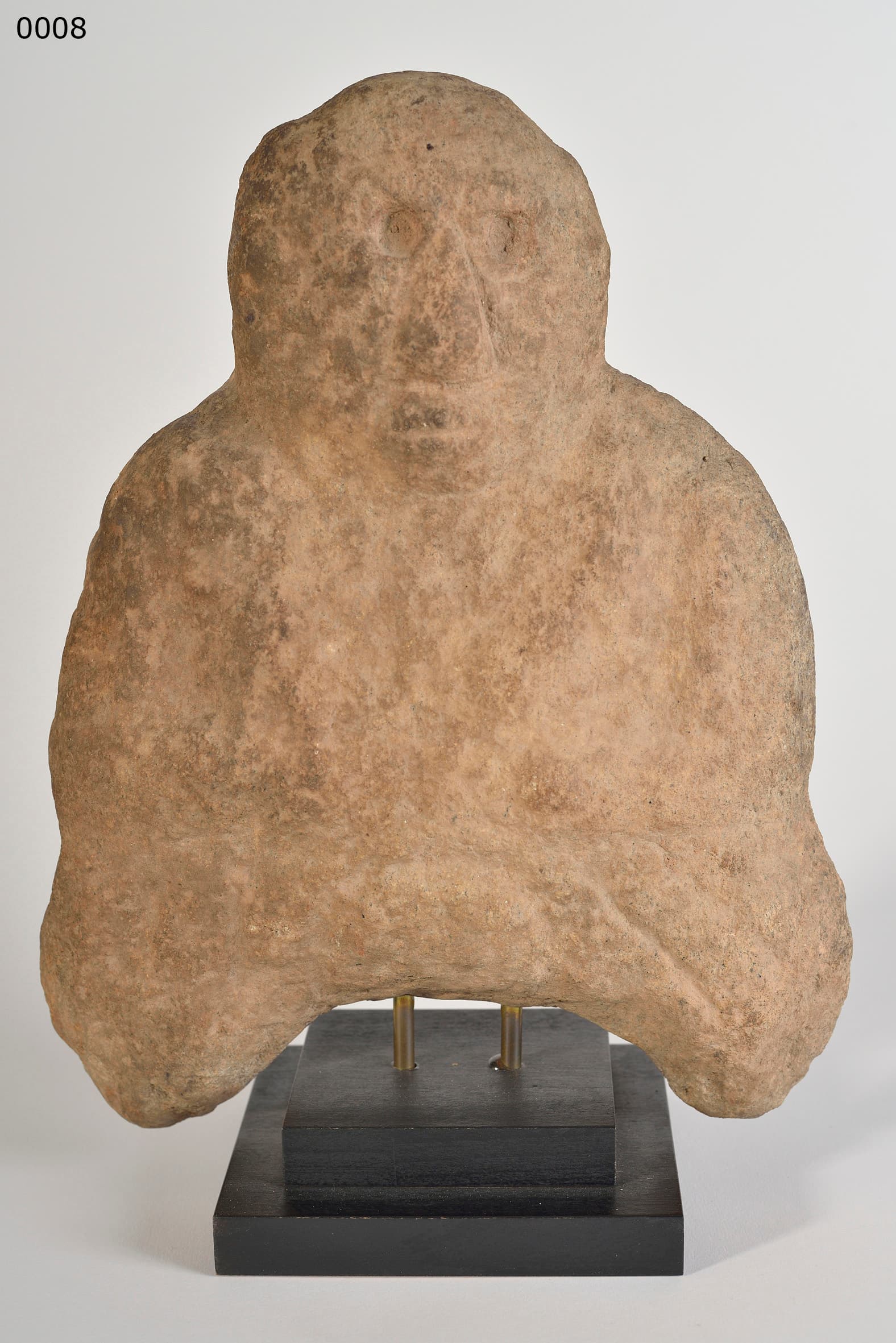
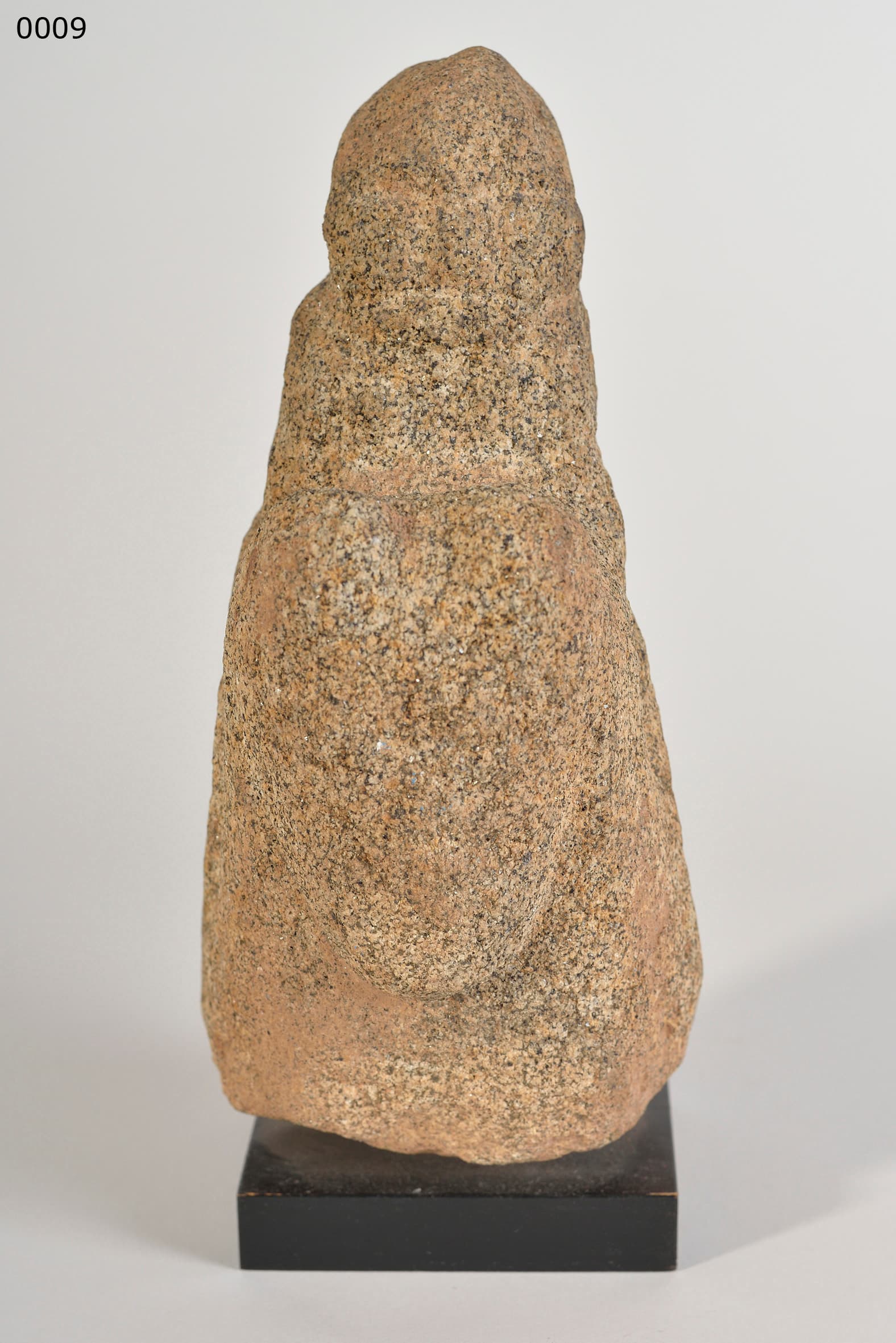
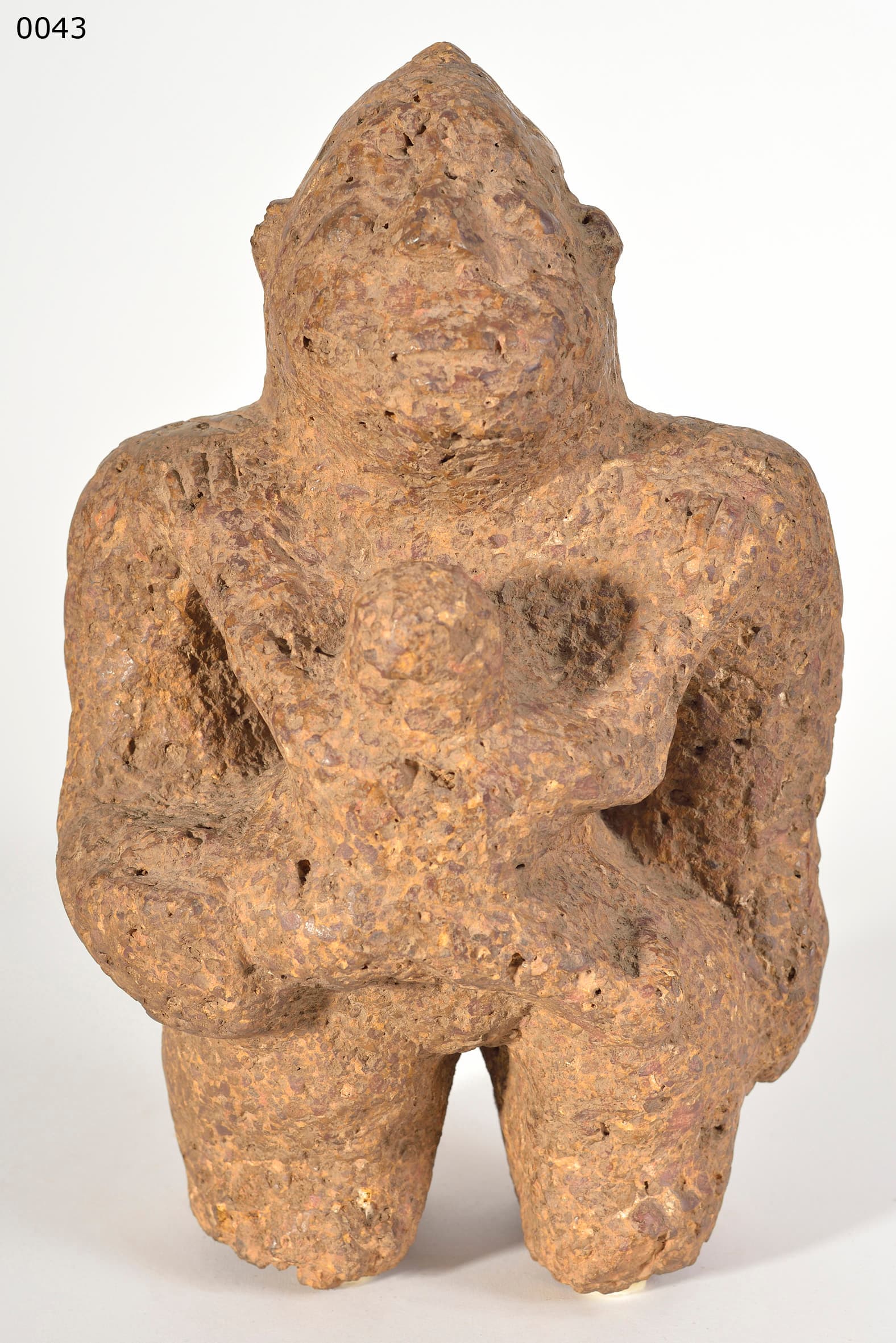
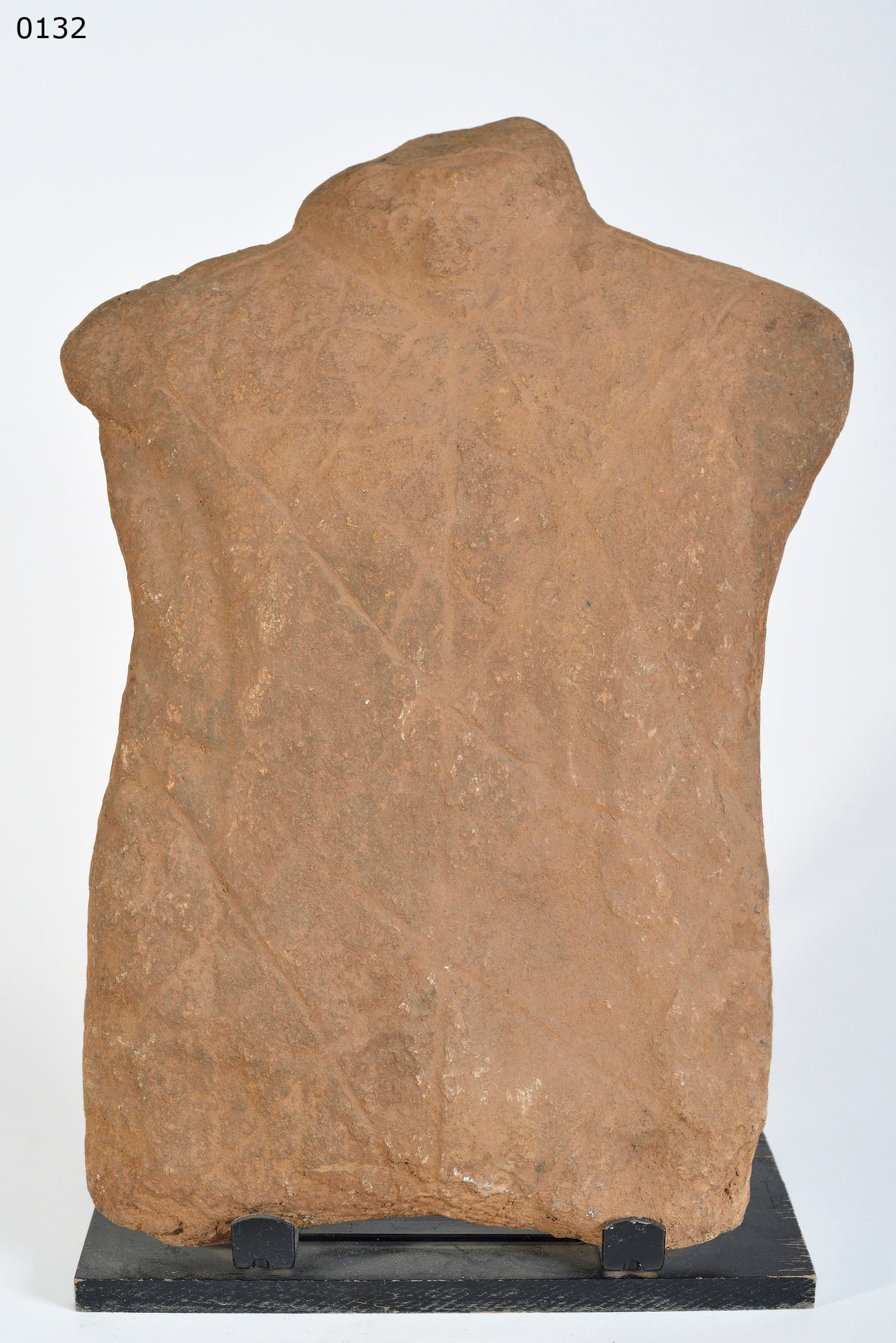
A tall columnar female tomb figure (12th–16th C., 49 cm) from the Nyonyosi of Burkina Faso — heavily eroded stone with incised V-shaped arms resting below the breasts. Companion to the maternity figure at collection Nr. 43.
1. The rarity of lithic femininity
While wooden female figures are common across Africa, they are exceptionally rare in ancient stone. This piece honors a founding matriarch or a high-status female ancestor of the clan.
- Eternal Matriarch: In the harsh arid environment of Burkina Faso, the survival of lineage is the ultimate blessing. Carving the female ancestor into eternal stone ensures her spirit nurtures descendants forever.
2. Abstracted matriarch
- The V-Shape: The incised lines forming a V or chevron across the torso represent stylized arms resting below the breasts — a classic posture of reverence and ancestral peace.
- Columnar Reduction: The figure rejects anatomical realism, reducing the female form to a symbolic monumental pillar.
3. Territorial anchor and erosion
- Outdoor Monument: This heavy stone was erected on a burial mound, proving matrilineal lines or female founders held immense spiritual and political power in pre-Mossi society.
- Verified Antiquity: The deep weathering and pitting blur the features — validating its deep antiquity (12th–16th century) and decades of exposure to Sahelian winds.
Summary
This figure is a monumental tribute to ancient female leadership. Its minimalist enduring form serves as a permanent architectural pillar — linking the earth to the ancestral matriarchs who founded the community.
Written with AI assistance from the collection appraisal, object photography and our own research; editorially reviewed. Mistakes are possible — corrections are welcome. How we work →