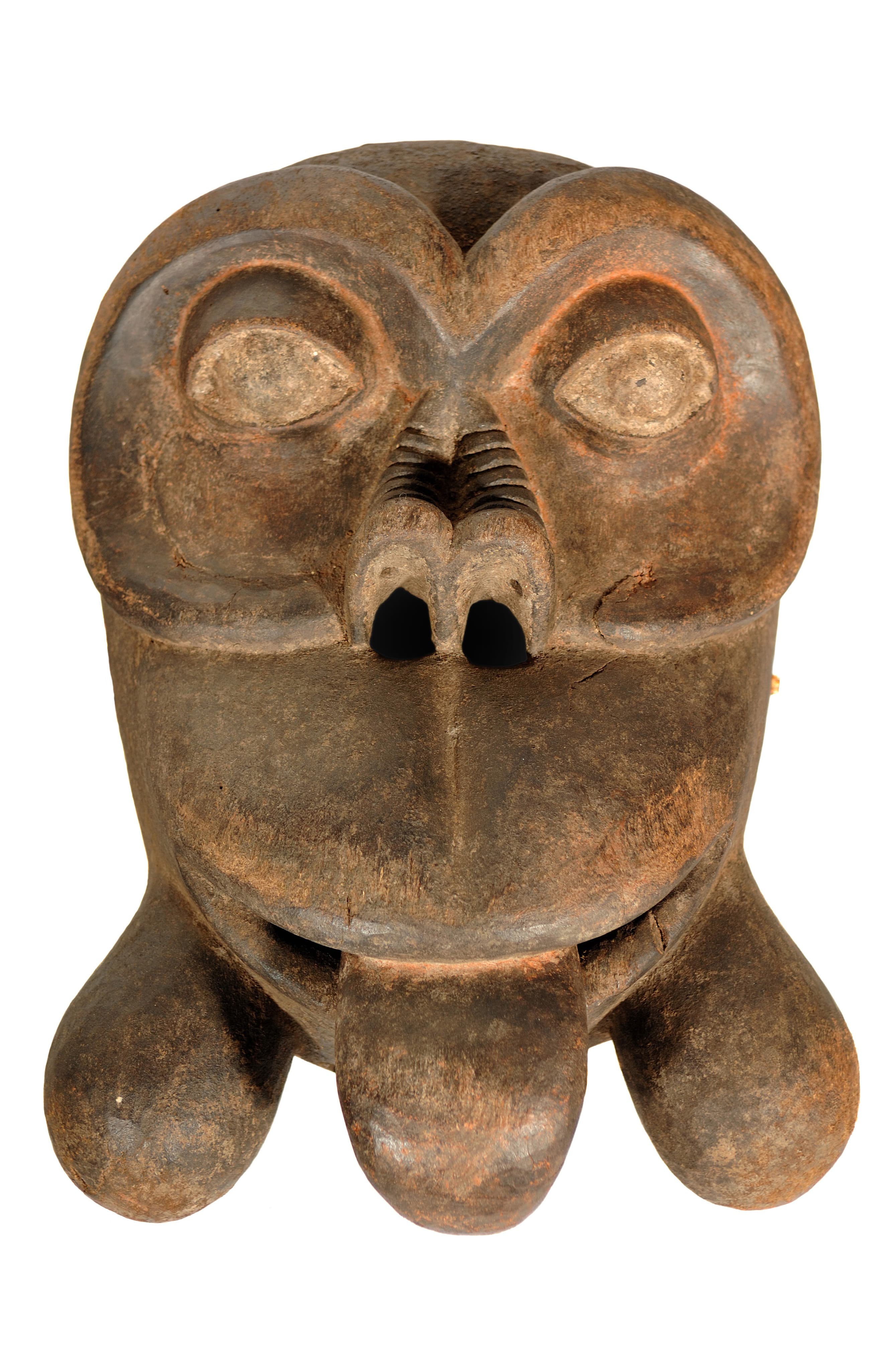
This massive 56 cm wooden figure depicts a powerful, standing ape with a prominent phallus, its body tightly bound in a net of aged organic fibers. A hidden, hollowed-out rectangular cavity in its back reveals a smaller, secondary monkey skull or carved head nested within. It is coated in a dark, crusty patina.
1. Aesthetic style — simian iconography and the ngi society
The Bulu (closely related to the Fang complex in southern Cameroon) utilize gorilla and chimpanzee imagery to represent the raw, overwhelming, and terrifying power of the deep jungle. Unlike the serene, idealized human ancestors of standard Fang byeri figures, this standing ape projects aggressive, muscular dominance and hyper-masculinity. The heavy, stooped posture, the deep-set eyes, and the bared teeth are designed to intimidate, channeling the devastating physical strength of the great apes into a weapon of social defense.
2. Ritual function — witchcraft eradication and the hidden reliquary
This figure is traditionally understood as an agent of the Ngi (gorilla) secret society, a powerful cult dedicated to hunting down and destroying malevolent sorcerers. A notable feature of this piece is the hidden, rectangular reliquary cavity carved into its back, containing a smaller skull or carved head. This cavity held the bishimba (sacred magical charge). By binding the figure in a complex net of fibers, the priest visually and magically "trapped" this energy inside the wooden ape, unleashing it to strike down witches.
3. Physical patina — desiccated bindings and encrusted power patina
The material complexity of this piece is consistent with an early 20th-century origin. The dense wooden armature is covered in a thick, soot-stained, and oily sacrificial crust, indicating heavy use in smoke-filled, active shrines. Crucially, the intricate net of organic fiber cords wrapping the body and securing the reliquary cavity remains completely intact. These indigenous fibers are highly desiccated, brittle, and caked with the same dark patina as the wood, suggesting the object's assemblage has remained undisturbed.
Summary
Associated with the Ngi society, this monumental Bulu ape figure served as a ritual instrument against witchcraft. Its hidden reliquary cavity and undisturbed, highly desiccated bindings make it a significant and well-preserved example of this sculptural tradition.
Written with AI assistance from the collection appraisal, object photography and our own research; editorially reviewed. Mistakes are possible — corrections are welcome. How we work →