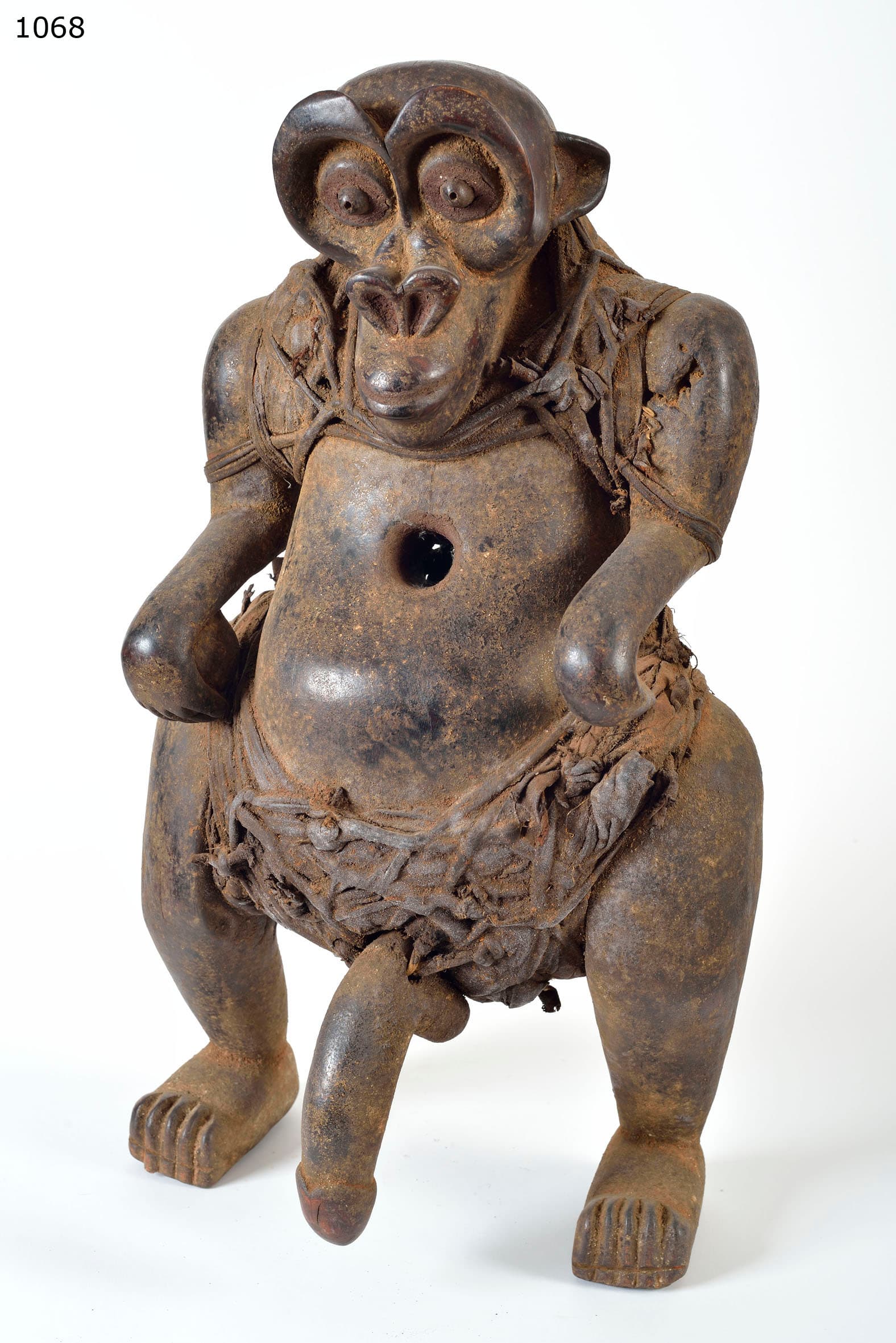
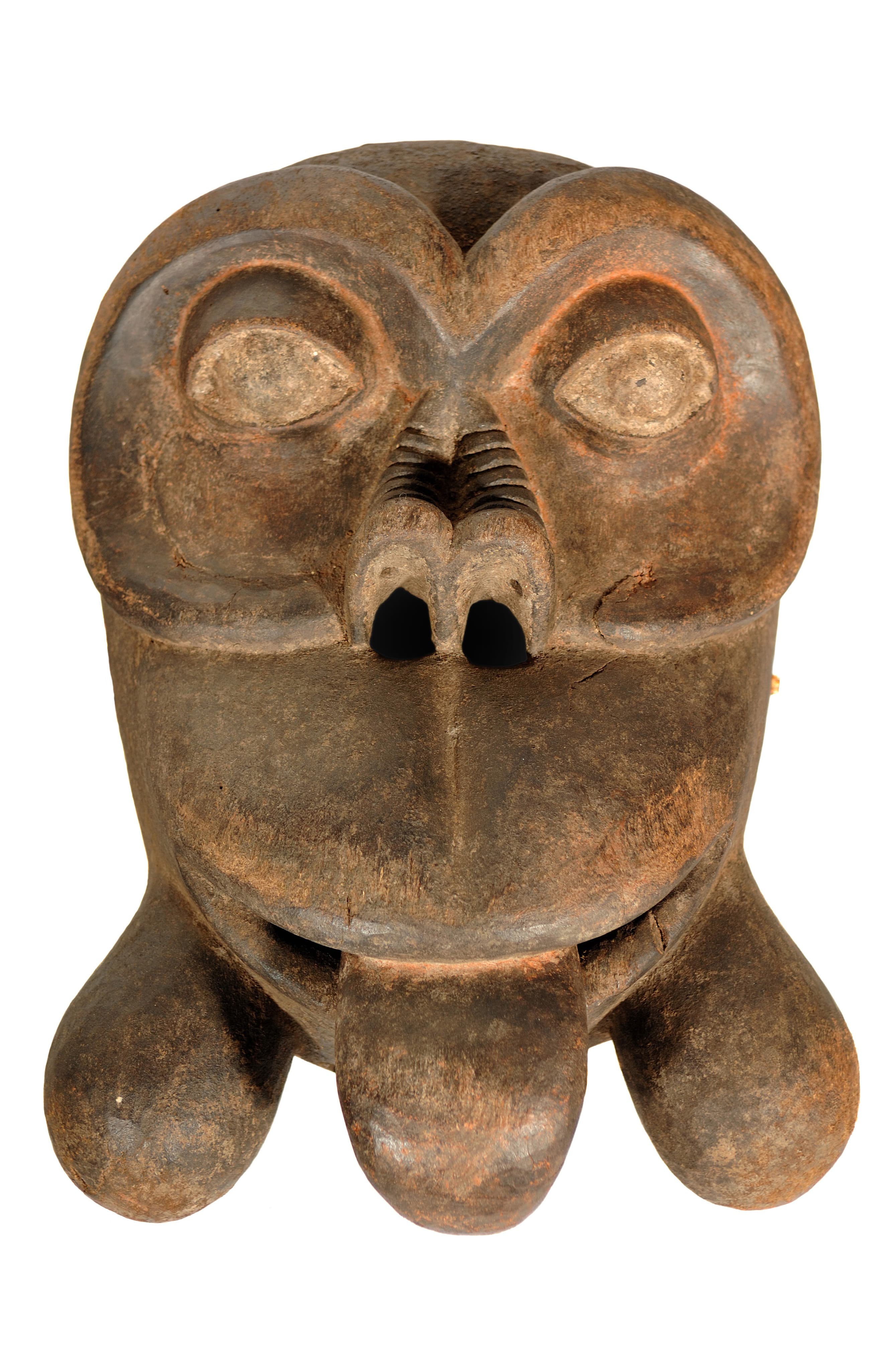
This heavy wooden mask features a striking, ape-like physiognomy with large, deeply hollowed circular eyes, a prominent brow, and an aggressively projecting mouth baring jagged, carved teeth. The dense hardwood is covered in a thick, dark, and highly oxidized black patina with localized red pigmentation around the cheeks.
1. Aesthetic style — primate iconography in the equatorial forest
The Bulu, a subgroup of the larger Fang linguistic and cultural matrix of southern Cameroon, possess a masking tradition heavily influenced by the dense equatorial rainforest. This mask is a notable example of zoomorphic abstraction, specifically channeling the formidable power of the gorilla or chimpanzee. Unlike the serene, heart-shaped faces of neighboring groups, this piece utilizes brutalist geometry — deeply excavated eye sockets and a massive, forward-thrusting jaw — to project primal, uncultivated aggression, creating a powerful visage of wild force.
2. Ritual function — judicial power of the ngi society
Masks of this dramatic nature were historically utilized by the Ngi (or Ngil) secret society, which operated as the ultimate judicial and policing authority in Bulu and Fang villages. Ngi initiates functioned as inquisitors, hunting down malevolent sorcerers, murderers, and thieves. Danced at night by firelight, the menacing, ape-like appearance of the mask was traditionally intended to inspire fear among the uninitiated and the guilty. The animalistic features symbolically granted the human enforcer the supernatural strength and ferocity of the apex predators of the forest.
3. Physical patina — soot patination and friction wear
The mask's history of use is supported by its dense, encrusted patination. Kept in the smoky rafters of the Ngi society's secret lodges, the wood has absorbed decades of carbon soot, resulting in a thick, matte, charcoal-black crust that obscures the original chisel marks. The subtle red ochre highlights, rubbed into the cheeks, are heavily faded and bonded to the wood matrix. Furthermore, the interior edges of the mask exhibit deep, smooth friction wear from repeated contact with the dancer's face and sweat, suggesting its active use in kinetic performances.
Summary
An expressive and architecturally bold artifact, this Bulu mask channels the powerful iconography of the rainforest's primates. Its dramatic iconography and deep, soot-blackened patina make it a significant example of Cameroonian judicial masquerade.
Written with AI assistance from the collection appraisal, object photography and our own research; editorially reviewed. Mistakes are possible — corrections are welcome. How we work →