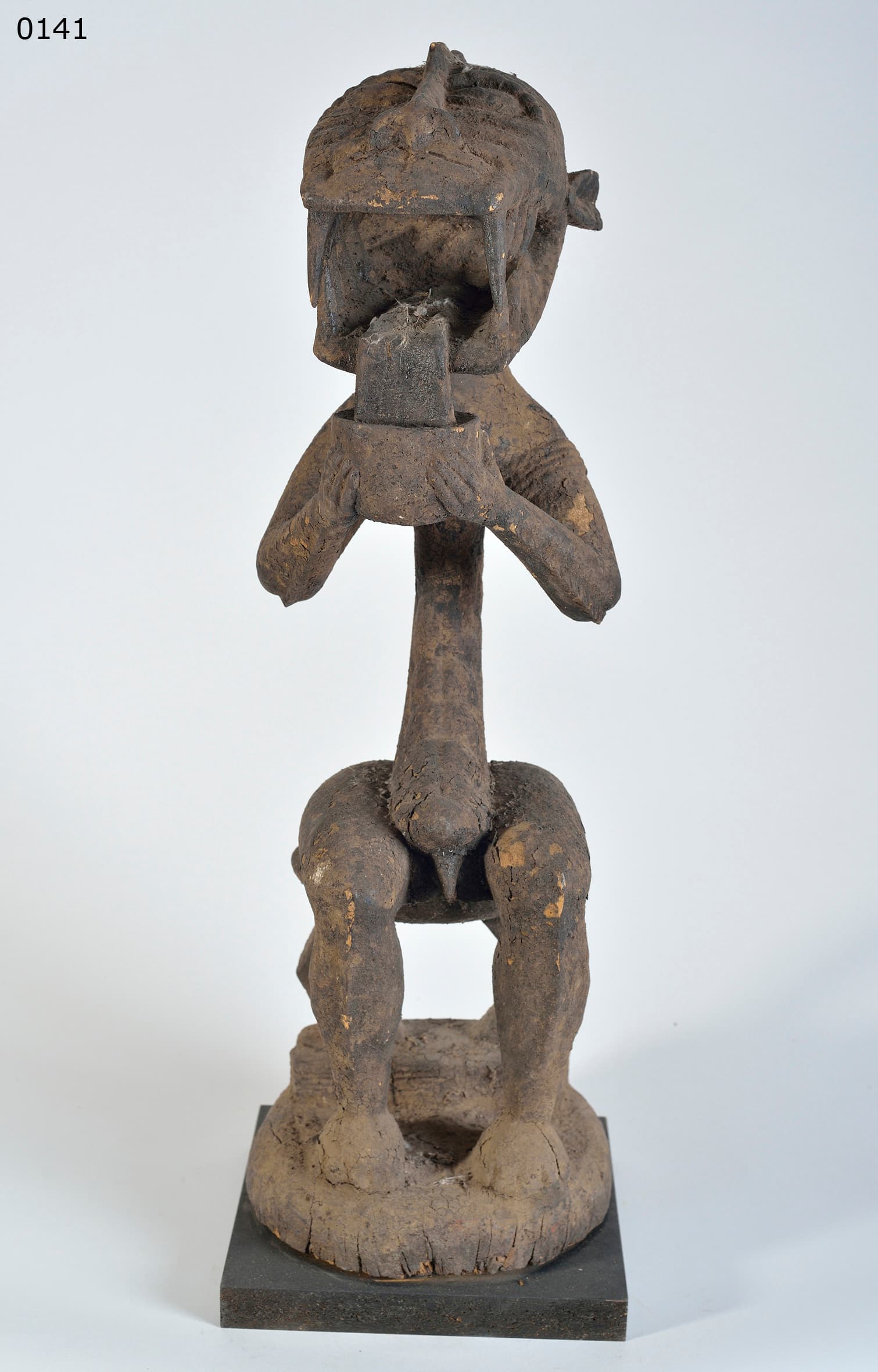
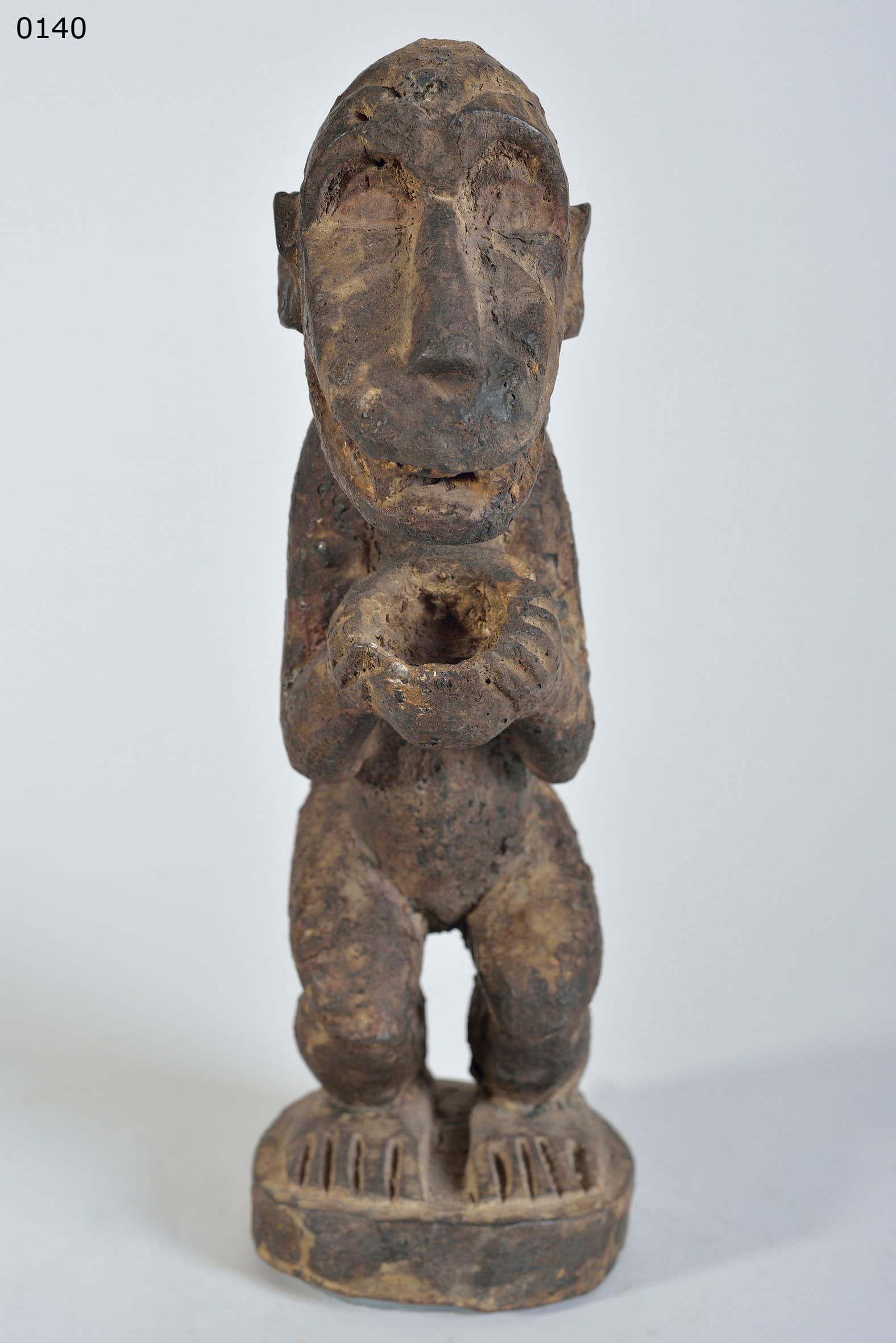
This aggressive 58 cm wooden figure depicts a standing, stylized baboon or monkey with bent knees, holding a small offering cup or bowl before its torso. The creature features a prominent, jutting snout with bared teeth, and its surface is entirely caked in a thick, dry, and highly textured sacrificial crust.
1. Aesthetic style — the subversion of Baule elegance
The Baule are celebrated for their incredibly smooth, polished, and serene human statuary. However, when dealing with the unpredictable, dangerous forces of the untamed bush, they deliberately subvert this aesthetic. This figure — known as Mbotumbo or Gbekre — represents a powerful baboon deity. The carver utilized rough, aggressive, and jagged geometry. The bared teeth, the forward-leaning, athletic posture, and the jutting, dog-like snout project an aura of raw, feral violence, perfectly visualizing an untamed wilderness spirit brought into the village to do battle.
2. Ritual function — trance divination and the amwin
This monkey figure is an amwin, a terrifying power object used by specialized male trance diviners. It is not an ancestor, but a volatile nature spirit enlisted to fight malevolent witchcraft, identify thieves, or protect the village from epidemics. The cup held prominently in its hands is a functional receptacle. During highly charged, chaotic nighttime rituals, the diviner would pour fresh blood, cracked eggs, and chewed kola nuts directly into the cup and over the head of the beast, "feeding" the amwin to unleash its lethal, protective energy.
3. Physical patina — the sacrificial "power crust"
The ritual significance of an amwin is closely tied to its surface, and this figure features a substantial "power crust." It is encased in a thick, dry, multi-layered accumulation of coagulated blood, eggshell, millet, and sacrificial matter. This crust is highly irregular, flaking in areas to reveal aged, darkened wood beneath. The complete lack of decorative polish suggests that this object was considered too dangerous and too sacred to be cleaned, surviving as an instrument of early 20th-century Baule ritual.
Summary
A deliberate subversion of Baule elegance, this aggressive Mbotumbo monkey figure served as a powerful counter to witchcraft. Its thick, dry sacrificial crust is consistent with an active, deeply fed amwin from the tradition of Ivorian trance divination.
Written with AI assistance from the collection appraisal, object photography and our own research; editorially reviewed. Mistakes are possible — corrections are welcome. How we work →

mask (collected in Abidjan)

mask (called GOLI)
simian statue (called MBOTUMBO or GBEKRE)