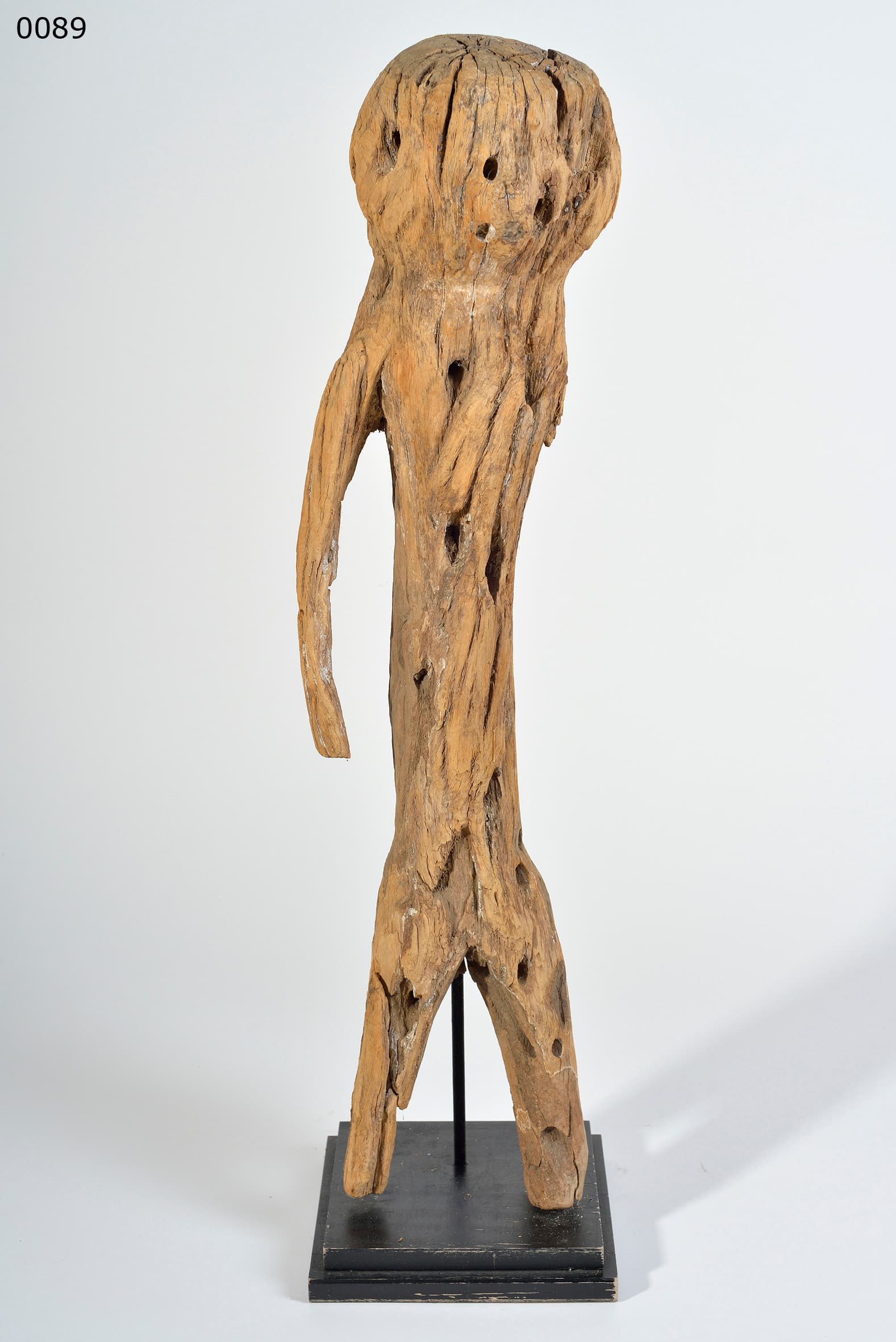
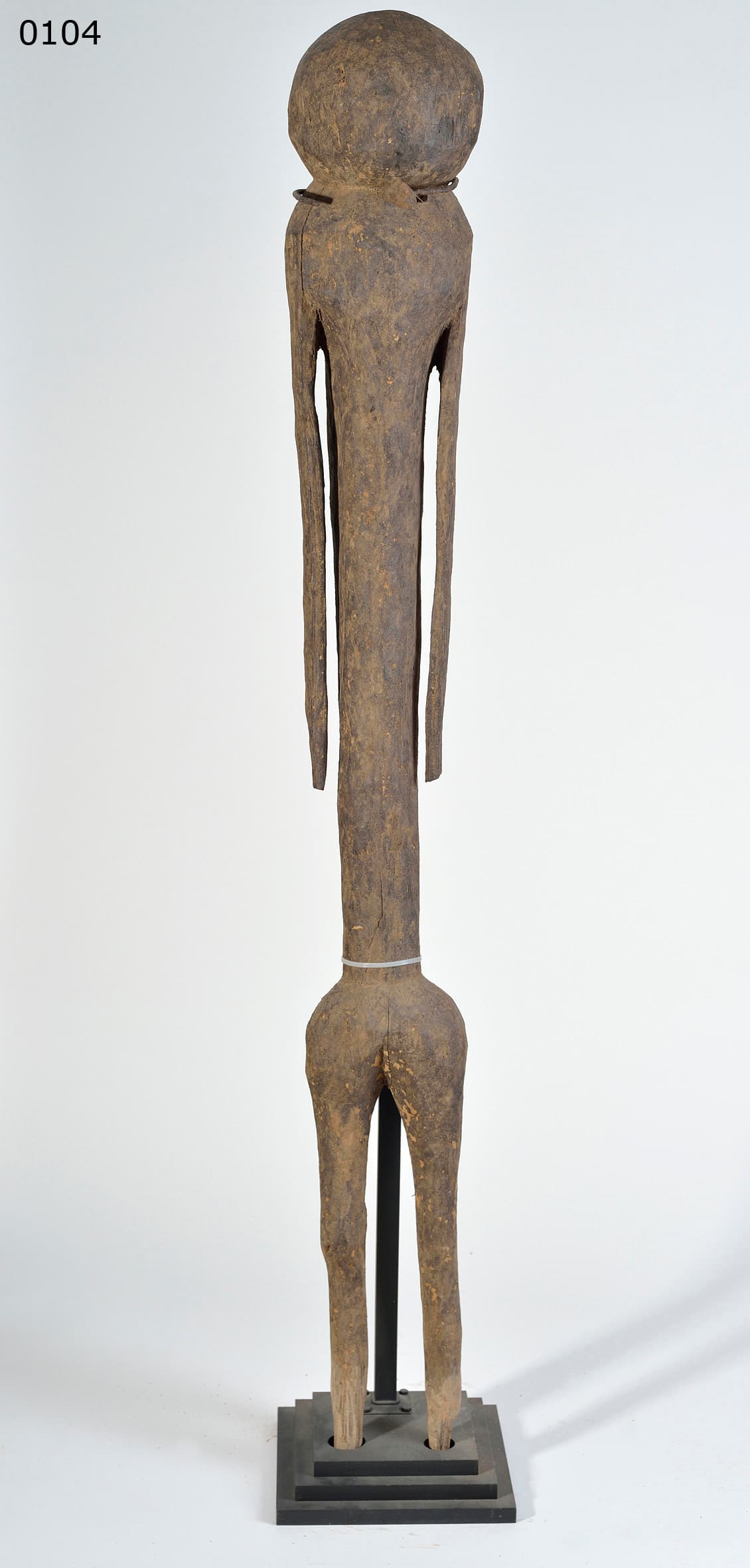
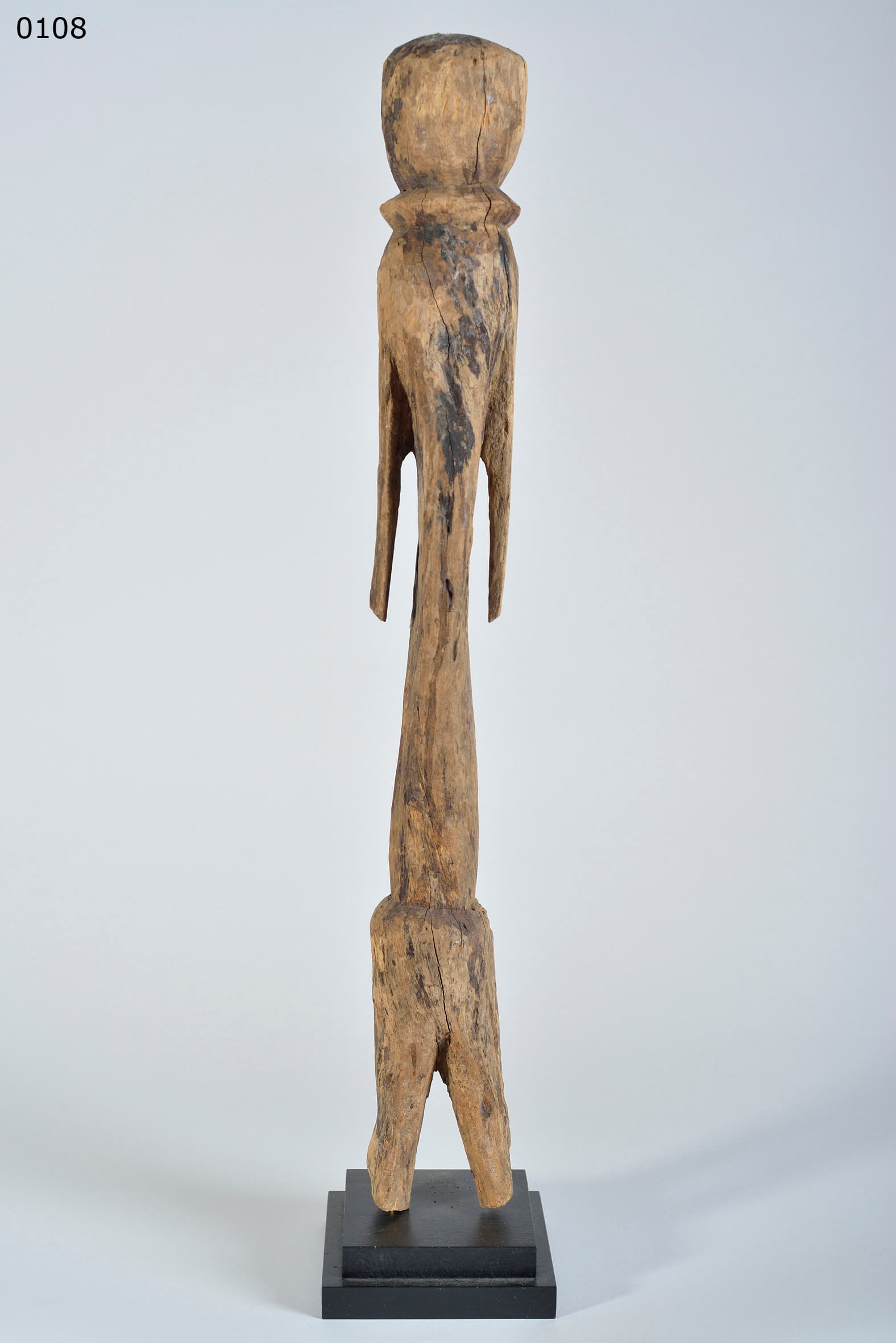
A tall slender Moba Tchitchiri post figure (attributed to the 19th century, 89 cm) from Togo — almost entirely concealed beneath heavy iron bindings, wrapped animal hide, and accumulated packets of magical materials, the featureless head topping a form completely entombed in a thick dark organic sacrificial crust, giving the object a highly imposing presence.
1. The tchitchiri and additive aesthetics
Traditional Moba wood carving is renowned for the Tchitchiri — a highly abstracted wooden figure reduced to a simple vertical pole with minimal indications of head and limbs.
- Transcending the Standard: This piece departs from standard Moba carving through its additive aesthetic.
- Weaponized Pole: The underlying wooden form has been modified and activated by the deliberate addition of iron rings, leather, and organic matter — transforming it from an ancestral marker into an active, highly charged ritual object.
2. Aggressive sorcery and spiritual containment
Associated with power figures for a sorcerer, this object functioned similarly to a Vodou bocio.
- Tied-Down Spirits: The heavy iron bindings are not decorative — they are spiritually functional, intended to "tie down" or trap malevolent spirits, or to contain the explosive magical energy generated by the sorcerer.
- Medicine Packets: The attached packets likely contain powerful medicines, graveyard dirt, or animal parts — used for extreme spiritual warfare, defense against curses, or to project aggressive magic against the community's enemies.
3. Entombed patination consistent with 19th-century age
The surface shows wear consistent with long-term ritual use.
- Preserved Organics: Attributed to the 19th century, the original wood and iron are unified under a heavy hardened layer of sacrificial blood, millet beer, and earth — the organic bindings have hardened into a resinous crust.
- Generations of Shrine Use: Deep stable rust on the exposed iron combined with the hardened organics suggests generations of continuous active use in a smoky shrine environment.
Summary
This Moba sorcerer's figure is a notable example of West African additive magic. Its heavy iron bindings and thick sacrificial crust suggest significant age and anthropological interest.
Written with AI assistance from the collection appraisal, object photography and our own research; editorially reviewed. Mistakes are possible — corrections are welcome. How we work →