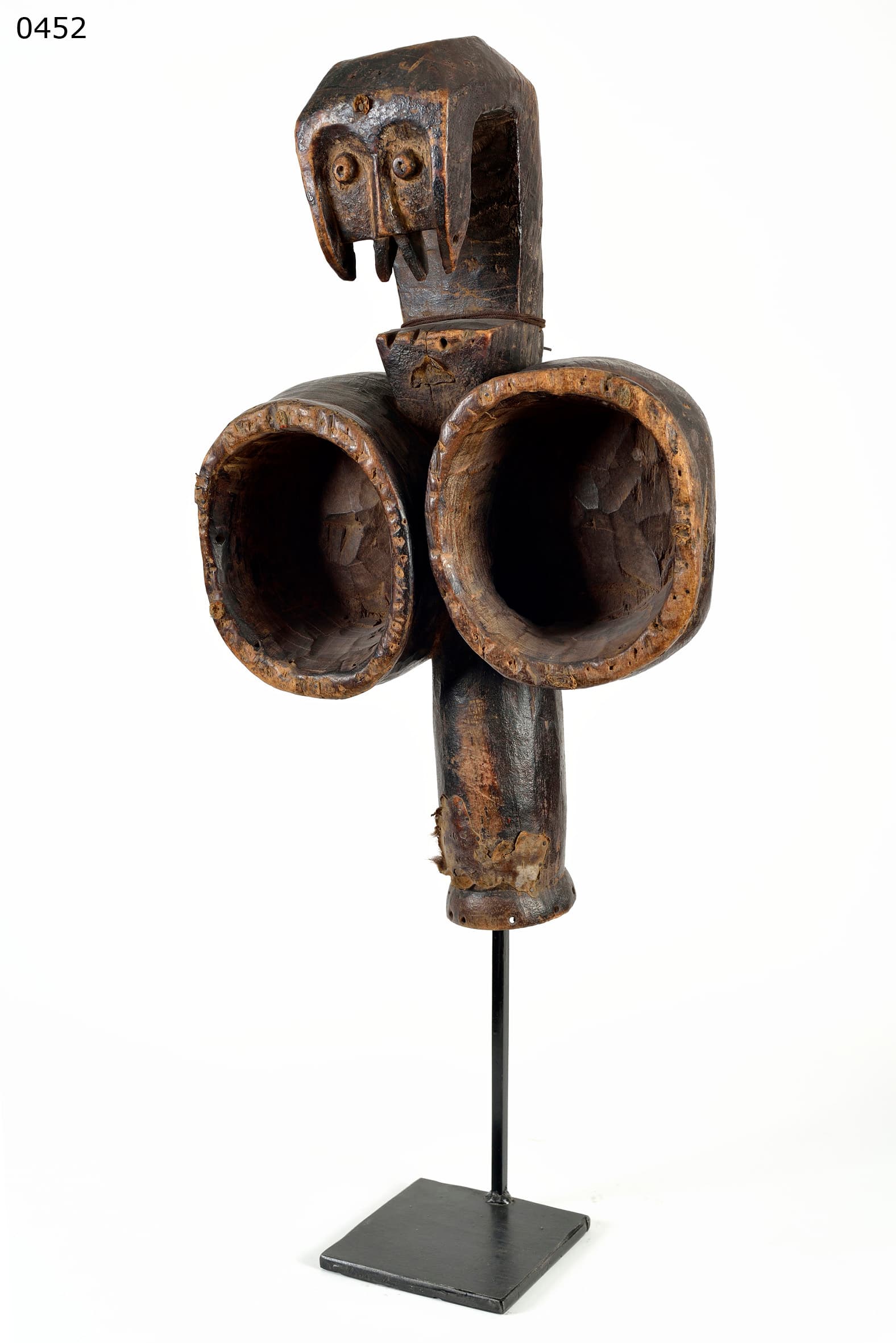
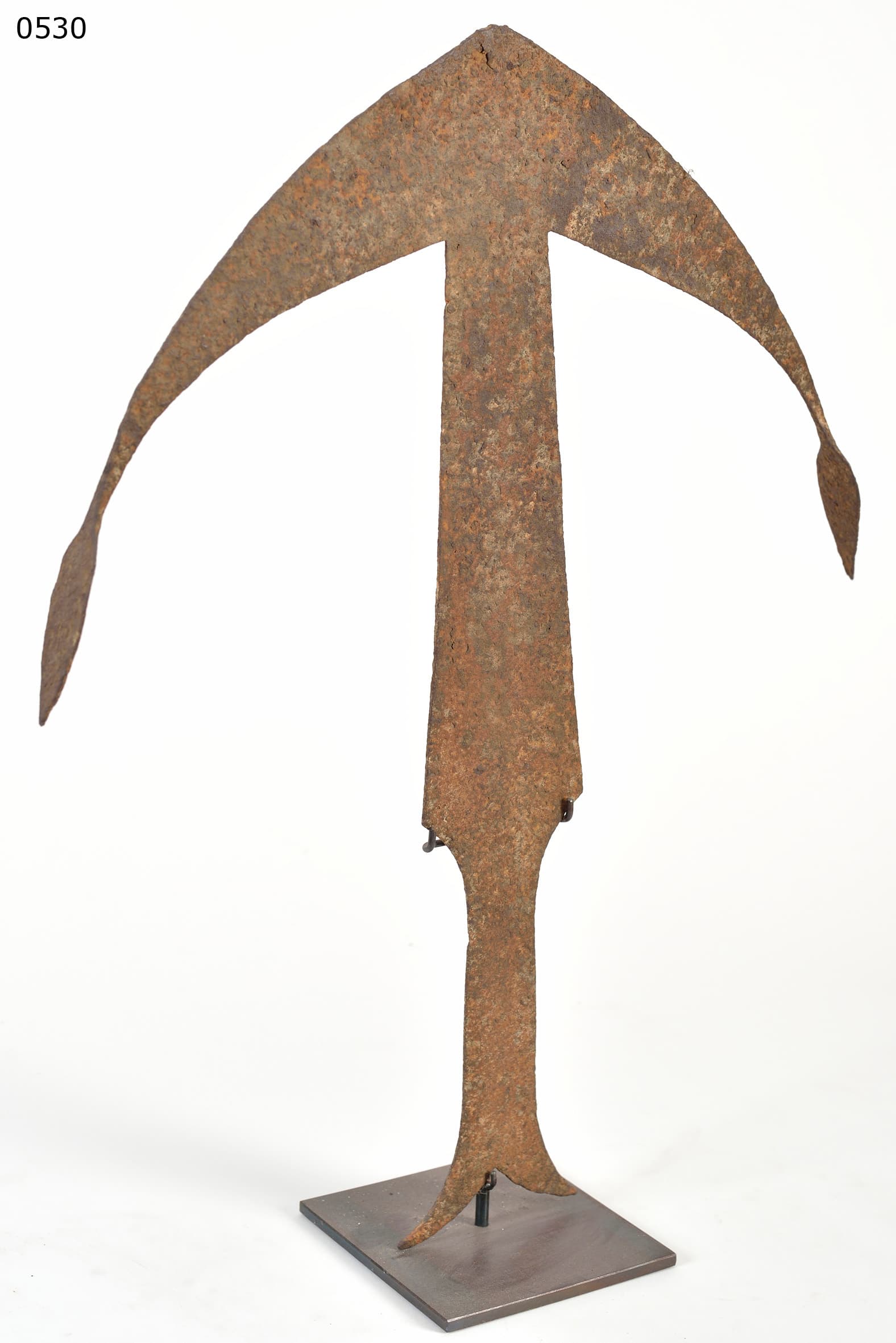
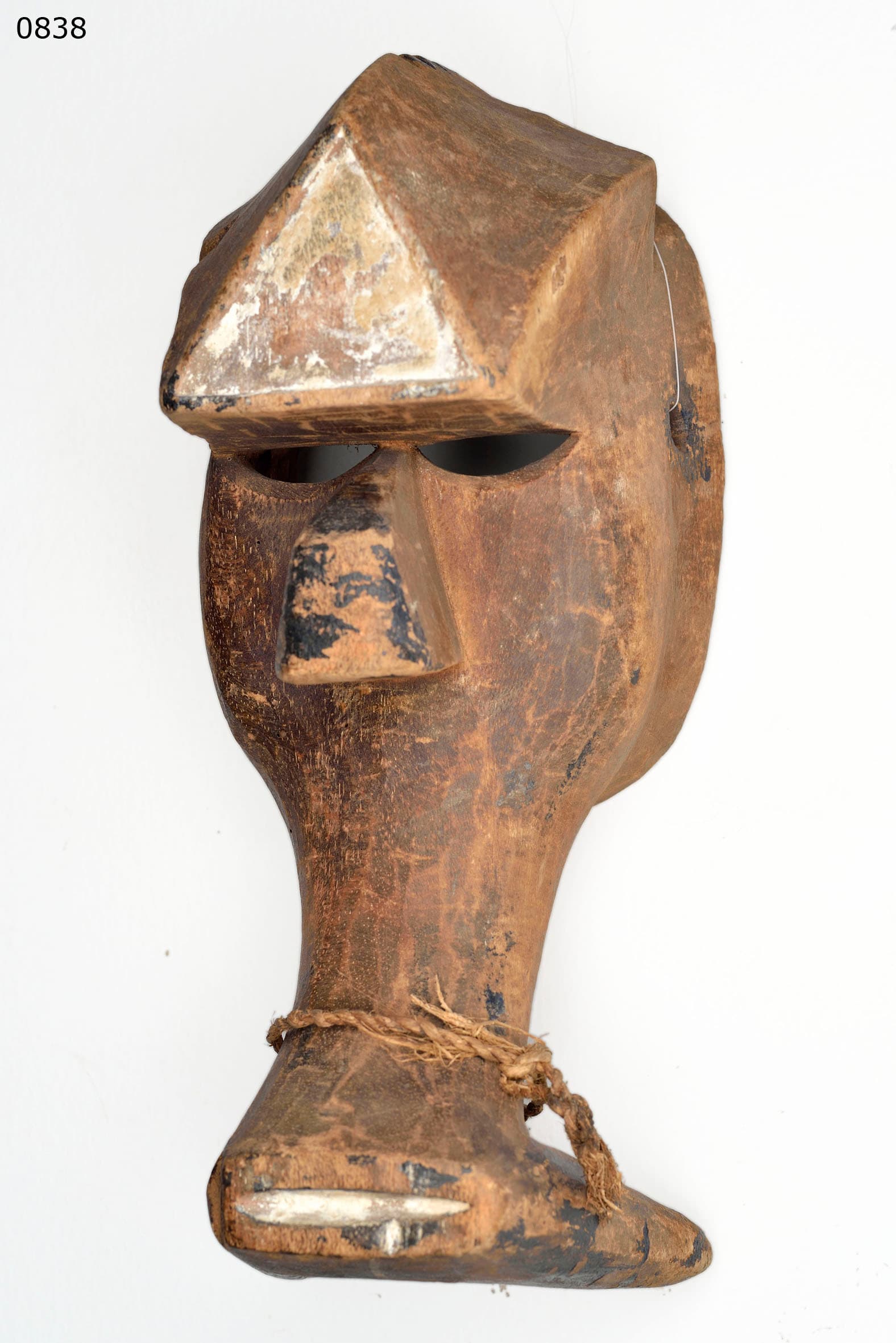
This 26 cm cylindrical wooden object is carved in deep relief on multiple sides with the classic, heart-shaped Kwele faces, featuring narrow slit eyes and sweeping horns or framing curves. The faces are colored with white kaolin clay, contrasting against the dark, aged wood of the cylinder.
1. Aesthetic style — Bwete aesthetics and cylindrical translation
The Kwele people of Gabon are famous for their elegant, flat, heart-shaped ekuk masks. This object is highly unusual because it translates that iconic two-dimensional mask aesthetic onto a three-dimensional, functional cylinder (likely a specialized altar seat, drum, or reliquary base). The carver executed multiple concave, heart-shaped faces around the perimeter. The sweeping, horn-like curves that frame the faces maintain the delicate, ethereal geometry that makes Kwele art so instantly recognizable.
2. Ritual function — the Bwete cult and the ekuk spirits
Kwele art is closely associated with the Bwete cult, an association designed to combat witchcraft and maintain social harmony. The serene, white-faced ekuk (forest spirits) are considered benevolent entities associated with light, clarity, and peace. A cylindrical object of this nature, surrounded by the watchful, all-seeing faces of the ekuk, would have served as a highly charged, sacred focal point within the Bwete shrine. It physically anchored the peaceful, cleansing energy of the forest spirits in the center of the village during crisis rituals.
3. Physical patina — deep wood fissures and kaolin maturation
An early 20th-century dating is consistent with the profound aging of the heavy wooden cylinder. Massive, natural desiccation cracks run vertically through the dense log, and the rim shows irregular wear and softening. The white kaolin clay filling the concave faces is not a fresh, chalky paint; it is deeply embedded into the porous grain of the old wood, displaying a muted, yellowish-white patina from decades of smoke exposure, atmospheric humidity, and handling within a dark Gabonese sanctuary.
Summary
Translating the serene, heart-shaped ekuk mask into a three-dimensional functional cylinder, this Kwele altar piece is a rare example associated with the Bwete cult. Its massive desiccation cracks and deeply embedded, smoke-stained kaolin patina support an attribution to the early 20th century.
Written with AI assistance from the collection appraisal, object photography and our own research; editorially reviewed. Mistakes are possible — corrections are welcome. How we work →