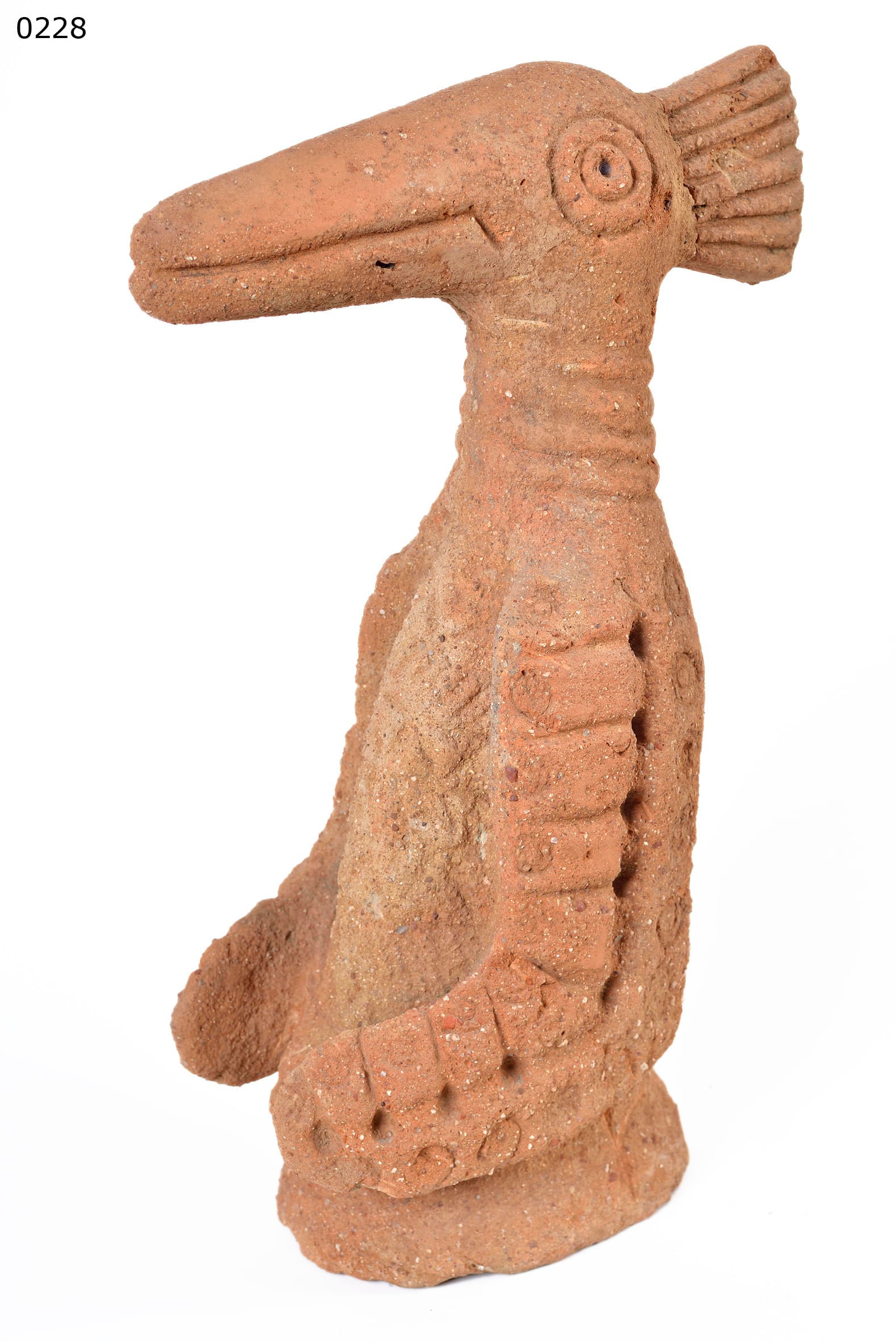
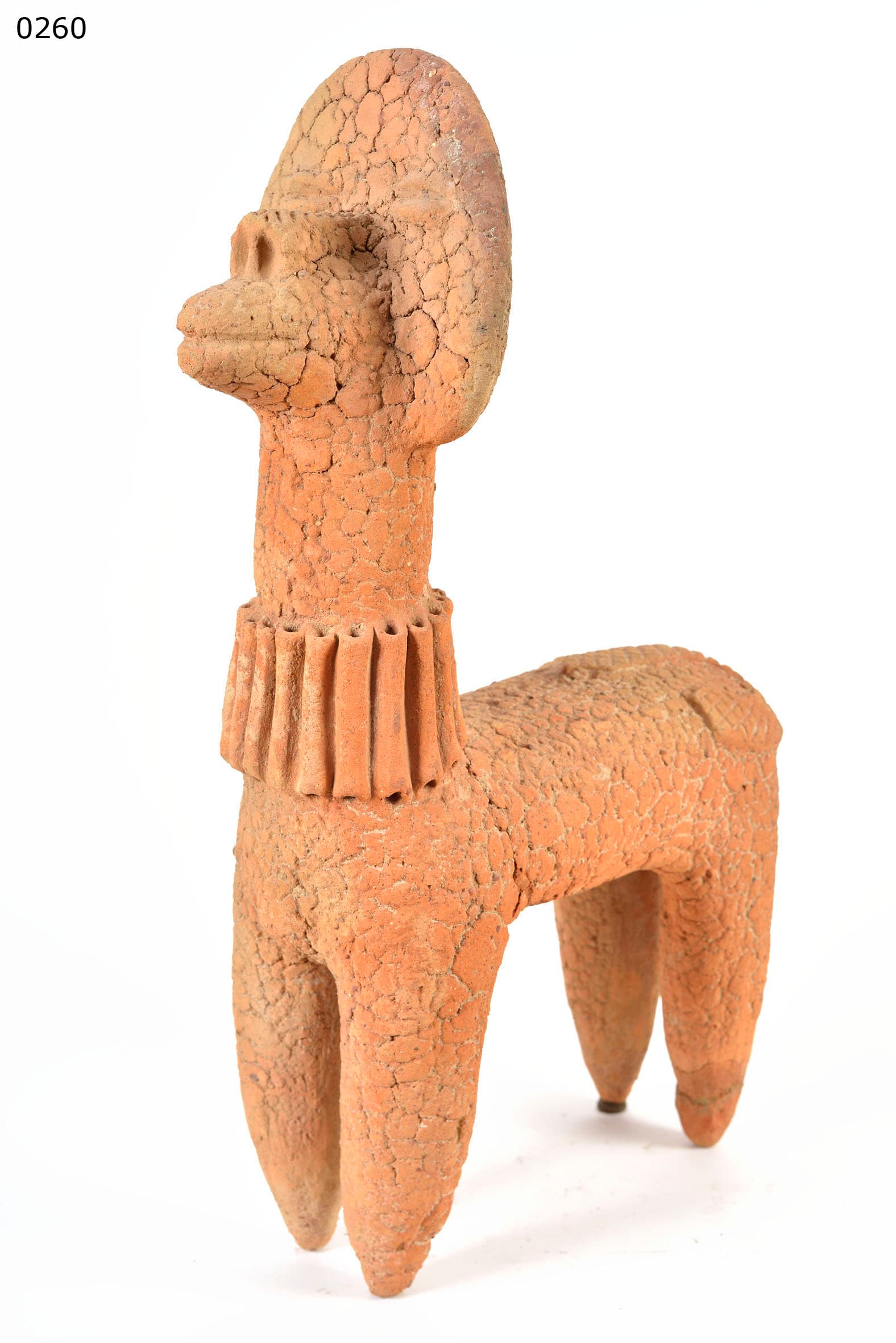
Among the most poignant of the Djenne-Djenno terracotta corpus, this small 14-centimetre figure depicts a body distorted by physical illness or congenital deformity — a type documented in the archaeological literature as ritual objects linked to healing ceremonies. The seated posture, with limbs in abnormal positions, communicates suffering with direct, unsentimental force. Used in specialist healing rituals presided over by sacrificial priests, such figures served as surrogates for afflicted patients, absorbing illness into clay.
1. Aesthetic style — raw pathos
The DJENNE deformed figure abandons the heroic proportions of elite ancestor sculpture in favour of raw documentary realism. Limbs are skewed, joints enlarged, and the torso compressed — an accurate representation of swelling, contortion, or wasting disease. Despite the disturbing subject, the modelling retains skill: subtle fingertip presswork articulates the distorted anatomy, and the face, though anguished, preserves individual character. The small format and unpolished surface reinforce the object's practical rather than display function.
2. Ritual function — healing surrogate
Healing figures of this type occupied a distinct niche in the Djenne ritual economy. A specialist healer would commission or invoke such a figure on behalf of an afflicted patient; prayers, sacrificial blood, and medicated pastes were applied to the clay body, which then absorbed the illness as a sympathetic surrogate. After the ritual was completed — successfully or not — the figure was deposited in the earth, completing the cycle of transference. The terracotta medium was deliberately chosen: clay, drawn from the riverbed and returned to it, embodied the cycle of dissolution and regeneration.
3. Physical patina — ochre-rich burial matrix
The figure's surface is coated with a compact ochre and grey deposit typical of Inland Niger Delta archaeological contexts. Residues of organic matter — consistent with applied sacrificial paste — are detectable in recessed areas of the modelled surface. The compact earth crust sealing the figure's hollow interior confirms genuine burial, as opposed to surface exposure. This combination of encrustation typology and organic residue aligns with authenticated Djenne-Djenno terracottas recovered from the 12th-16th-century occupation layers of the Mopti region.
Summary
This small DJENNE healing figure, 12th to 16th century, is a visceral artefact of ritual medicine in the ancient Niger Delta city-states. Its deformed anatomy served as a sympathetic surrogate in ceremonies designed to transfer illness from patient to clay — a practice documented across the Djenne corpus. The dense ochre burial matrix confirms genuine archaeological provenance.
Written with AI assistance from the collection appraisal, object photography and our own research; editorially reviewed. Mistakes are possible — corrections are welcome. How we work →