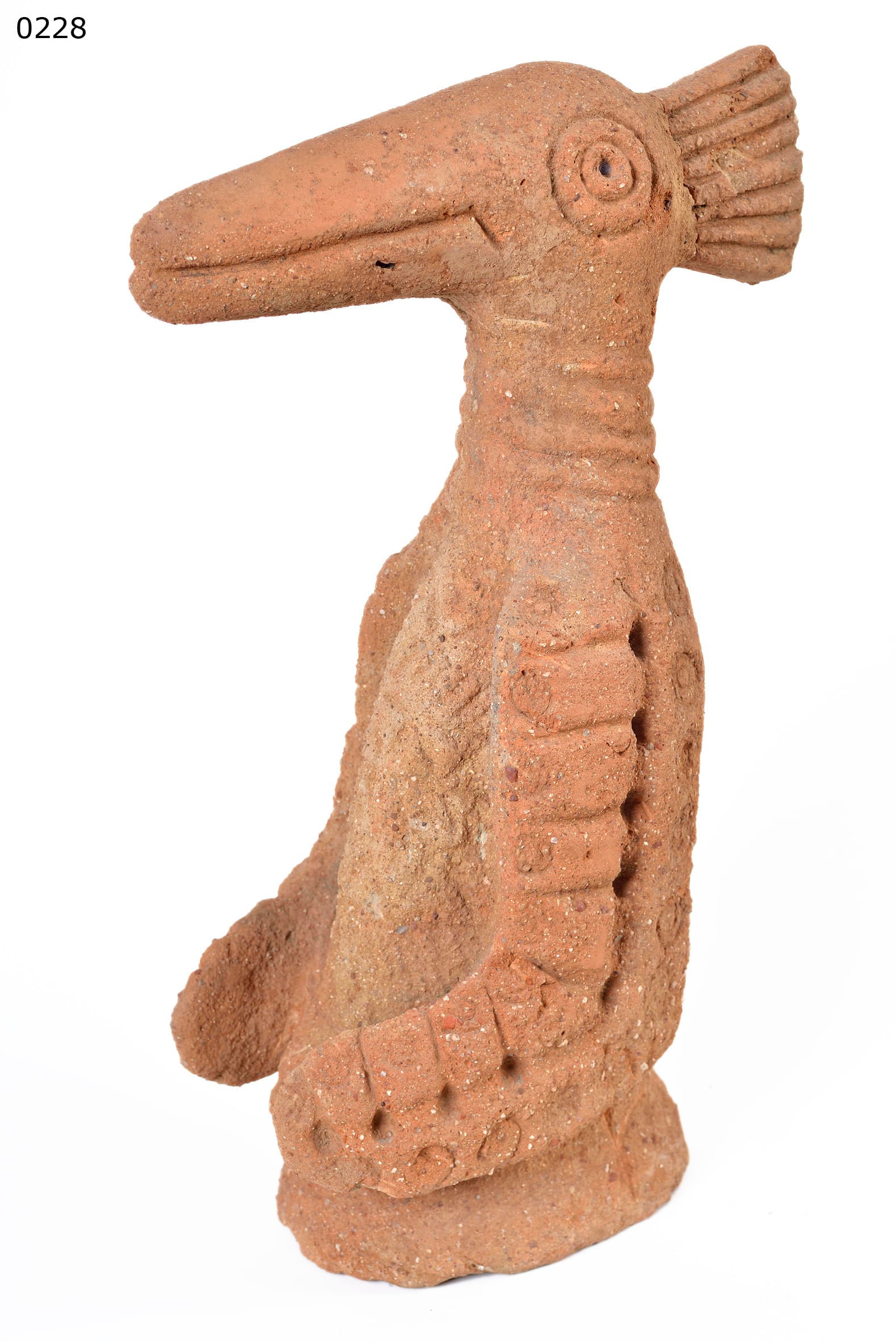
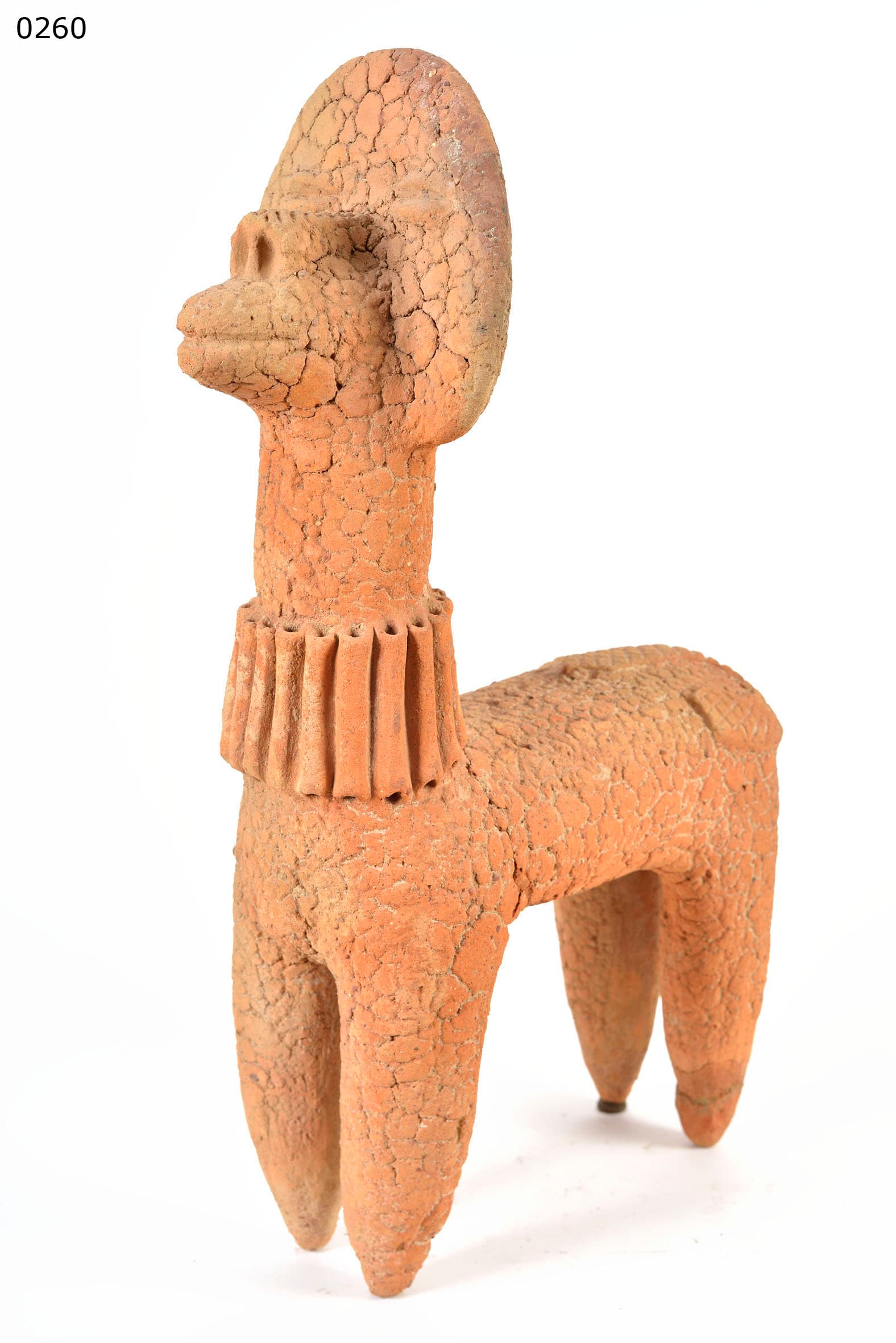
At 36 centimetres this DJENNE maternity figure is among the larger surviving terracottas from the Inland Niger Delta tradition. The seated mother holds — or supports — an infant, the classic gesture of protection and nourishment that recurs across the Djenne corpus. Elaborate surface ornament — raised scarification patterns, beaded necklaces, and a coiled serpent at the mother's back — identifies the figure as a person of ritual importance, possibly a priestess or a deified ancestral mother invoked in fertility and childbirth ceremonies.
1. Aesthetic style — opulent embellishment
The DJENNE maternity figure is a showcase of the terracotta tradition's decorative ambition. Every surface is activated: the body is covered with applied pellets and incised lines simulating scarification and jewellery; the coiffure is built up in ridges and discs; a serpent wraps the torso, its scales rendered individually. The mother's face combines frontal gravity with a slight downward gaze toward the infant — an intimate tenderness encoded within the formal stylisation of the Inland Niger Delta aesthetic.
2. Ritual function — fertility and ancestral protection
Maternity figures in the Djenne corpus are associated with fertility cults, safe childbirth, and the protection of infants in their dangerous first months of life. This figure's scale and elaborate decoration suggest shrine rather than personal use: placed at a communal altar or riverine deposit site, it would receive offerings from families seeking the ancestral mother's intercession. The serpent attribute identifies the figure with chthonic power and the earth's fertility, linking the human act of childbearing to cosmic regeneration.
3. Physical patina — stratified mineral crust
The figure's warm terracotta body is overlaid with a stratified deposit of grey-ochre mineral crust, heavier on the base and lower torso where ground moisture concentrated during burial. The applied decorative elements — pellets, coils — retain their attachment, suggesting the figure was fired at sufficient temperature to vitrify the clay bonds before deposition. Minor root-penetration channels are visible on the rear face, confirming multi-century soil burial. These surface characteristics are consistent with authenticated terracottas from the Djenne-Djenno archaeological zone.
Summary
This 36-centimetre DJENNE maternity figure, 12th to 16th century, is a tour de force of ancient Malian terracotta sculpture. Its opulent surface ornament, serpent attribute, and nursing gesture situate it within the fertility and ancestral veneration complex of the Inland Niger Delta. Scale and decoration suggest shrine use rather than personal commission.
Written with AI assistance from the collection appraisal, object photography and our own research; editorially reviewed. Mistakes are possible — corrections are welcome. How we work →