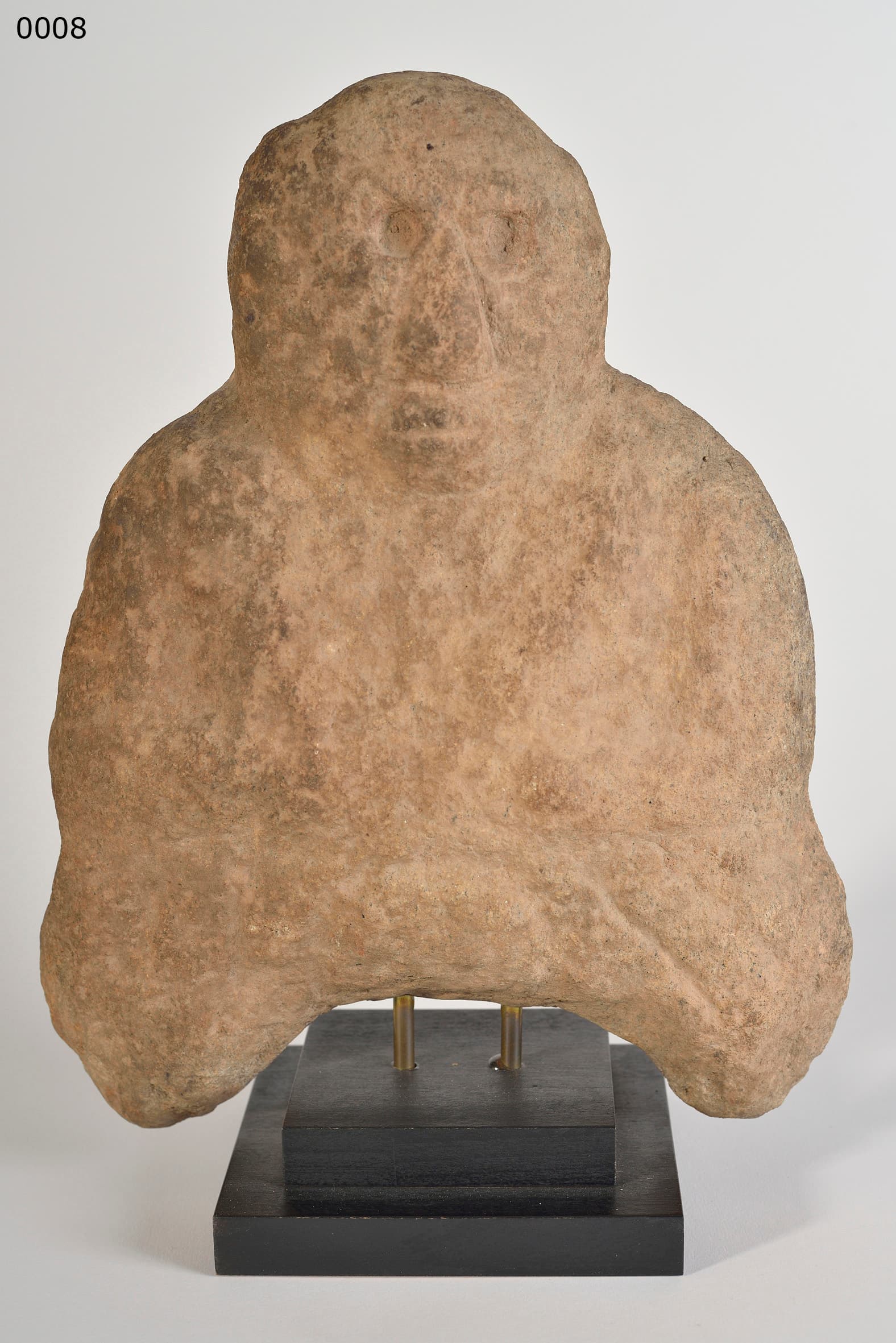
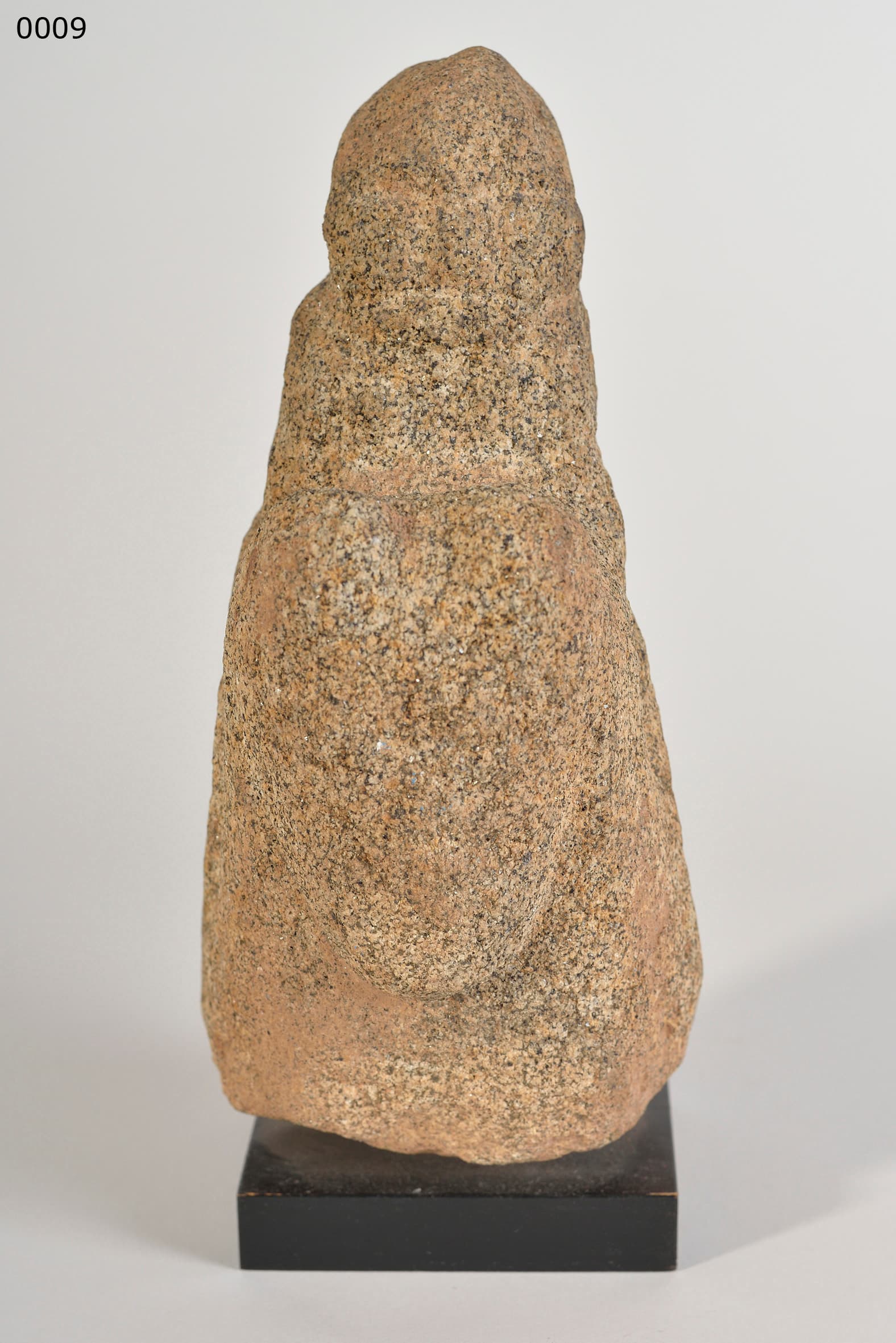
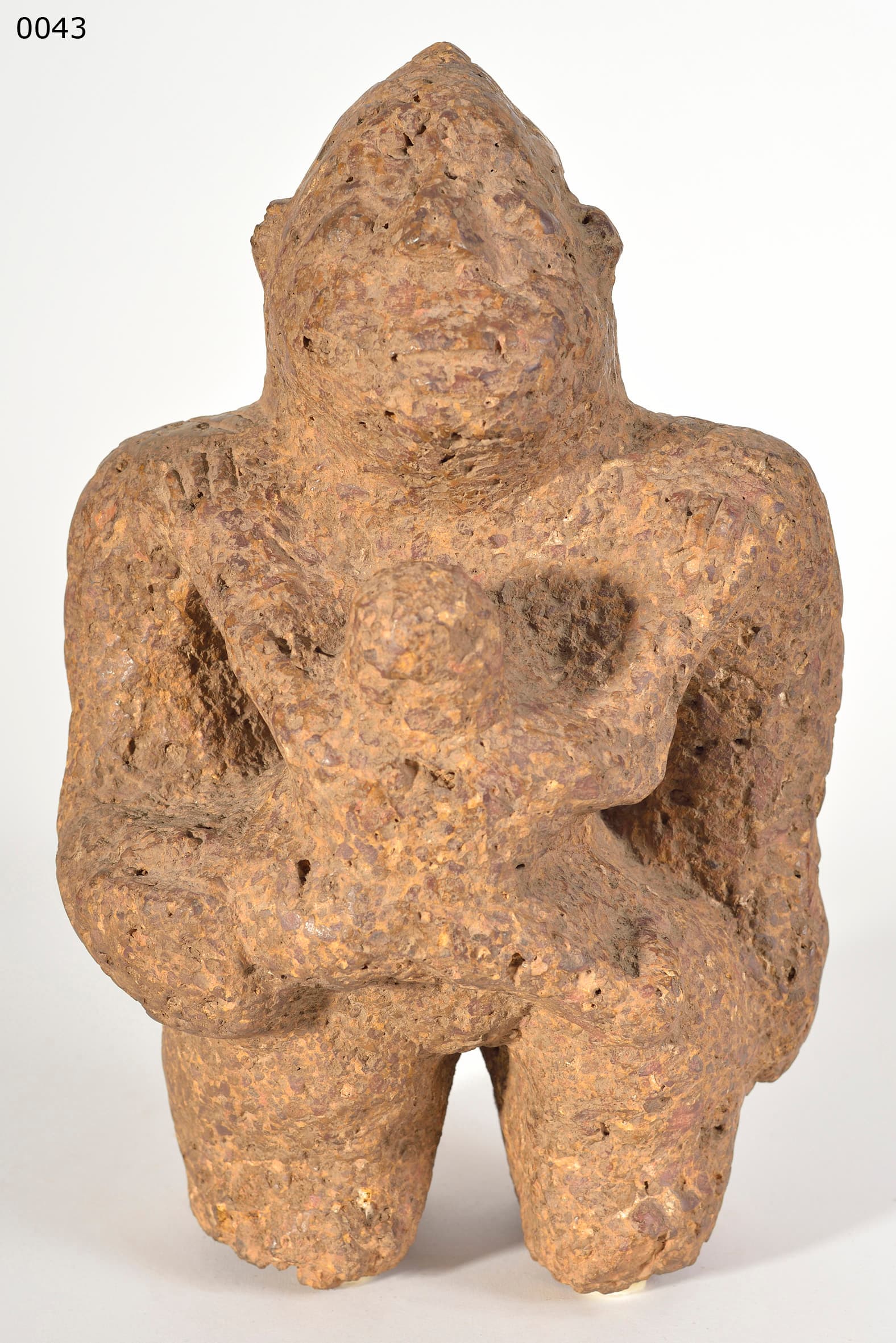
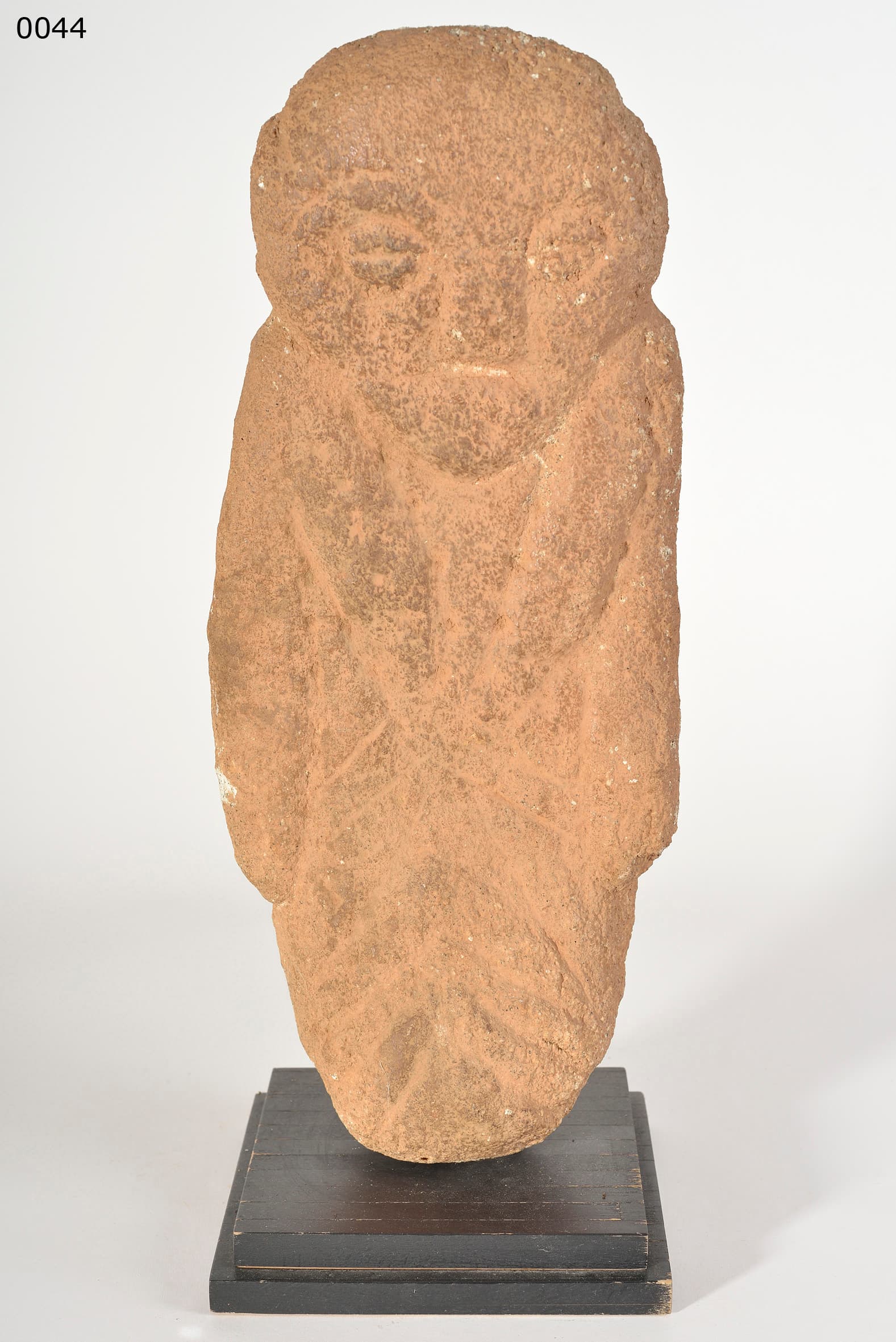
The Nyonyosi, an ancient Voltaic-speaking population of central Burkina Faso, produced a body of carved stone funerary figures that remain among the least-studied monuments of sub-Saharan African sculpture. This 22-centimetre stone figure, schematised in the Nyonyosi manner with a columnar body, vestigial limb indication, and a simplified head atop a long neck, was deposited in a tomb as a permanent representative of the deceased. Stone was chosen for its resistance to decay — a deliberate statement of ancestral permanence in the face of biological dissolution.
1. Aesthetic style — columnar reduction
The NYONYOSI tomb figure reduces the human body to its essential vertical axis: a column that rises from a base, narrows to a neck, and terminates in a rounded or slightly defined head. The limbs, if present, are rendered as lateral protrusions that do not interrupt the columnar logic. This radical simplification aligns the figure with geological forms — stalagmites, standing stones — reinforcing its role as a permanent marker in the landscape of the dead. The 22-centimetre scale is consistent with individual tomb deposit rather than communal shrine display.
2. Ritual function — permanent grave presence
In Nyonyosi funerary practice, stone figures were placed within the tomb chamber itself, accompanying the body through its long residence in the earth. Unlike perishable wooden effigies, stone ensured that the deceased's presence persisted across generations. Family members might periodically address the tomb to make offerings, and the stone figure served as the spiritual anchor ensuring the ancestor's benevolent engagement with the living. The figure's columnar verticality echoes the standing presence of a person — even in death, the ancestor remains upright.
3. Physical patina — iron-rich laterite skin
The stone — likely a fine-grained laterite or ferruginous sandstone common in central Burkina Faso — has developed a deep reddish-brown surface weathering layer through centuries of tomb burial. This iron-rich skin, formed by the oxidation of minerals within the stone matrix, is consistent with genuine long-term interment. The base shows compaction and smoothing where the figure sat on a stone or earth surface for extended periods. A thin dark deposit in the facial recess may represent ancient libation residue.
Summary
This NYONYOSI carved stone tomb figure, 22 centimetres and dating to the 12th-16th century, represents a rare survival from the poorly documented stone-sculpture tradition of central Burkina Faso. Its columnar reduction, iron-rich laterite patina, and tomb-deposit context make it a significant document of Voltaic funerary belief — permanent stone standing in for permanent ancestral presence.
Written with AI assistance from the collection appraisal, object photography and our own research; editorially reviewed. Mistakes are possible — corrections are welcome. How we work →