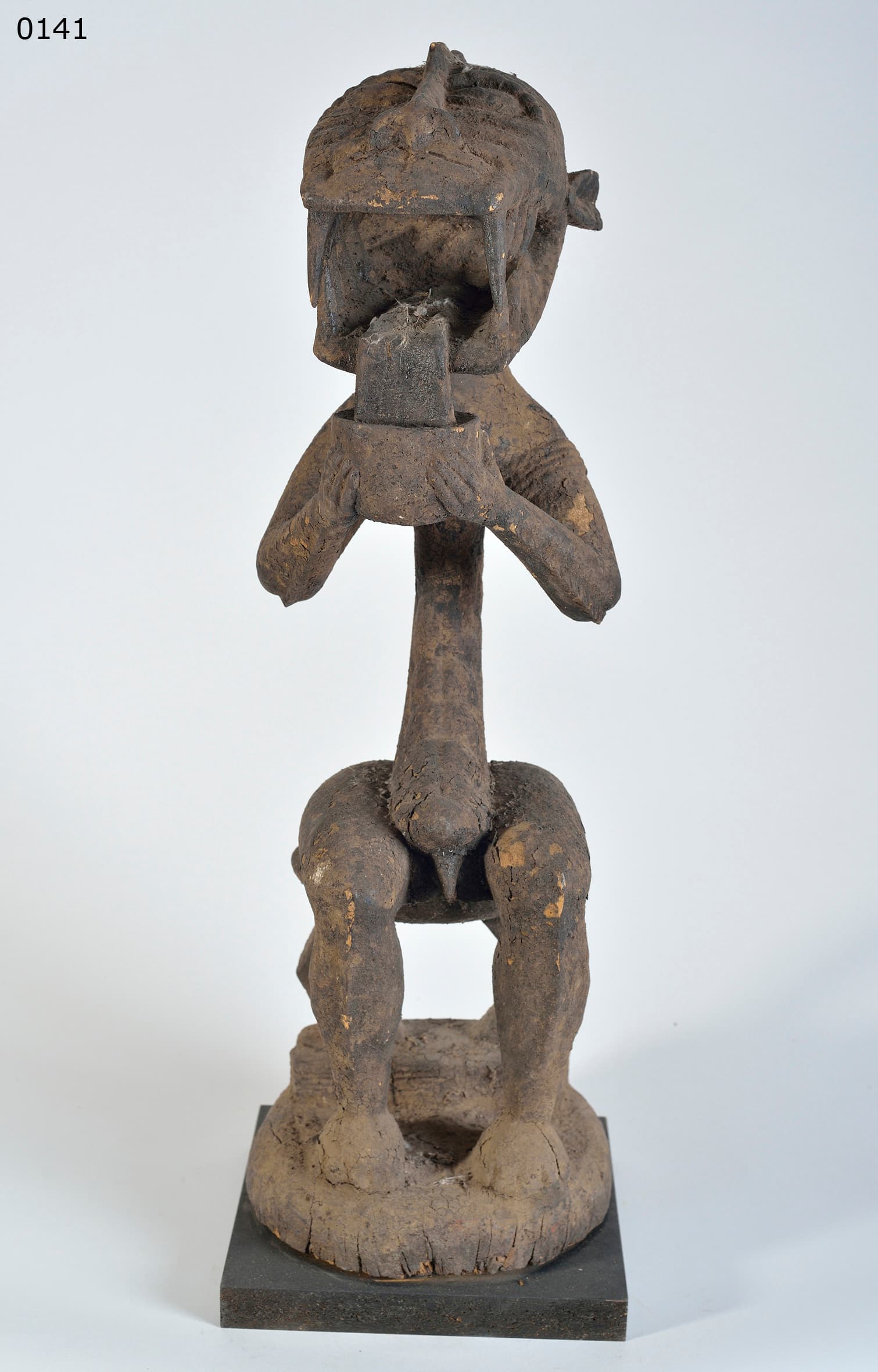
This highly weathered, roughly carved wooden figure features a simplified, blocky head and an ambiguous torso with hands carved in shallow relief against the belly. The wood is severely split down the center, featuring a heavily encrusted, matte, grey-brown patina.
1. Aesthetic style — the asiye usu wilderness aesthetic
This carving stands in stark contrast to the highly polished, refined beauty typically associated with Baoule blolo bian (spirit spouse) figures. Its crude, blocky, and unrefined geometry identifies it as an asiye usu — a representation of the dangerous, unpredictable nature spirits that inhabit the untamed wilderness beyond the village. The Baoule intentionally commissioned these figures to be ugly or terrifying; their rough execution is not a lack of skill, but a deliberate stylistic choice to accurately reflect the chaotic, uncultivated essence of the bush spirits they are meant to house.
2. Ritual function — divination and the containment of chaos
When a Baoule individual suffered sudden misfortune, crop failure, or illness, a diviner (komien) might determine that an asiye usu had been offended and followed them into the village. To appease the spirit, this crude statue was carved to give the entity a physical home. Once the spirit inhabited the wood, it could be pacified through continuous sacrifices. Kept outside or in dark, dedicated shrines, these figures were the focal points for intense, messy rituals designed to transform malevolent, chaotic energy into protective, localized power for the client.
3. Physical patina — extreme sacrificial taphonomy and fissuring
The physical state of this object is a profound record of its ritual life. Unlike figures polished with fine oils, this asiye usu is coated in a thick, dull crust of dried blood, eggshells, and chewed kola nuts, which has obscured the original chisel marks. The massive, vertical desiccation crack running through the torso is a hallmark of tropical hardwood that has been repeatedly saturated with wet sacrifices and then dried in the harsh Sahelian heat. This severe taphonomic breakdown is consistent with prolonged, active use in a divinatory context.
Summary
A raw, terrifying manifestation of untamed wilderness spirits, this Baoule asiye usu subverts traditional Ivorian aesthetics to project chaotic power. Its brutalist carving and extreme, crusty desiccation crack make it a compelling example of West African divinatory art.
Written with AI assistance from the collection appraisal, object photography and our own research; editorially reviewed. Mistakes are possible — corrections are welcome. How we work →

mask (collected in Abidjan)

mask (called GOLI)
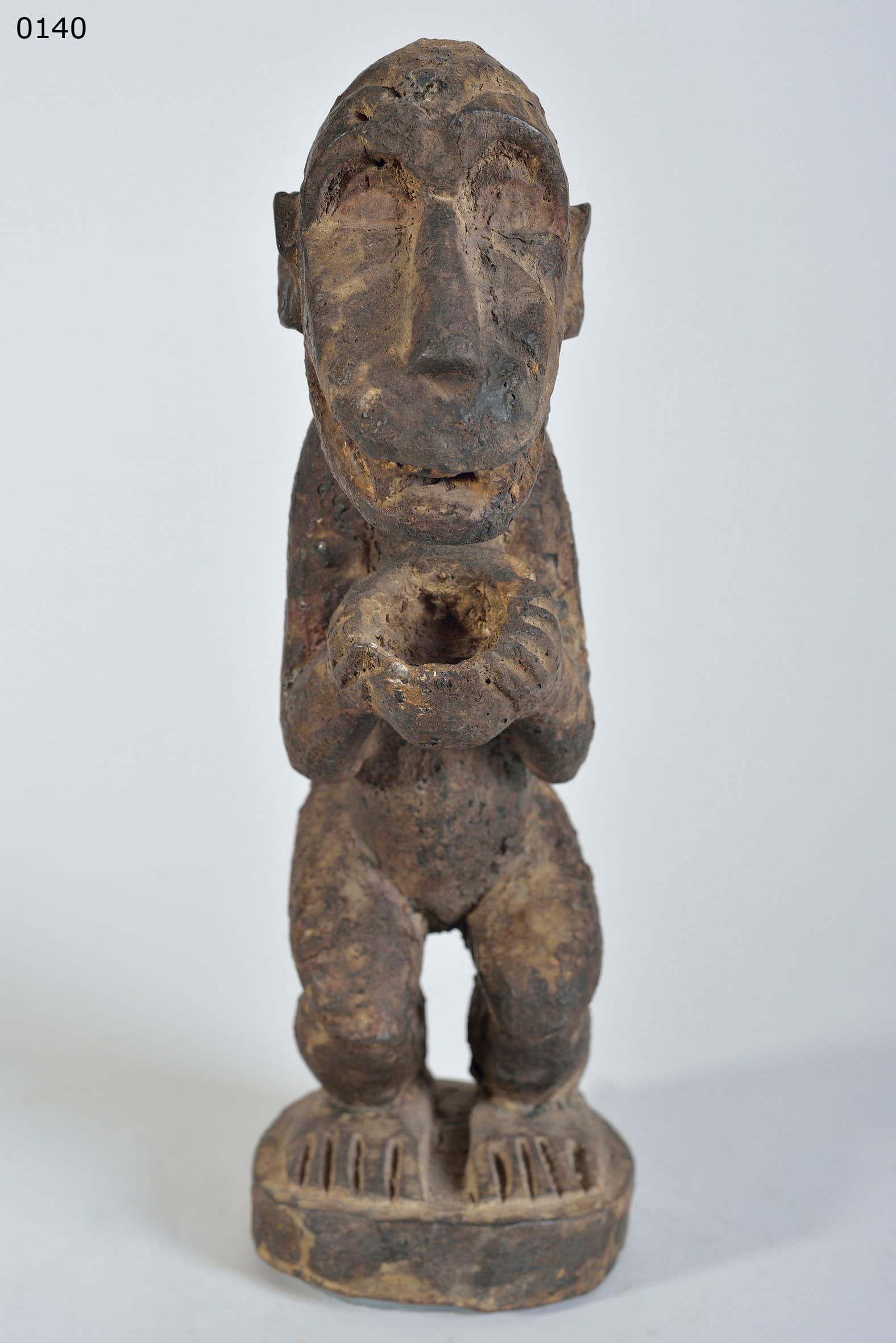
simian statue (called MBOTUMBO or GBEKRE)