This tall, brightly polychromed wooden statue depicts a male figure standing with his hands casually in his pockets, wearing painted blue shorts, a red-lined button-down shirt, and a wide-brimmed colonial sun helmet. The surface displays significant handling wear, with the paint naturally flaking and fading to reveal the aged wood beneath.
1. Aesthetic style — the genesis of the colon aesthetic
This piece is a notable example of "Colon" (colonial) art, a genre that emerged in West Africa during the early 20th century. The Baoule sculptor has adapted the strict, upright, and perfectly balanced posture of traditional canonical statuary to incorporate modern, European signifiers. The sun helmet, tailored shirt, and relaxed, hands-in-pockets stance are detailed carvings intended to represent wealth, bureaucratic authority, and the perceived power of the French colonial administrators, domesticating this foreign imagery into the local Baoule artistic vocabulary.
2. Ritual function — the evolution of the spirit spouse (blolo bian)
Despite its modern attire, the ritual function of this statue is identical to the most traditional Baoule carvings. It is a blolo bian (other-world husband). In Baoule belief, a woman experiencing worldly troubles might be told by a diviner that her spirit husband from the "other world" is jealous. In the 20th century, these spirits began demanding to be depicted not as traditional warriors or farmers, but as successful, modern men of the colonial era — clerks, officers, or merchants. The statue was kept in the woman's bedroom, fed, and spoken to in order to appease this demanding, modern spirit.
3. Physical patina — polychrome degradation and handling wear
The well-developed patina of this Colon figure is consistent with older examples rather than later tourist productions. The industrial enamels or localized natural pigments utilized for the blue trousers and the red shirt details have heavily oxidized, flaking along the grain of the wood. The highest points of contact — the brim of the helmet, the nose, and the knees — have been worn down to the smooth, polished hardwood matrix beneath, suggesting decades of intimate, personal handling and ritual care in a domestic Ivorian shrine.
Summary
This Baoule Colon figure is a sociologically rich synthesis of traditional animist belief and early 20th-century modernity. Its fusion of colonial iconography with a worn ritual patina suggests a significant ethnographic and historical work.
Written with AI assistance from the collection appraisal, object photography and our own research; editorially reviewed. Mistakes are possible — corrections are welcome. How we work →

mask (collected in Abidjan)

mask (called GOLI)
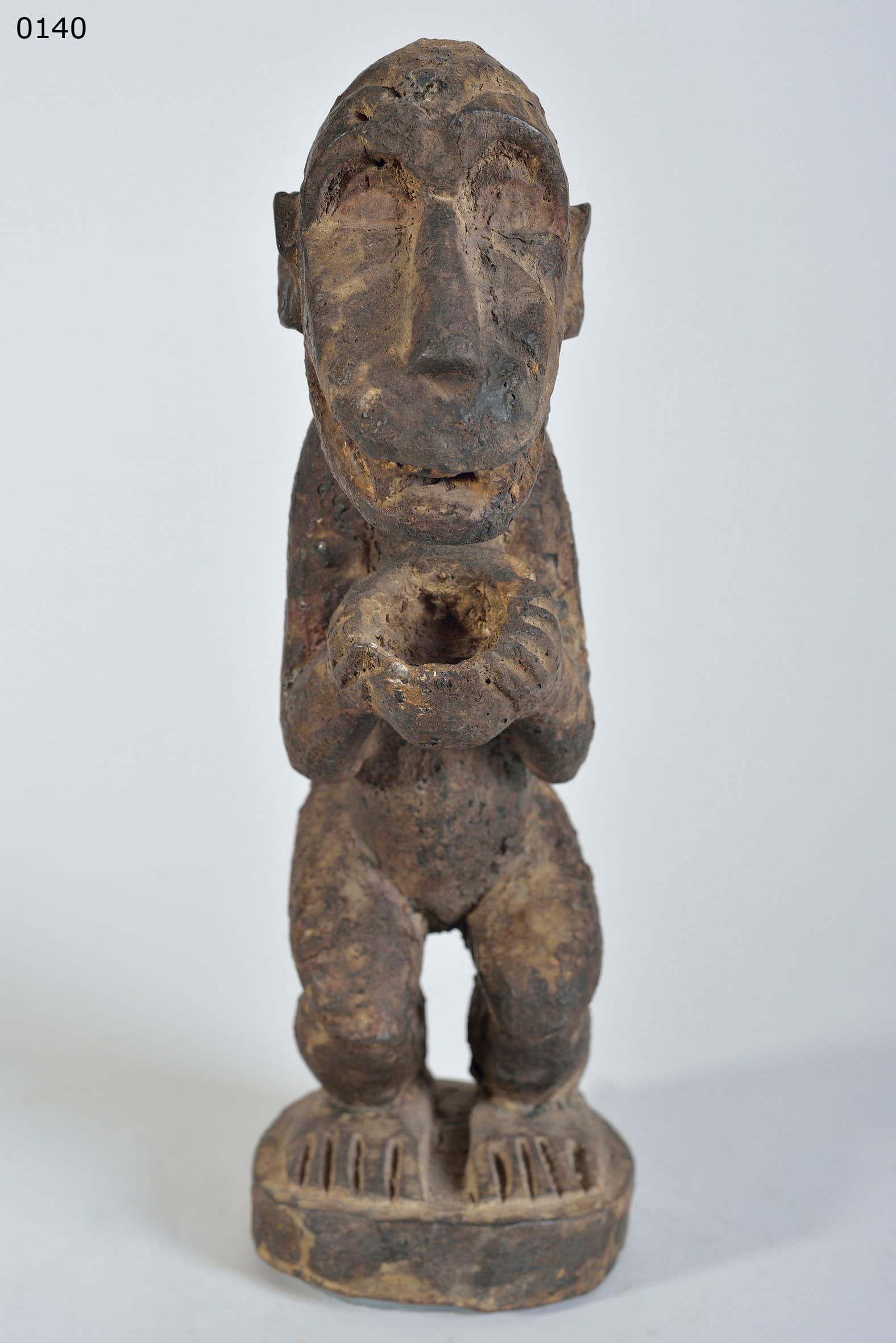
simian statue (called MBOTUMBO or GBEKRE)