This tall, expressively carved wooden figure stands with its legs slightly apart and both arms thrust dramatically upward in a high "V" formation. The dark, highly desiccated wood features deep vertical shrinkage cracks and a matte, ash-grey and brown weathered patina.
1. Aesthetic style — gestural expressionism of the Bateba ti bala
While most Lobi Bateba figures are carved in a rigid, passive stance, this piece is a distinctive example of a highly active, expressive sub-style known as Bateba ti bala (figures that block or fly). The dramatic, upward-sweeping arms break the canonical verticality of Burkinabe carving, creating a dynamic silhouette charged with kinetic energy. The Lobi sculptor has captured a moment of explosive spiritual action, utilizing the upward thrust of the arms to visually represent the figure actively defending the space above the shrine.
2. Ritual function — apotropaic magic and the thil spirits
In Lobi cosmology, the universe is filled with invisible, dangerous spirits, and human beings rely on the Thil (protective deities) for survival. The Bateba ti bala is the most aggressive physical agent of the Thil. The raised arms signify a spirit that is either flying through the night to intercept malevolent witches, or physically blocking a curse, disease, or disaster from descending upon the family compound. Placed in the dark thildu (shrine room), this statue was an active, terrifying guardian, constantly at war in the invisible realm on behalf of its human clients.
3. Physical patina — wood desiccation and shrine aging
The physical state of this Bateba is a profound record of both environmental and ritual history. The wood has undergone severe cellular desiccation, resulting in massive, organic longitudinal fissures that run through the torso and face. Despite this drying, the surface retains the deep, dark oxidation of decades spent in a smoky, windowless Lobi shrine. The high points of the carving are smoothed down, contrasting with the crusty, sacrificial residue in the deep cracks, consistent with a long, active life in early 20th-century animist rites.
Summary
A dramatic departure from traditional African stoicism, this active Lobi Bateba physically embodies the explosive power of apotropaic magic. Its soaring, expressive geometry and deeply fissured, smoke-darkened patina are consistent with a highly expressive example of this ethnographic tradition.
Written with AI assistance from the collection appraisal, object photography and our own research; editorially reviewed. Mistakes are possible — corrections are welcome. How we work →
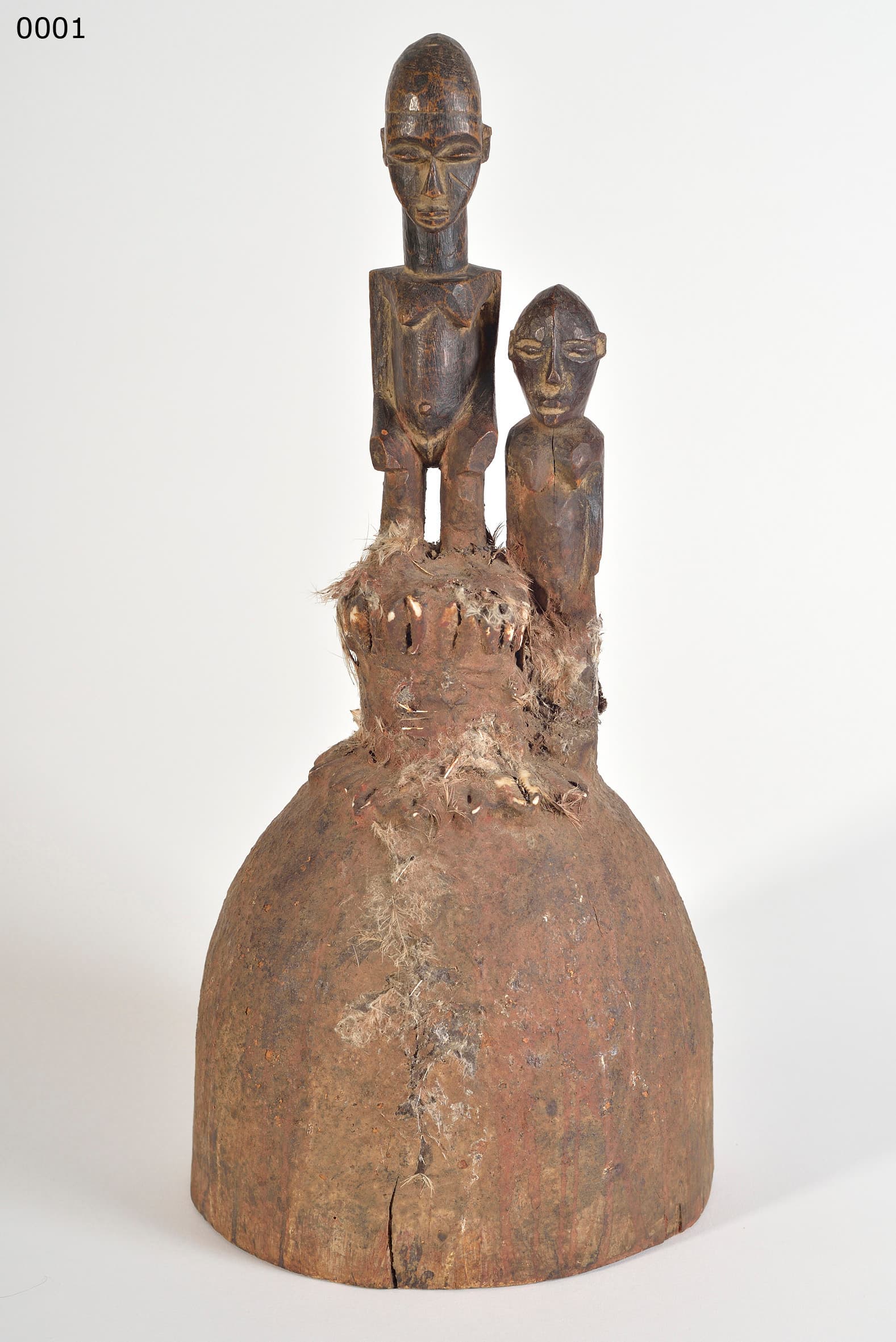
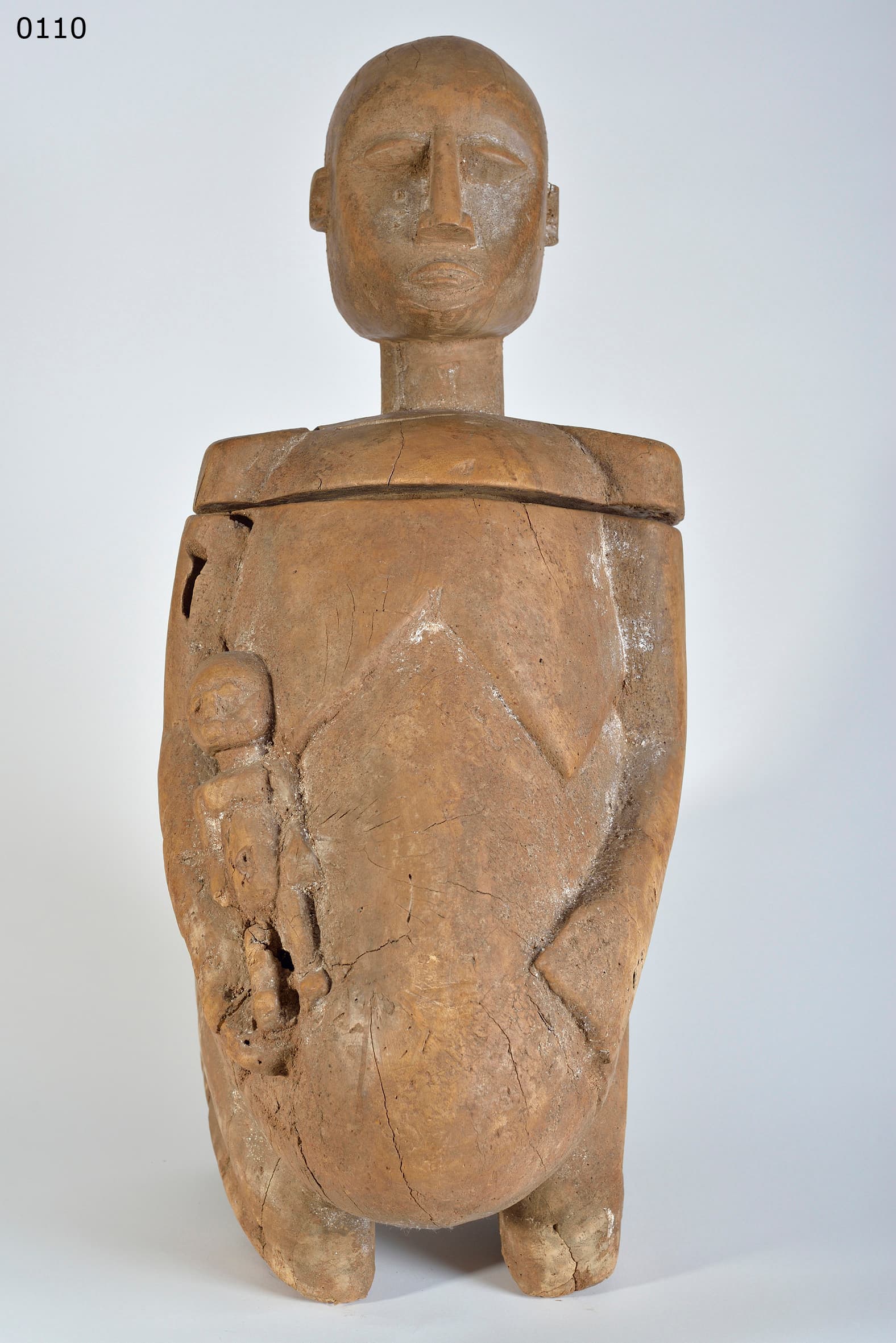
shrine altar with BATEKE couple
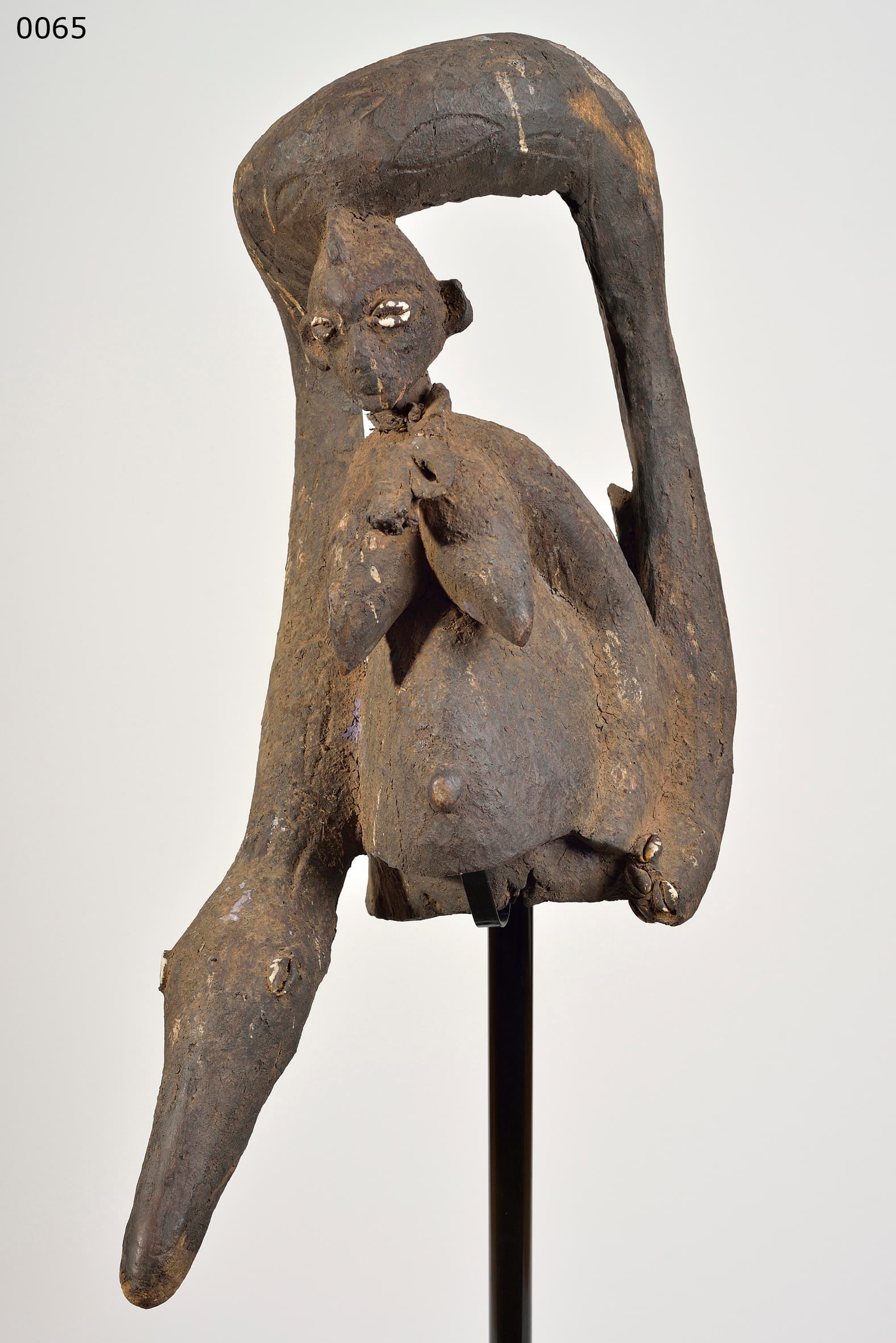
rare head crest mask
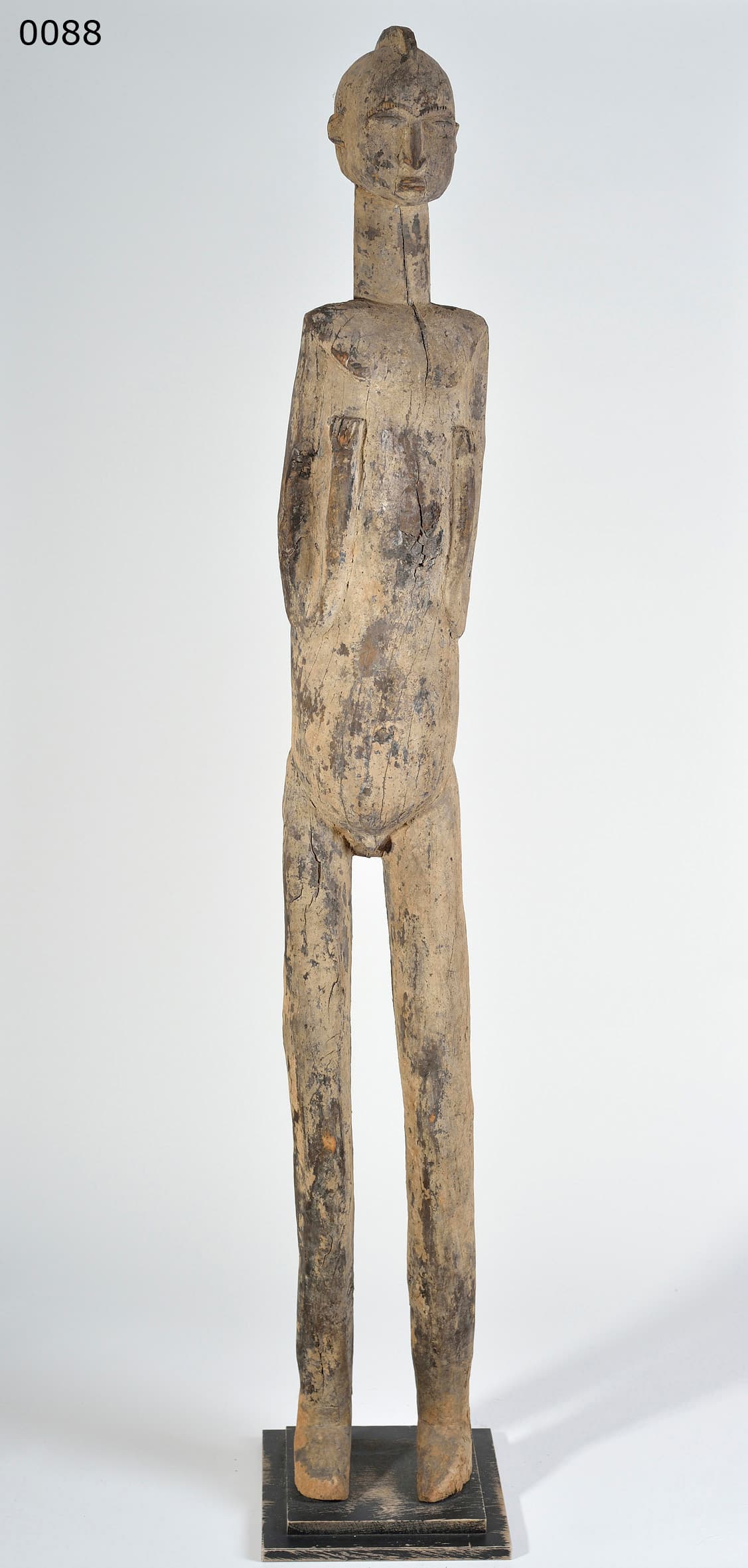
shrine figure representing a BATEBA spirit (unusually tall, rare)