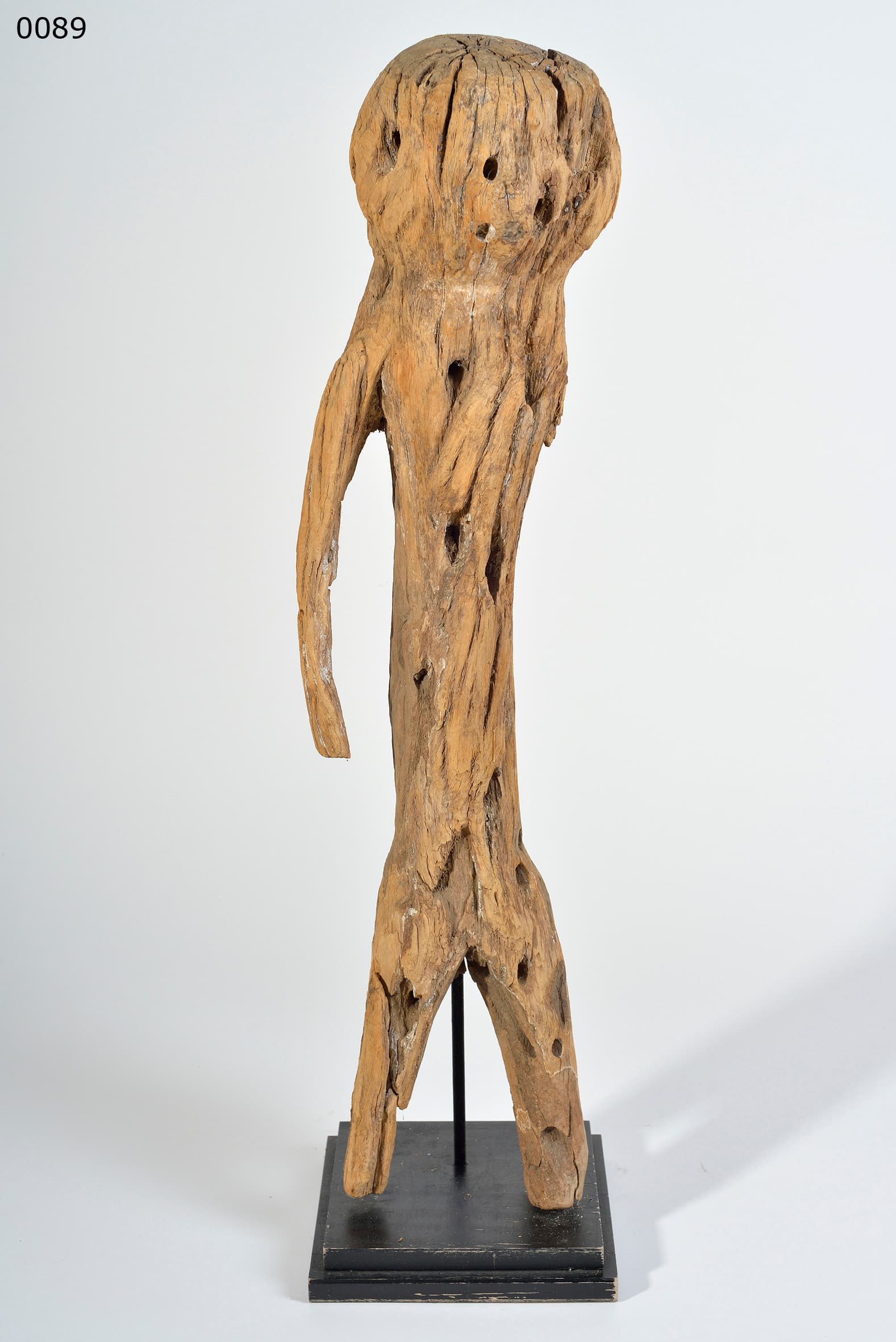
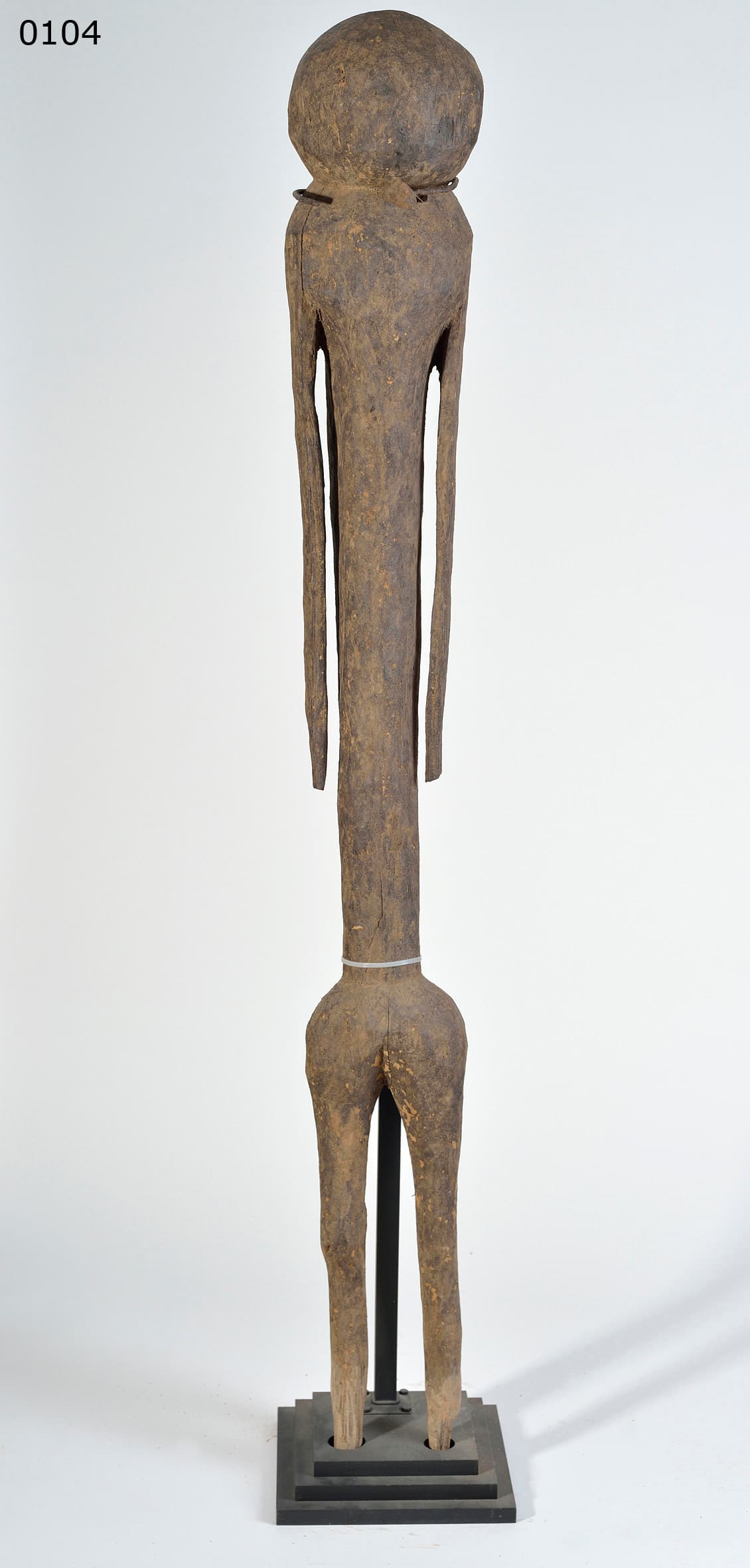
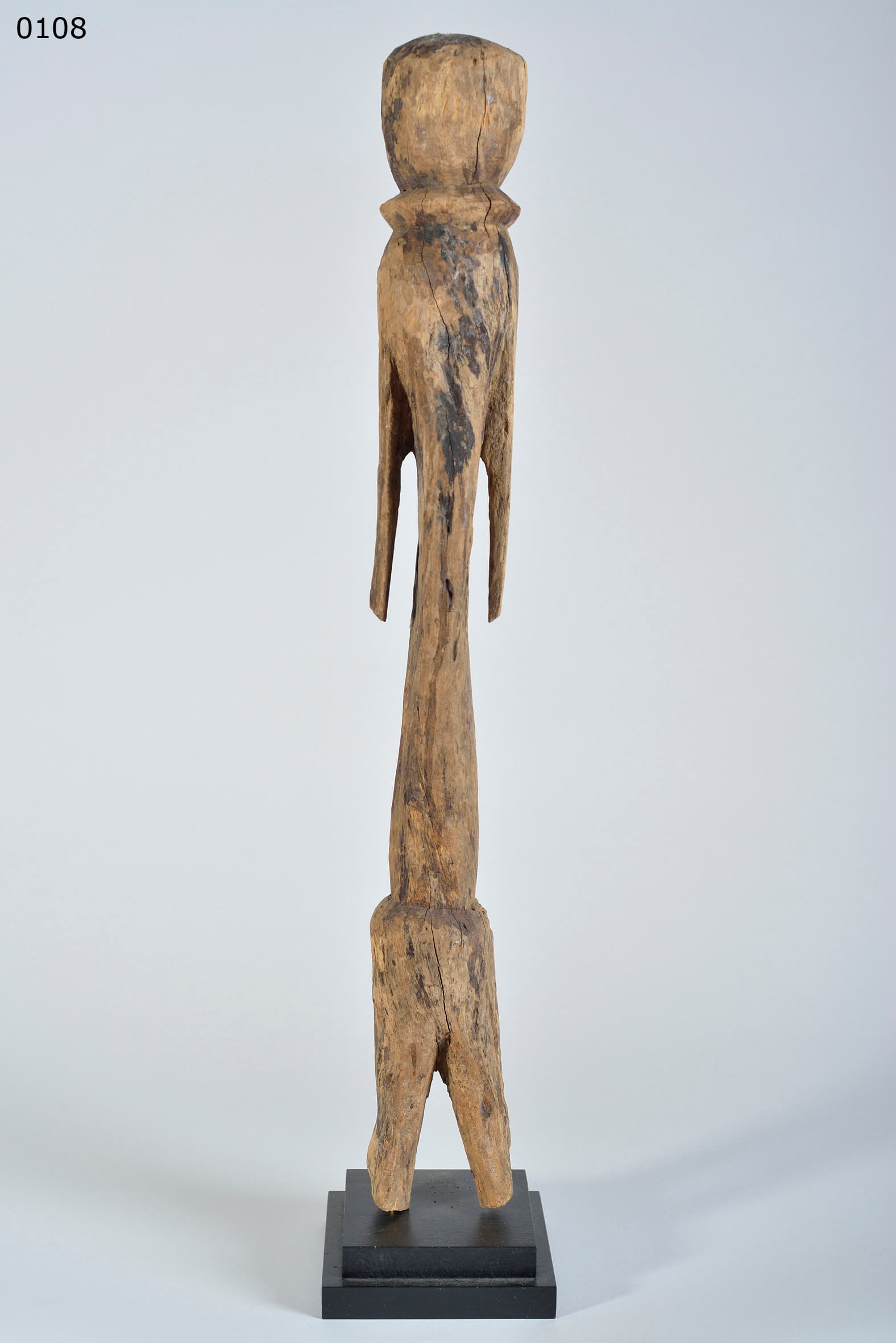
These two tall, incredibly minimalist wooden figures are carved as simple, sweeping vertical posts that lean slightly forward, terminating in smooth, featureless domed heads. Both figures are bound with heavily oxidized, hand-forged iron rings around their necks and waists, and the wood possesses a very deep, dry, ancient patina.
1. Aesthetic style — the radical minimalism of tchitcheri sakka
Originating from the Moba people of northern Togo, these figures, known as Tchitcheri, represent the absolute extreme of African sculptural abstraction. The carver has completely eliminated all facial features, limbs, and anatomical details, reducing the human ancestor to a pure, phallic, and aerodynamic contour. This radical minimalism suggests that the ancestral spirit has transcended human identity and become a pure, faceless force of nature. The slight, forward-leaning posture of these Tchitcheri sakka (medium-sized figures) projects a silent, looming presence that is incredibly modern in its aesthetic impact.
2. Ritual function — the clan shrine and ancestral anchors
Among the Moba, only individuals with specific clairvoyant abilities are permitted to carve Tchitcheri, as the act is inherently dangerous. These figures are not mere representations; they are the literal anchors for the founding ancestors of the clan. Planted directly into the earth outside the family compound or inside a dedicated shrine room, the Tchitcheri serves as the focal point for all familial rituals, dispute resolutions, and sacrificial offerings. The addition of the iron rings is highly significant; iron is a sacred material in West Africa, used here to magically "bind" the volatile ancestral spirit to the wooden host.
3. Physical patina — iron oxidation and desiccated patination
The survival and condition of these figures are consistent with an early 20th-century origin. The wood is profoundly desiccated, possessing a dry, porous, heavily weathered exterior that has lost all its sap and weight. The forged iron rings have oxidized heavily over decades of exposure to the elements, and this deep, red-black rust has bled into the surrounding wood grain, creating a beautiful, dark, localized staining. The bases are heavily eroded from being planted in the soil, which is consistent with their original, active shrine context.
Summary
These Moba Tchitcheri are astonishing achievements of radical sculptural abstraction, distilling the human form into pure, ancestral power. The combination of deeply weathered wood and oxidized iron bindings makes this pair a notable example of Moba ethnographic art.
Written with AI assistance from the collection appraisal, object photography and our own research; editorially reviewed. Mistakes are possible — corrections are welcome. How we work →