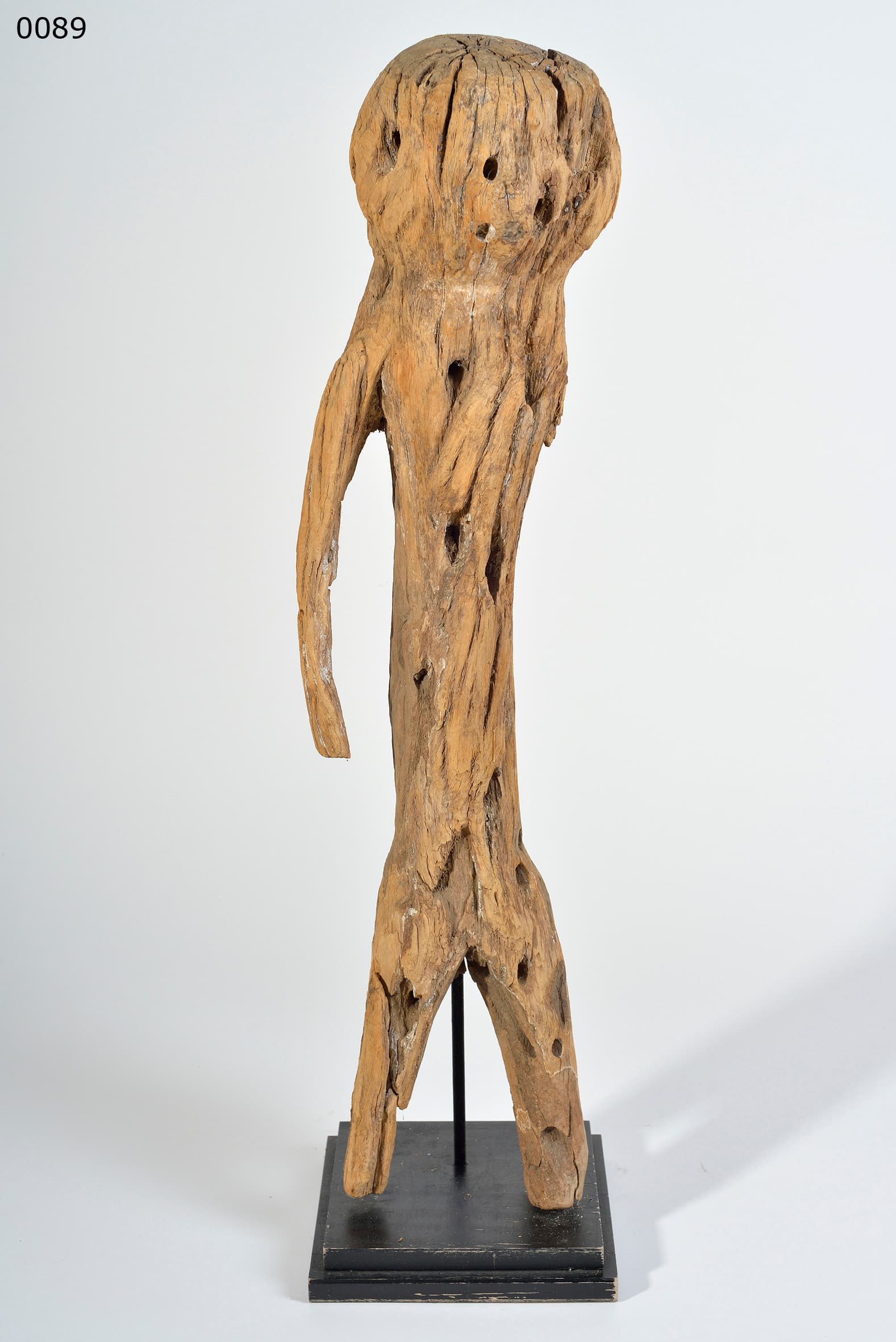
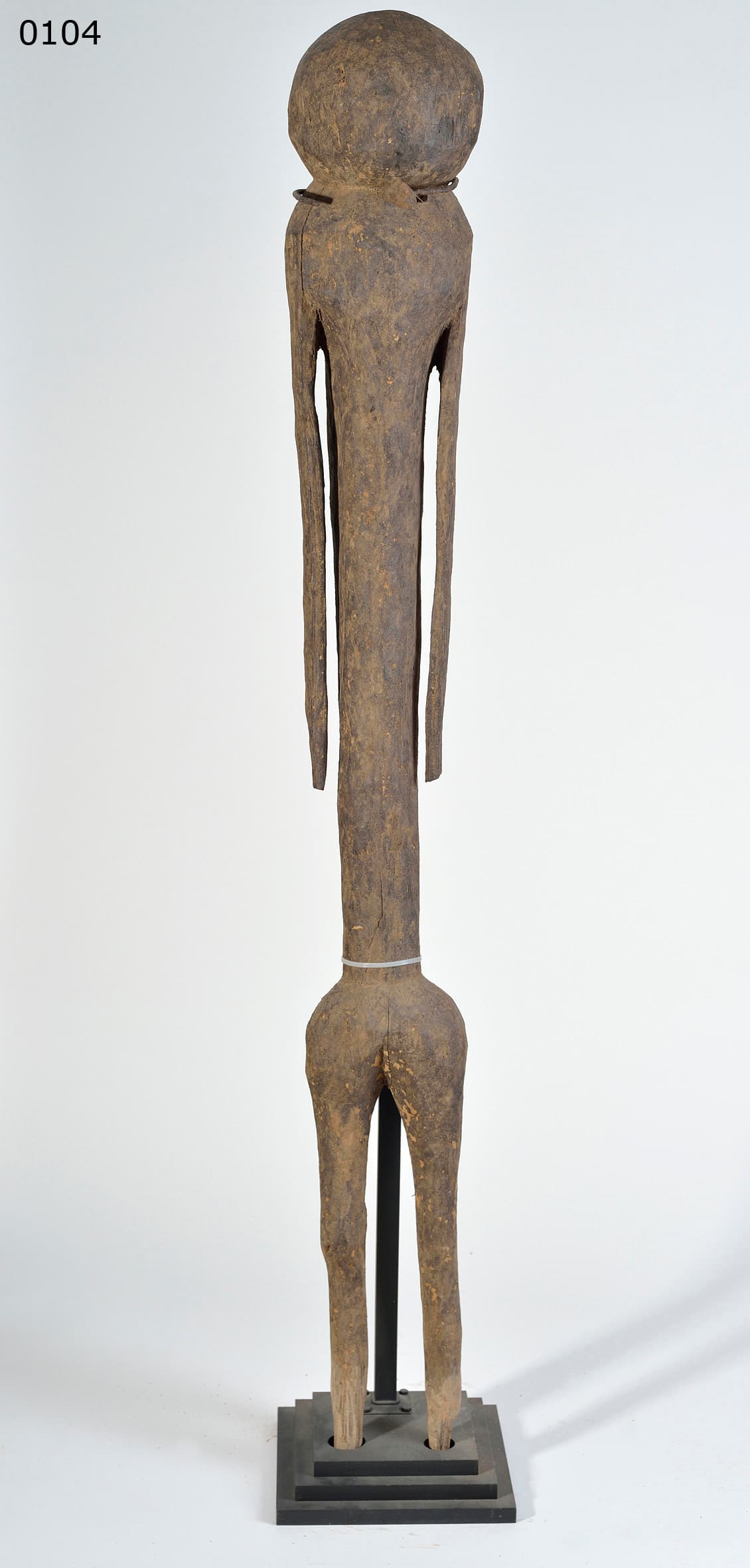
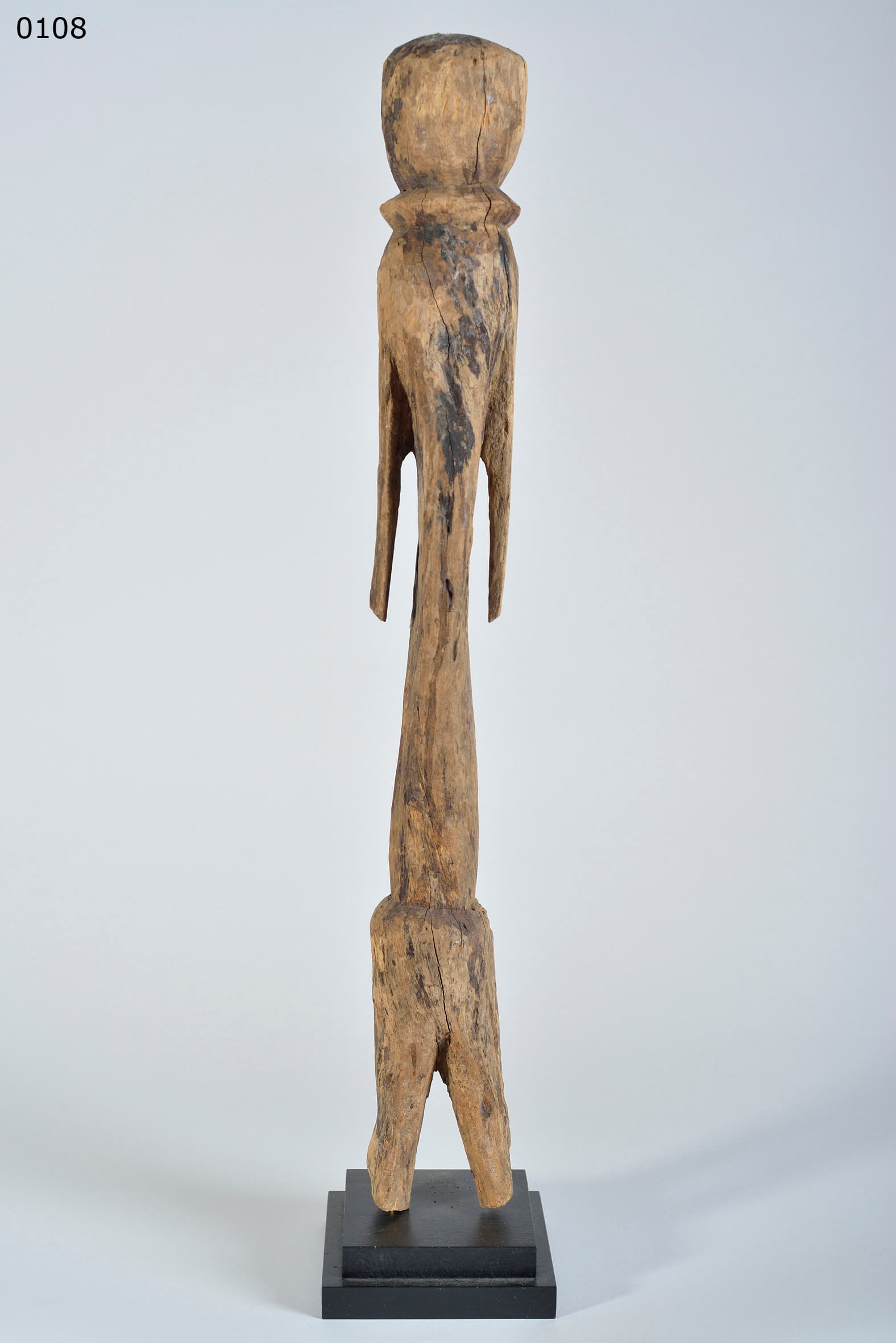
These two diminutive figures are carved from solid ivory in an extremely minimalist, forward-leaning posture, completely devoid of facial features, hands, or feet. The ivory has aged to a warm, honey-yellow tone, exhibiting fine, longitudinal age cracks and a deep, glossy handling sheen.
1. Aesthetic style — the Ivory translation of Moba minimalism
The Moba people of northern Togo are famous for their large, abstract wooden shrine figures (Tchitcheri). These two rare objects perfectly translate that monumental, brutalist minimalism into a precious, miniature format using elephant ivory. The complete erasure of anatomical detail — leaving only the sweeping, aerodynamic contour of a featureless head and a leaning torso — is a profound aesthetic statement. It signifies that the ancestor has shed their mortal identity and transformed into a pure, concentrated force of spiritual energy, rendered here in a material historically associated with elite wealth and indestructible permanence.
2. Ritual function — portable amulets and personal divination
While large wooden Tchitcheri are planted into the earth to protect the entire clan, miniature ivory figures like these are deeply personal protective amulets. Commissioned by a diviner for an individual suffering from illness, spiritual attack, or embarking on a dangerous journey, they are designed to be carried on the body. The forward-leaning posture visually suggests an active, vigilant spirit stepping forward to intercept malevolence. Kept in leather pouches or worn close to the skin, they served as a constant, intimate connection to the protective ancestors.
3. Physical patina — Ivory taphonomy and human oil absorption
The aging of ivory is a highly specific geochemical process, beautifully evident in this pair. Over the first half of the 20th century, the original bright white of the elephant tusk has oxidized, absorbing the natural oils and sweat of the person who carried them. This continuous friction has polished the ivory to a glass-like smoothness and turned it a rich, honeyed amber color. The presence of fine, natural desiccation cracks and the faint, cross-hatching Schreger lines (unique to proboscidean ivory) confirm both the material and the absolute authenticity of its ethnographic use.
Summary
These miniature Moba ivory figures are breathtaking examples of radical African abstraction rendered in a precious material. Their sleek, featureless geometry and gorgeous, golden handling patina elevate them to the status of rare and exquisite personal power objects.
Written with AI assistance from the collection appraisal, object photography and our own research; editorially reviewed. Mistakes are possible — corrections are welcome. How we work →