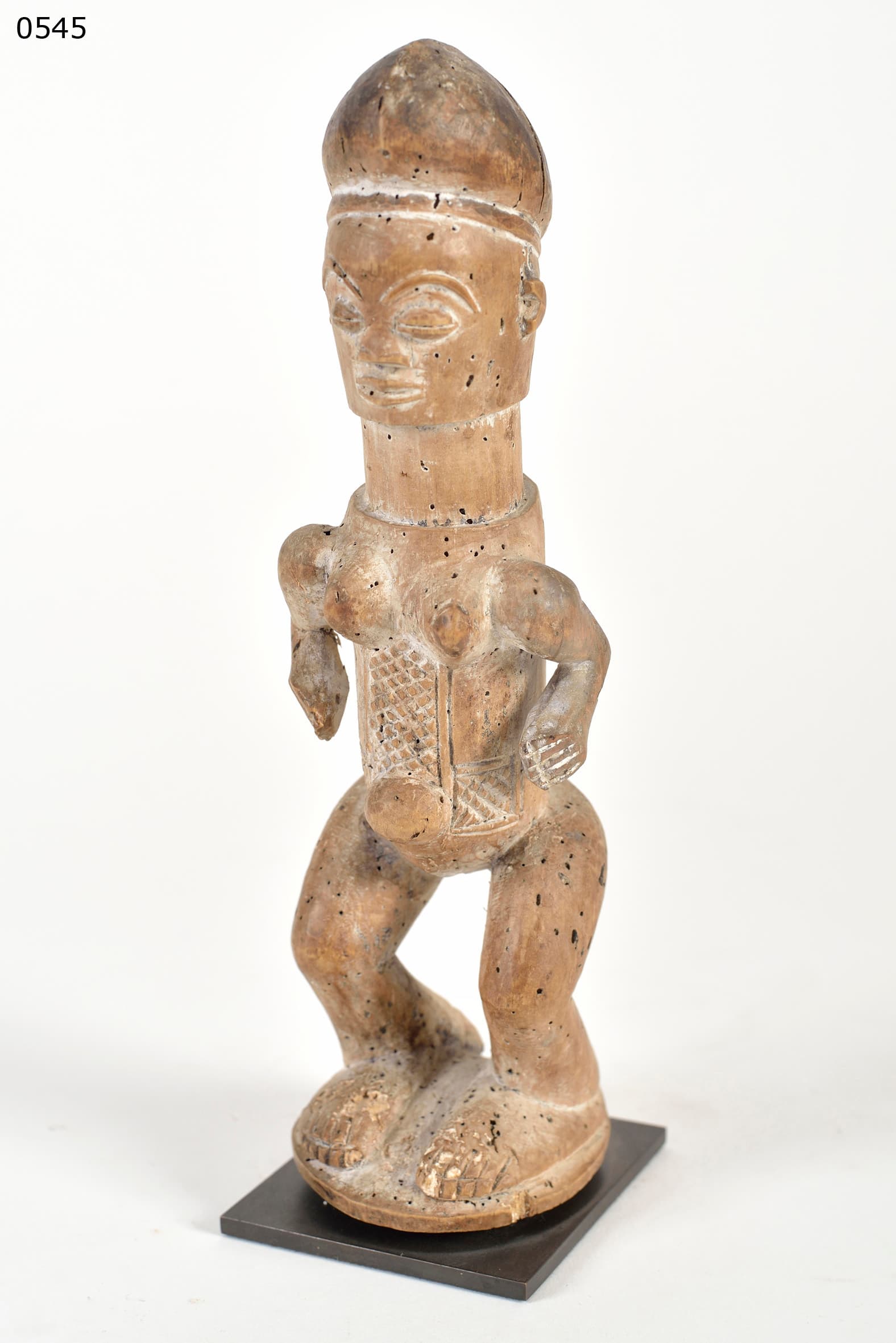
This formidable, heavily weathered Punu mask features a prominent bi-lobed, ridged coiffure and a large, raised diamond scarification on the brow. The kaolin surface is profoundly degraded, presenting a mottled, earthy texture mixed with dark oxidation and significant organic abrasion over the entire facial plane.
1. Aesthetic style — monumental form and regional gabonese variations
While adhering to the broad Mukudj aesthetic, this mask displays a much heavier, more monumental architecture than the typical delicate Punu face. The massive, deeply striated bi-lobed coiffure dominates the upper hemisphere of the carving, lacking the central sagittal crest of other variants. The facial features are wider and more robust, with heavy, thick eyelids and a wide, pursed mouth. This stylistic variation points to a specific regional atelier, perhaps closer to the Lumbo or Shira borders, where carvers favored a weightier, more imposing physical presence for their ancestral spirits.
2. Ritual function — ancestral veneration and the rituals of the night
Because of its heavier, more brooding aesthetic and severe degradation, it is possible this mask transitioned in its use, or was utilized in the darker, more serious phases of the Okuyi or Mwiri associations. While white masks generally celebrate the benevolent dead, the sheer physical weight and commanding presence of this specific carving suggest it was used to invoke older, more formidable matriarchs of the clan. The dancer wearing this heavy, 34-centimeter mask is thought to have projected an aura of grounded authority, commanding reverence from the observing village.
3. Physical patina — extreme environmental taphonomy and fused kaolin
The physical appearance of this mask suggests a significant age. It has endured severe environmental taphonomy, likely from being stored in a highly humid, unprotected environment or a collapsed shrine. The original stark white kaolin has been almost entirely corrupted by soil, smoke, and moisture, resulting in a mottled, brownish-grey crust that is chemically fused to the wood. Deep, abrasive wear has softened the sharp lines of the nabina scarification and the striated hair, leaving a surface that shows a rich, element-worn history.
Summary
A heavy, monumental variant of the Gabonese white mask, this piece eschews delicate beauty for raw, commanding ancestral weight. Its profound, earth-fused taphonomy and severely weathered kaolin patina make it a notable, historically significant ethnographic object.
Written with AI assistance from the collection appraisal, object photography and our own research; editorially reviewed. Mistakes are possible — corrections are welcome. How we work →