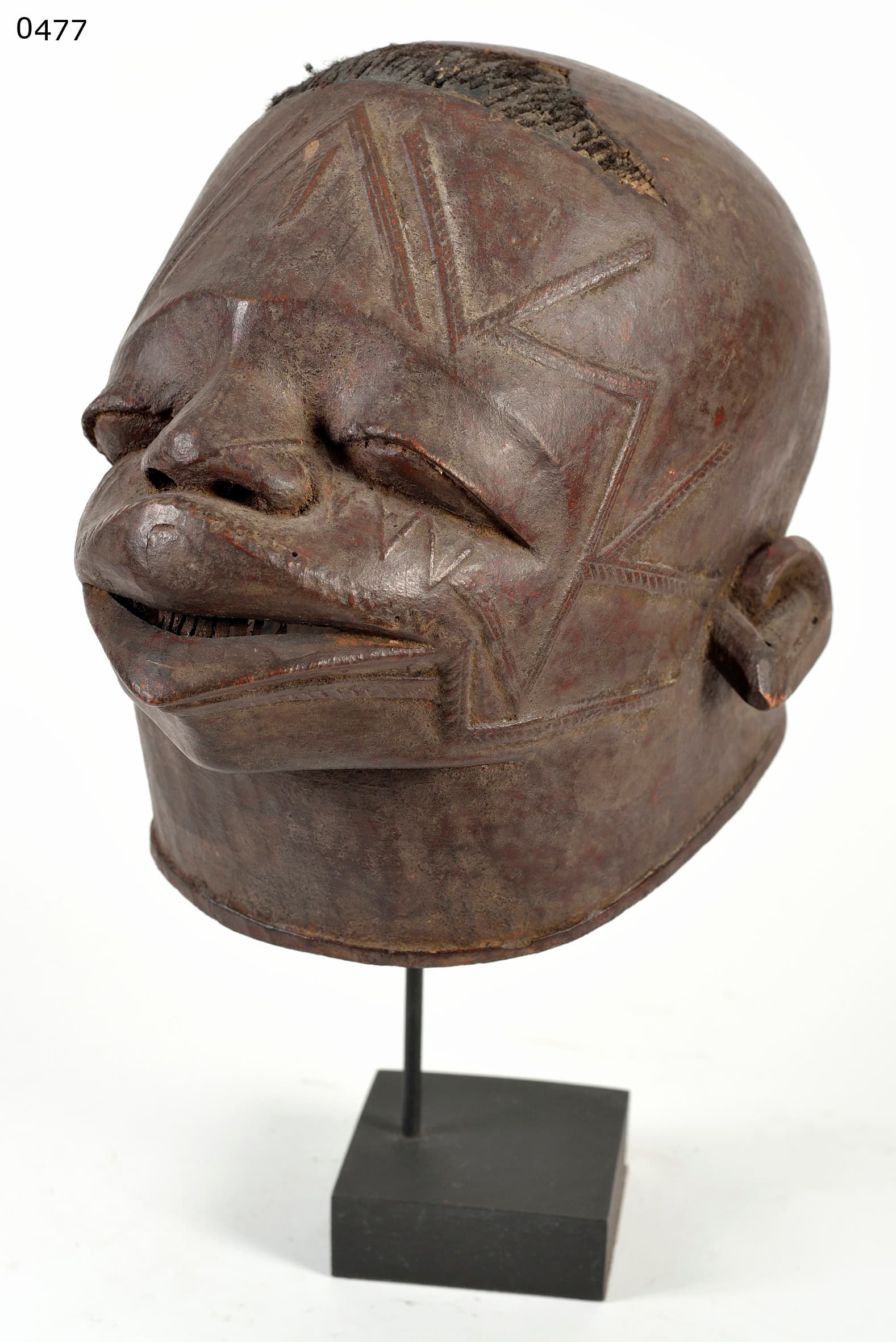
Carved from a lightweight, pale wood, this remarkable zoomorphic mask features a long, flat facial plane dominated by a vertical nasal ridge and surmounted by two enormous, elongated hare ears. The unpainted surface is severely weathered, possessing a dry, scrubbed, and earthy patina.
1. Aesthetic style — zoomorphic abstraction in mapiko masquerades
The Makonde people of the Ruvuma River plateau (spanning Tanzania and Mozambique) are famous for their helmet masks, making this flat, zoomorphic face mask a fascinating and rare stylistic variation. The carver has brilliantly captured the essence of a hare or rabbit by exaggerating the length of the ears and flattening the face, creating a sleek, aerodynamic silhouette. This extreme elongation and the stark, pierced square eye-holes demonstrate a highly sophisticated approach to abstracting animal forms into wearable, kinetic sculpture.
2. Ritual function — lipiko rites and didactic performance
In Makonde culture, the Mapiko (or Lipiko) masquerade is the central element of the secretive male initiation rites (Jando). The dancers, completely covered in cloth to hide their human identity, embody various spirits, animals, and caricatures of neighbouring peoples. The hare is a universal trickster figure in African folklore, representing cunning, speed, and intelligence. When danced, this mask was used to act out mythological fables, imparting vital moral and survival lessons to the young male initiates as they transitioned from boys into fully fledged members of the adult community.
3. Physical patina — savannah weathering and desiccated wood
The material condition of this mask is defined by profound environmental exposure. Unlike masks kept in oily, smoky shrines, this piece exhibits a dry, heavily desiccated surface typical of the arid East African savannah. It has lost all original pigment, resulting in a pale, ash-grey and tan wood matrix that has been softly abraded by blowing sand and sun over decades. The edges of the ears and the rim of the face are organically rounded, confirming long-term usage and historical aging.
Summary
This rare Makonde zoomorphic mask perfectly captures the mythological importance of the trickster hare through sleek, elongated abstraction. Its severely weathered, dry patina speaks to decades of authentic use in the didactic Mapiko initiation dances of East Africa.
Written with AI assistance from the collection appraisal, object photography and our own research; editorially reviewed. Mistakes are possible — corrections are welcome. How we work →