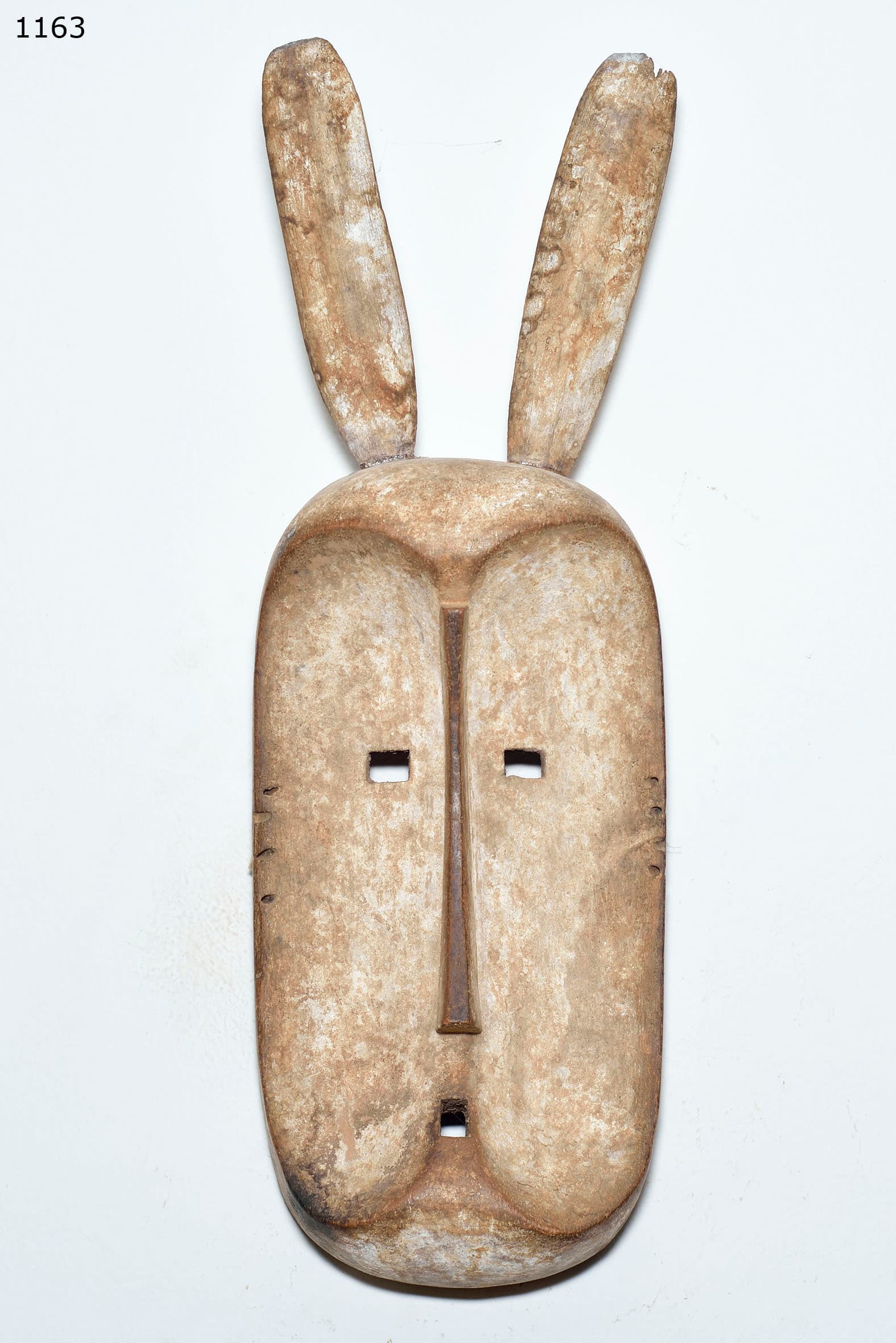
A highly realistic Makonde Mapiko helmet mask (1st half 20th C., 24 cm) from Mozambique — a human face adorned with sweeping dark scarification lines across the cheeks and forehead. Features an open mouth revealing teeth, a distinct protruding upper lip (pelele labret), and a crown of actual human hair. The wood has a rich reddish-brown patina.
1. Mapiko realism and the pelele
The Makonde are known for their Mapiko helmet masks, which represent a highly realistic tradition of portraiture in East Africa.
- Physiological and Cultural Markers: The carver has captured markers consistent with those of a high-status Makonde individual — sweeping raised scarification (often darkened with beeswax or soot) maps clan identity.
- Pelele Labret Indicator: The prominent protruding upper lip specifically represents the insertion of a pelele (lip plug) — an essential traditional marker of beauty and initiated adulthood in historical Makonde society.
2. The mapiko initiation rites
The Mapiko masquerade is a central element of Makonde male initiation.
- Shetani Spirit Embodiment: During the intense secretive rites where boys are circumcised and taught the laws of manhood, these helmet masks are danced by adult men — representing shetani (powerful nature spirits) or resurrected ancestral spirits.
- Terrifying Athletic Performance: The dancer, completely concealed within a heavy cloth costume, performs incredibly athletic terrifying unpredictable movements — acting as both a disciplinarian to the boys and a physical manifestation of the terrifying power of the spirit world.
3. Mixed media and tannin patination
The material aging is consistent with traditional use.
- Red Soil + Plant Tannin Dye: Traditionally dyed using a mixture of red soil and plant tannins, resulting in the deep saturated reddish-brown hue.
- Attached Human Hair: The integration of actual human hair plugged into the scalp (a technique designed to heighten the terrifying lifelike quality) shows genuine matted age and environmental dust accumulation; the dark, heavily oxidized rim on the interior shows wear consistent with performance use.
Summary
A notable example of East African realism, this Makonde helmet mask captures the scarification and lip-plug aesthetics of a bygone era. Its attached human hair and deep performance patina make it a significant artifact of the Mapiko rites.
Written with AI assistance from the collection appraisal, object photography and our own research; editorially reviewed. Mistakes are possible — corrections are welcome. How we work →