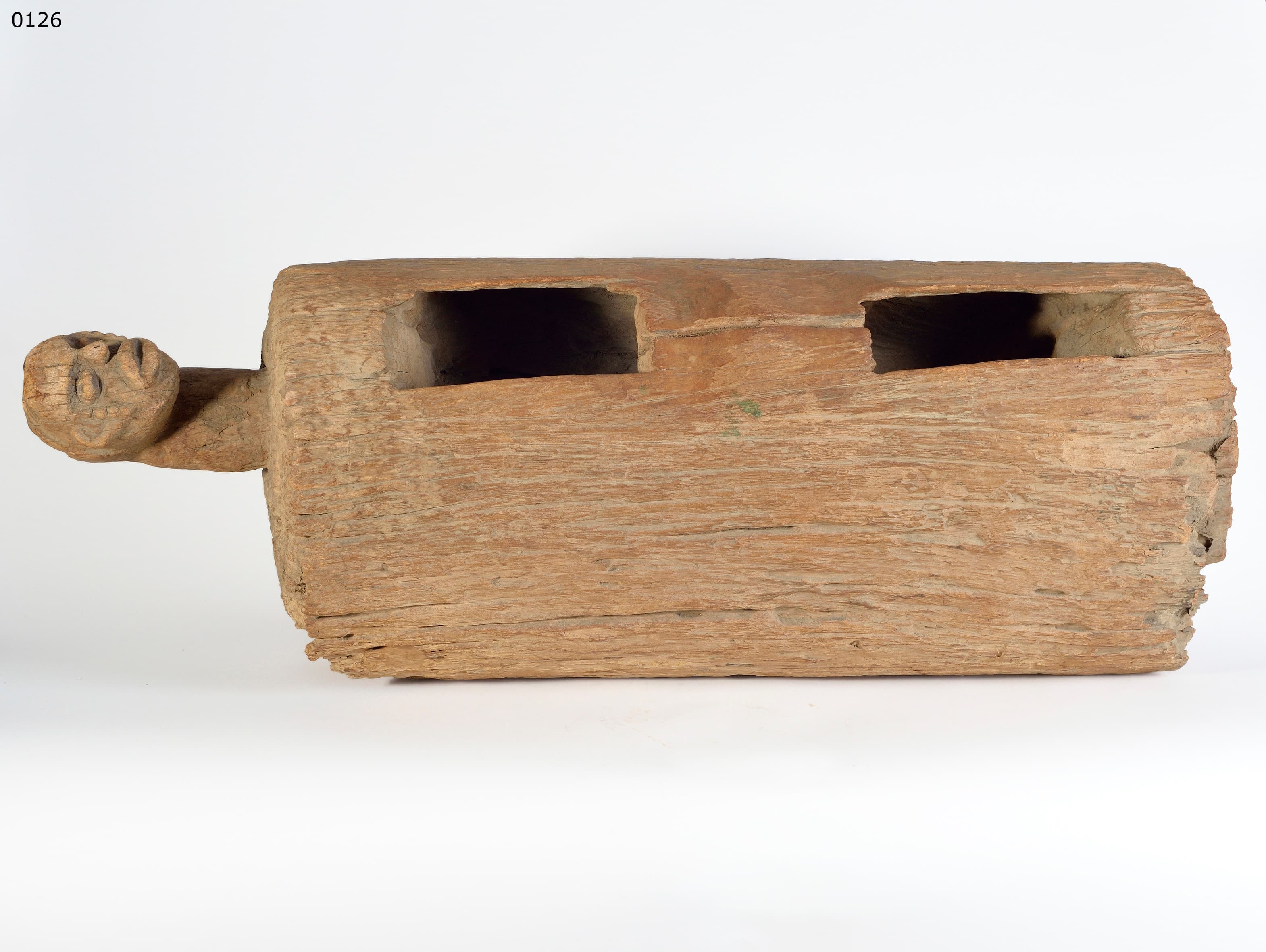
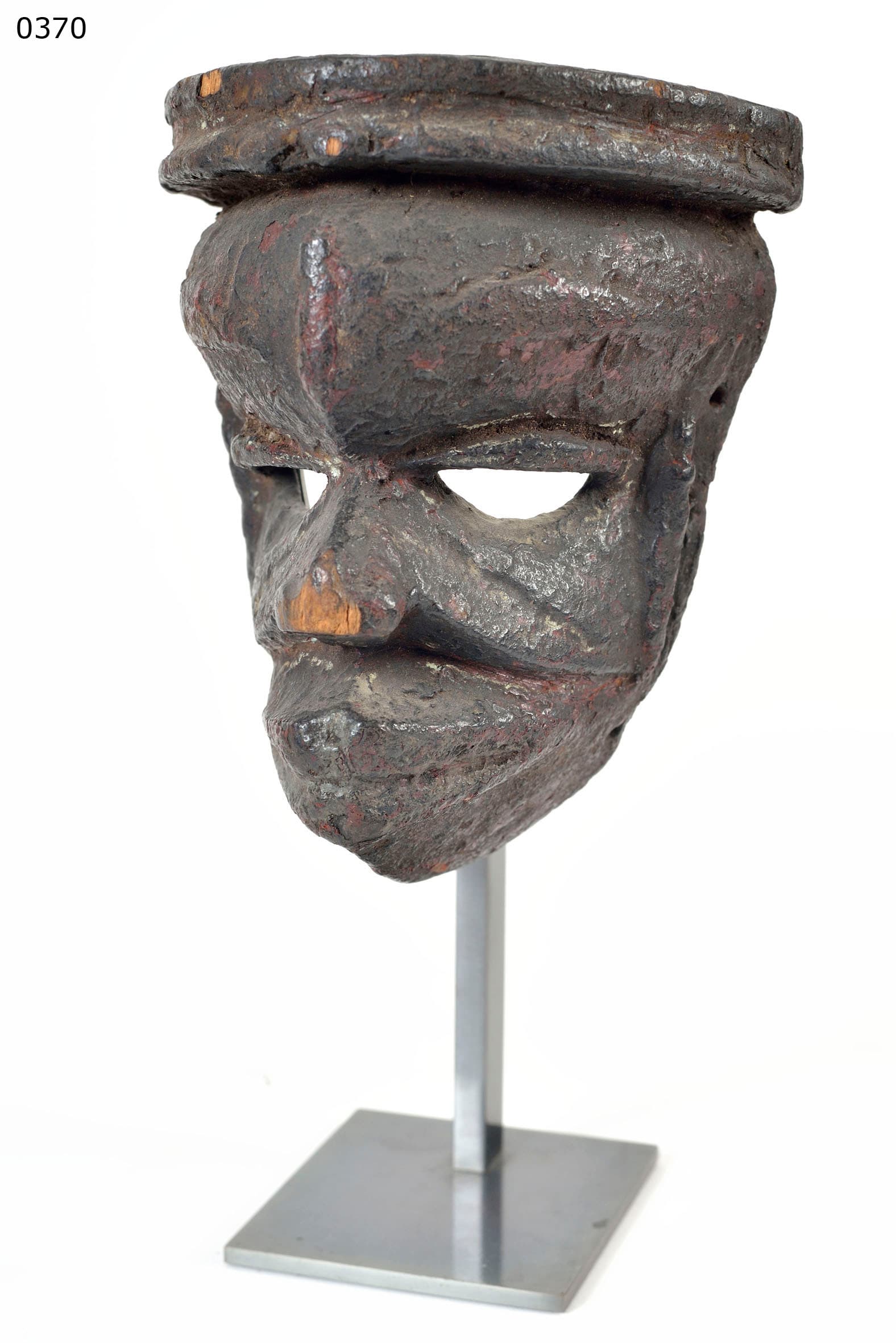
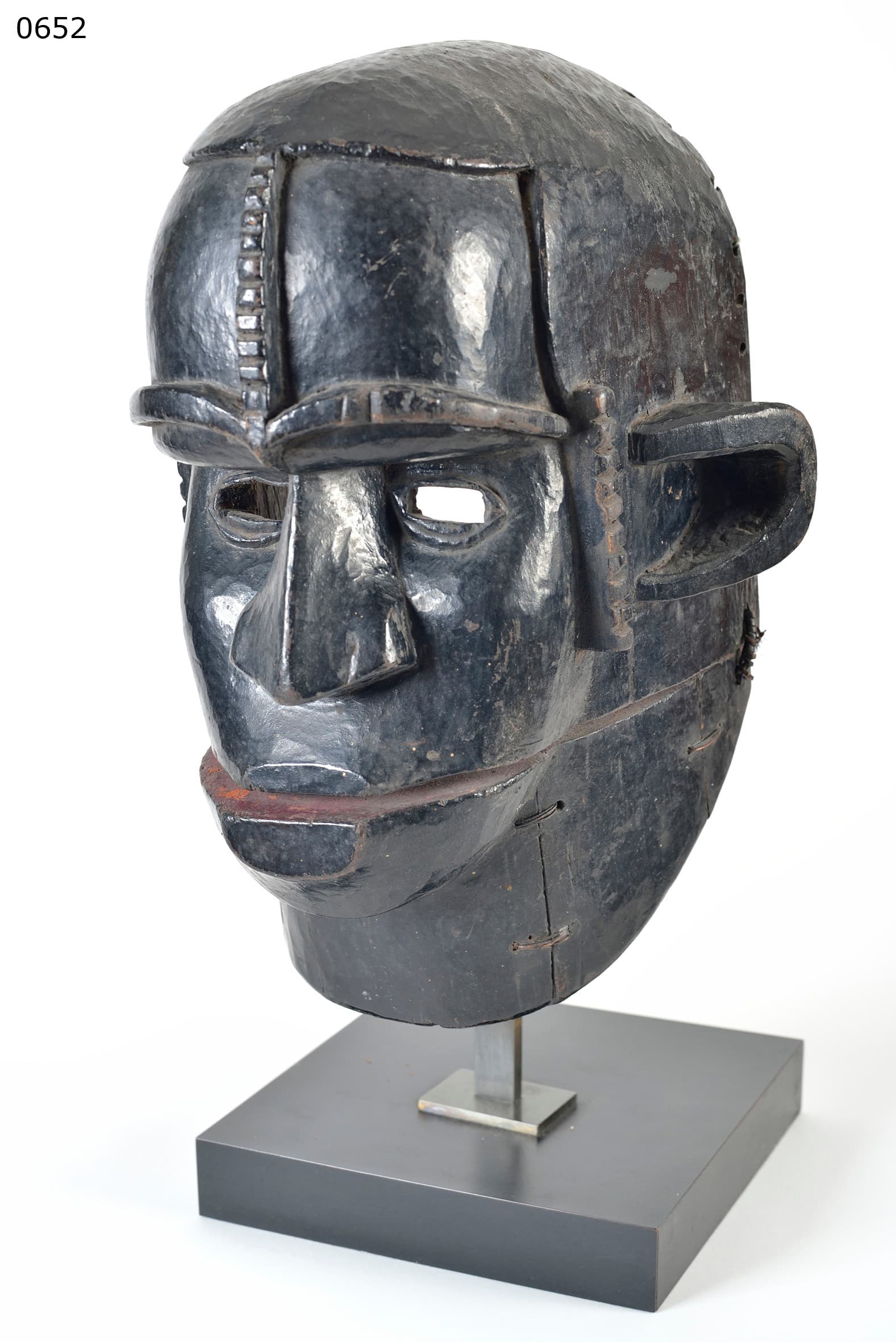
This dark, brooding wooden mask features a heavy, rounded face with prominent, deeply carved eye sockets and an articulated, terrifying mouth baring jagged wooden teeth. The entire surface is saturated with a thick, blackened, and heavily oxidized resinous patina.
1. Aesthetic style — idiok ekpo (the ugly spirit) aesthetic
The Ibibio people of southeastern Nigeria divide their masking traditions into two starkly opposing aesthetic categories: the beautiful, serene mfon masks, and the terrifying, deformed idiok masks. This object is a classic idiok mask. The carver has deliberately exaggerated the facial features to evoke disease, decay, and death. The deeply sunken, hollow eyes, the pronounced cheekbones, and the horrific, articulated jaw filled with sharp teeth are designed to provoke visceral fear, representing a soul condemned to wander the earth due to a bad death or evil deeds in life.
2. Ritual function — social control and the ekpo society
This mask was utilized by the Ekpo secret society, the primary organ of social control and law enforcement in traditional Ibibio communities. When the Ekpo society paraded through the village, dancers wearing the idiok masks acted aggressively and unpredictably, armed with weapons. They represented the angry, dangerous spirits of the ancestors returning to punish wrongdoers, collect debts, and enforce the decrees of the village elders. The articulated jaw allowed the dancer to snap the teeth together, adding a terrifying kinetic and auditory element to the performance.
3. Physical patina — sacrificial encrustation and smoke patina
The surface of this mask is a profound record of its terrifying ritual function. Kept in the dark, secretive lodges of the Ekpo society, the wood has been heavily coated with sacrificial materials and exposed to constant woodsmoke. This has resulted in a thick, crusty, asphalt-like black patina that completely envelops the wood grain. The original native fiber or leather hinges holding the articulated jaw have calcified with age and grime, and the interior bite-stick area shows intense wear, confirming decades of aggressive, early 20th-century masquerade.
Summary
A visceral and terrifying manifestation of Nigerian judicial power, this Ibibio idiok mask embodies the aggressive enforcement of the Ekpo society. Its articulated jaw, horrific abstraction, and thick, soot-blackened crust make it a formidable and highly authentic ethnographic artifact.
Written with AI assistance from the collection appraisal, object photography and our own research; editorially reviewed. Mistakes are possible — corrections are welcome. How we work →