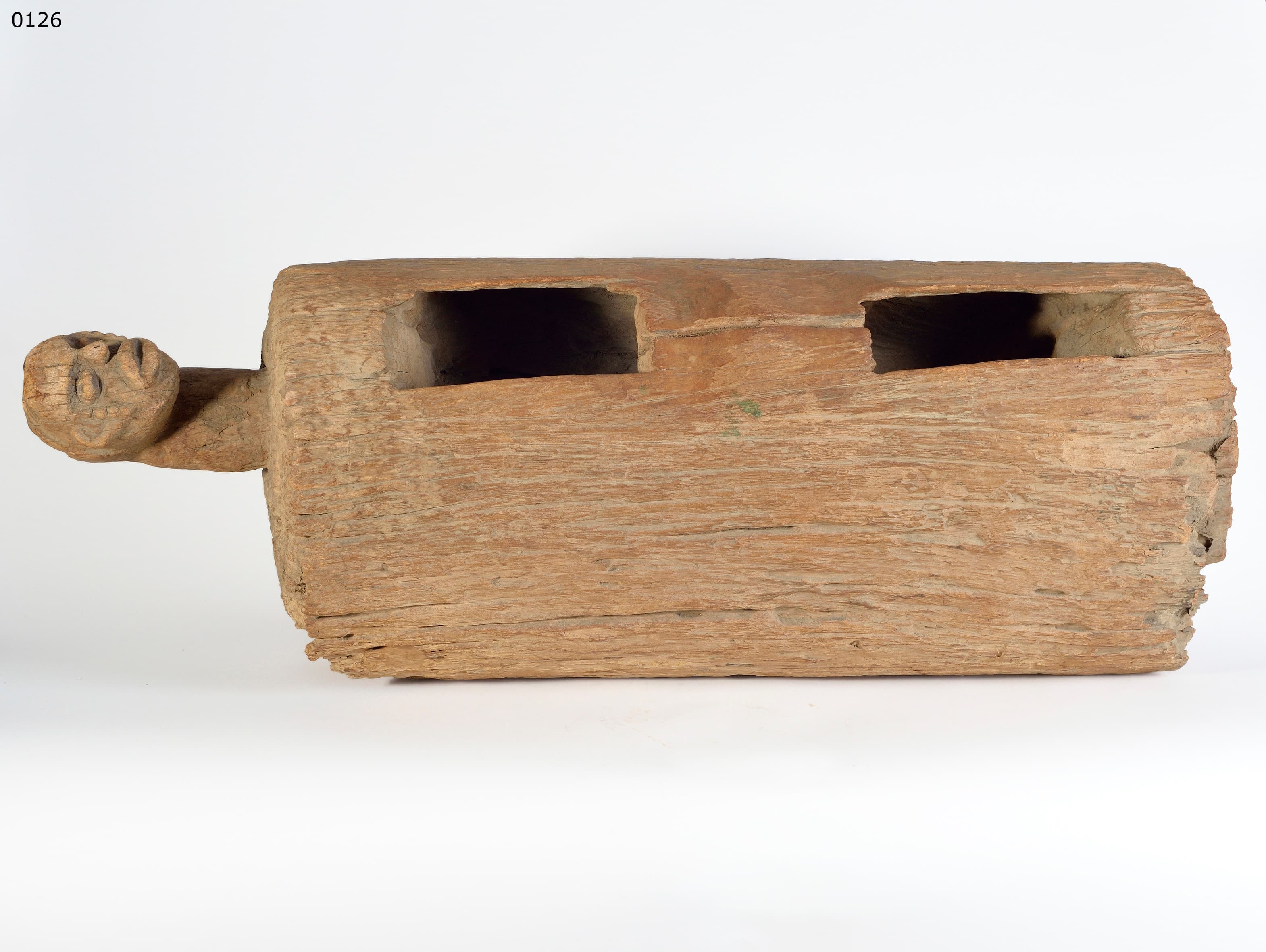
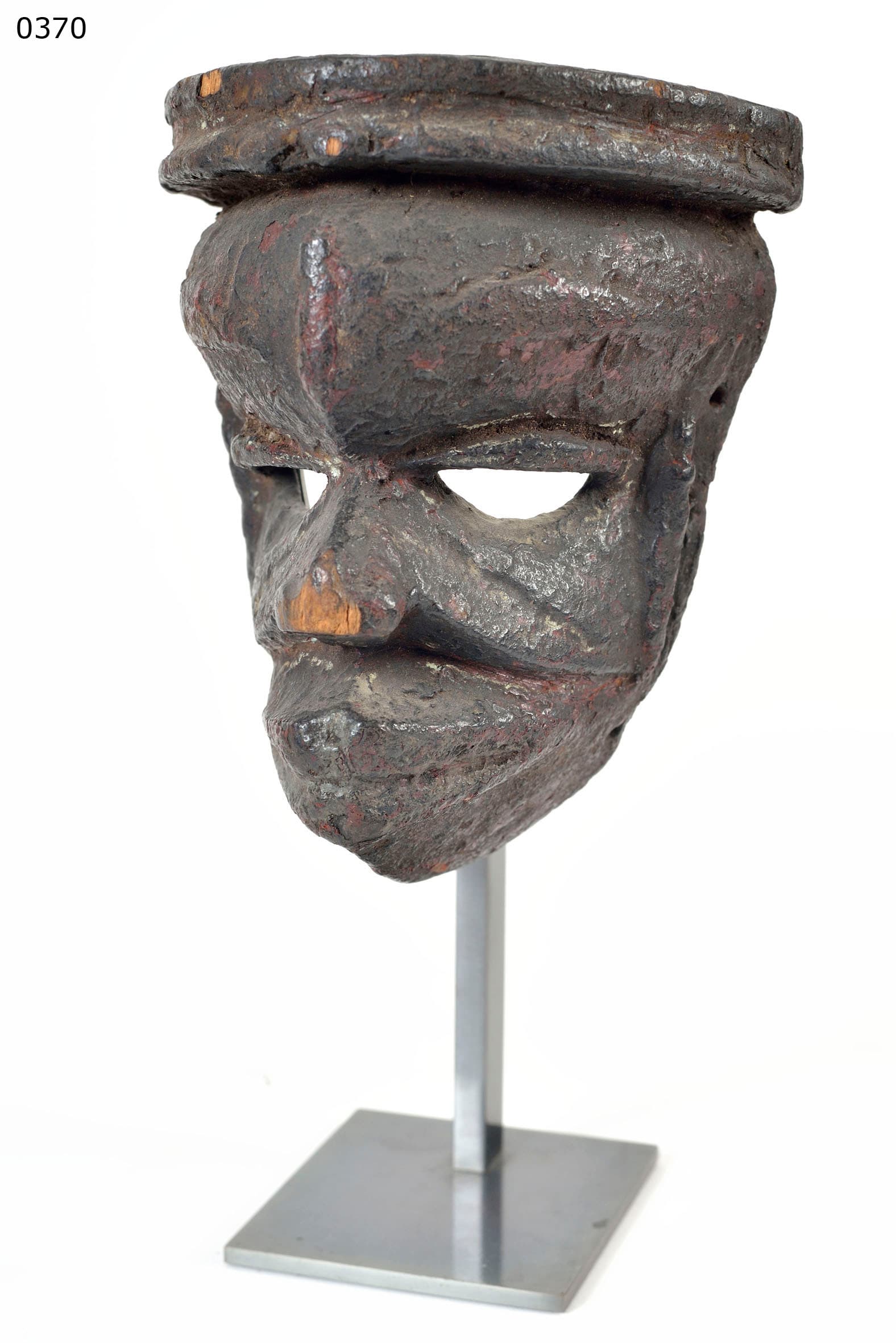
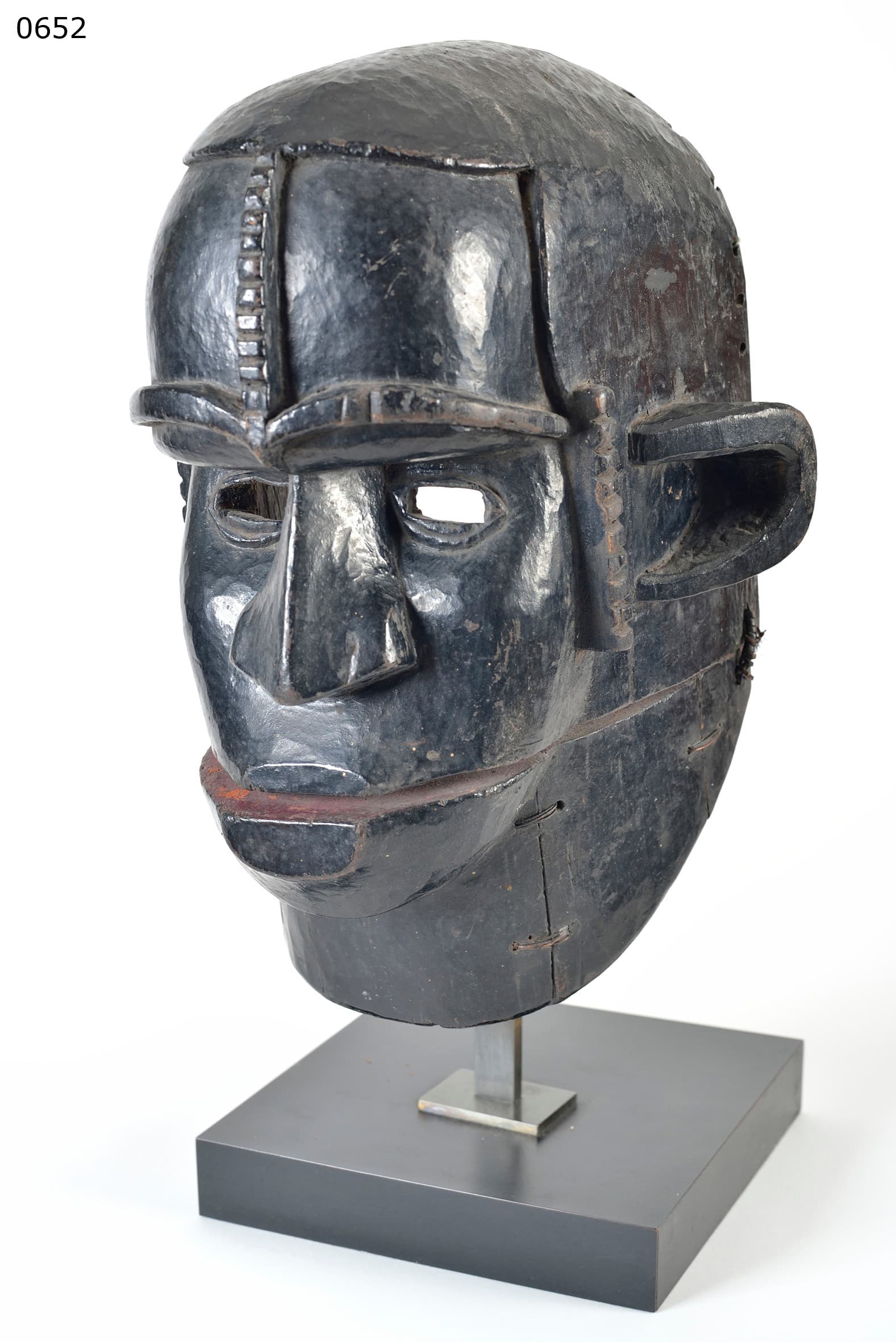
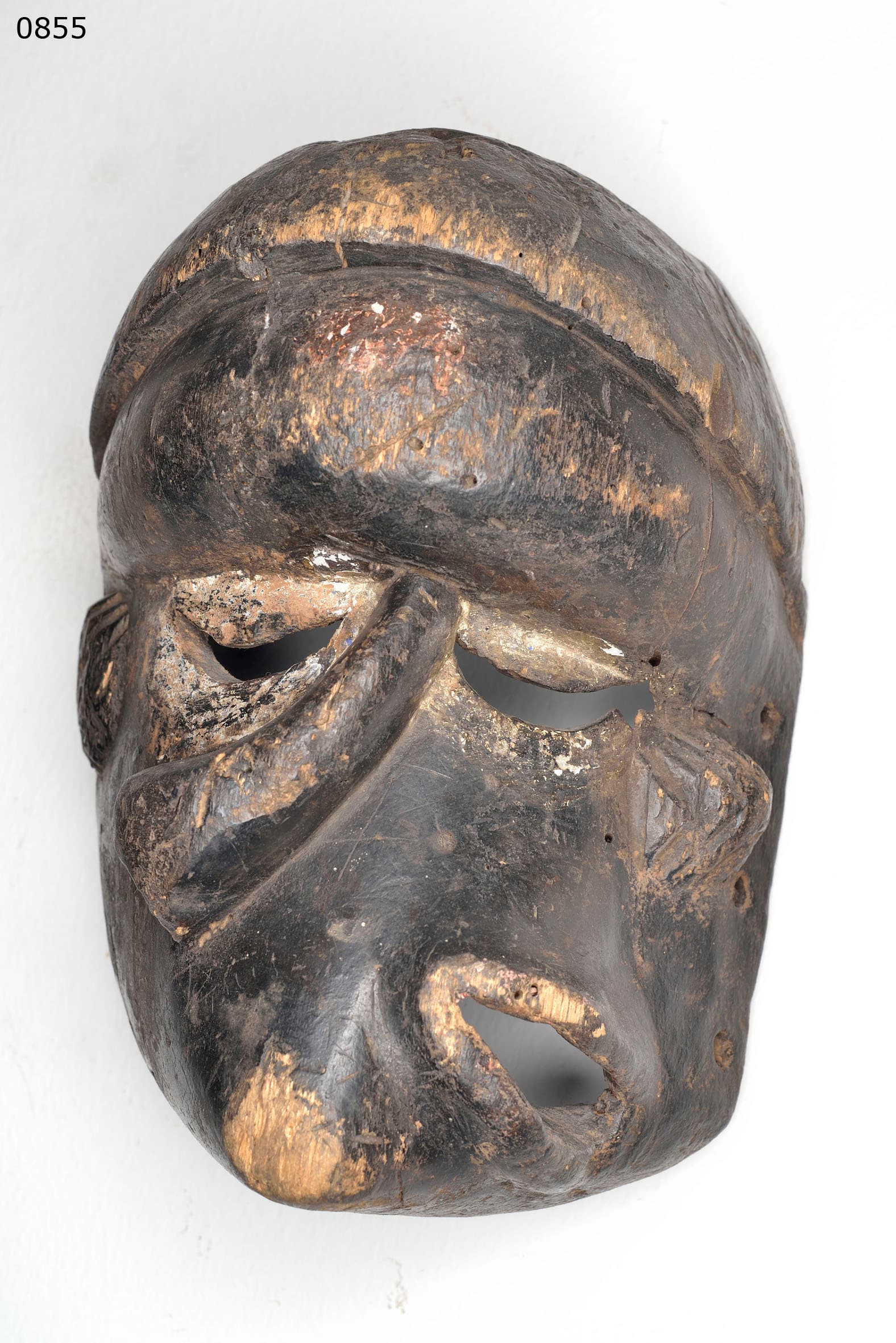
This is a very complex and "rare" example of an Ibibio shrine altar (specifically likely from the Anang or Eket subgroups) from southeastern Nigeria.
It belongs to the "darker" and more aggressive aesthetic of the secret societies in the Cross River region.
1. Central figure and style
The carving style is classic Ibibio:
- The Coiled Neck: The thick, ringed neck of the central figure is a prestige symbol. Historically, these rings represented wealth (like the bronze coils worn by high-status women) and the "fattening house" tradition, where a full neck was a sign of beauty and prosperity.
- Facial Features: The large forehead, heavy-lidded eyes, and slightly open mouth are typical of Ibibio carvings meant to represent either an ancestor or a powerful deity (Abassi or a local spirit equivalent).
2. The "magic" medicine bowls
The two large, round, bowl-like structures attached to the figure's chest are ritual medicine holders.
- The White Substance: The substance inside is almost certainly kaolin (white clay). In Ibibio culture, white (afia) represents the spirit world, purity, and communication with ancestors. It is often mixed with herbal concoctions to create "medicine" used by a priest to protect the household or curse enemies.
- Function: This figure was likely an active "power object" (sometimes referred to as a "fetish" in older literature), intended to "eat" offerings like palm wine or sacrificial blood to keep its magic potent.
3. Animal skulls and power
The inclusion of real animal skulls (likely monkeys or small mammals) bound to the wooden frame with plant fiber is a characteristic of high-stakes ritual objects.
- Aggression and Protection: In societies like the Ekpo or Idiong, animal remains are added to transfer the "wild" or "aggressive" spirit of the animal into the object. This makes the shrine a more effective guard against malevolent forces.
- Binding: The string and fiber binding is not just for attachment; it "locks" the spirit into the object.
4. Flanking figures
The two smaller figures on the sides act as attendants or family members. In Ibibio shrine logic, a central powerful spirit is rarely alone; it is supported by a "lineage" of smaller spirits who perform tasks on its behalf.
Summary
This object is an active shrine assembly, not a decorative piece. It would have been housed in a private room or a secret society lodge (Nwommo). Its "rare" status comes from the fact that it is a complete, multi-part assemblage; many such altars were dismantled by collectors, with only the central figures remaining. The presence of the original bowls, skulls, and kaolin suggests it saw significant ritual use before being collected.
Written with AI assistance from the collection appraisal, object photography and our own research; editorially reviewed. Mistakes are possible — corrections are welcome. How we work →