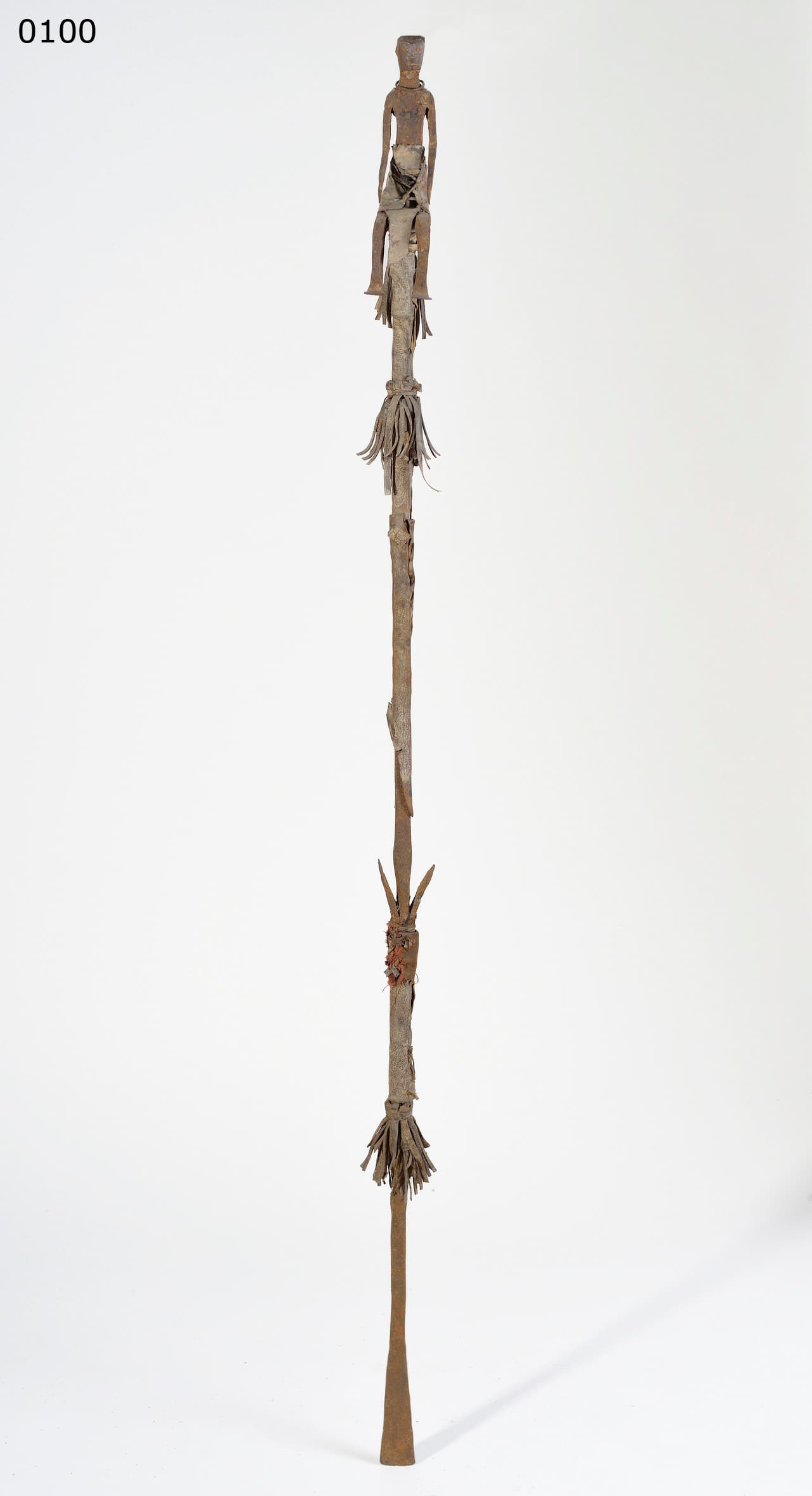
This intriguing ritual object consists of a heavy, forged iron staff topped by an angular, seated iron figure. The long metal shaft is tightly and extensively wrapped in thick, desiccated leather thongs and fringes, which are deeply stiffened with age, dirt, and likely sacrificial matter.
1. Aesthetic style — the alchemy of the forge in the Sahel
This object is a classic expression of West African blacksmithing, strongly associated with the Bamana, Dogon, or potentially Lobi cultures of the Sahel. In these societies, the blacksmith (Numu) is not merely a craftsman, but an alchemist, a priest, and a master of fire. Working with iron is considered a highly dangerous, magical act. The seated figure at the apex is forged with brutalist, geometric efficiency, prioritizing raw, angular power over refined detail. This iron figure is immutable and indestructible, representing the unyielding, eternal nature of the ancestral spirits that the blacksmith invokes.
2. Ritual function — iron altars and the containment of nyama
Iron staffs of this type are utilized as portable, highly active altars. They are designed to be driven directly into the earth at a shrine, a crossroad, or outside a dwelling to establish a protective boundary. The iron itself acts as a lightning rod for nyama (the vital, unseen spiritual energy of the universe). The seated figure represents the guiding spirit or the protective ancestor commanding this energy. The extensive leather wrapping is critical; leather is often used to bind and conceal nyama-laden medicines (herbs, animal parts, or written charms) directly to the iron, supercharging the staff's protective magic against witchcraft.
3. Physical patina — desiccated leather and ferric oxidation
The physical presence of this staff is defined by its incredibly authentic, multi-material taphonomy. The exposed iron of the seated figure is heavily pitted and coated in a deep, dark layer of ferric oxidation (rust), accumulated over decades of exposure to the elements and ritual libations. The leather wrapping is spectacular; it is completely fossilized, stiff, and deeply darkened by sweat, smoke, and age. The fringes hang rigid, no longer pliable, proving that this staff was actively used and subsequently left to age naturally over the first half of the 20th century.
Summary
A masterful synthesis of the blacksmith's magic and animistic protection, this forged iron staff utilizes brutalist geometry and organic binding to control spiritual energy. Its heavily oxidized metal and profoundly desiccated leather wrapping make it a highly desirable, authentic Sahelian power object.
Written with AI assistance from the collection appraisal, object photography and our own research; editorially reviewed. Mistakes are possible — corrections are welcome. How we work →