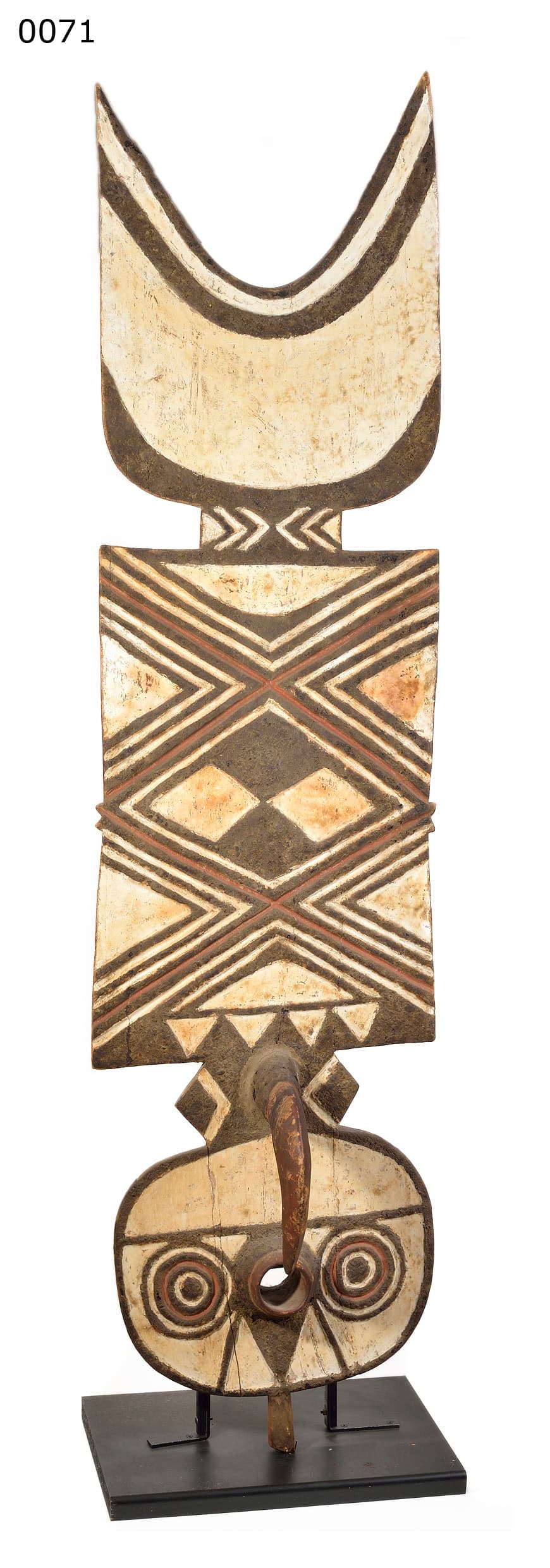
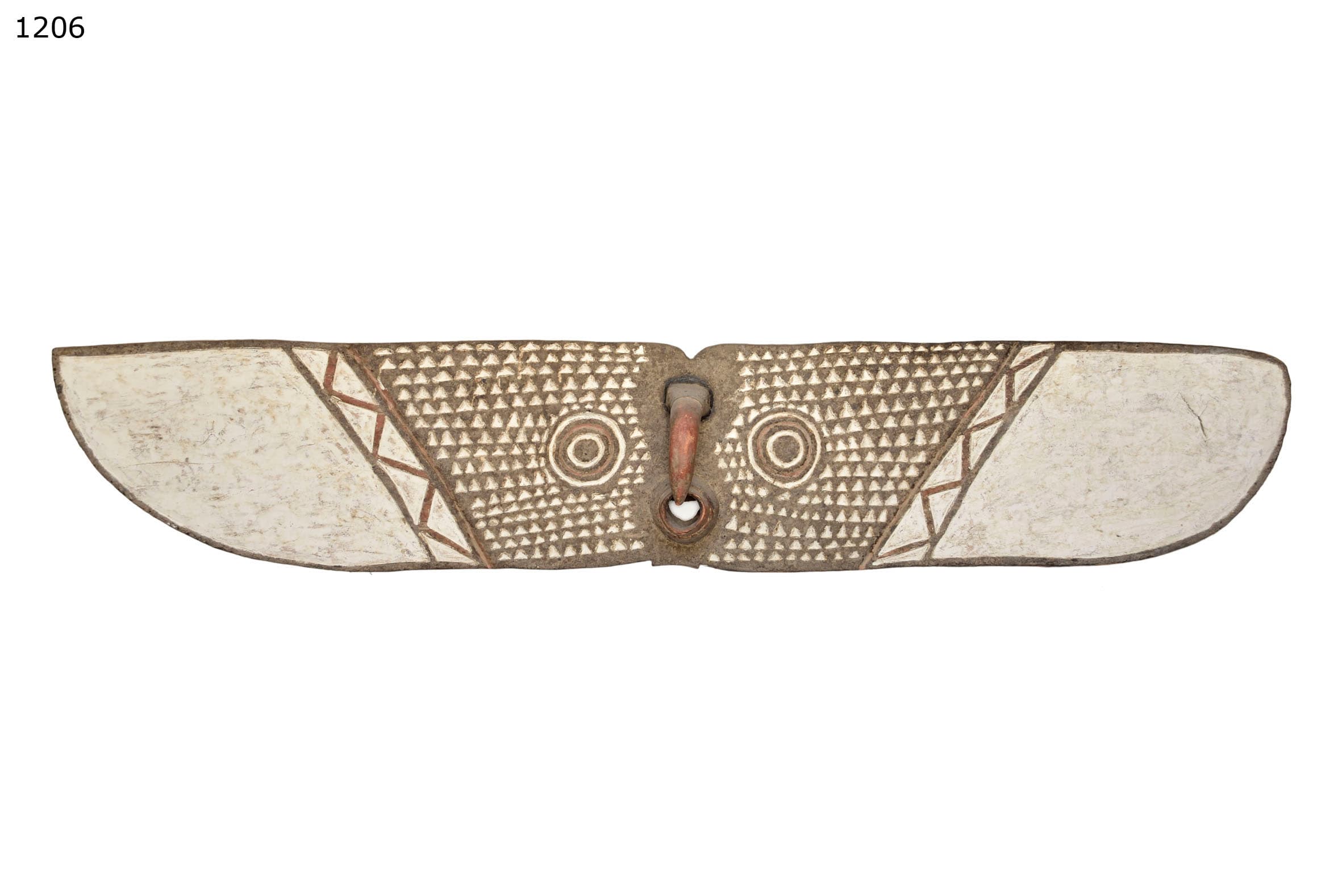
Reaching 496 cm (nearly 16 feet), this Bansonyi mask features a small, round face with concentric eyes at the base, surging upward into a massive, undulating, zigzagging plank. The entire surface is richly painted with high-contrast, black, white, and red geometric triangles and chevrons.
1. Aesthetic style — the graphic abstraction of the bansonyi
The Bwa people of Burkina Faso are widely recognized for their large-scale, two-dimensional graphic abstraction. This monumental Bansonyi mask is a striking representation of a massive, supernatural serpent. By carving the edges of the towering plank into sharp zigzags and painting the flat surface with alternating, high-contrast triangles, the carver creates a powerful optical illusion of a slithering, kinetic snake, even when the mask is standing perfectly still. The geometry is not just decorative; the checkerboards and zigzags are a readable moral text, representing the separation of light and dark, knowledge and ignorance.
2. Ritual function — the Do cult and the guardian serpent
The massive serpent depicted here is not a mundane animal; it is a powerful, benevolent bush spirit utilized by the Do religious association. During purification ceremonies and initiation rites, the Bansonyi mask is danced at dusk or by firelight. The dancer, hidden beneath thick raffia, must possess great strength to balance the 5-meter plank. As the dancer moves, the towering snake appears to writhe and strike at the sky, actively clearing the village airspace of malevolent witchcraft and ensuring the spiritual boundaries of the community remain impenetrable.
3. Physical patina — masterful engineering and pigment abrasion
The structural reality of carving a nearly 5-meter wooden plank that is thin enough to wear, yet strong enough not to snap during an aggressive dance, is a remarkable example of traditional engineering. The patina on this mask is consistent with its attributed age. The striking, high-contrast pigments are composed of local soot, red earth, and kaolin chalk. Over the estimated first half of the 20th century, these natural paints have become deeply matte, with significant organic flaking and abrasion where the dancer gripped the base, suggesting its active life in the Voltaic savannah.
Summary
A remarkable example of Burkinabe engineering and optical design, this nearly 5-meter Bwa Bansonyi mask transforms the serpentine form into a towering expression of graphic morality. Its high-contrast abstraction and massive scale make it a highly significant ethnographic work.
Written with AI assistance from the collection appraisal, object photography and our own research; editorially reviewed. Mistakes are possible — corrections are welcome. How we work →