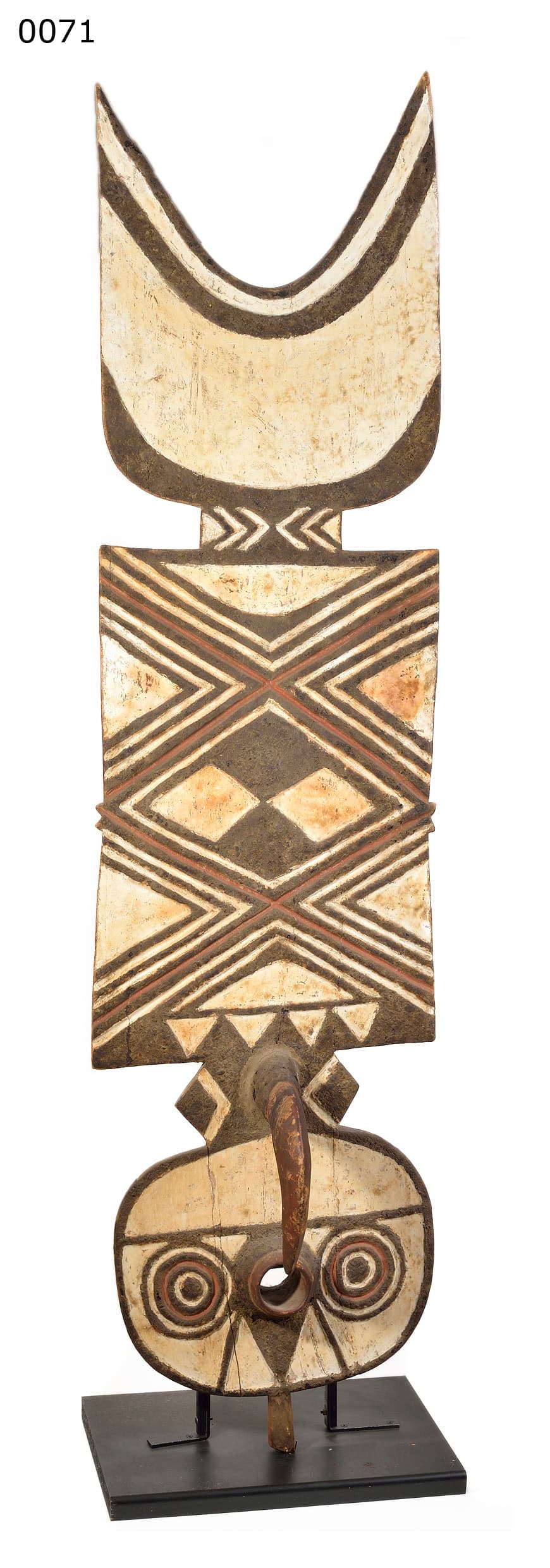
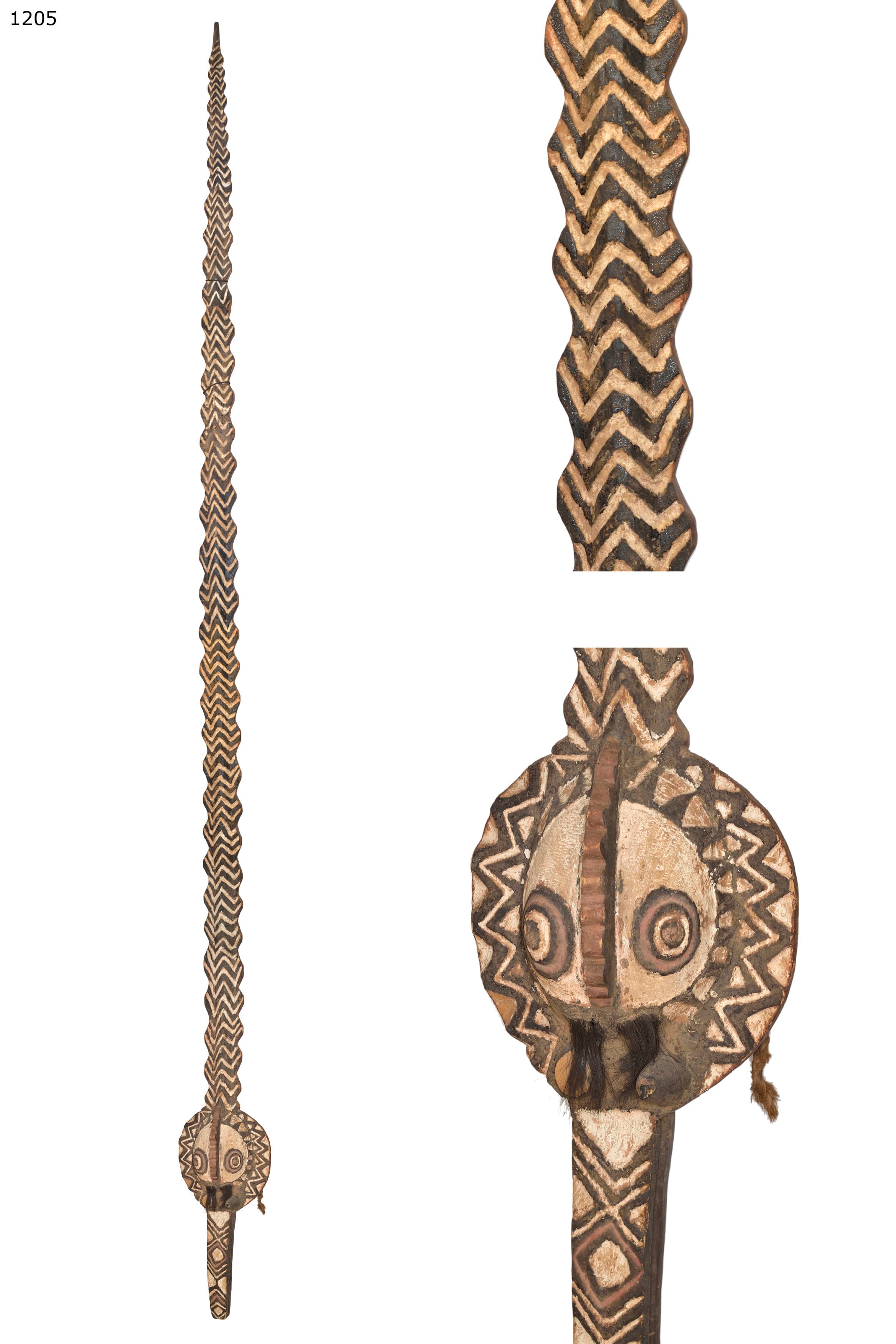
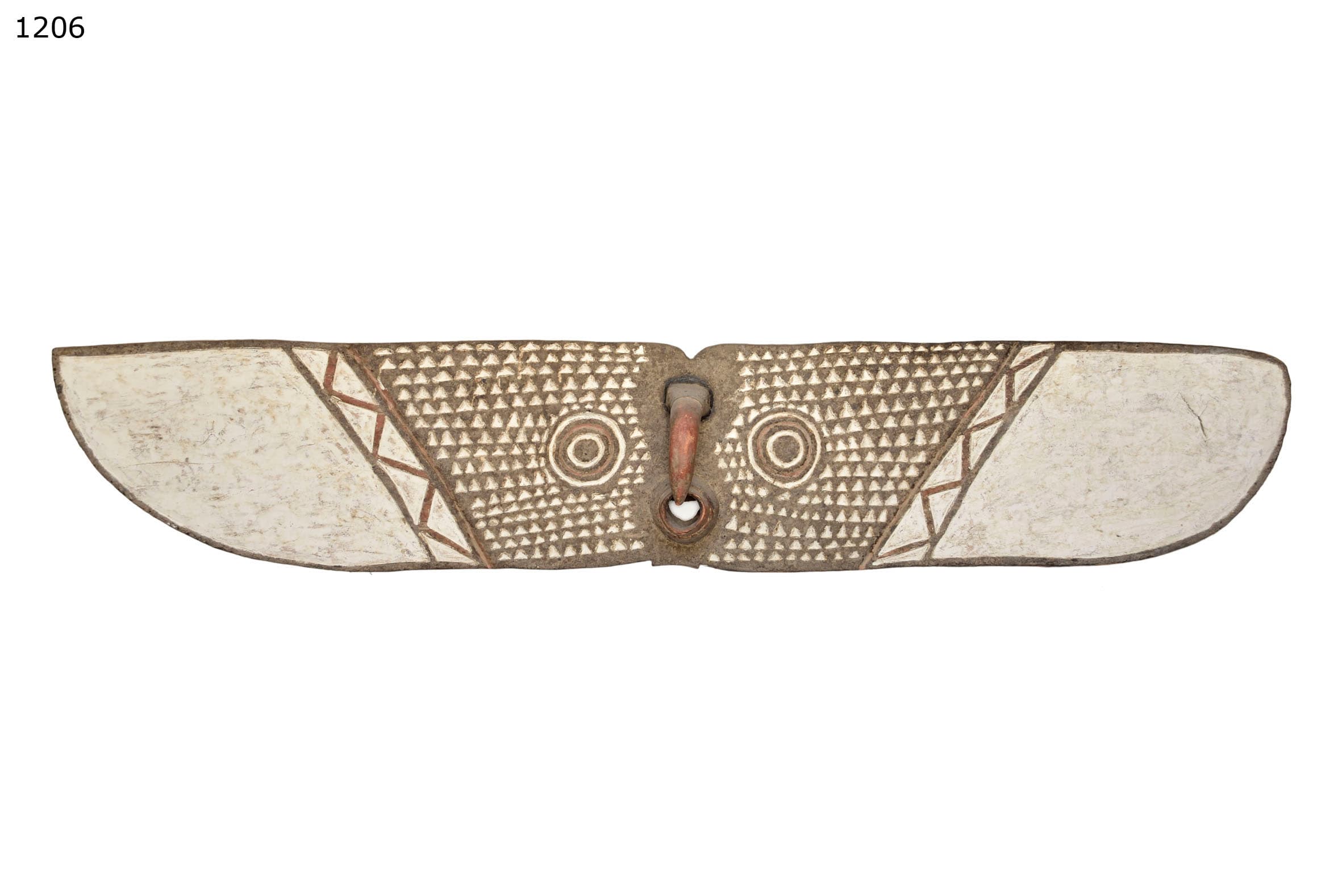
An immense, plank-like wooden mask (nwantantay) reaching 150 cm in height. It features a small, projecting, circular face with concentric ring motifs, topped by a towering, segmented vertical board decorated entirely in high-contrast, black-and-white geometric checkerboard and zig-zag patterns. A thick ruff of dried raffia fibers hangs below the face.
1. Aesthetic style and regional traits
The Bwa people are world-renowned for these massive, brilliantly graphic plank masks. The aesthetic relies on the aggressive visual vibration of alternating black and white geometric shapes. These patterns are not merely decorative; they are a highly codified language representing the moral laws of the community, the flight of bats, the paths of the ancestors, and the separation of knowledge from ignorance. The Bwa patterning system is one of the most fully decoded visual languages in West African masking literature, with each motif carrying a specific institutional meaning.
2. Ritual function and the Do society
These towering nwantantay masks are the physical manifestations of the protective nature spirits associated with the Do secret society. They appear during village purification ceremonies, agricultural rites, and funerals. The dancers perform incredible acrobatic feats, spinning the massive 1.5-meter planks to dramatically cut the air, physically driving away malevolent forces, disease, and witchcraft from the community. The acrobatic performance is a central operational element — the mask's protective function is enacted through the dancer's physical exertion as much as through the mask's iconography.
3. Physical patina and wear
Signs of age and use are suggested by its structural wear. The edges of the plank show historical dings and abrasions from dynamic dancing and occasional contact with the earth. The black and white pigments are deeply set, faded, and chalky, indicating repeated indigenous application and subsequent environmental weathering. The thick raffia collar is brittle, dust-filled, and organically aged, consistent with use in the first half of the 20th century.
Summary
A breathtaking, monumental Bwa plank mask that perfectly illustrates the use of high-contrast geometry for spiritual communication and community protection. Its massive scale, faded pigments, and wear consistent with performance use make it a significant example of Burkina Faso art.
Written with AI assistance from the collection appraisal, object photography and our own research; editorially reviewed. Mistakes are possible — corrections are welcome. How we work →