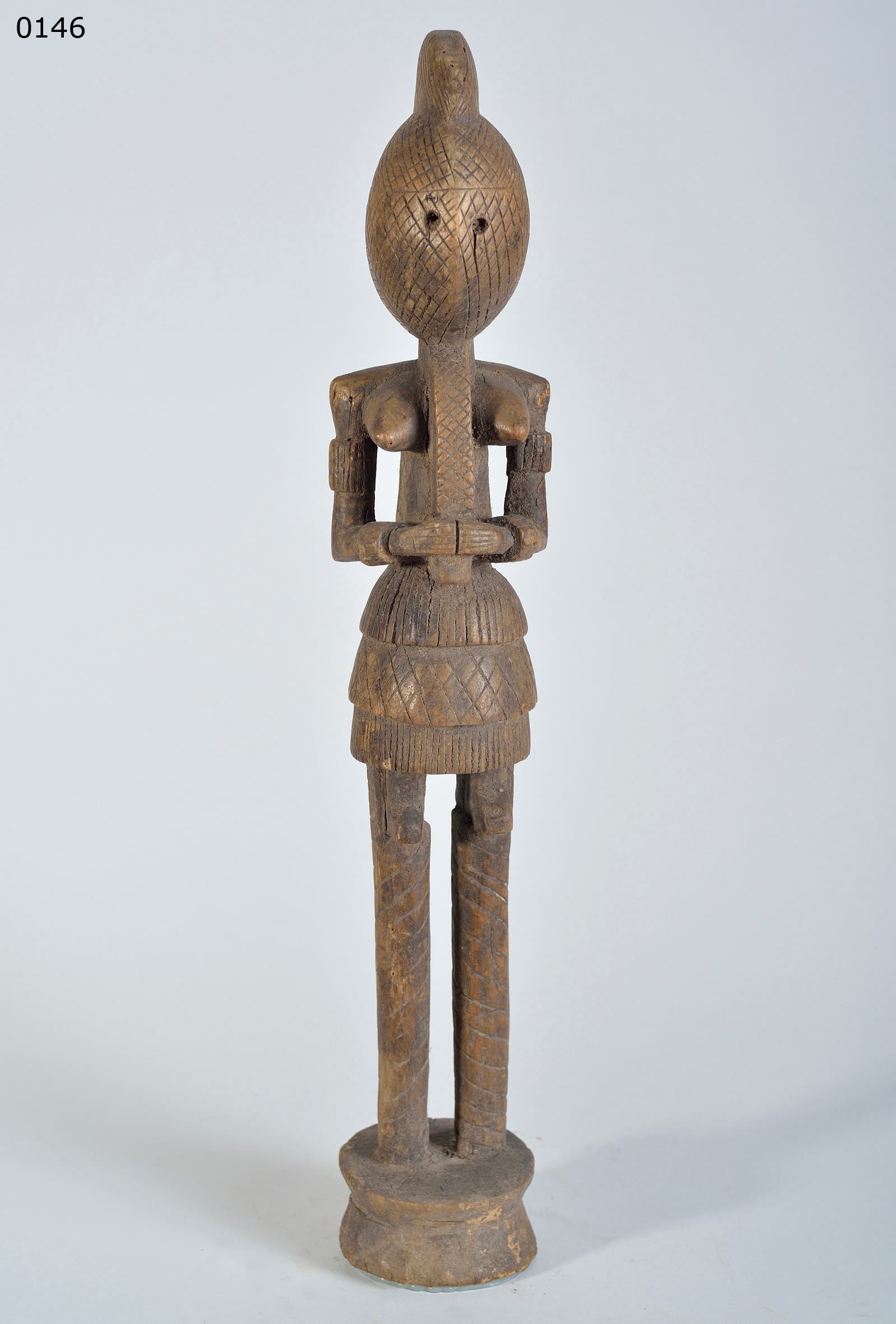
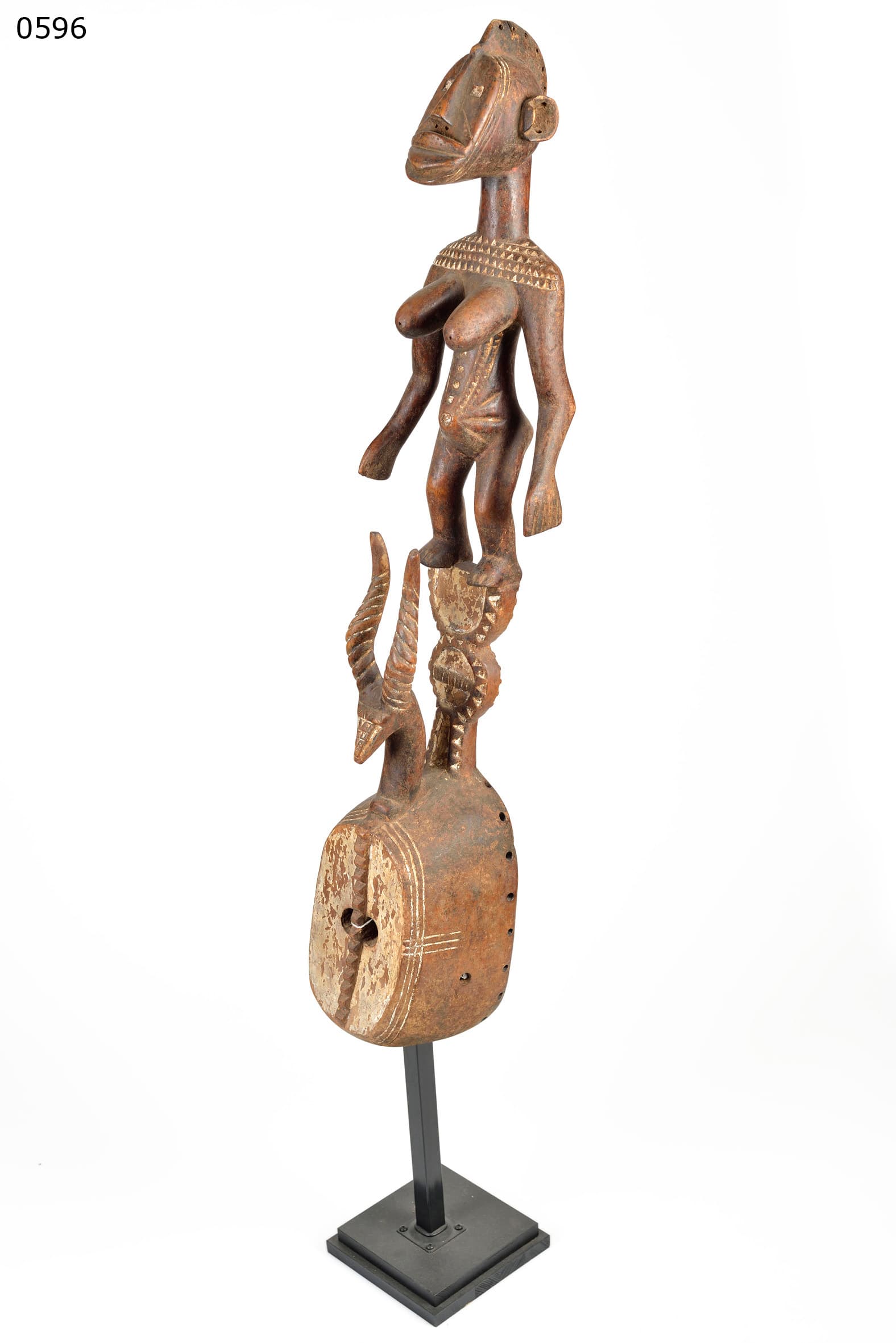
Eine große weibliche Figur aus dunklem Holz (Mitte 20. Jh., 82 cm) von den Mossi aus Burkina Faso - starr aufrecht, gekrönt von einem ausgeprägten zweilappigen Sagittalkamm, die Hände ruhen in der Nähe des Bauches.
1. Königliches Gedenken (Nakomse)
Die Mossi sind politisch entlang einer alten Bruchlinie gespalten.
- Zwei Völker, zwei Künste: Die ursprünglichen Bauern (Nyonyosi) schnitzen Masken; die erobernde herrschende Klasse (Nakomse) gibt traditionell figurative Statuen in Auftrag.
- Aristokratische Haltung: Diese Figur gehört zur königlichen Nakomse-Tradition, die zum Gedenken an eine weibliche Vorfahrin geschnitzt wurde und die würdevolle, starre Autorität des Herrschergeschlechts zum Ausdruck bringt.
2. Das Gyindo-Wappen
Das zweilappige Wappen, das von vorne nach hinten über den Kopf verläuft, ist ein sozialer Ausweis.
- Aristokratische Frisur: Es stellt die Gyindo dar, eine historische Frisur, die ausschließlich von Mossi-Frauen von hohem Rang und königlichem Blut getragen wurde.
- Identitätsabzeichen: Es ist auf den ersten Blick erkennbar und weist die Figur eindeutig als Elitefrau und nicht als allgemeine Vorfahrin aus.
3. Schrein-Verehrung
Mit 82 cm war dies kein unbedeutender Haushaltsgegenstand.
- Königsaltar: Wird im Ahnenschrein eines Mossi-Häuptlings aufgestellt.
- Jährliche Opfergaben: Während der königlichen Zeremonien opferte der Häuptling Hirsebier und Tierblut, um den Ahnenmüttern zu danken und sie um fortgesetzte Fruchtbarkeit und politische Stabilität des Häuptlingstums zu bitten.
Zusammenfassung
Diese Mossi-Figur ist ein stattliches Denkmal der weiblichen Aristokratie. Durch ihre starre Vertikalität und das spezifische Gyindo-Wappen projiziert sie die dauerhafte politische und spirituelle Autorität des königlichen Geschlechts der Mossi.
KI-unterstützt erstellt aus Sammlungsgutachten, Objektfotografie und eigener Recherche, redaktionell geprüft. Fehler sind möglich — Hinweise darauf sind uns willkommen. Zum Verfahren →