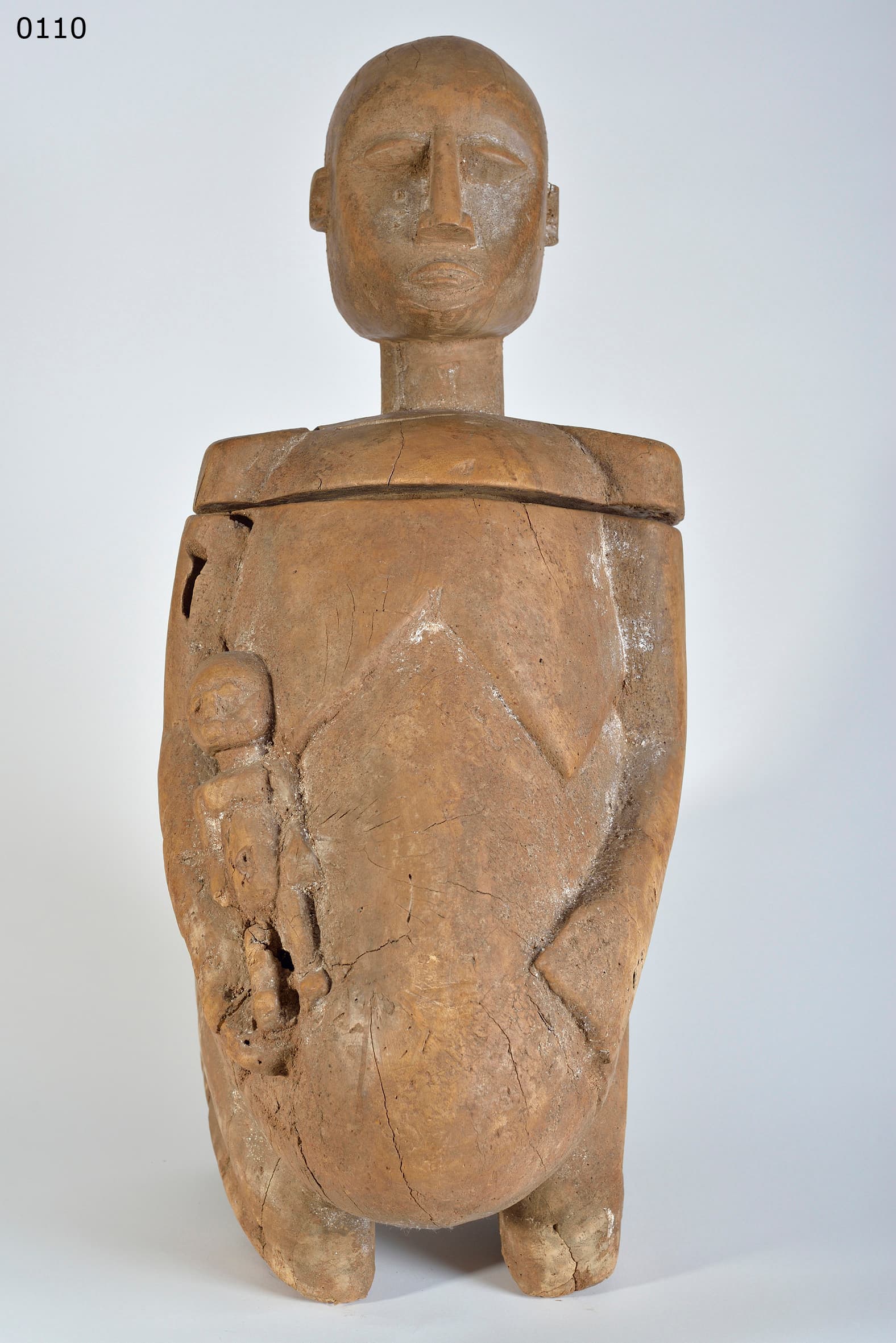
A masterfully carved wooden male Bateba (1st half 20th C., 81 cm) from the Lobi of Burkina Faso — the right leg structurally replaced by the body of a smaller child clinging to the father's waist, a cowrie-shell necklace around the neck.
1. The rarity of paternity in African art
Maternity figures are ubiquitous across West African sculpture; paternity figures are exceedingly rare.
- Shifted Focus: Rather than biological birth, this carving addresses societal continuity and protection.
- The Father's Duty: It dramatizes the male role of raising the next generation of hunters, farmers, and warriors — a dimension usually absent from shrine figures.
2. Sculptural ingenuity: The living support
The carver's solution is structurally brilliant.
- Son as Pillar: Instead of the father merely holding the son, the son physically replaces the father's leg.
- Inversion of Support: The father carries the child now, but the visual metaphor is that the child is the literal pillar holding the family's future upright.
3. Shrine activation
This is a Bateba — a physical vessel for the invisible Thila spirits.
- Cowrie Necklace: The shells indicate the figure was formally "activated" by a diviner.
- Protection of Male Heirs: Placed on a family altar, it was petitioned to shield the male heirs of the household from disease and witchcraft.
Summary
This Lobi paternity figure is a feat of metaphorical engineering. It is a highly rare, tender yet structurally robust depiction of fatherhood, proving that the son is the literal and spiritual foundation of the lineage.
Written with AI assistance from the collection appraisal, object photography and our own research; editorially reviewed. Mistakes are possible — corrections are welcome. How we work →
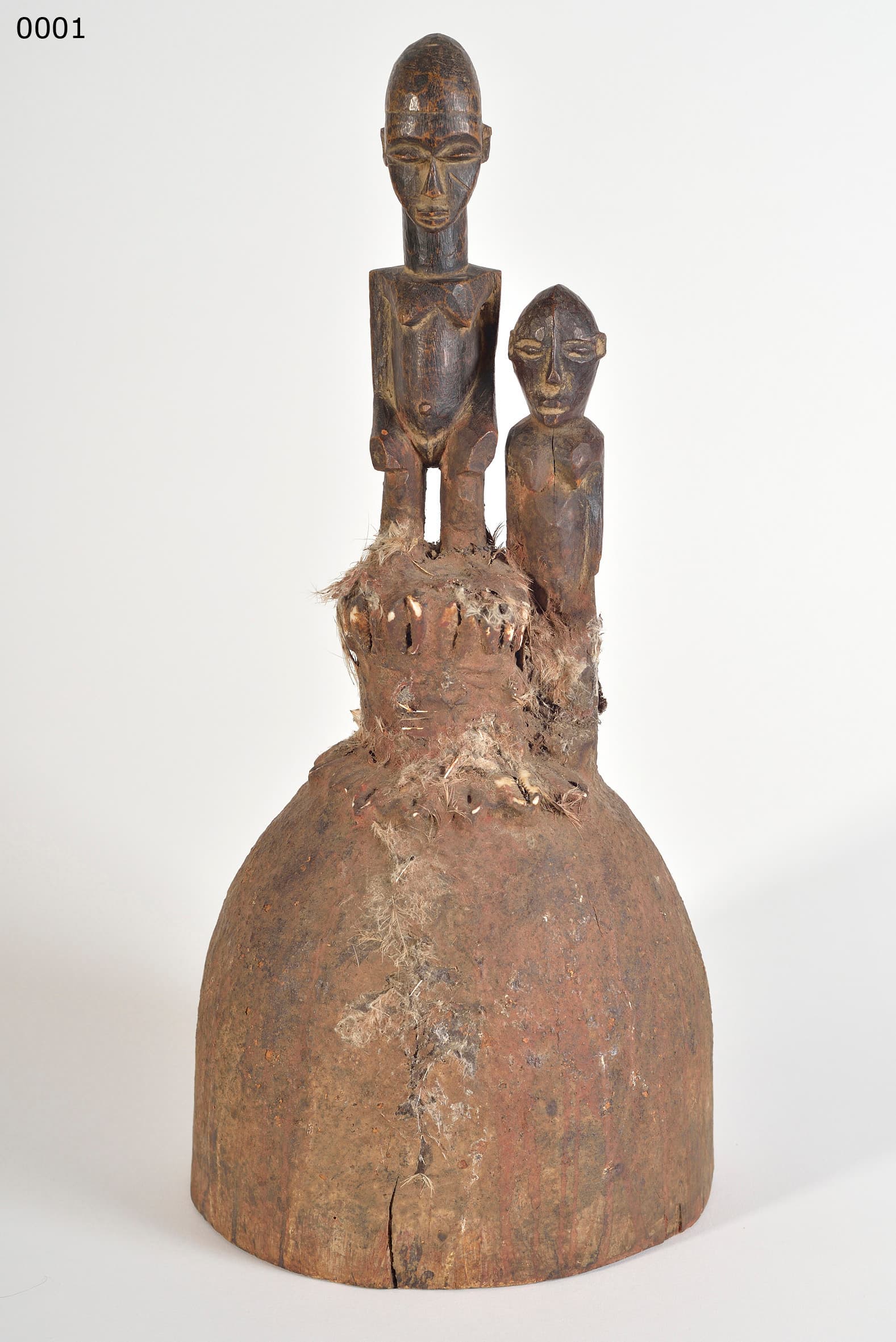
shrine altar with BATEKE couple
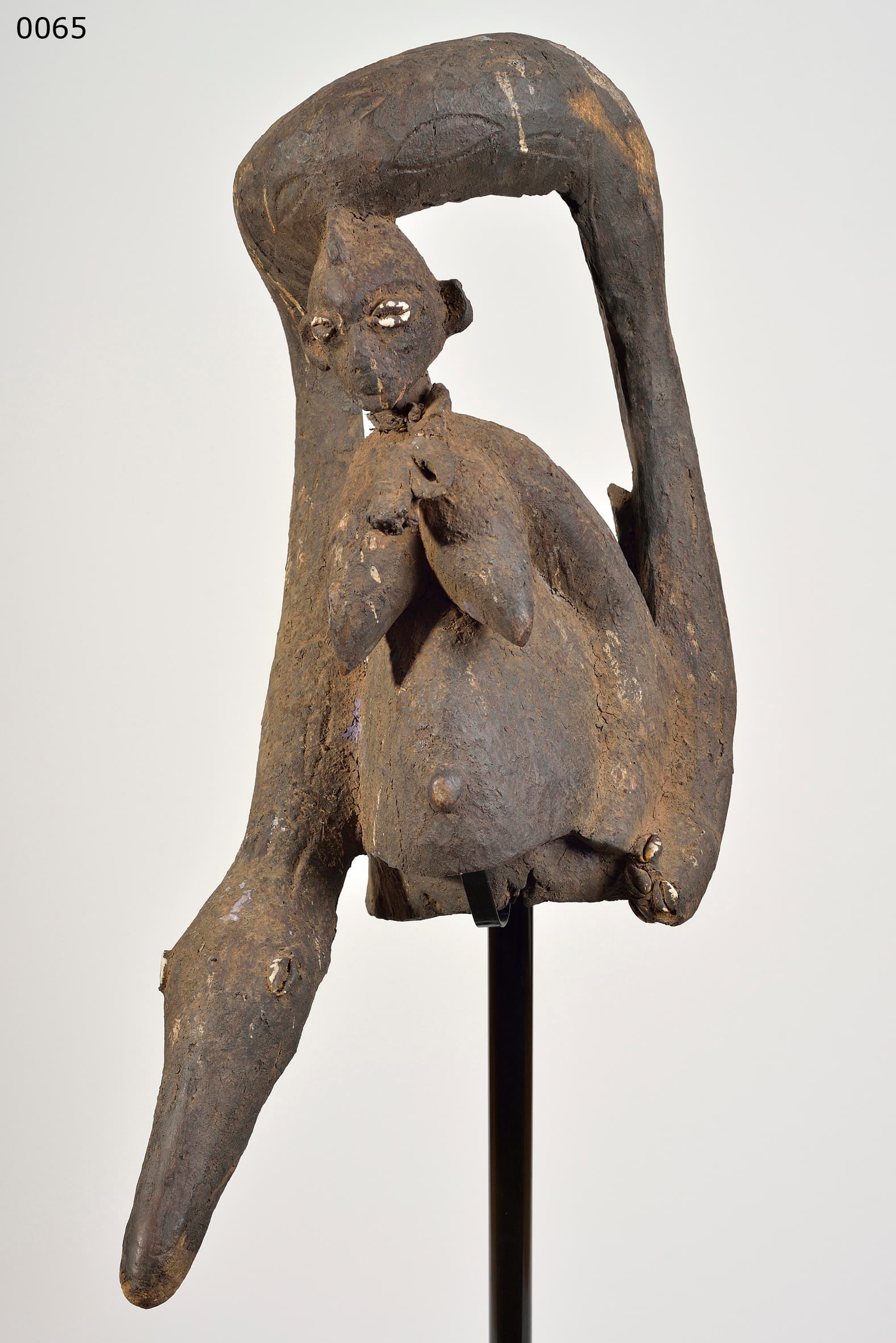
rare head crest mask
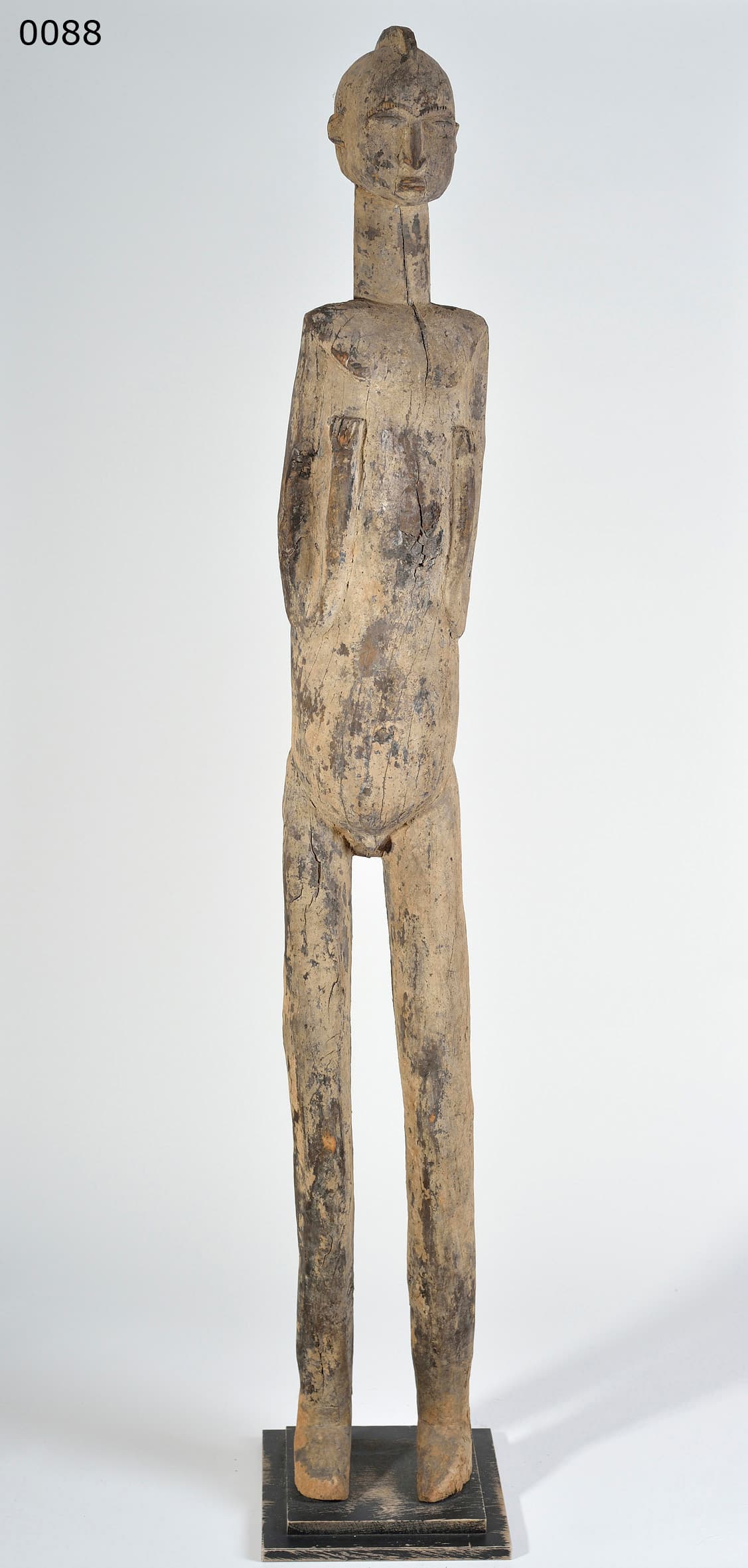
shrine figure representing a BATEBA spirit (unusually tall, rare)