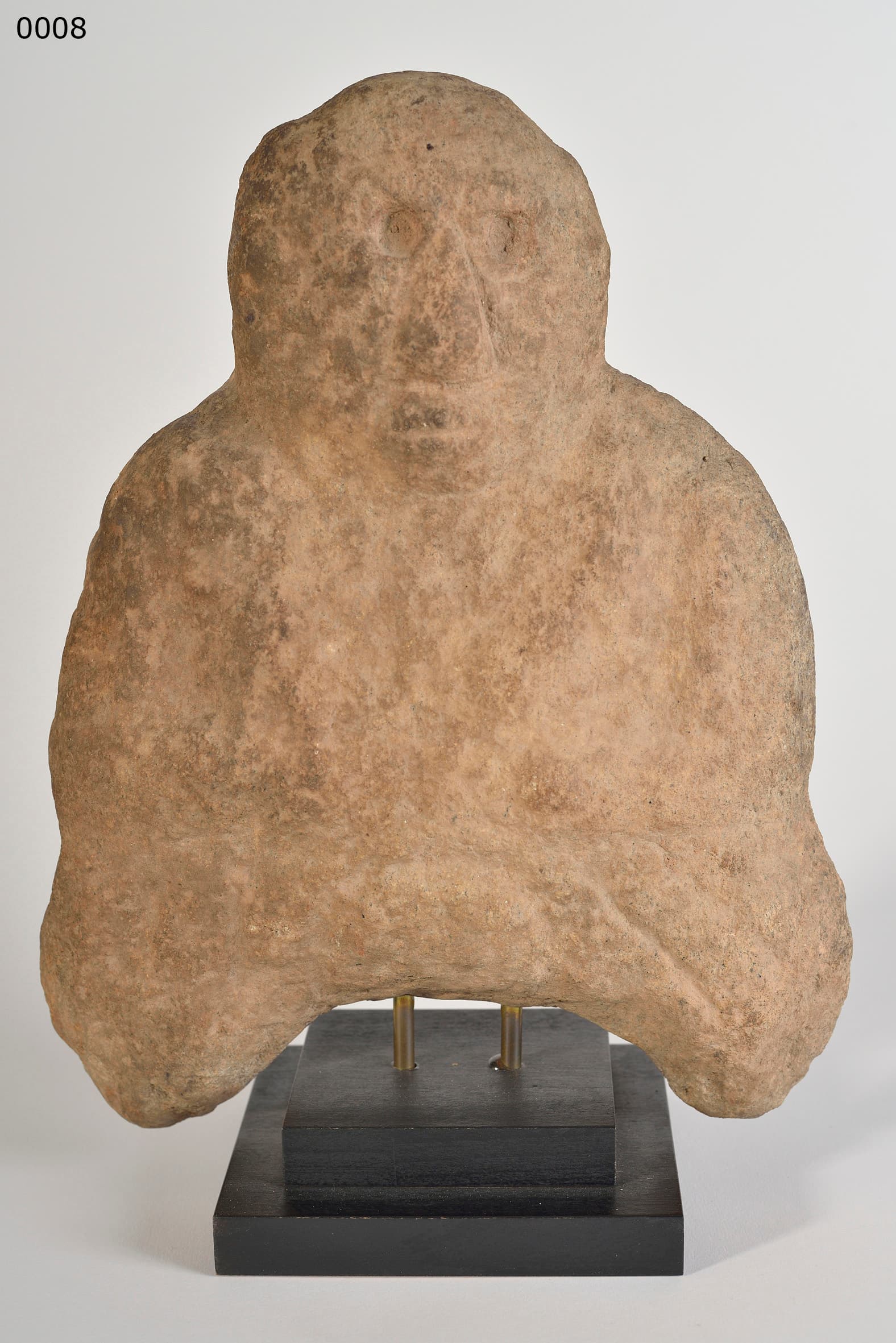
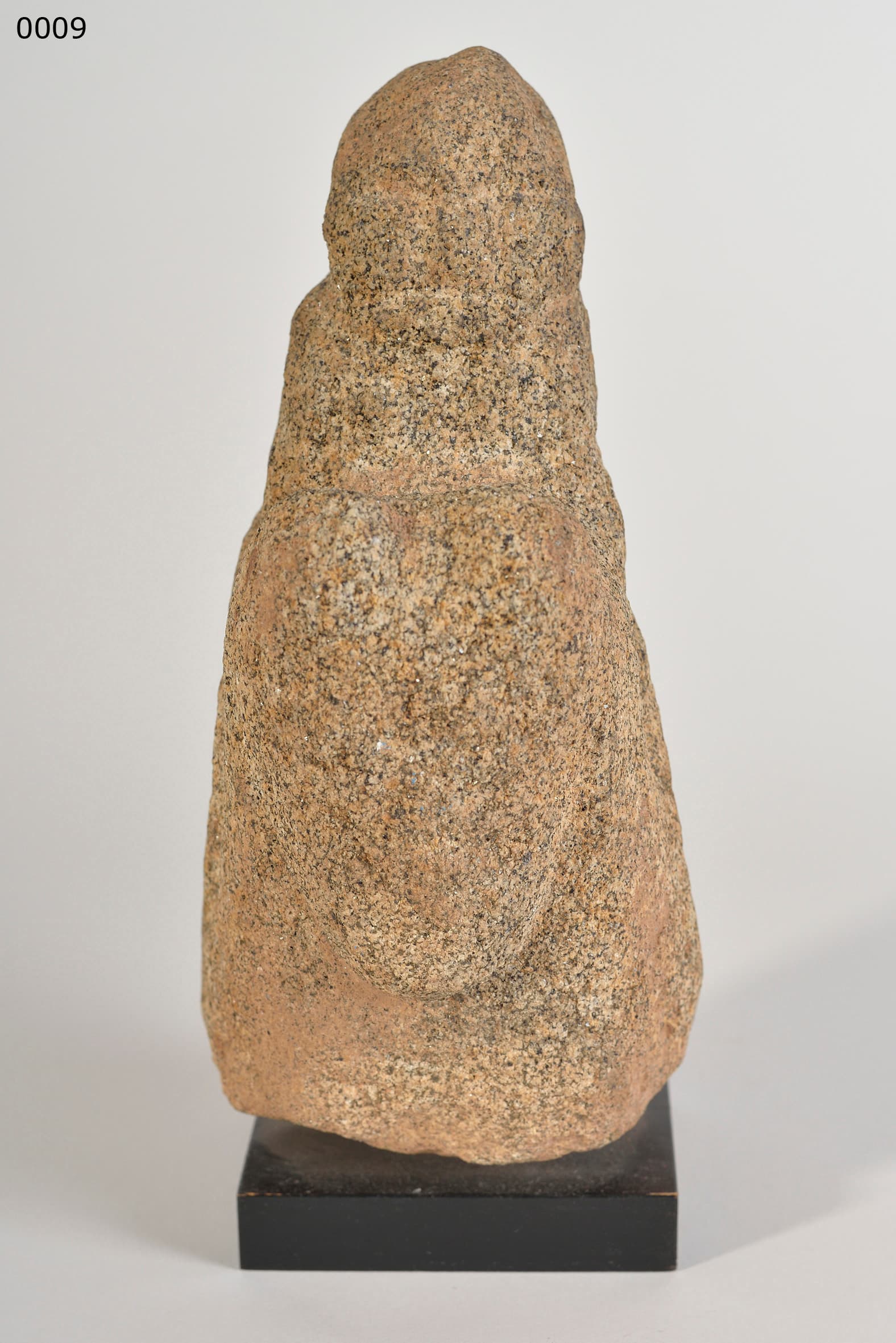
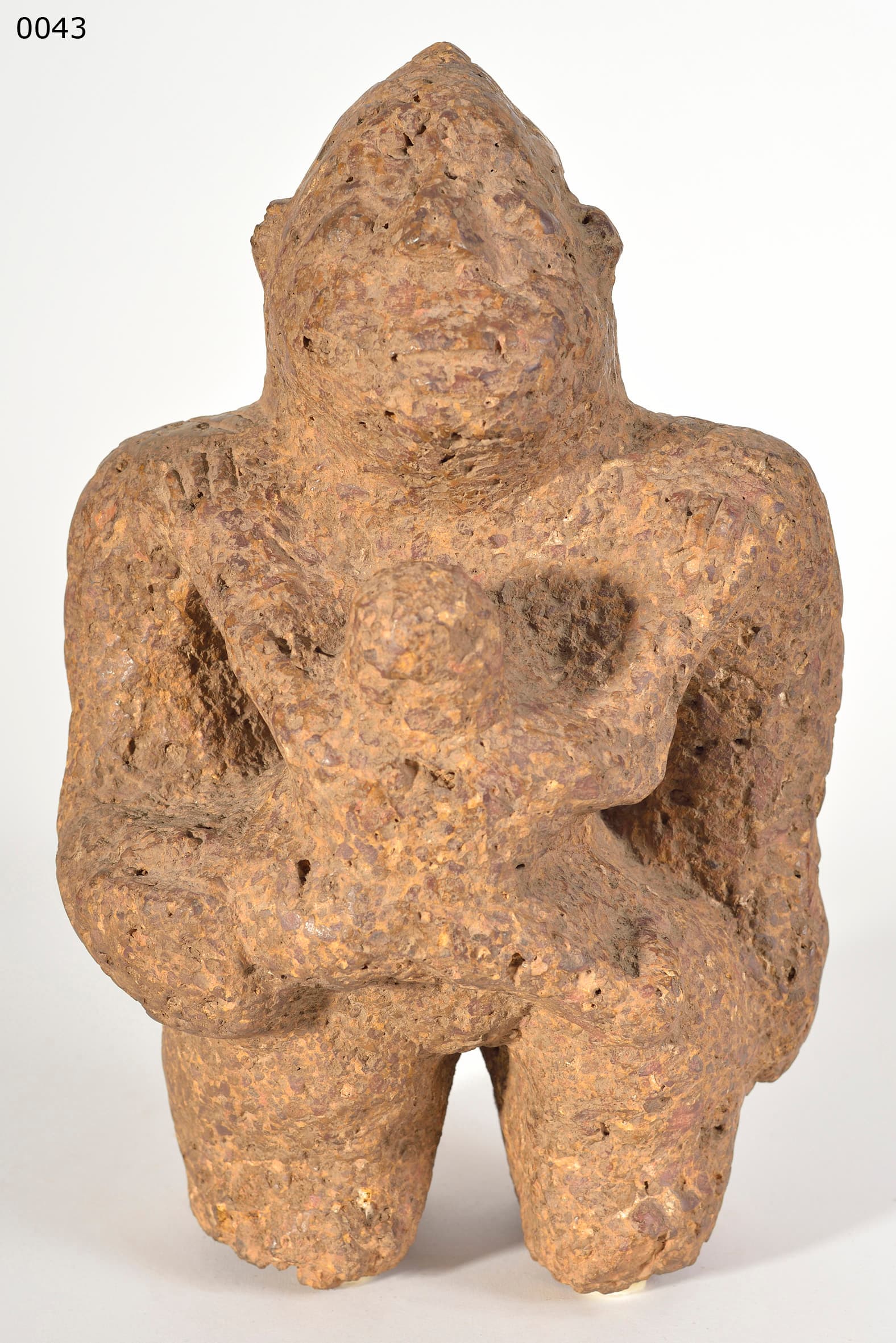
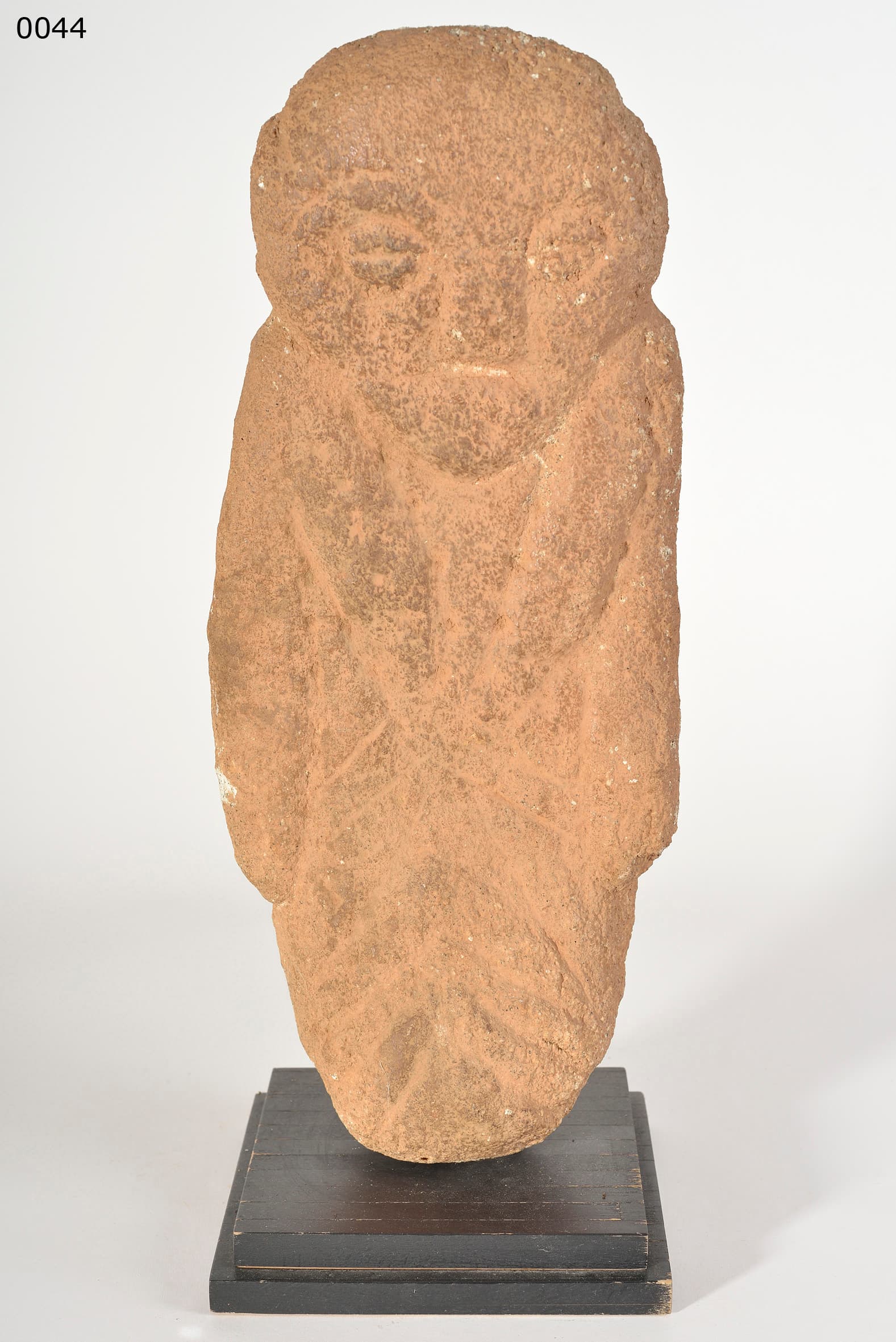
A heavily eroded flat stone stele (12th–16th C., 58 cm) from the Nyonyosi of Burkina Faso — a slab with softened incised lines and blurred geometric markings, carved from dense laterite.
1. The "masters of the earth"
The Nyonyosi are the original pre-Mossi inhabitants of the Burkinabe plateau.
- Stone Over Wood: Unlike their later neighbors, the Nyonyosi carved dense laterite and granite to forge an unbreakable, permanent link to the land.
- Pure Abstraction: Item 132 represents the most minimal end of the tradition — a flat incised slab whose geometry alone marked the sanctity of the burial below.
2. An anonymous marker
Stripped of figurative features, this stele relies on place and pattern.
- Territory Claim: Planted over a burial mound, the stone's incisions encoded lineage affiliation known to the community without needing portraiture.
- Spirit Seat: The flat surface also served as a libation platform, receiving offerings poured by descendants across generations.
3. 12Th–16th-Century Erosion
The weathering is the slab's final authenticator.
- 500–800 Years Exposed: Centuries of Sahelian sun, wind-blown sand, and rain have rounded the chisel marks and blurred the original incisions.
- Fused With the Land: The stone's surface now reads as half carving, half geology — the art literally returning to the earth.
Summary
This Nyonyosi slab is the most minimal voice of the tradition. A weathered incised monolith marking an anonymous but honored burial, it quietly claims the earth on behalf of Burkina Faso's earliest inhabitants.
Written with AI assistance from the collection appraisal, object photography and our own research; editorially reviewed. Mistakes are possible — corrections are welcome. How we work →