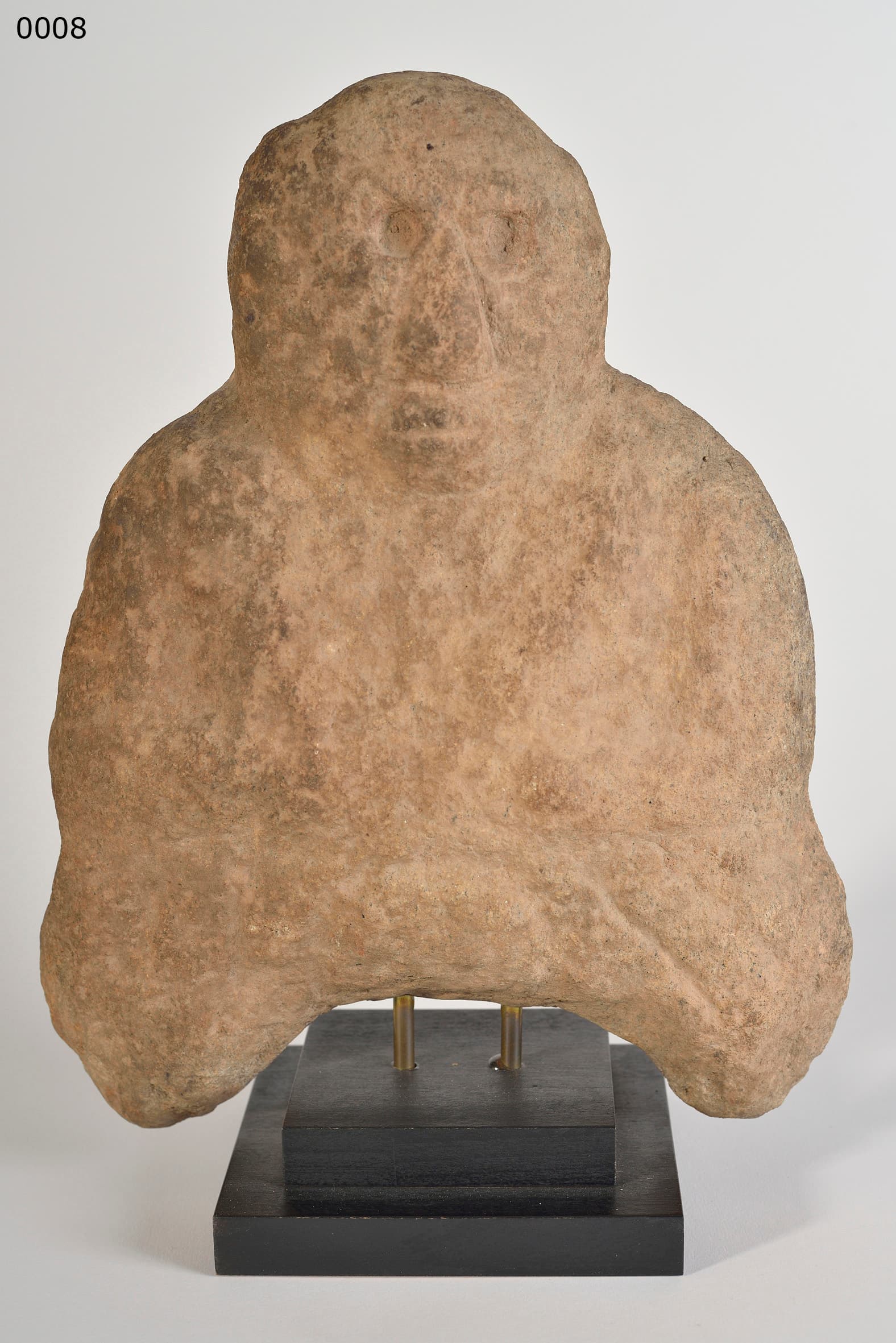
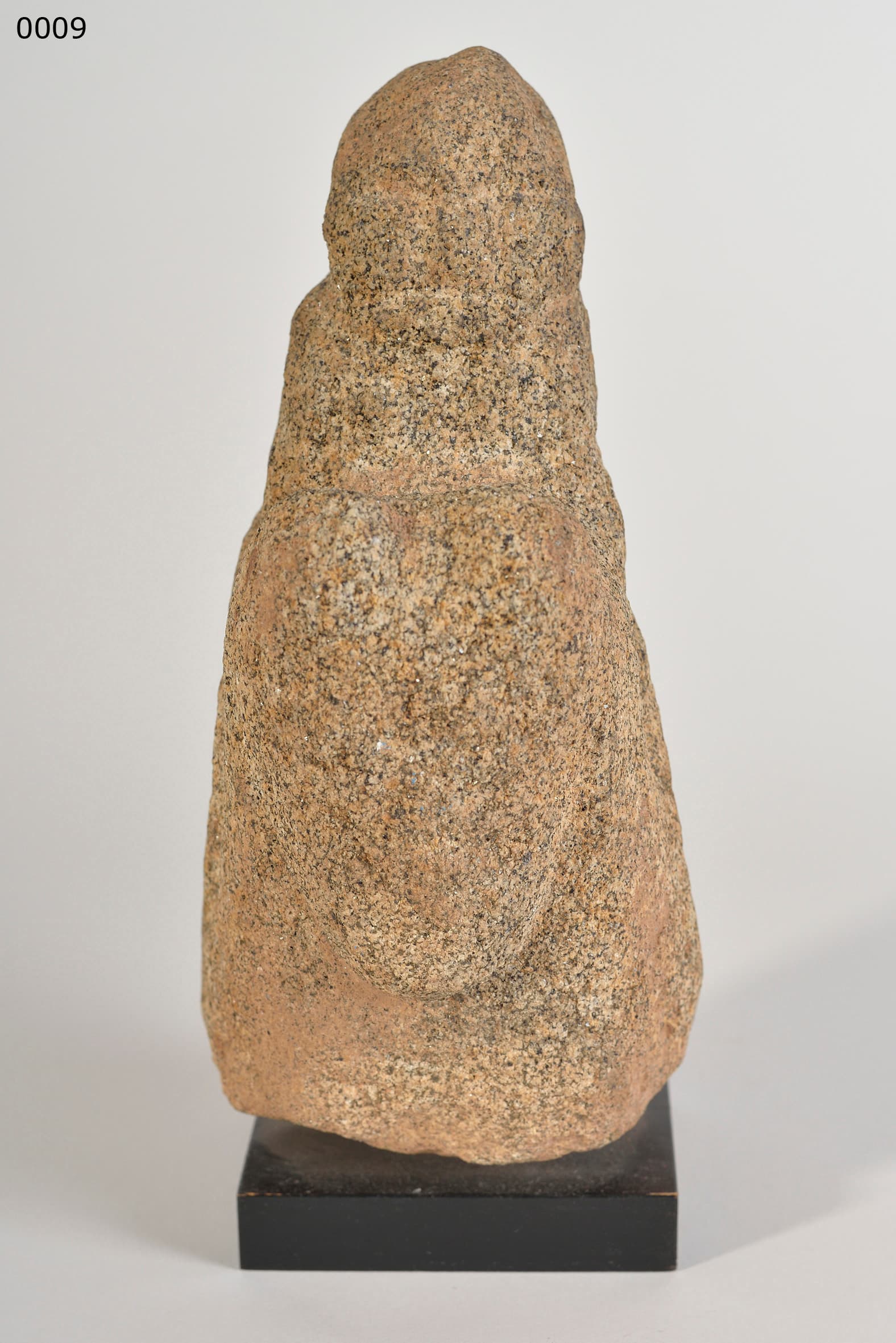
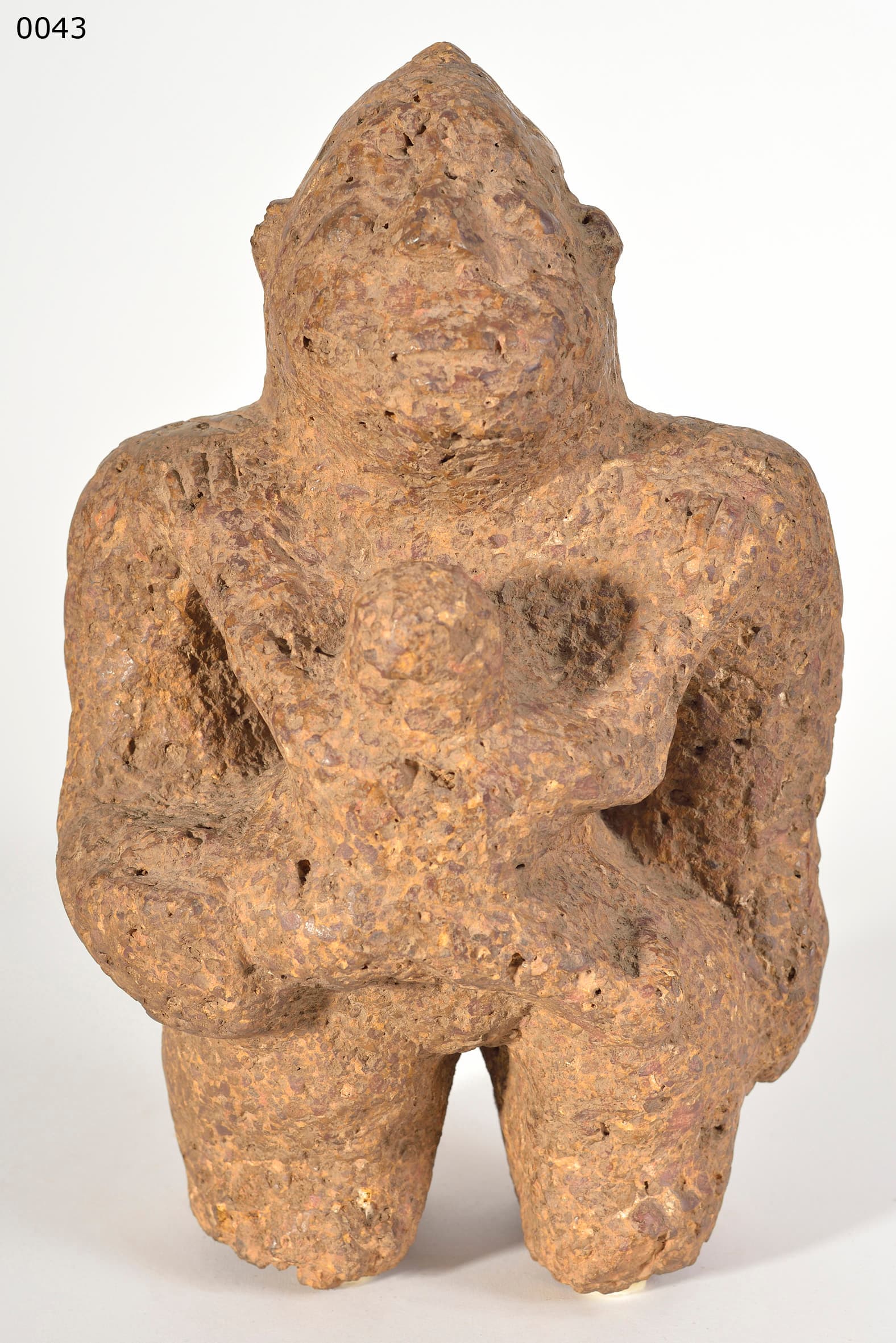
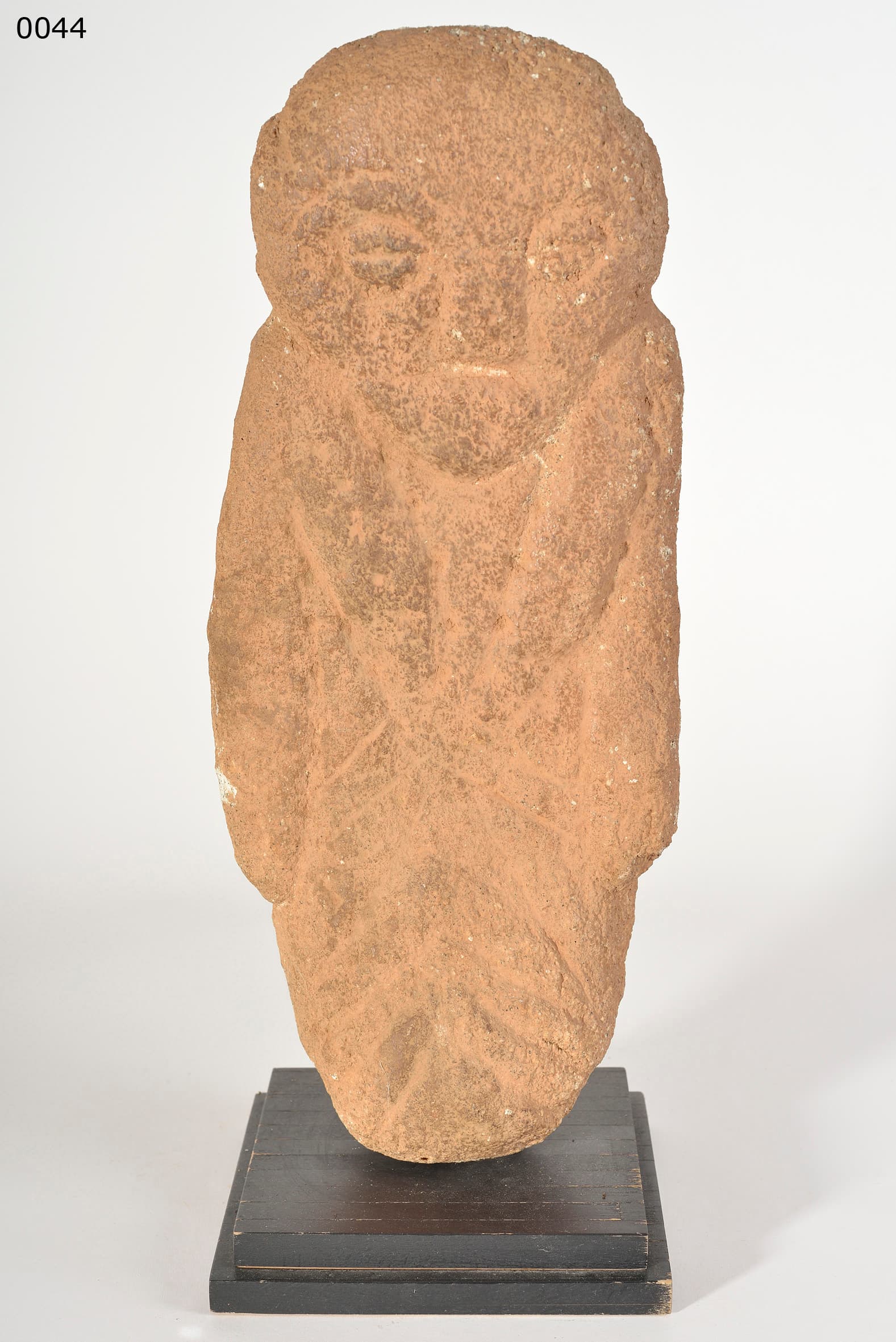
A weathered columnar stone pillar (12th–16th C., 61 cm) from the Nyonyosi of Burkina Faso — phallic in silhouette, carved from dense laterite, with softened incised markings left by centuries of exposure.
1. The planted ancestor
The phallic column is the core Nyonyosi masculine form.
- Seed of the Lineage: The upright silhouette symbolizes the planting of the male ancestor's vital force back into the soil.
- Vertical Claim: At 61 cm the pillar stood as a miniature monument visible from across the burial field, marking an elite male grave among the Nyonyosi necropolis stones.
2. Stone as permanence
The choice of laterite over wood is a statement about time.
- Unbreakable Record: Where carved wood rots within a generation, stone resists centuries of climate and termites.
- Pre-Mossi Authority: These stones outlived the Nyonyosi political ascendancy itself — when the Mossi arrived, the stones were already ancient, reinforcing the Nyonyosi claim as the true "Masters of the Earth."
3. Centuries of weather
The erosion pattern authenticates the piece.
- Rounded Edges: Wind-driven sand and seasonal rains have blurred the original chisel marks into soft, pitted curves.
- Surface as Calendar: Every pit and depression records a specific episode of Sahelian weathering — the stone has become a literal archive of 500+ years of climate.
Summary
This Nyonyosi pillar is a lithic seed for a founding male ancestor. Its upright phallic silhouette and weathered laterite surface embody the tradition's core theology: planting the dead permanently into the earth.
Written with AI assistance from the collection appraisal, object photography and our own research; editorially reviewed. Mistakes are possible — corrections are welcome. How we work →