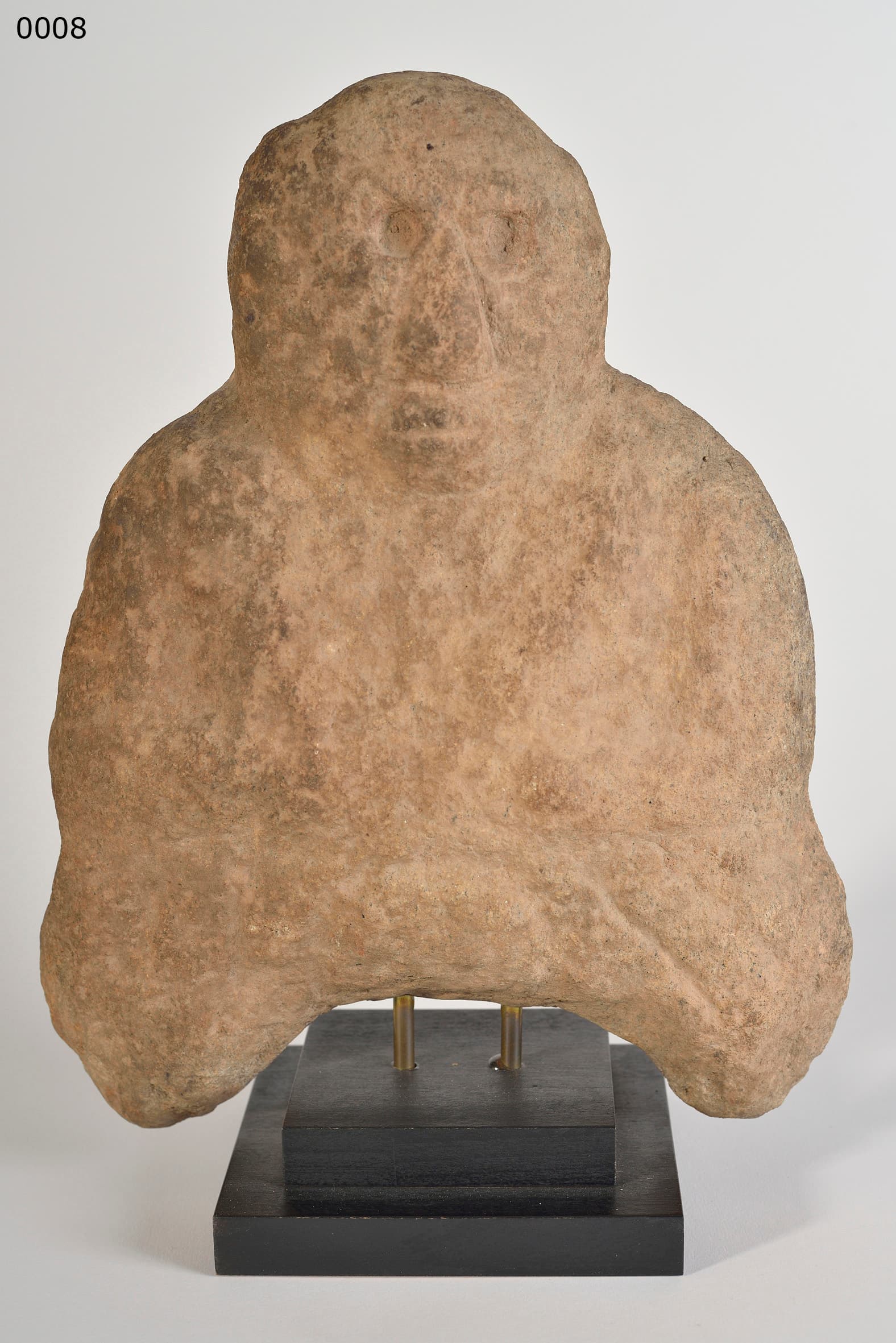
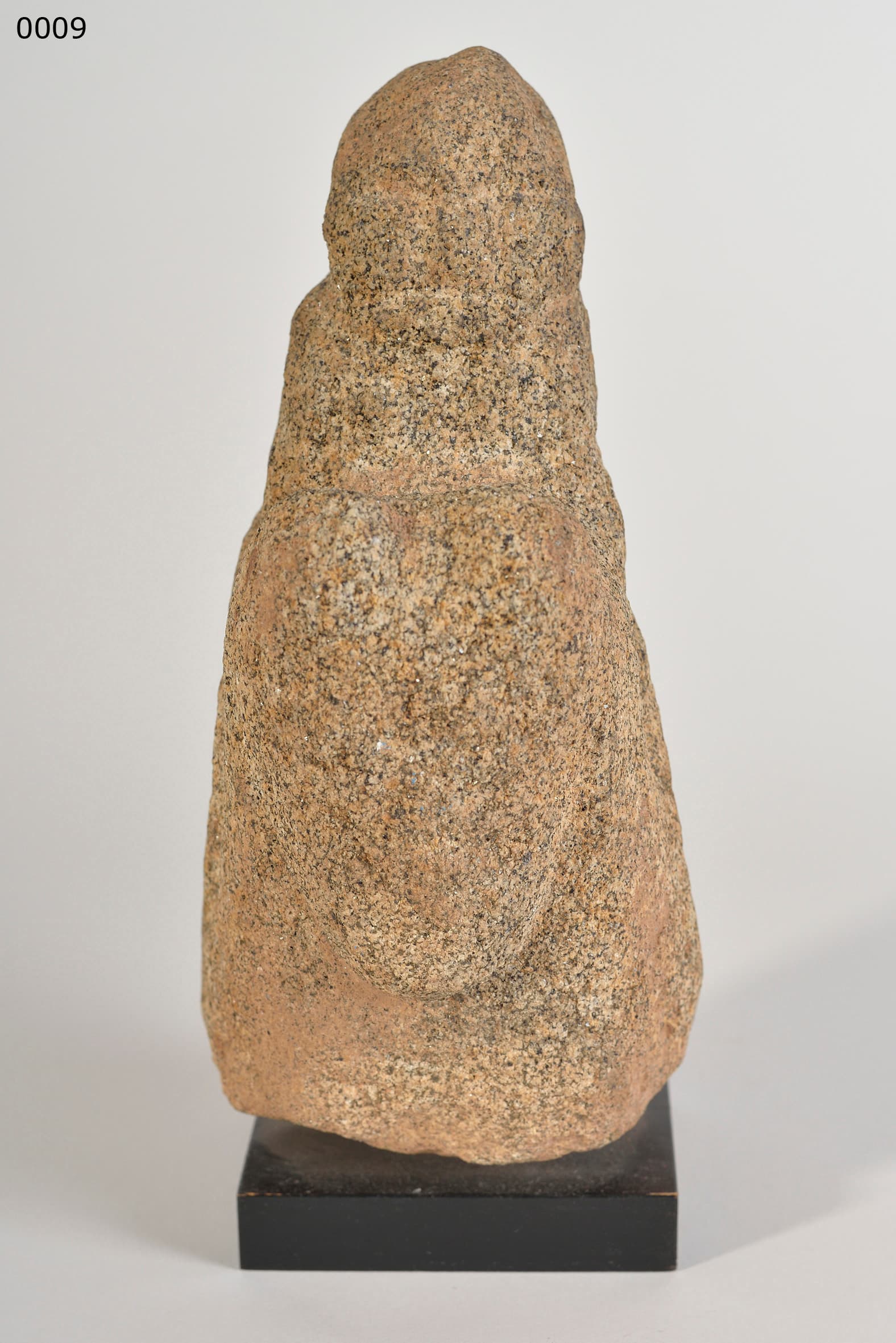
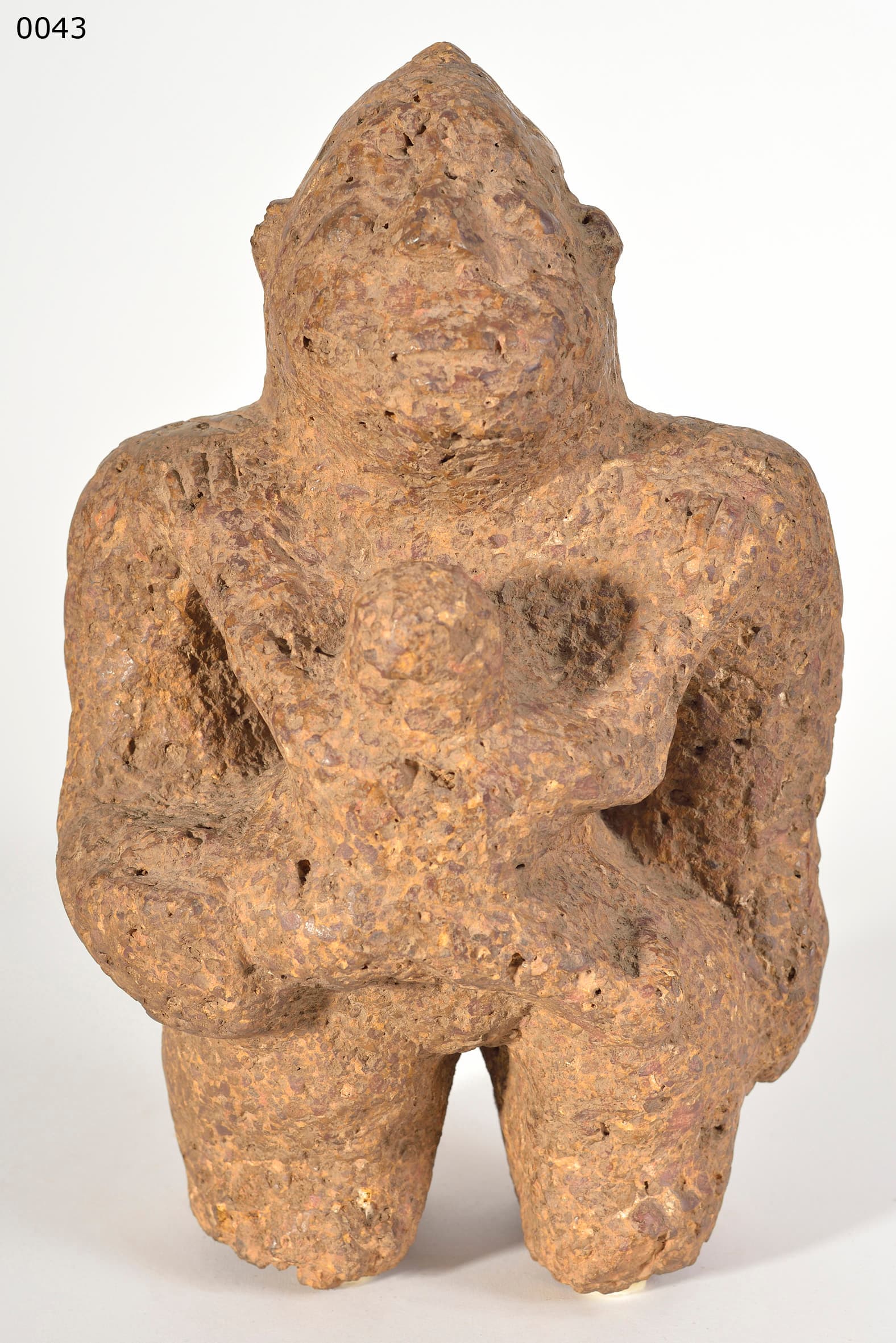
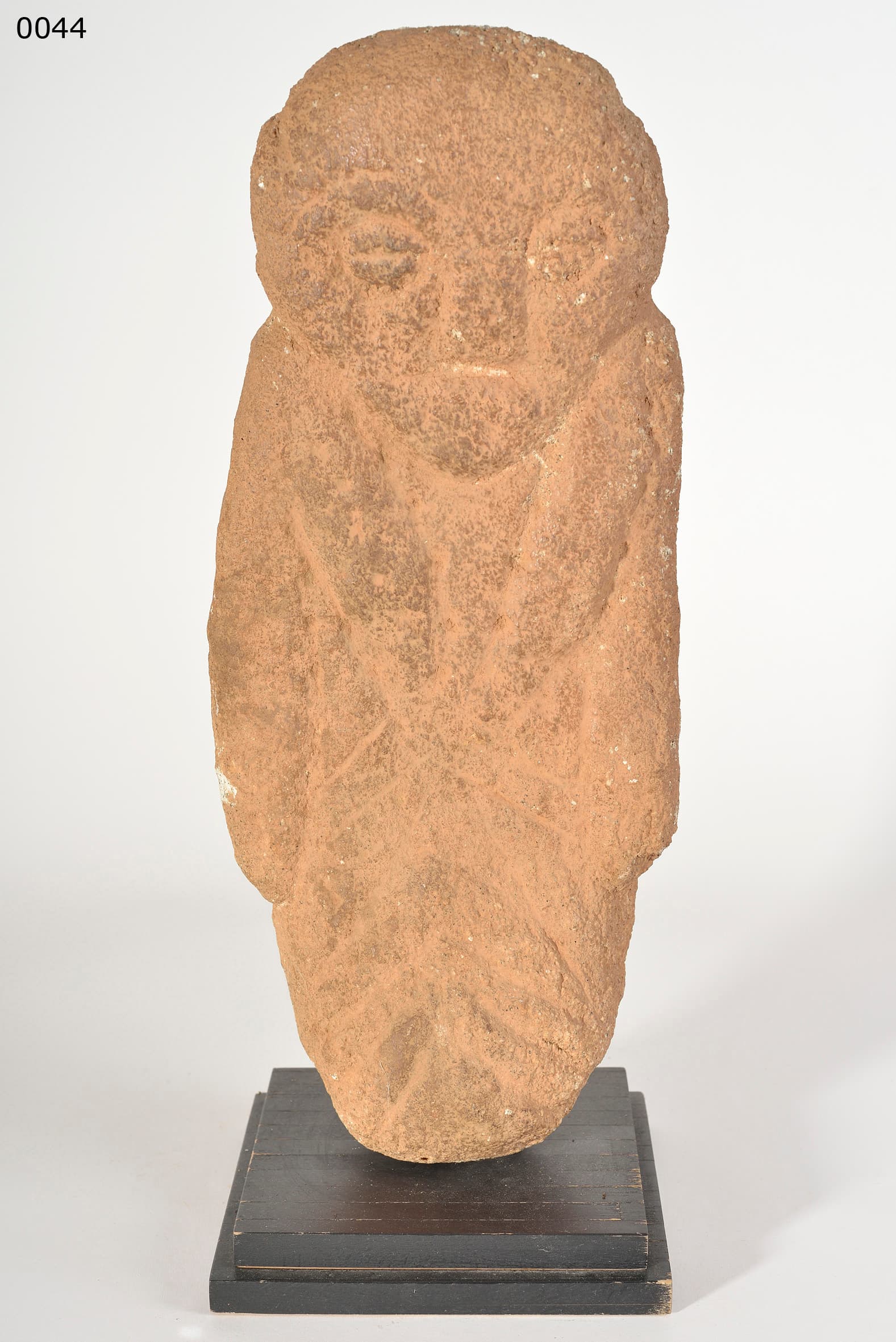
A stout columnar stone pillar (12th–16th C., 43 cm) from the Nyonyosi of Burkina Faso — phallic silhouette carved from dense laterite, surface heavily eroded into soft pitted geology.
1. The compressed form
At 43 cm, this is the smallest of the Nyonyosi columnar pillars in the group.
- Compact Marker: Smaller scale likely signals a junior elder or a secondary grave within a larger burial field.
- Same Theology: Despite its reduced size, the pillar performs the same role as its larger peers — planting the ancestor's vital force into the ground.
2. Stone as shared language
The close morphological kinship among Nyonyosi stones reveals a disciplined tradition.
- Common Vocabulary: Columnar, phallic, stele, figurative — four stable forms used across a necropolis to encode rank and identity.
- Sculptor as Priest: Working in dense laterite was a specialized occupation; the carvers were trusted figures whose craft carried spiritual authority.
3. Weathering and authentication
The heavily pitted surface is the stone's biography.
- Centuries of Exposure: The softening of original tool marks indicates at minimum 500 years of open-air weathering.
- Geology Reclaims the Carving: The pillar's edges have blurred into the laterite's natural texture — art and rock merging back into one substance.
Summary
This small Nyonyosi pillar is a compact lithic seed. Planted over a secondary grave and weathered across half a millennium, it quietly performs the same ancestral theology as its larger neighbors in the necropolis field.
Written with AI assistance from the collection appraisal, object photography and our own research; editorially reviewed. Mistakes are possible — corrections are welcome. How we work →