A seated pair of male and female spirit-spouse figures (1st half 20th C., 41 cm) from the Baule of the Ivory Coast — extraordinary sculptural finesse, deeply grooved coiffures, intricate bodily scarifications, authoritative yet calm demeanor, the wood polished to a dark, lustrous sheen.
1. Refinement of Baule sculpture
This pair is highly representative of the Baule sculptural canon, defined by the pursuit of civilized beauty.
- Raised Keloid Scarifications: The meticulous attention to complex raised scars marks each figure as a fully socialized, respected individual.
- Balanced Proportions: Elaborately braided hair, balanced proportions, and serene downcast eyes project moral integrity and inner calm — the complete Baule aesthetic program executed with notable skill.
2. Blolo bian and blolo bla devotion
Within Baule cosmology, paired figures of this kind appease the spirit husband and wife from the otherworldly realm.
- Crisis Diagnosed: When a human experiences trouble, diviners often attribute the misfortune to a jealous spirit spouse.
- Domestic Veneration: The owner commissions idealized wooden vessels, keeps them in the bedroom, talks to them, and tends to them. The beauty of the carving directly mirrors the owner's devotion, meant to flatter and pacify the spirit.
3. Deep handling patina
The defining physical characteristic is the smooth, dark handling patina.
- Not Sacrificed, Intimately Held: The figures were never encrusted with sacrificial blood — they were rubbed with palm oil and polished with cloth over decades.
- Oil Driven Into Grain: Continuous tactile interaction smoothed the high points and drove dark oils deep into the wood, yielding a glowing finish that is consistent with authentic early 20th-century domestic use.
Summary
Exuding an aura of serene composure, this Baule spirit-spouse pair is a fine example of West African aesthetic refinement. Its dark handling patina and harmonious proportions are consistent with highly accomplished examples of this tradition.
Written with AI assistance from the collection appraisal, object photography and our own research; editorially reviewed. Mistakes are possible — corrections are welcome. How we work →

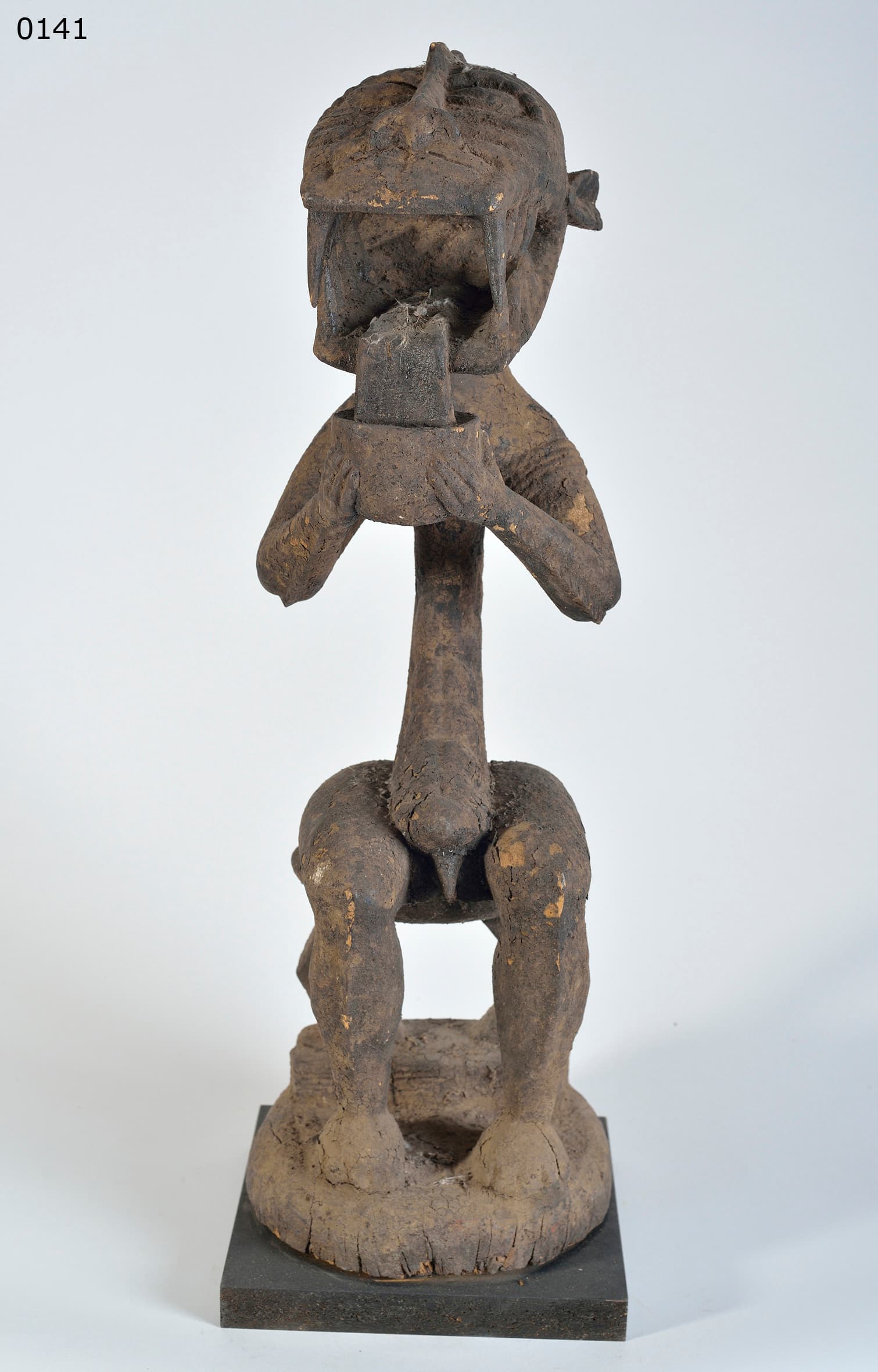
mask (collected in Abidjan)

mask (called GOLI)
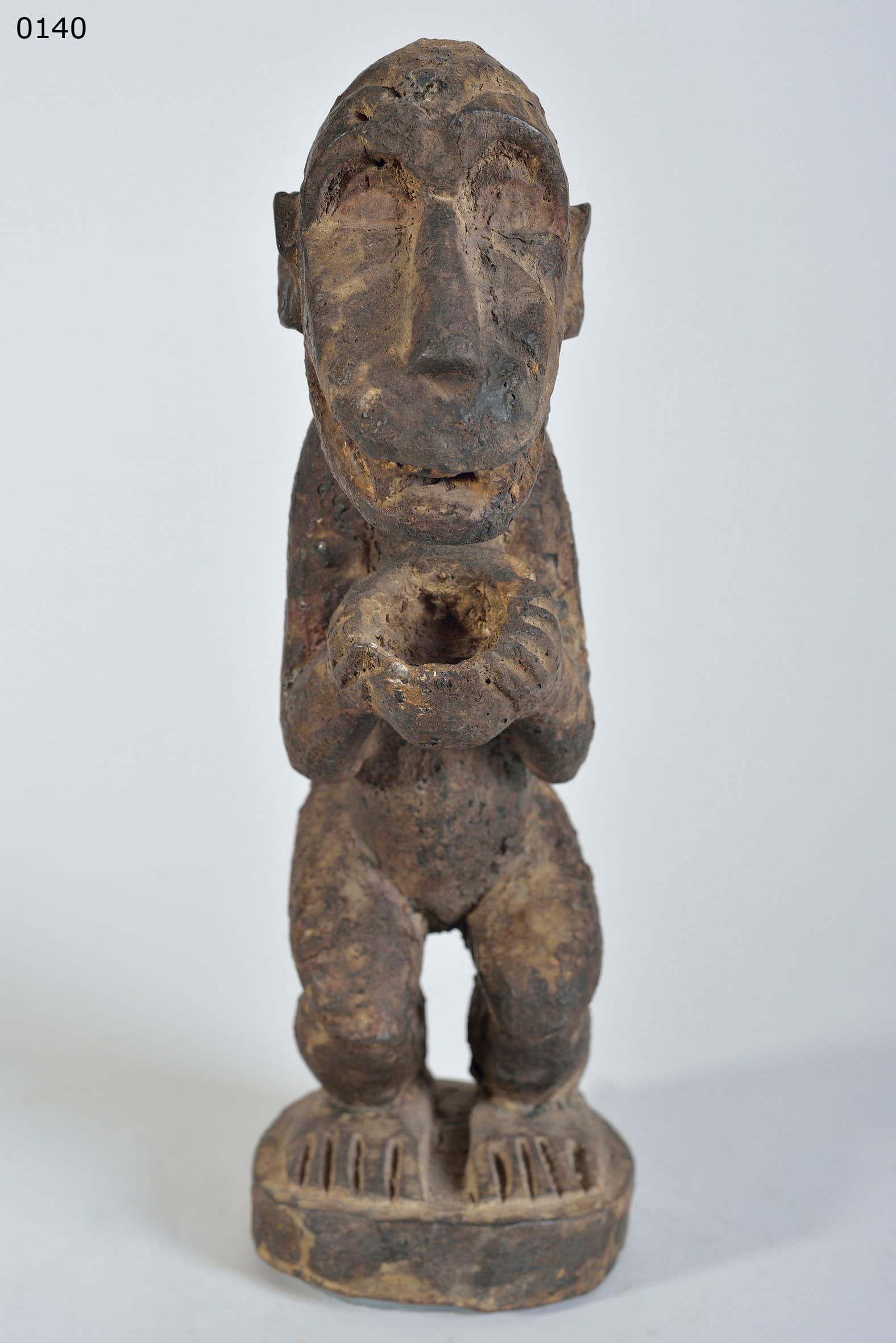
simian statue (called MBOTUMBO or GBEKRE)