A statuesque pair of male and female spirit-spouse figures (1st half 20th C., 55 cm and 51 cm) from the Baule of the Ivory Coast — the male holding his braided beard, the female resting hands on her abdomen, both with elaborate crested coiffures and intricate scarifications, retaining aged textile loincloths over a dark thickly anointed handling patina.
1. Idealized harmony and asymmetry
This couple exemplifies classic ideals of the Baule aesthetic tradition.
- Complementary Gestures: The male's gesture toward his beard denotes wisdom and authority; the female's gesture toward her womb emphasizes fertility and lineage.
- Coded Refinement: The intricate keloid scarifications and perfectly groomed hair signal their status as fully initiated, moral, and culturally refined individuals — the full Baule aesthetic program executed in gendered counterpoint.
2. Blolo spouses and divinatory healing
Though the ledger labels both as Blolo Bla, the pair encompasses both Blolo Bian (spirit husband) and Blolo Bla (spirit wife).
- Diviner-Diagnosed Crisis: Commissioned on the advice of a diviner, the figures appease otherworldly spouses believed to cause marital discord or infertility.
- Domestic Transformation: By offering the spirits a beautiful physical vessel and tending to them in a private shrine, the owner converts spiritual jealousy into localized protective blessings.
3. Original adornments and domestic patina
The surviving fiber and textile loincloths are consistent with traditional use.
- Civilized Spirits Must Be Clothed: The dressing reflects the Baule mandate that respectable spirits be treated with dignity.
- Polished by Hand, Not Sacrifice: The wood beneath the textiles bears a rich dark polished surface created by decades of palm-oil rubbing and tactile veneration — continuous non-sacrificial handling is consistent with early 20th-century private shrine use.
Summary
Conveying the Baule ideals of wisdom, fertility, and civilized beauty, this paired couple is a significant achievement in West African woodcarving. Their deeply polished handling patinas and rare surviving textiles are consistent with well-preserved examples in major collections.
Written with AI assistance from the collection appraisal, object photography and our own research; editorially reviewed. Mistakes are possible — corrections are welcome. How we work →

mask (collected in Abidjan)

mask (called GOLI)
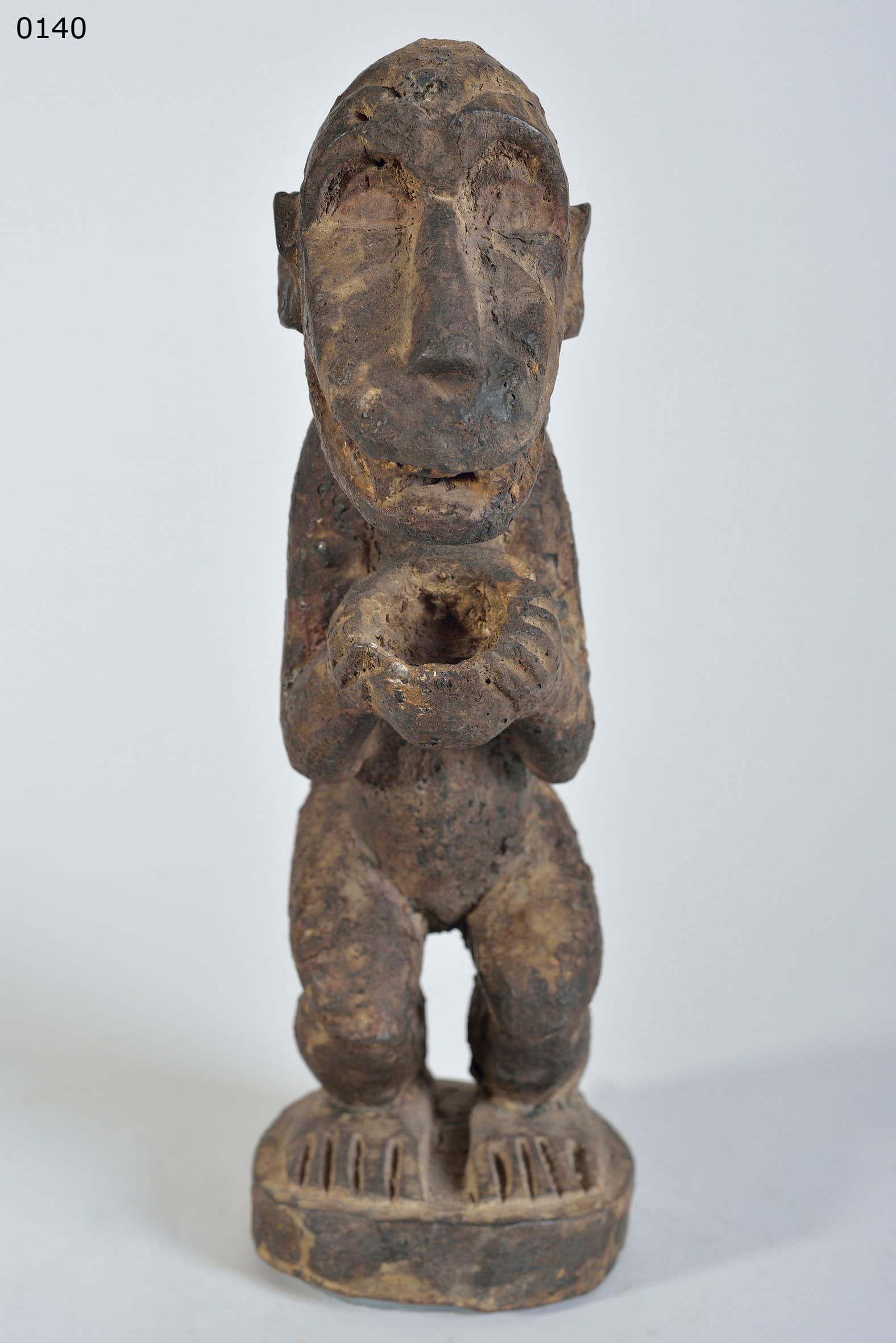
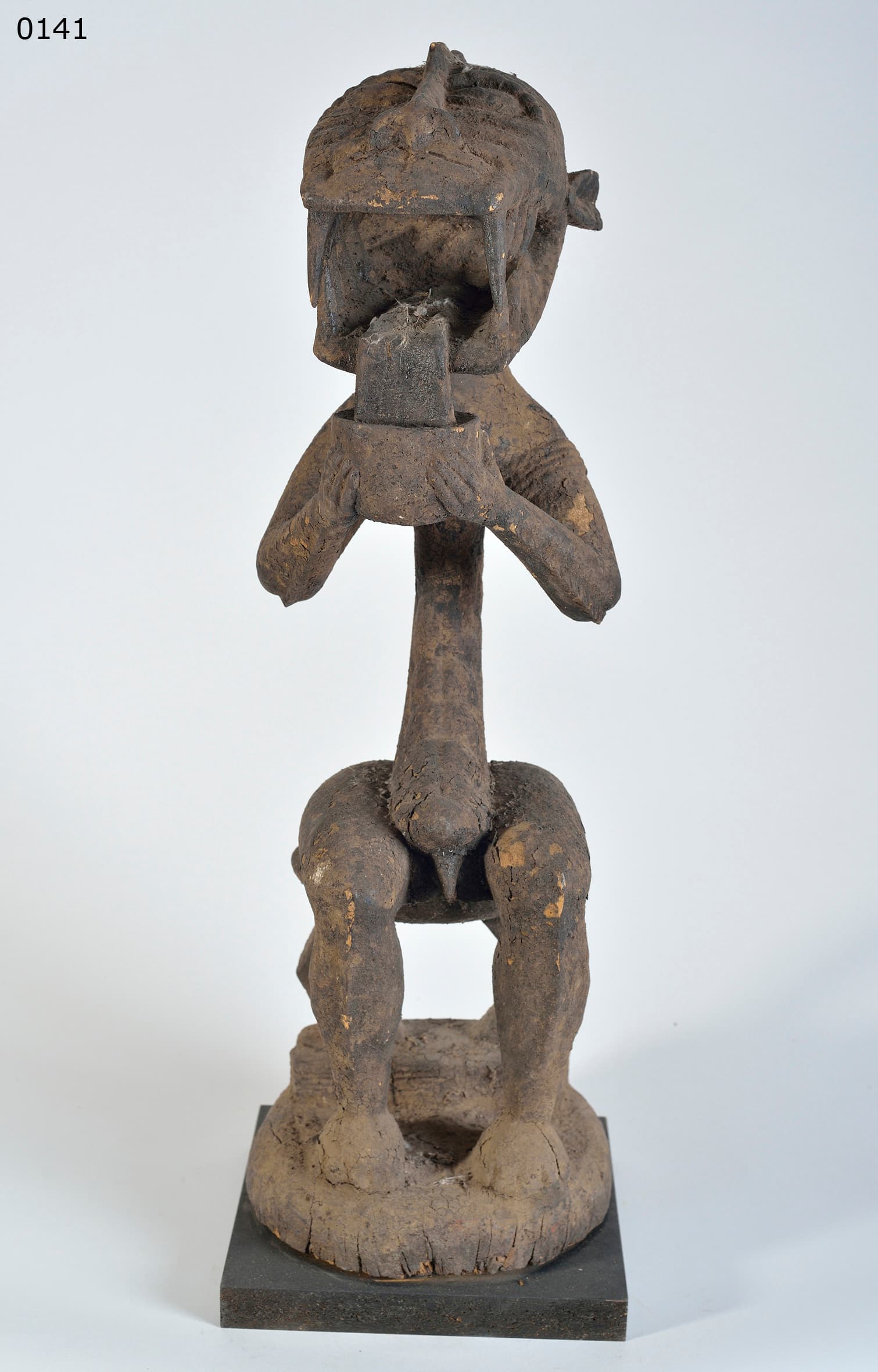
simian statue (called MBOTUMBO or GBEKRE)