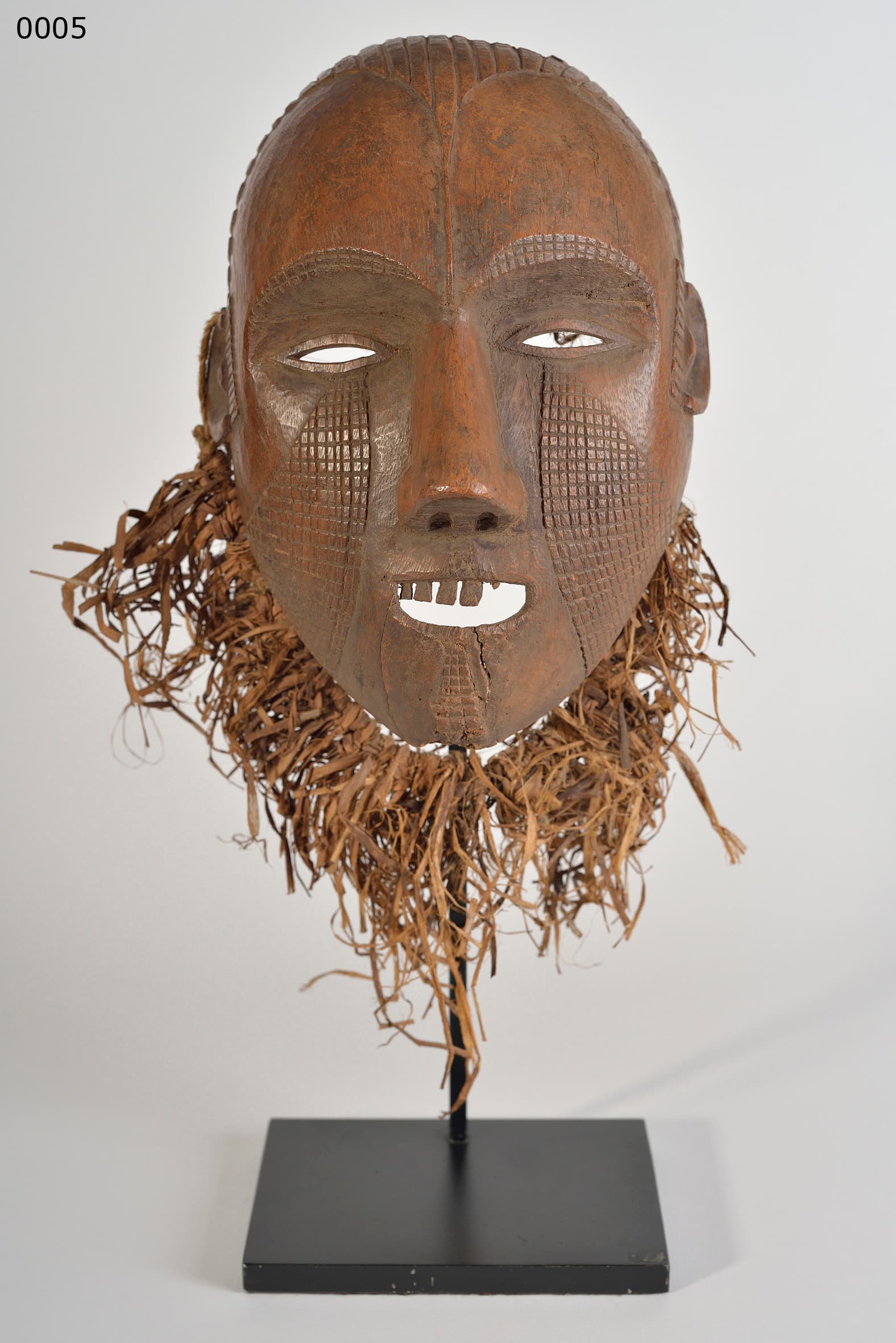
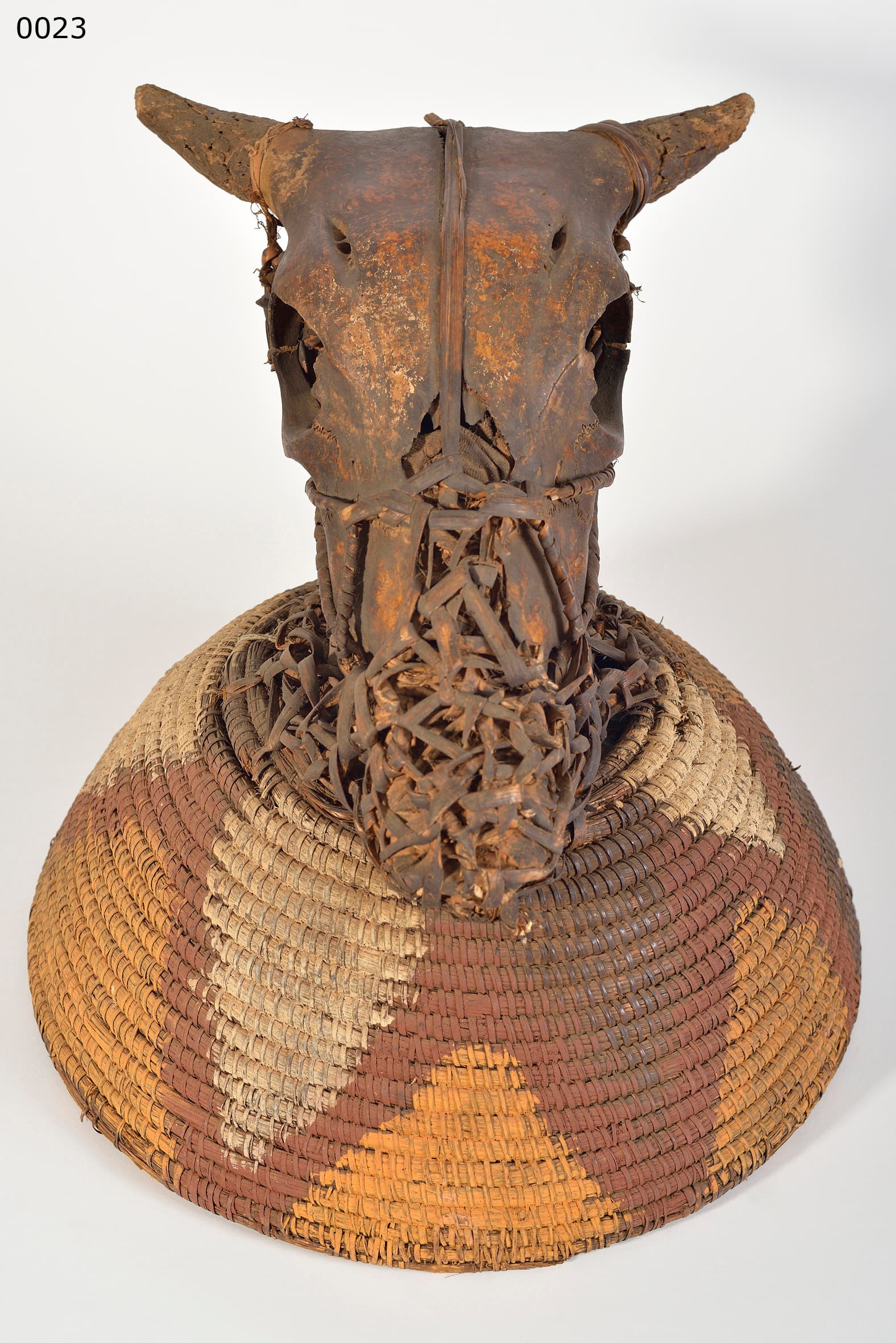
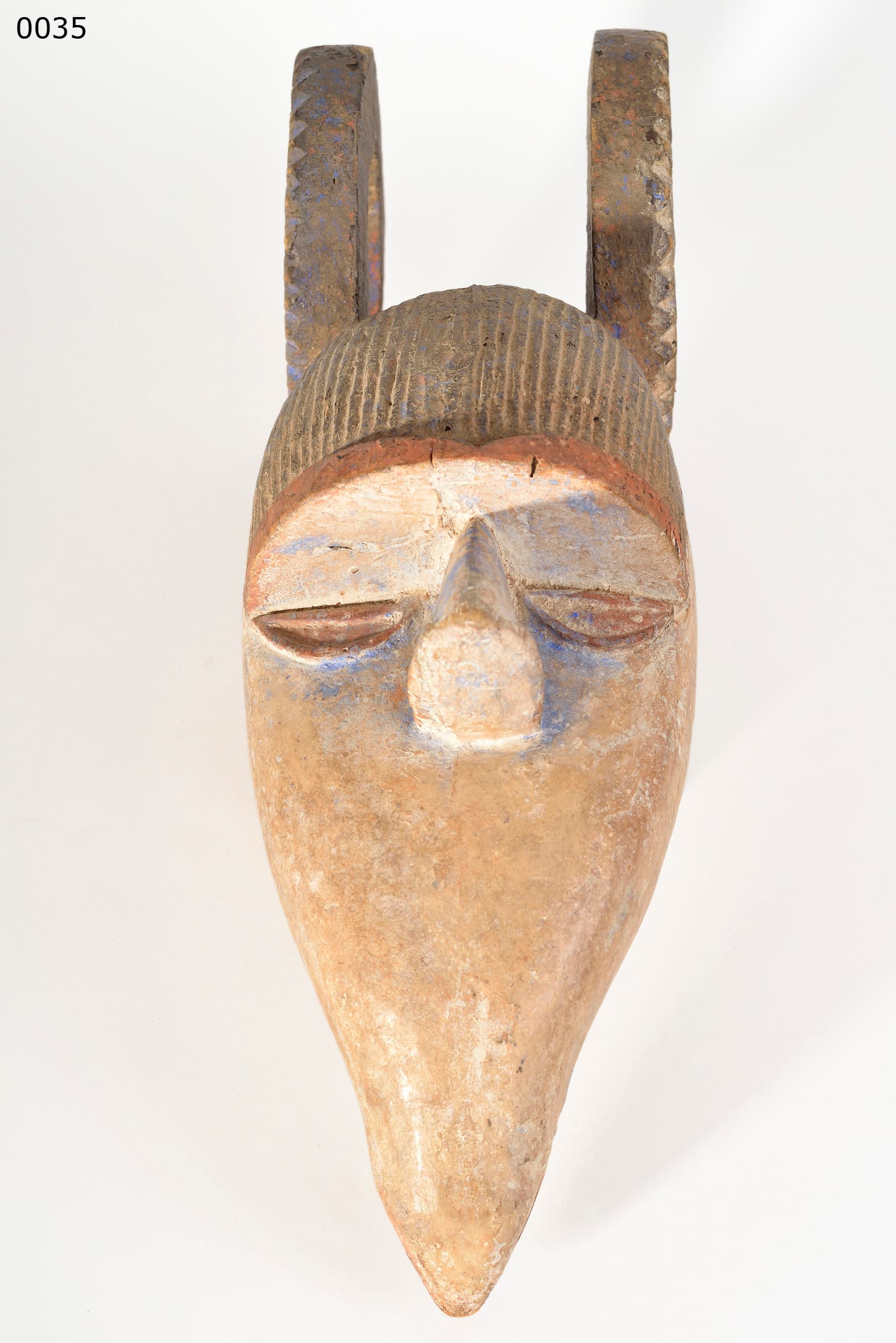
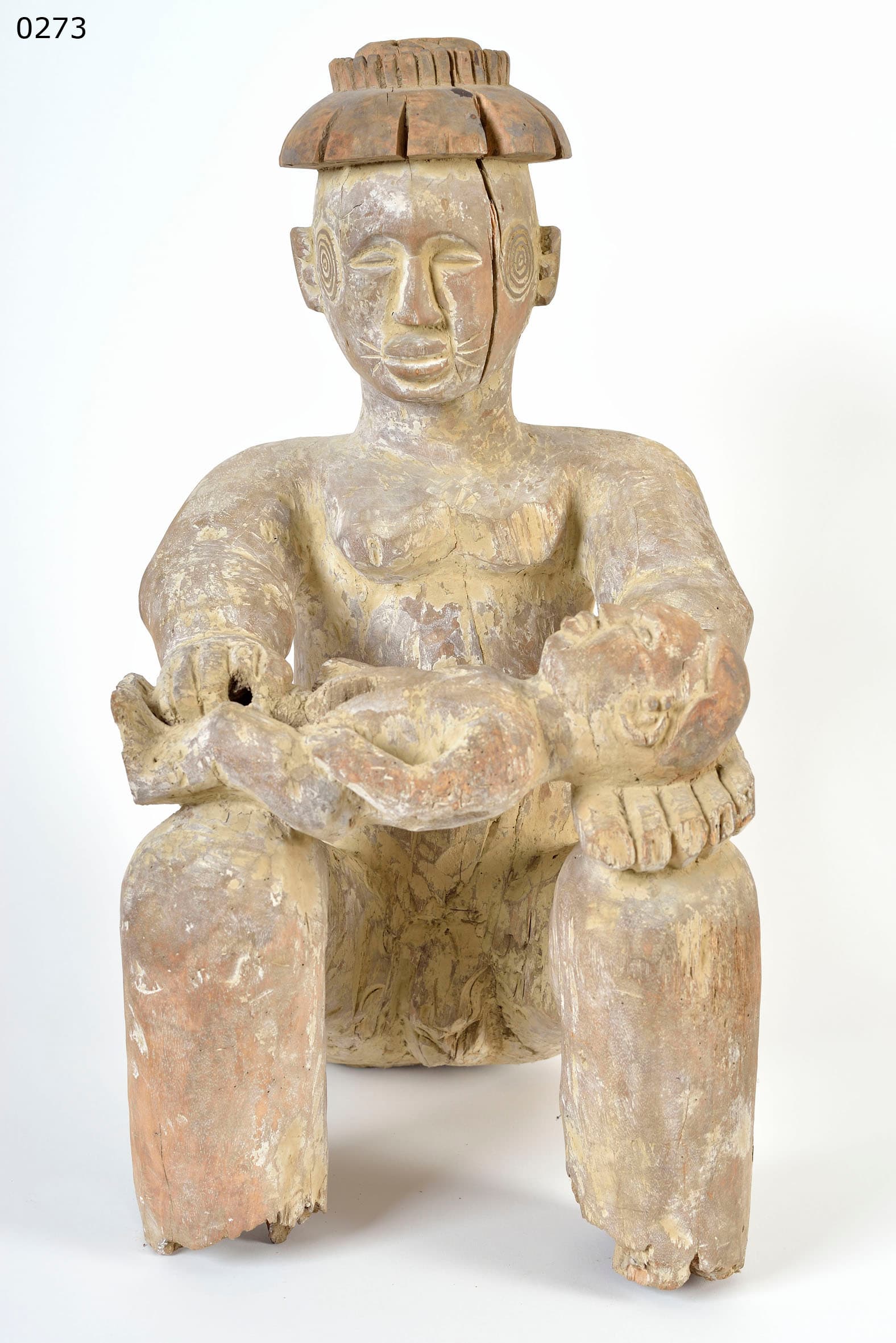
An Igbo face mask (attributed to the first half of the 20th century, 37 cm) from Nigeria, featuring intricate surface carving, mounted on a Metra socle and previously exhibited at the French Embassy in Vienna.
1. Scarification as visual language: The Ichi
The most arresting feature is the dense rhythmic application of concentric linear carvings across the entire face.
- The Marks of Nobility: These grooves represent Ichi (or Nkali), a highly painful and expensive form of traditional facial scarification. Historically, acquiring these marks was a prerequisite for men entering the highest ranks of the Ozo title society — a literal map of a man's wealth, bravery, and social elevation.
- Optical Effect: The carver used the lines to create a shimmering effect. When the masquerader moves in sunlight, the deep shadows of the grooves make the mask appear dynamic and alive.
2. The character type: The strong spirit
- Aggression and Defense: While the Igbo carve delicate white-faced "Maiden" masks for entertainment, this dark-pigmented mask with bared teeth is consistent with the "Strong" or "Fierce" category (Ojo).
- Protruding Horns: Small horn-like protrusions on the forehead add to its aggressive silhouette, linking the human ancestor to the raw power of forest animals. Such masks were traditionally danced to maintain social control and ward off evil.
3. Diplomatic provenance
- Exhibition Pedigree: Mounted on a custom Metra socle, this piece was exhibited at the French Embassy in Vienna. The density and precision of its scarification suggest the work of an accomplished carver, and it has been exhibited as a notable example of Igbo surface decoration.
Summary
This mask represents a traditional badge of honor. It serves as a portrait of authority, using elaborate surface scarification and an aggressive expression to depict an ancestral leader of high status.
Written with AI assistance from the collection appraisal, object photography and our own research; editorially reviewed. Mistakes are possible — corrections are welcome. How we work →