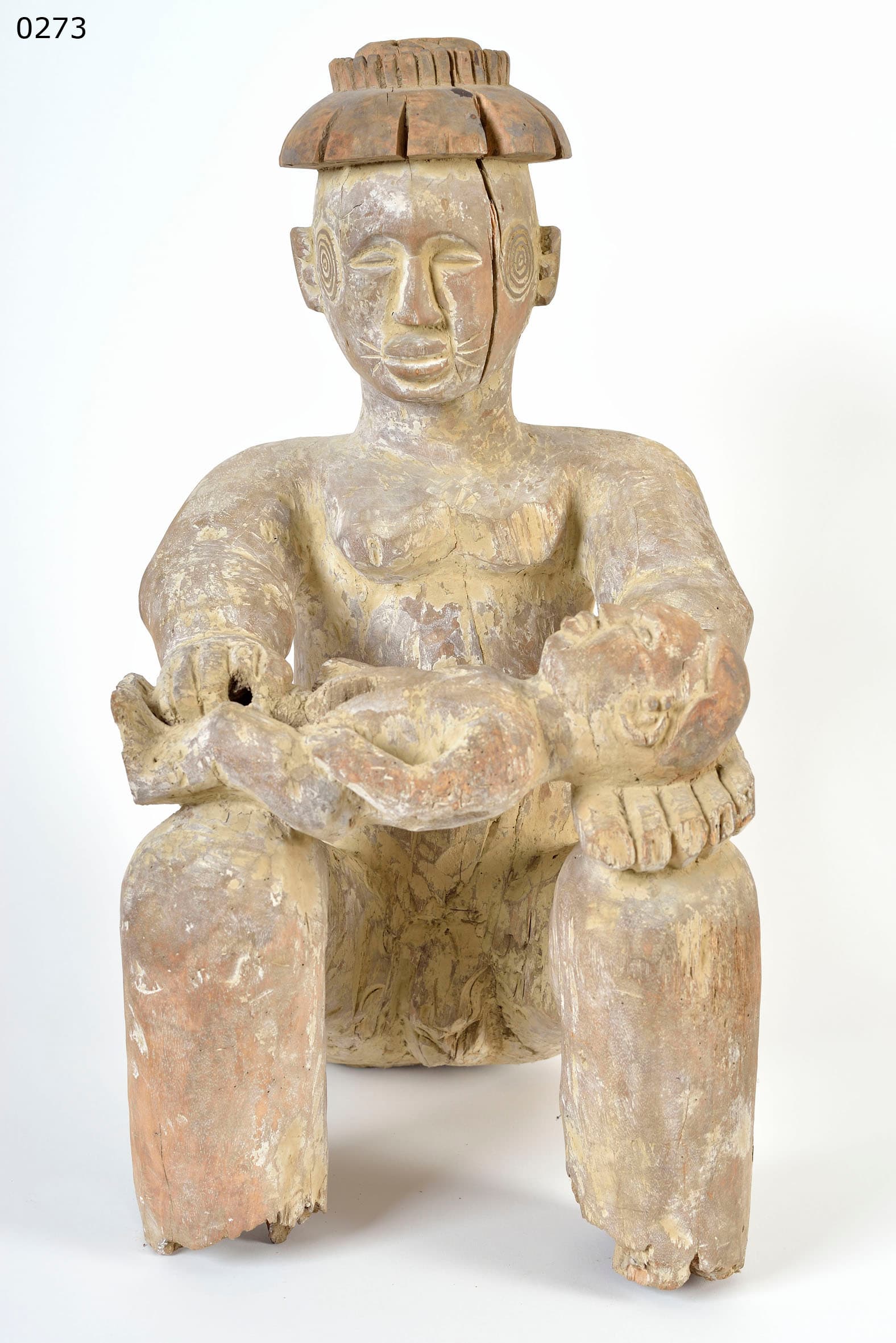
This is a classic and well-preserved Igbo (or Ibo) mask from southeastern Nigeria.
Following your previous examples of shrine altars and specialized masquerade masks, this object represents the complex spiritual theater of the Igbo people, specifically the Okoroshi or Mmuo masquerade traditions.
1. Style and character: Okoroshi Ojo
In Igbo masking, characters are often categorized into a binary: Oma (beautiful, delicate, and usually white-faced) and Ojo (dark, aggressive, and "ugly").
- The "Dark" Spirit: Because this mask is finished in a dark, natural wood tone (likely rubbed with camwood or charcoal) rather than white, it belongs to the Ojo category. These spirits represent the "strong," unruly, and unpredictable forces of nature and the forest.
- The Teeth: The bared, carved teeth are a signature of Ojo masks. They signal a spirit that is energetic, vocal, and potentially confrontational, as opposed to the silent, closed-mouth "beauty" masks.
2. The scarification: Nkali and Ichi
A key stylistic feature of this mask is the deeply incised gridded pattern on the cheeks.
- Status and Title: This cross-hatched scarification represents high social status. While the most famous Igbo title mark is Ichi (traditionally on the forehead), these gridded patterns on the cheeks—sometimes called Nkali patterns—mimic traditional facial tattoos or scarifications worn by titled men and women to show they have achieved a high rank within the Ozo society.
- Aesthetic Detail: The precise, geometric nature of the grid suggests the hand of an accomplished carver. It creates a play of light and shadow that makes the mask look "alive" when moving in the sunlight during a dance.
3. The raffia beard
The thick fringe of raffia fiber attached to the chin and jaw is not just decorative; it serves a functional ritual purpose:
- Identity Concealment: When the mask is worn, this raffia "beard" blends into the rest of the dancer's costume (usually a bodysuit of similar fiber or colorful cloth), effectively hiding the human neck and ensuring that the dancer is seen entirely as a spirit.
- Spiritual Connection: Raffia is considered a "spirit material" because it comes from the palm tree, which is central to Igbo life and economy.
4. Cultural context: The Owu festival
This mask would likely appear during the Owu water spirit festival or at the funerals of high-ranking community members.
- Social Control: While the "beautiful" masks dance gracefully, these darker, stronger masks might chase spectators, mock social behaviors, or enforce community laws. They represent the necessary "roughness" and power required to protect a village from spiritual and physical threats.
Summary
Unlike the delicate "Maiden Spirits" (which are white and symbolize purity), this mask represents a "Strong Man" or Powerful Ancestor spirit. Its dark patina, aggressive bared teeth, and high-status cheek scarification identify it as a figure of authority and spiritual force within Igbo society.
Written with AI assistance from the collection appraisal, object photography and our own research; editorially reviewed. Mistakes are possible — corrections are welcome. How we work →
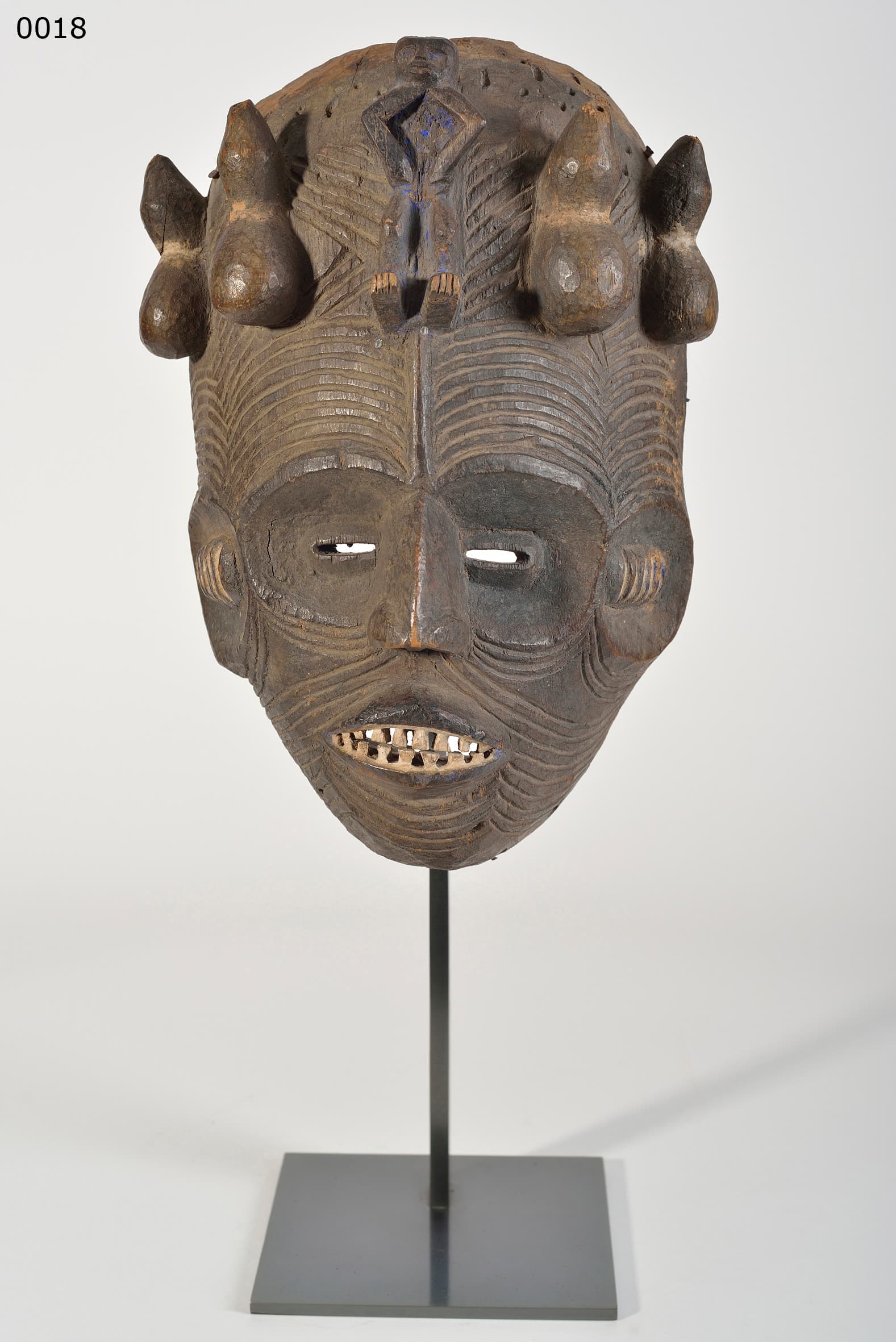
mask on Metra socle
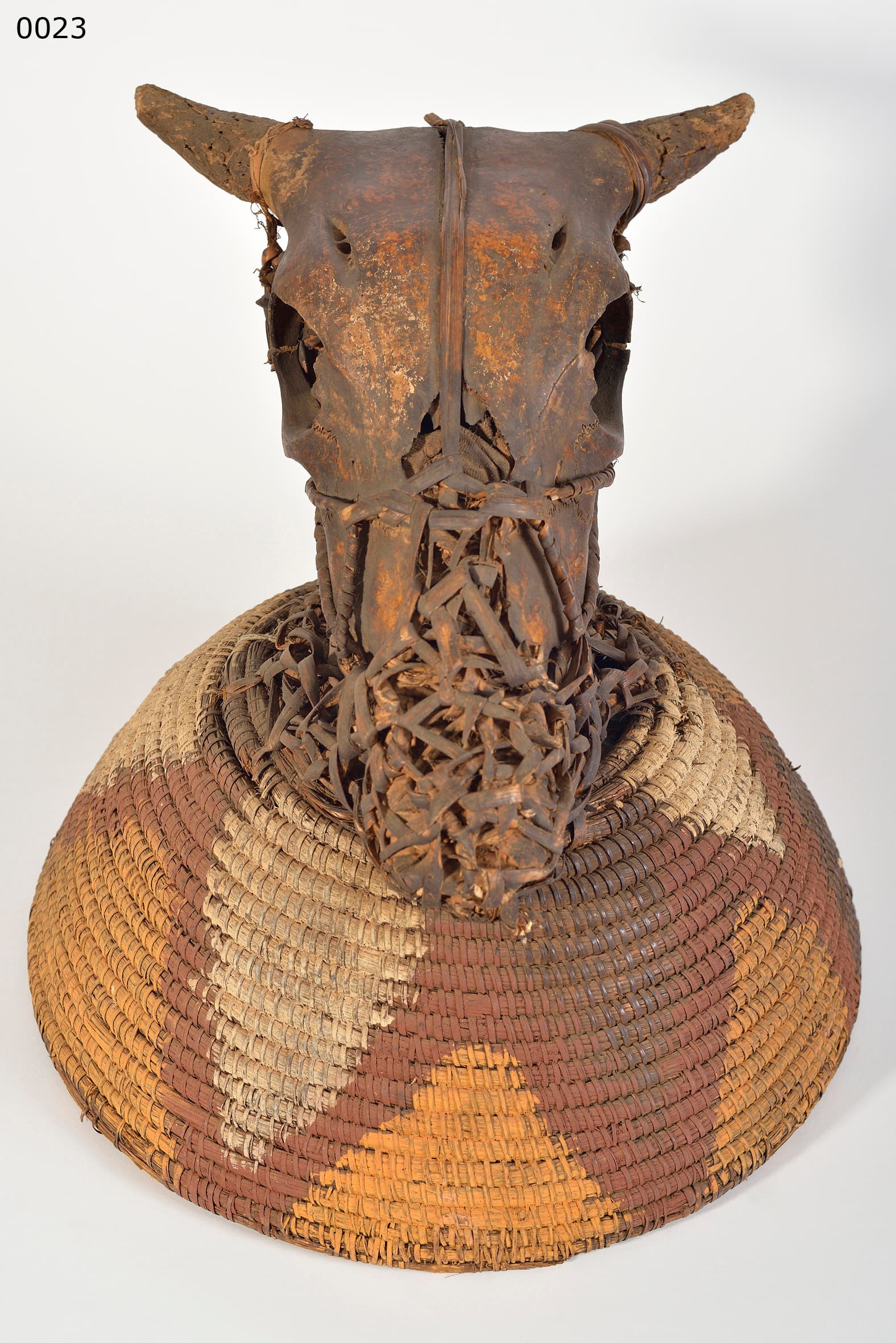
shrine altar (animal scull on plaited basket socle)
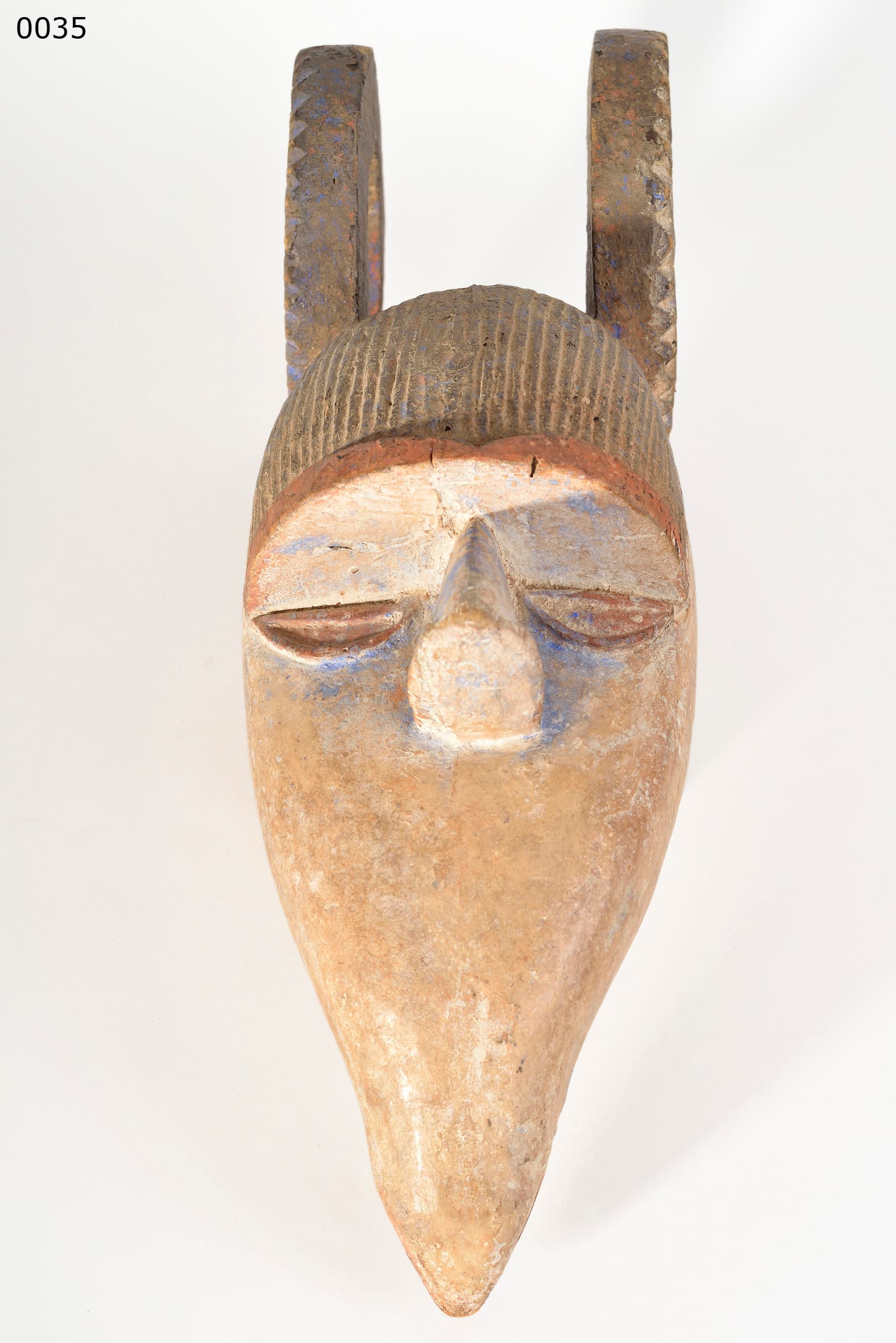
headcrest mask