An abstract wooden headcrest (1st half 20th C., 55 cm) from the Igbo of Nigeria — a stark white heart-shaped face topped by two massive paddle-like vertical horns painted with faded blue and red pigments.
1. The dual universe
Igbo philosophy relies heavily on the concept of duality (male/female, beauty/beast, sky/earth).
- The Vertical Antennas: The twin vertical "planks" or horns dominating this mask are a visual representation of this dualism. They stretch upward like towering antennas — connecting the human dancer on the earth to the spiritual realm of the sky.
2. Color symbolism
The mask's bold color palette is highly symbolic.
- White — Purity: The use of white kaolin chalk on the face represents the purity of the spirit world, clairvoyance, and the benevolent ancestors.
- Blue — Protection: The faded blue (often derived from indigo or trade washing blue) represents coolness and divine protection.
- Red — Vitality: Red details signify danger, heat, and physical vitality.
3. Agricultural festivals
Masks of this tall crest-like form are often associated with the dry season or the vital yam harvest festivals (such as the Mma ji or related Afikpo masking traditions).
- Youthful Power: They are danced by young athletic men — celebrating agricultural fertility and the physical prowess required to maintain the village's farmlands.
Summary
This mask is a towering billboard of Igbo cosmology. Its radical vertical abstraction and stark color contrast were designed to be highly visible and spiritually potent during vibrant chaotic village harvest dances.
Written with AI assistance from the collection appraisal, object photography and our own research; editorially reviewed. Mistakes are possible — corrections are welcome. How we work →
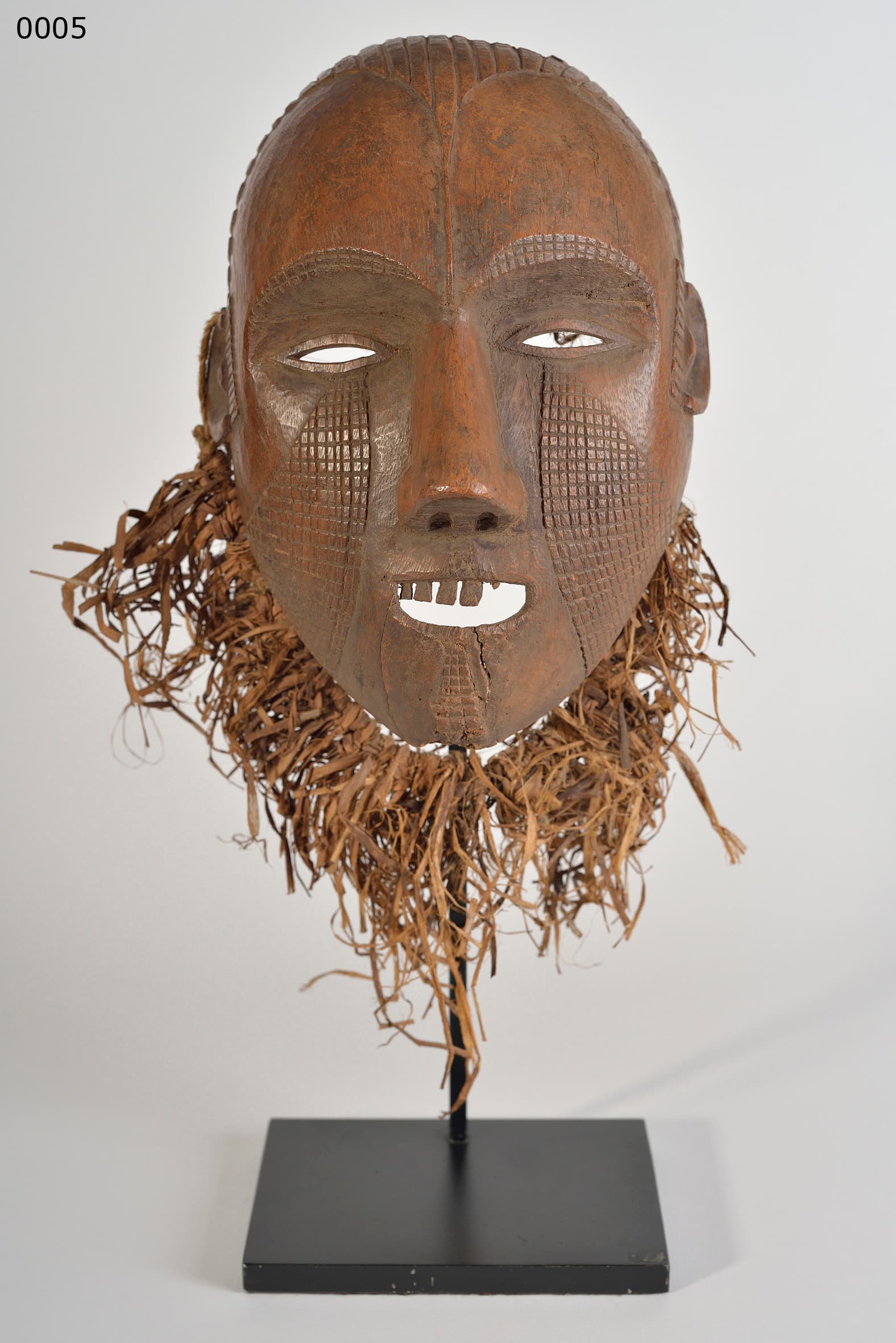
mask
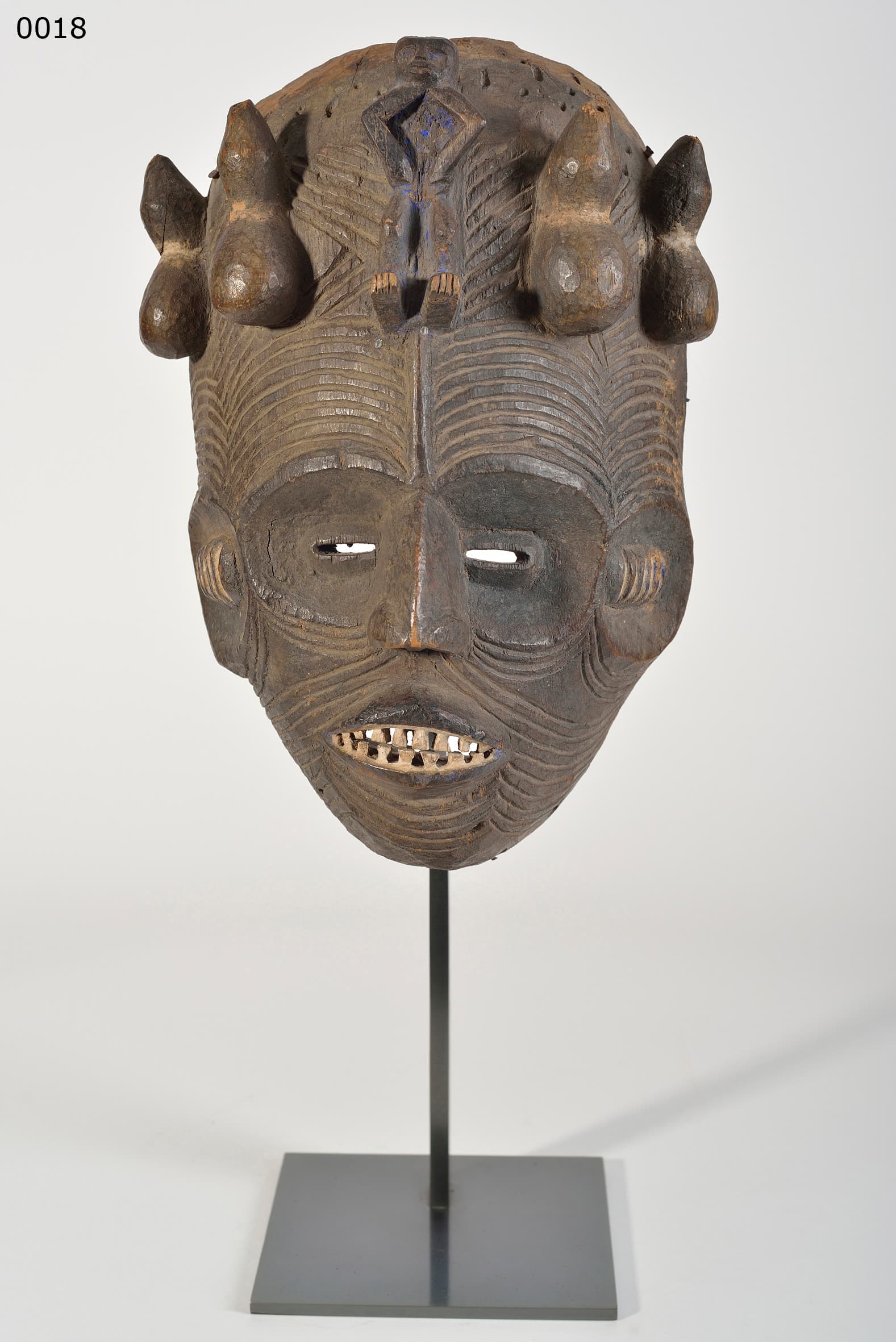
mask on Metra socle
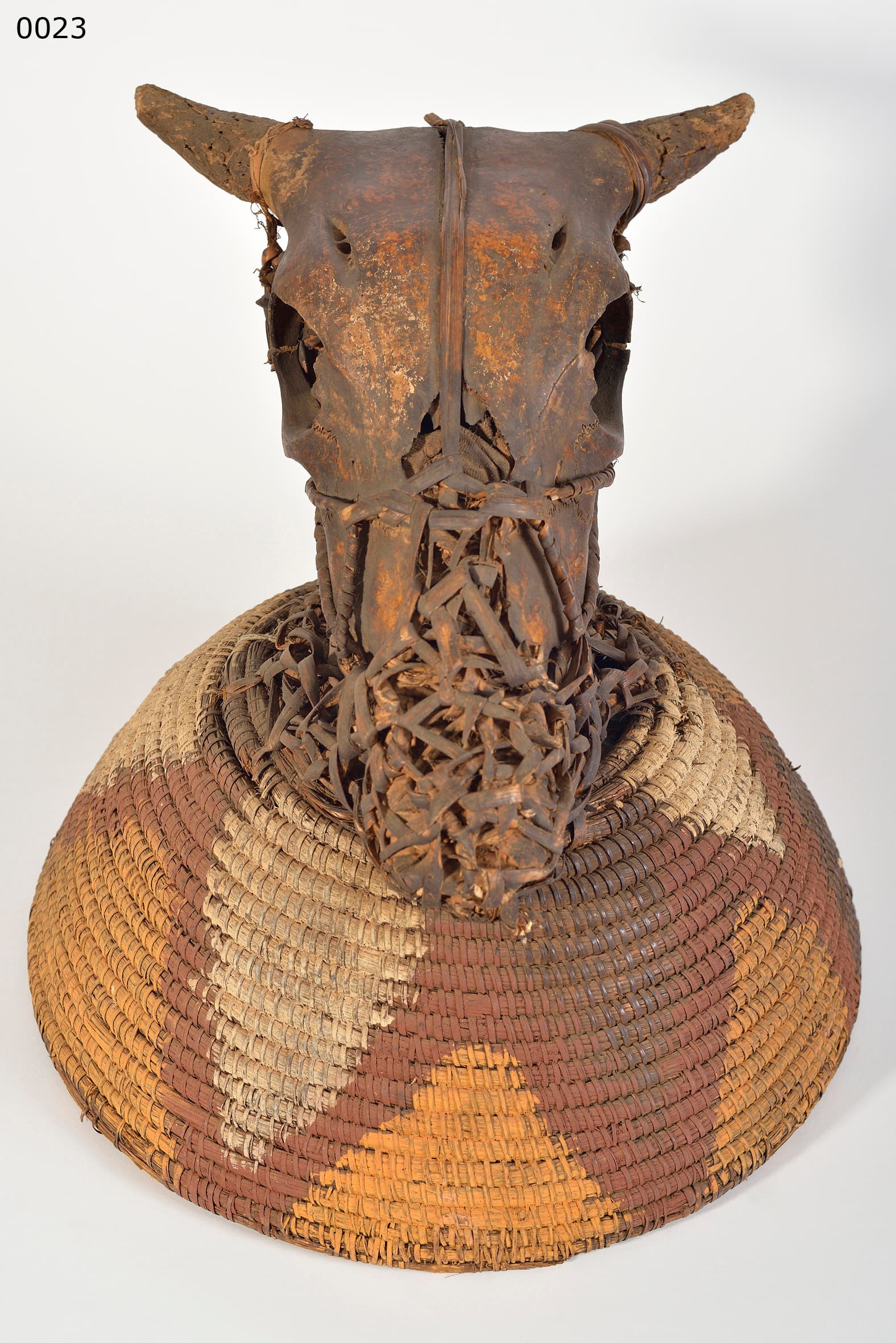
shrine altar (animal scull on plaited basket socle)