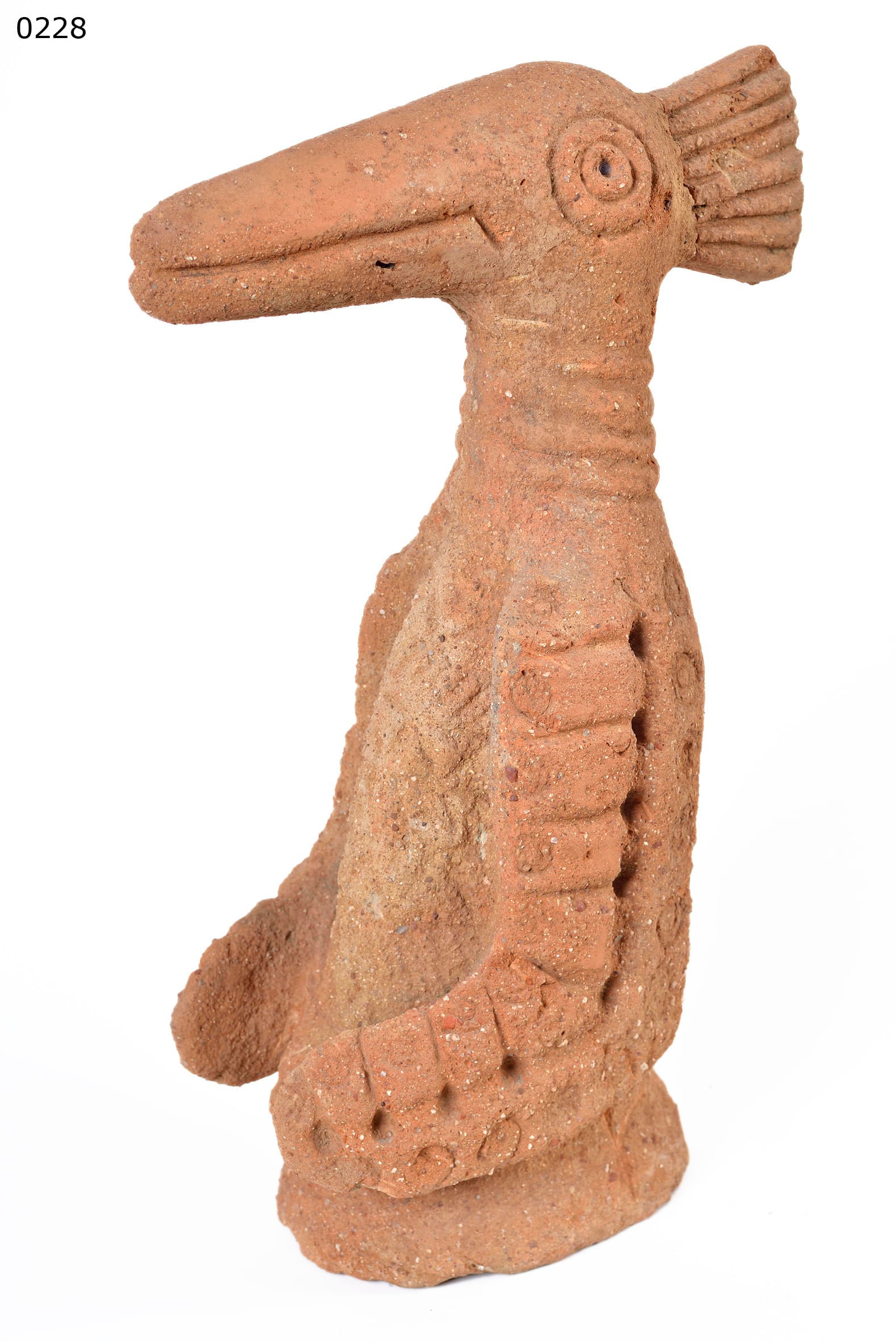
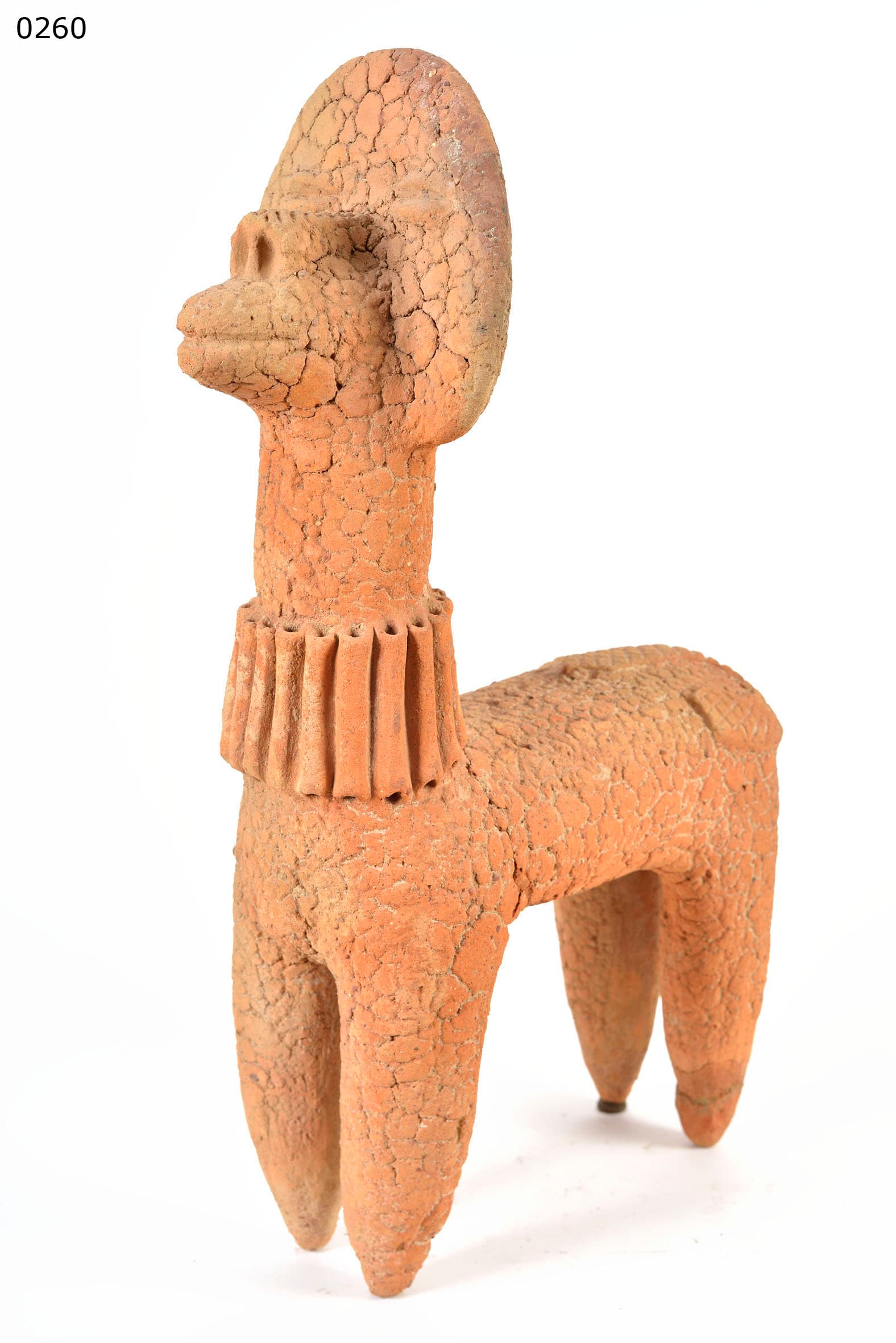
A highly emotive Inland Niger Delta terracotta (9th–16th C., 21 cm) from Mali — contorted body, bulging eyes, adorned torso, and dramatic kneeling or seated posture, the patina ranging from warm smoothed terra-sigillata slip to calcified zones characteristic of the anaerobic Niger floodplain. Published in Arts d'Afrique Noire No. 28 (1978, p. 11).
1. The djenne-jeno aesthetic typology
This figure epitomizes the distinctive Inland Niger Delta aesthetic.
- Reptilian Elongation: Elongated almost reptilian head shape and deeply incised parallel eyes are consistent with styles associated with ancient Djenne-Jeno and Tenenkou workshops.
- Trance-State Musculature: Upturned chin and taut musculature convey profound spiritual submission, prayer, or mourning.
2. Pathological representation and ancestral veneration
A fascinating hallmark of this corpus is the depiction of disease.
- Spiritual Chosenness: In ancient Malian cosmology, physical afflictions often signified spiritual chosenness, divine testing, or shamanic initiation.
- Votive Petition: Figures like this functioned as votive objects in shrines or wall niches — petitioned by the living to draw disease away from the community or honor ancestors who survived great suffering.
3. Documented provenance and alluvial aging
This piece carries documented provenance.
- Arts d'Afrique Noire Publication: Published in the Arts d'Afrique Noire No. 28 (1978, p. 11) — supporting its attribution and documented exhibition history.
- Alluvial Taphonomy: Cyclical flooding and baking of the Niger mud produced thick crusty calcification and slip degradation across the surface — a taphonomy consistent with long-term alluvial burial.
Summary
Combining harrowing psychological intensity with masterful ceramic execution and a published provenance stretching back to 1978, this figure is a significant representative of medieval Malian art. Its documented exhibition history and alluvial aging support its attribution as a notable archaeological work.
Written with AI assistance from the collection appraisal, object photography and our own research; editorially reviewed. Mistakes are possible — corrections are welcome. How we work →