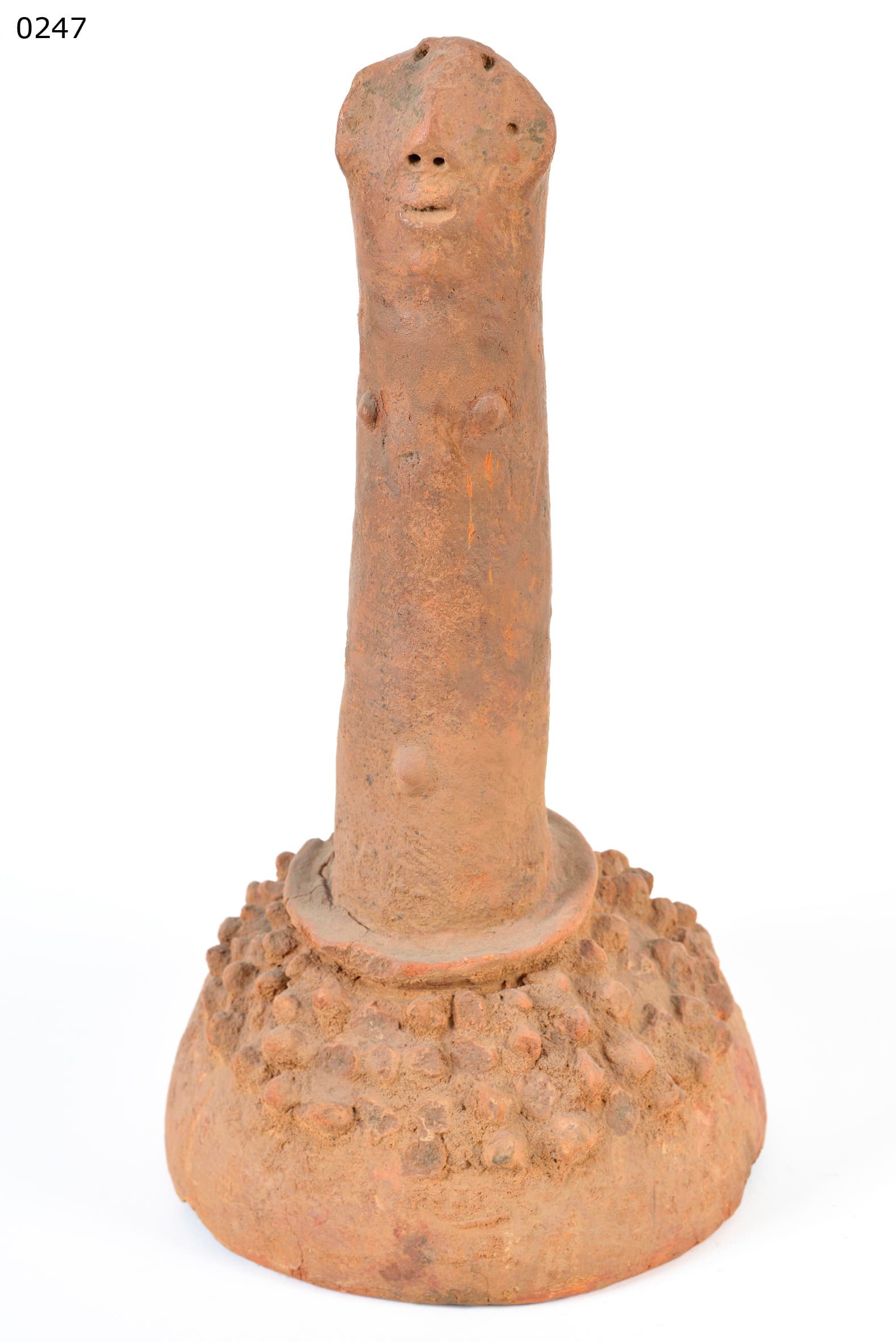
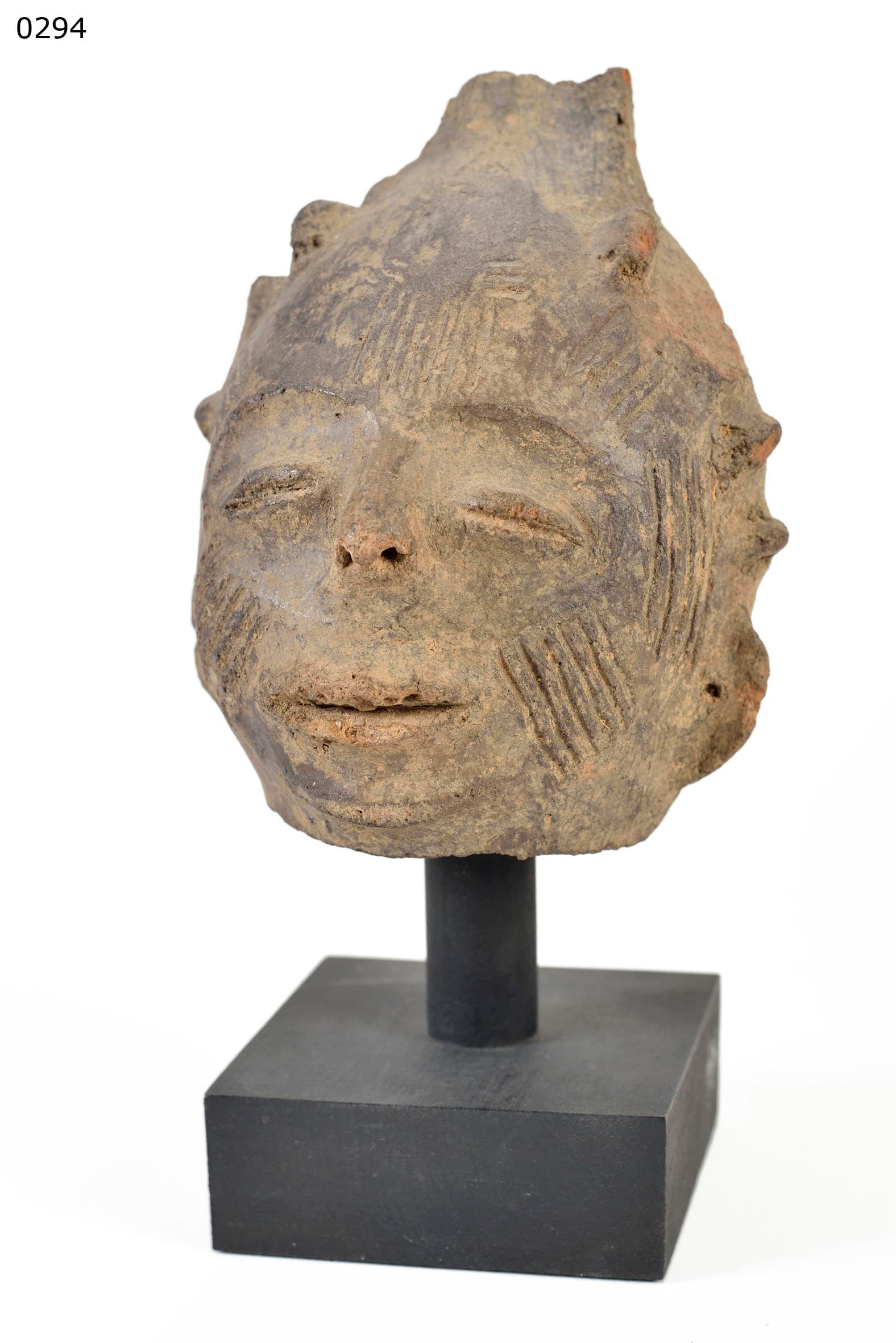
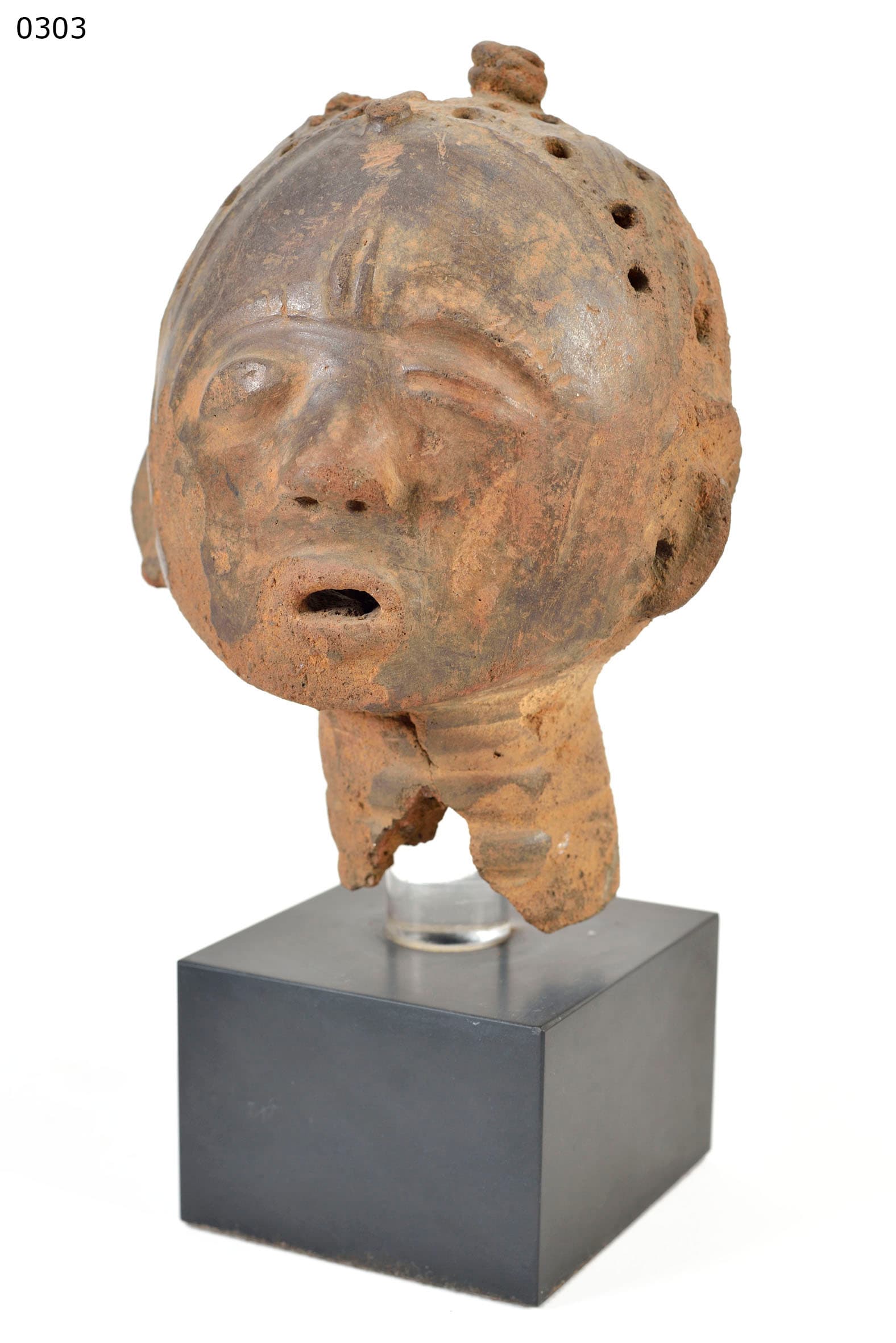
A large Akan terracotta commemorative head (12th–18th C., 39 cm) from Ghana — disembodied head adorned with prominent spiky nodules, the dark reddish-brown clay showing significant structural cracking, pitting, and pale soil encrustations.
1. The mma tradition of the Akan
This piece belongs to the mma (or nsodie) tradition — one of the few continuous highly documented terracotta traditions in West Africa.
- Idealized, Not Literal: Rather than naturalistic portraits, these heads are highly idealized representations of deceased royalty and nobility.
- Status Encoded: Flattened profiles, ringed necks, and specific scarification or hair nodes convey social rank, wisdom, and the serene spiritual composure of the elite ancestor.
2. The asensie (place of the pots)
Unlike many African terracottas buried with the dead, Akan funerary figures lived above ground.
- Memorial Grove: Displayed openly in the asensie — a sacred memorial grove located outside the village.
- Dressed and Fed: During complex funeral rites, these figures were dressed, fed, and treated as physical surrogates for the royal dead. The spiky head nodules likely depict an elite hairstyle or a crown of authority — the focal point for communal mourning.
3. Forest weathering
Because asensie figures were placed in open forested groves rather than subterranean graves, their taphonomy is distinct.
- Tropical Exposure: Centuries of intense tropical rainfall and jungle humidity have deeply pitted the surface, washing away the original slip.
- Root-Bound Soil: The dark porous clay is permeated with pale soil and organic matter — supporting the 12th–18th century dating and the piece's life in an Akan memorial grove.
Summary
An Akan terracotta commemorative head, this piece is a profound historical document of Ghanaian royal memorialization. Its serene idealized abstraction and forest-weathered surface support its attribution as a significant work of West African commemorative art.
Written with AI assistance from the collection appraisal, object photography and our own research; editorially reviewed. Mistakes are possible — corrections are welcome. How we work →