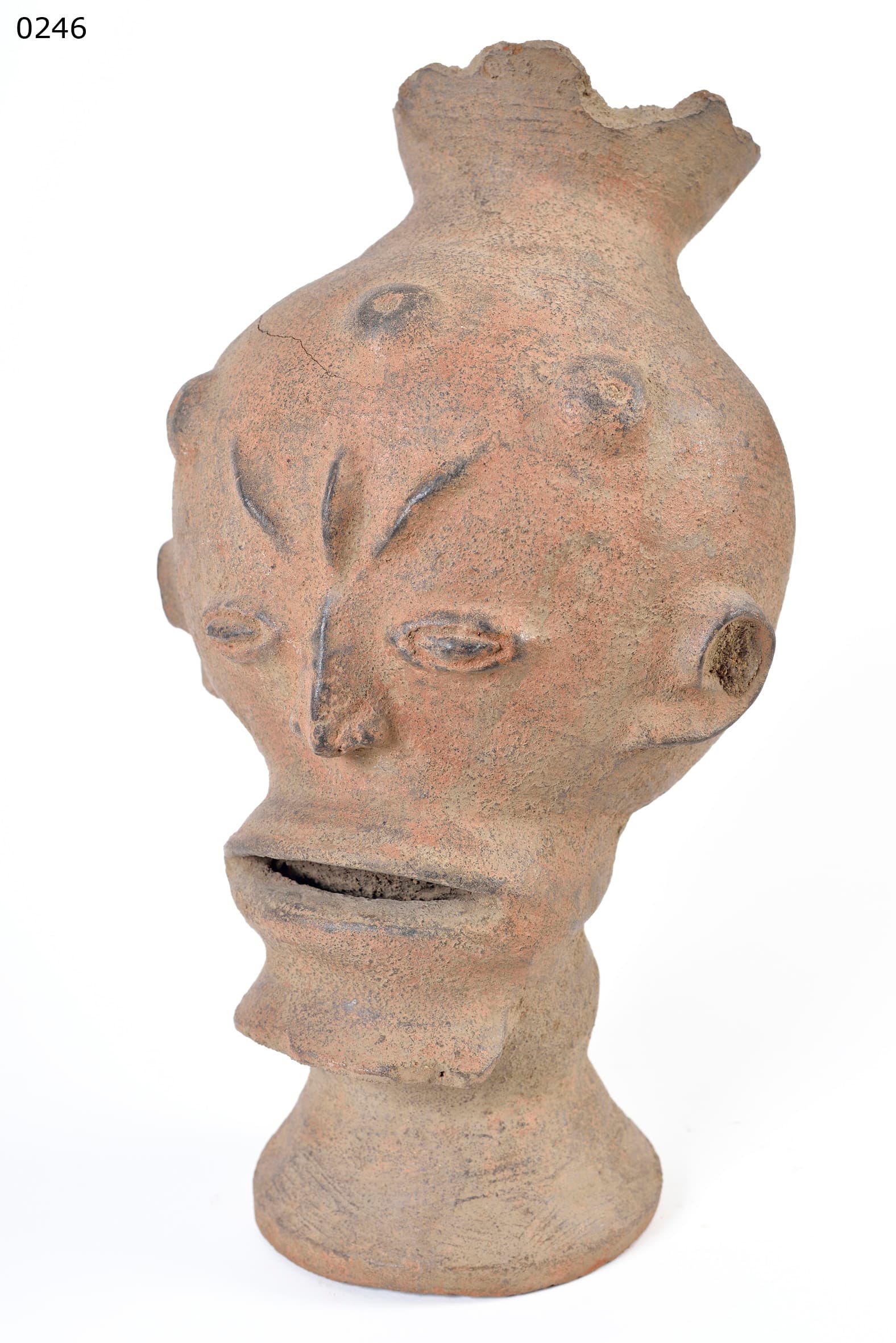
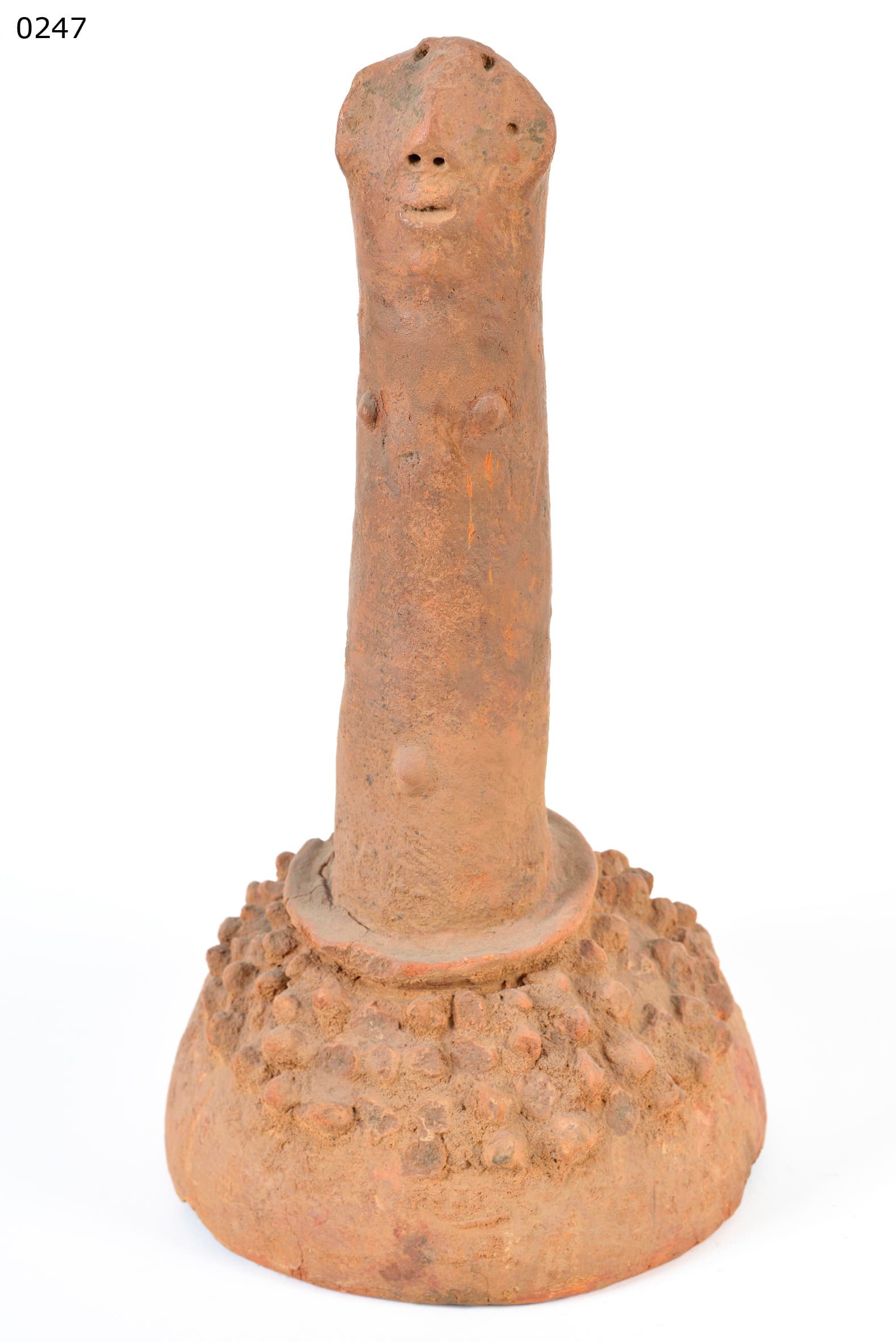
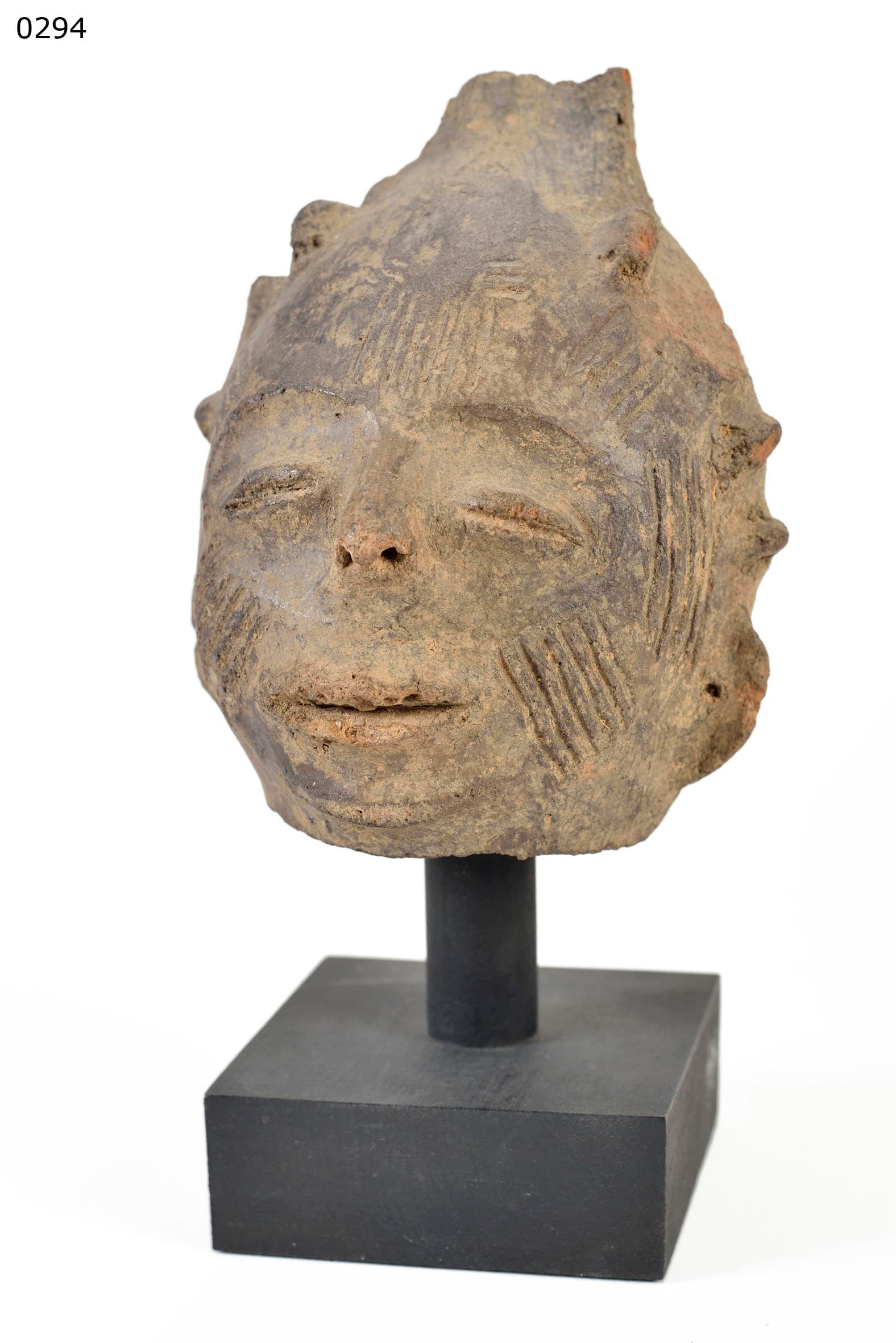
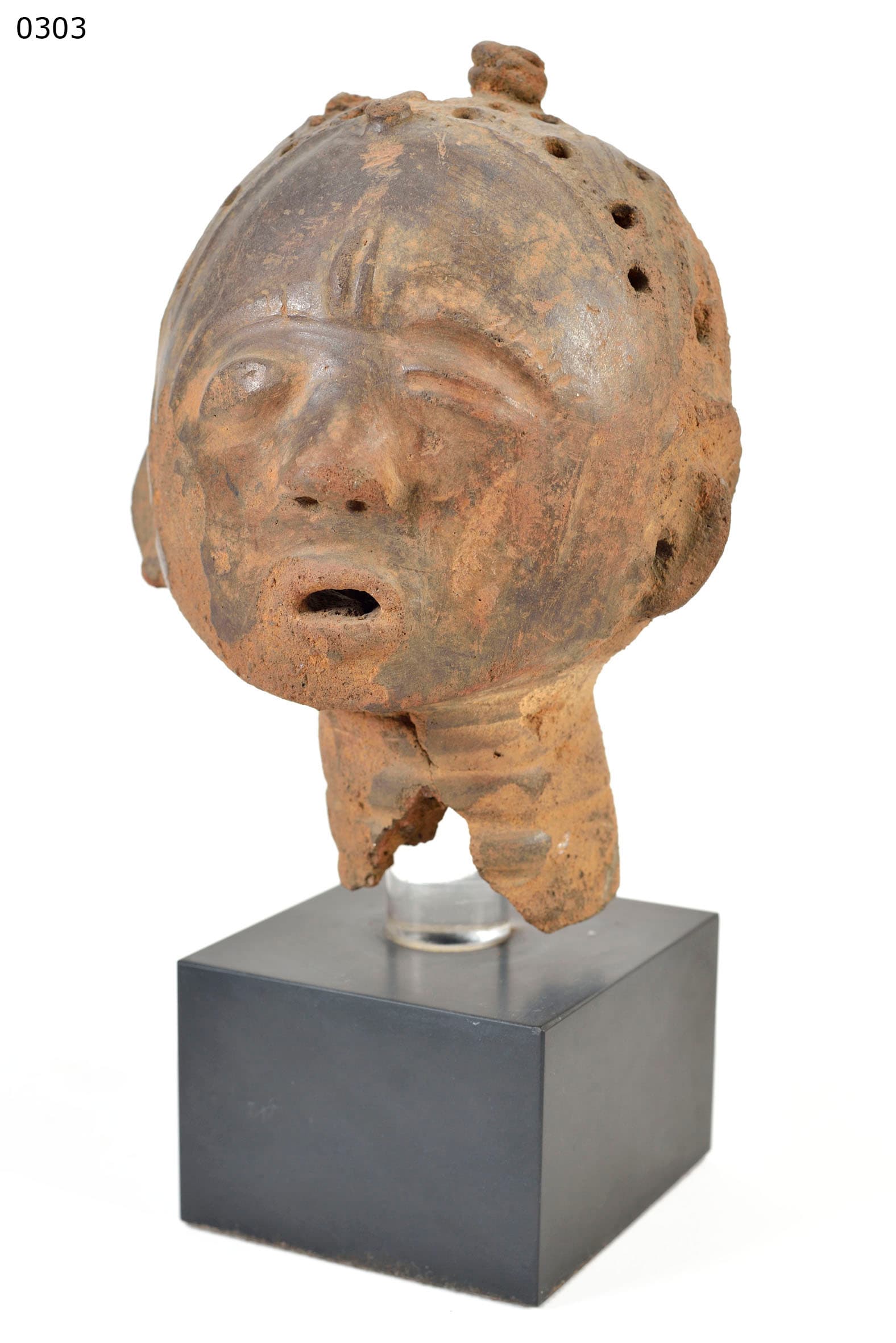
This is a classic Akan commemorative figure, specifically a funerary terracotta memorial head from Ghana.
Known in the Twi language as Nsodie (literally "thing placed on top") or Mma ("infants/little ones"), these objects are part of a centuries-old tradition primarily found among southern Akan subgroups such as the Kwahu, Asante, and Agni (Anyi).
1. Purpose and ritual use
- Memorialization: These figures were created upon the death of an important individual, such as a chief, queen mother, or high-status elder. They were not intended to be "portraits" in the Western sense of capturing a literal likeness, but rather to capture the "essence" or status of the deceased.
- The Sacred Grove: After the funeral, the head was placed in a sacred area of the forest known as an asensie ("place of pots"). Archaeological evidence shows that this specific ritual practice established itself in the late 16th or 17th century, reaching its peak production in the 18th and 19th centuries. Here, family members would visit to offer prayers, libations, and food, believing the spirit of the ancestor could be invoked through the vessel.
- Female Artistry: In a unique tradition for this region, these terracottas were almost exclusively modeled by elderly women artists.
2. Analysis of features (image 0007)
- Bifurcated Coiffure (The "Two Peaks"): The two rounded lobes at the top represent an elaborate hairstyle or headdress. In Akan culture, hair is a major marker of rank; such a "twin-peaked" coiffure signifies the high status and courtly demeanor of the individual being honored.
- Pierced Eyes: While many Akan heads use "coffee-bean" shaped eyes, this simplified style with direct punctures is characteristic of specific regional styles, such as those from the Twifo-Hemang or Agni areas. It gives the figure a meditative, "otherworldly" gaze suitable for a spirit vessel.
- Elongated Neck: The tall, cylindrical neck is a beauty ideal in the Akan world. Often these necks are "ringed" to signify health and prosperity (metaphorical "fat folds" of a well-fed person), though this example is smooth and stylized.
- Material: The piece is made of fired terracotta (clay). The dry, earthy patina with slight encrustations and weather-related abrasions on exposed areas, such as the nose and hair combs, is entirely consistent with traditional placement in an unprotected asensie shrine, supporting a dating to the 17th to 19th century. Historically, some were painted with black or red pigment or covered in white kaolin clay, depending on whether they were destined for a forest shrine or an indoor domestic altar.
Summary
This 17th- to 19th-century object represents the bridge between the world of the living and the ancestors. Its simplified, abstract form—highlighted by the prominent status-indicating hairstyle—served as a permanent physical home for the spirit of a departed leader, ensuring their protection and wisdom continued to benefit the community.
Written with AI assistance from the collection appraisal, object photography and our own research; editorially reviewed. Mistakes are possible — corrections are welcome. How we work →