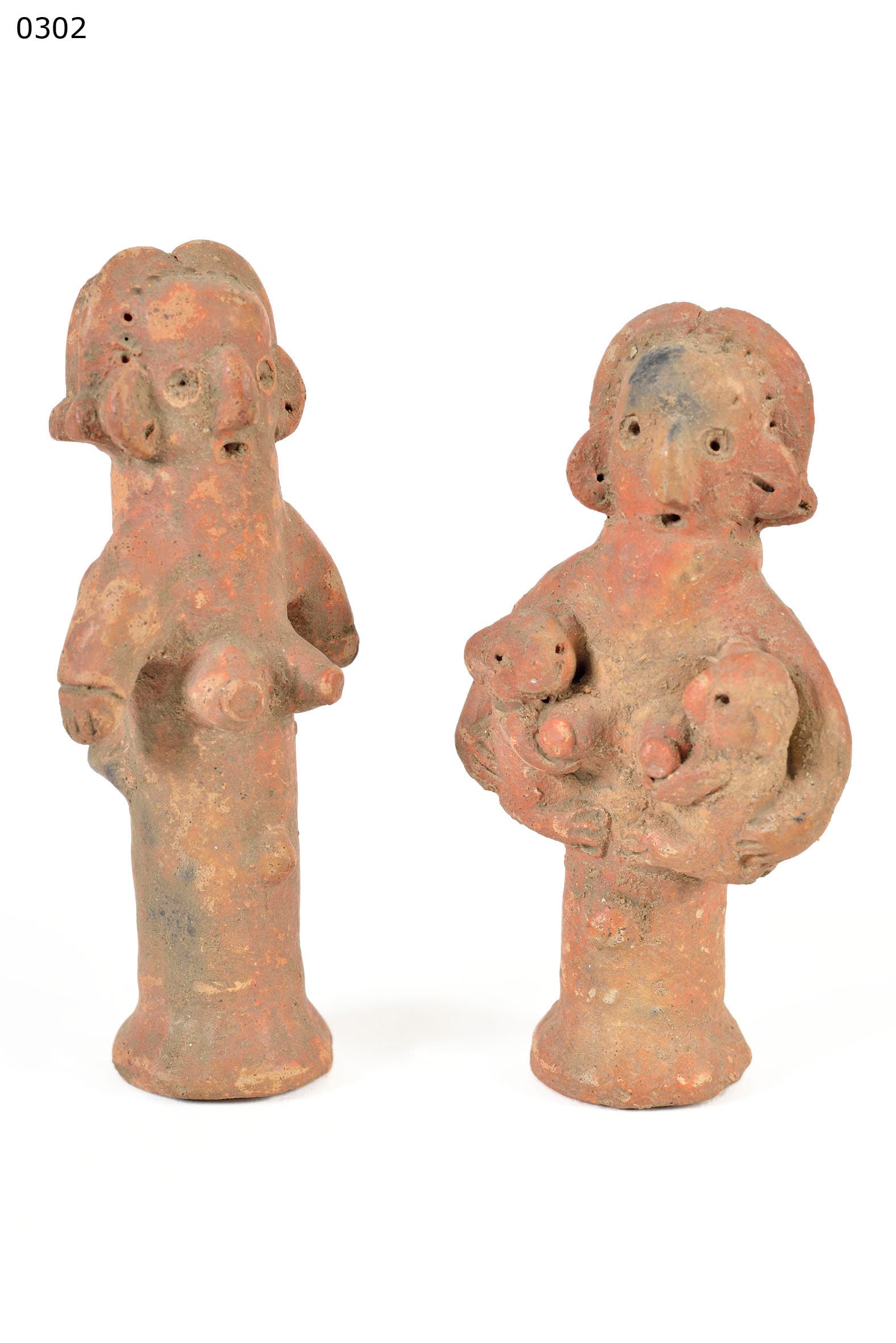
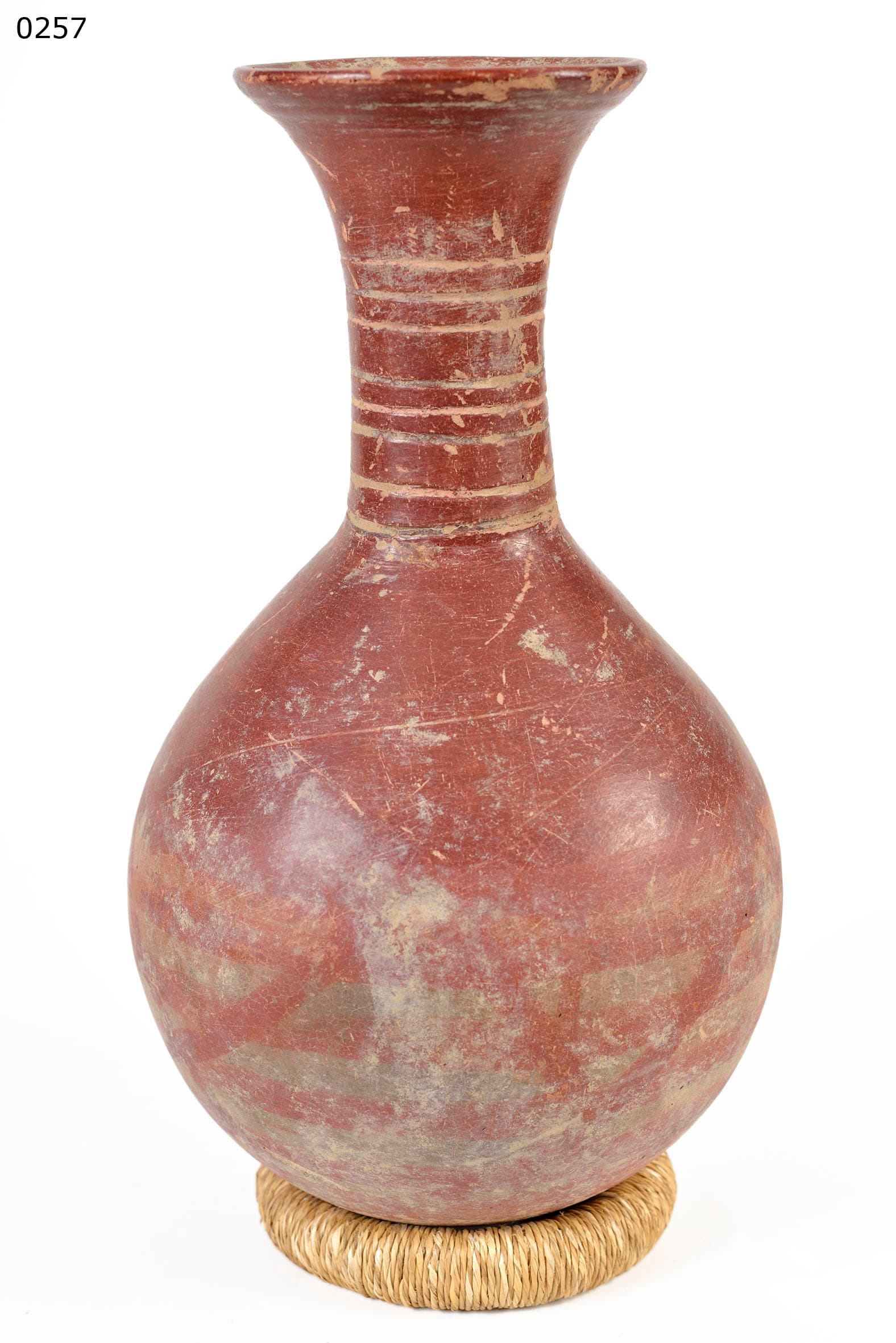
A spherical terracotta vessel (attributed to the 12th–16th C., 39 cm) from the Inland Niger Delta of Mali — entirely covered in intricately incised geometric bands and triangles, the surface heavily calcified with an earthy crust.
1. Ceramic traditions of the Inland Niger Delta
This vessel is associated with the sophisticated ceramic traditions of the ancient Inland Niger Delta, contemporaneous with the Djenne empire.
- Rhythmic Incision: Precise rhythmic incision of triangles and bands demonstrates a mastery of decorative geometry that recalls the region's famous figurative sculptures.
- Artistic Peak: The piece is consistent with a culture operating at a high level of artistic development — the ornamental program alone suggests specialized skill and hours of disciplined work.
2. Ritual offerings and funerary caches
Finely decorated vessels of this caliber were rarely created for domestic use.
- Elite Contents: Likely used to hold sacred medicines, ceremonial libations, or valuable trade goods.
- Burial Cache: When found in archaeological contexts, such vessels are typically recovered from burial tumuli or foundational caches — placed as offerings to sustain the ancestors in the afterlife or to consecrate the building of new homes and shrines.
3. Subterranean calcification
Half a millennium of burial has chemically altered the fired clay.
- Mineral Bonding: A pale chalky crust has formed where soil minerals have permanently bonded with the porous ceramic.
- Softened Incisions: The extreme softening of the originally sharp incised lines is consistent with a 12th–16th-century dating — centuries of compression and chemistry rounded every edge.
Summary
Marrying an elegant spherical form with intricate geometric decoration, this Inland Niger Delta vessel is an example of Malian ceramic craftsmanship. Its profound subterranean calcification is consistent with its status as an archaeological antiquity.
Written with AI assistance from the collection appraisal, object photography and our own research; editorially reviewed. Mistakes are possible — corrections are welcome. How we work →
vessel

pair of zoomorphic tomb figures
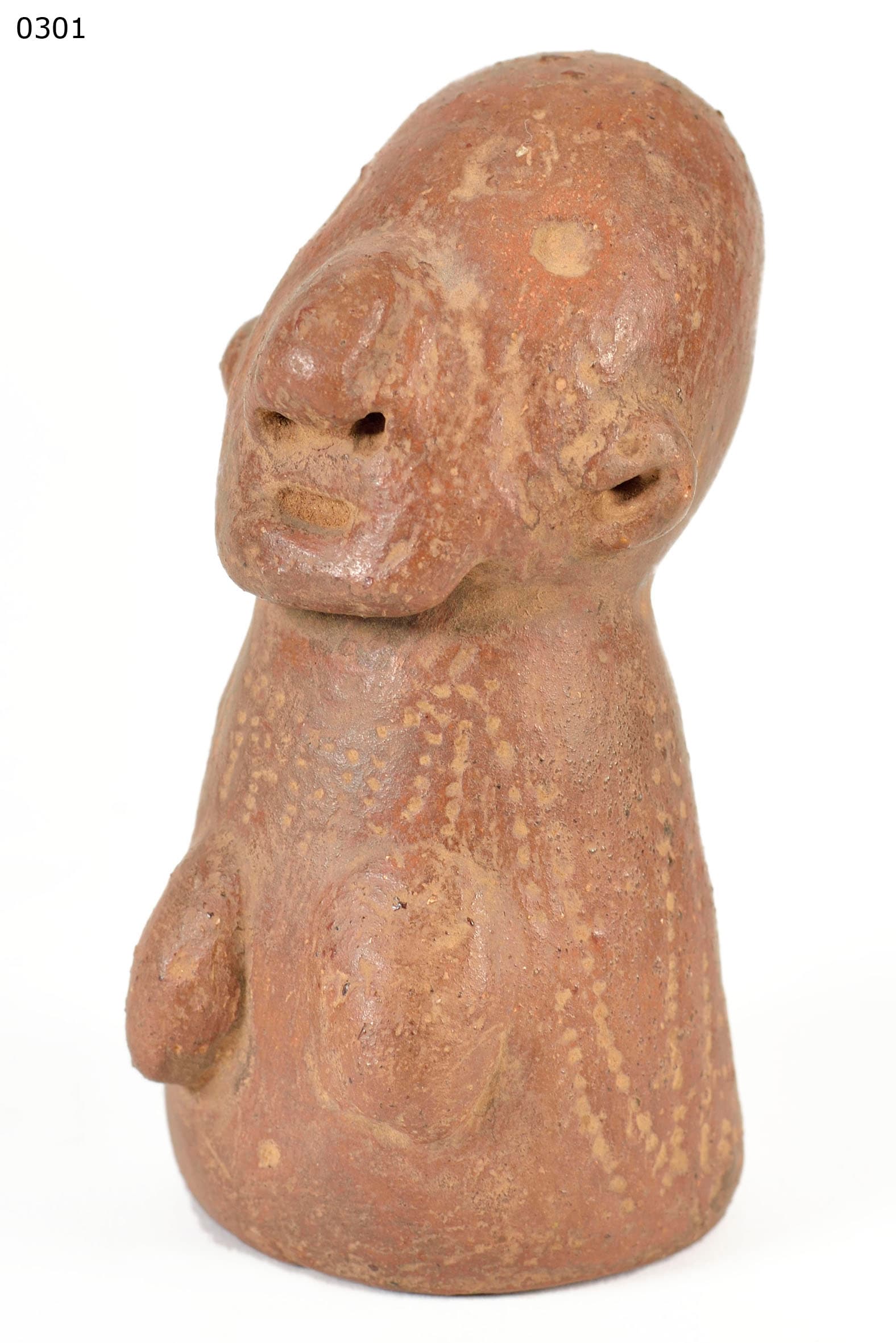
female tomb figure