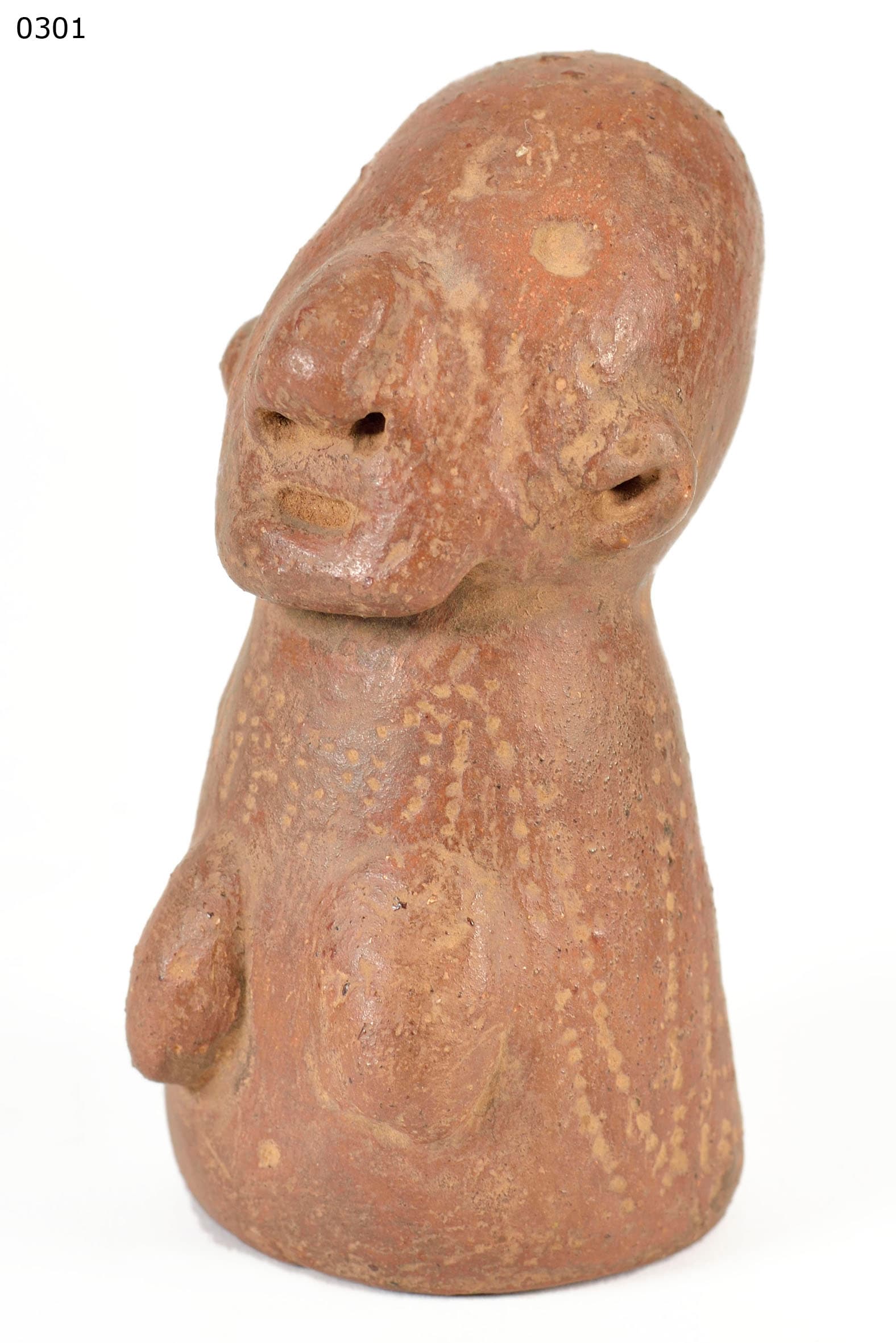
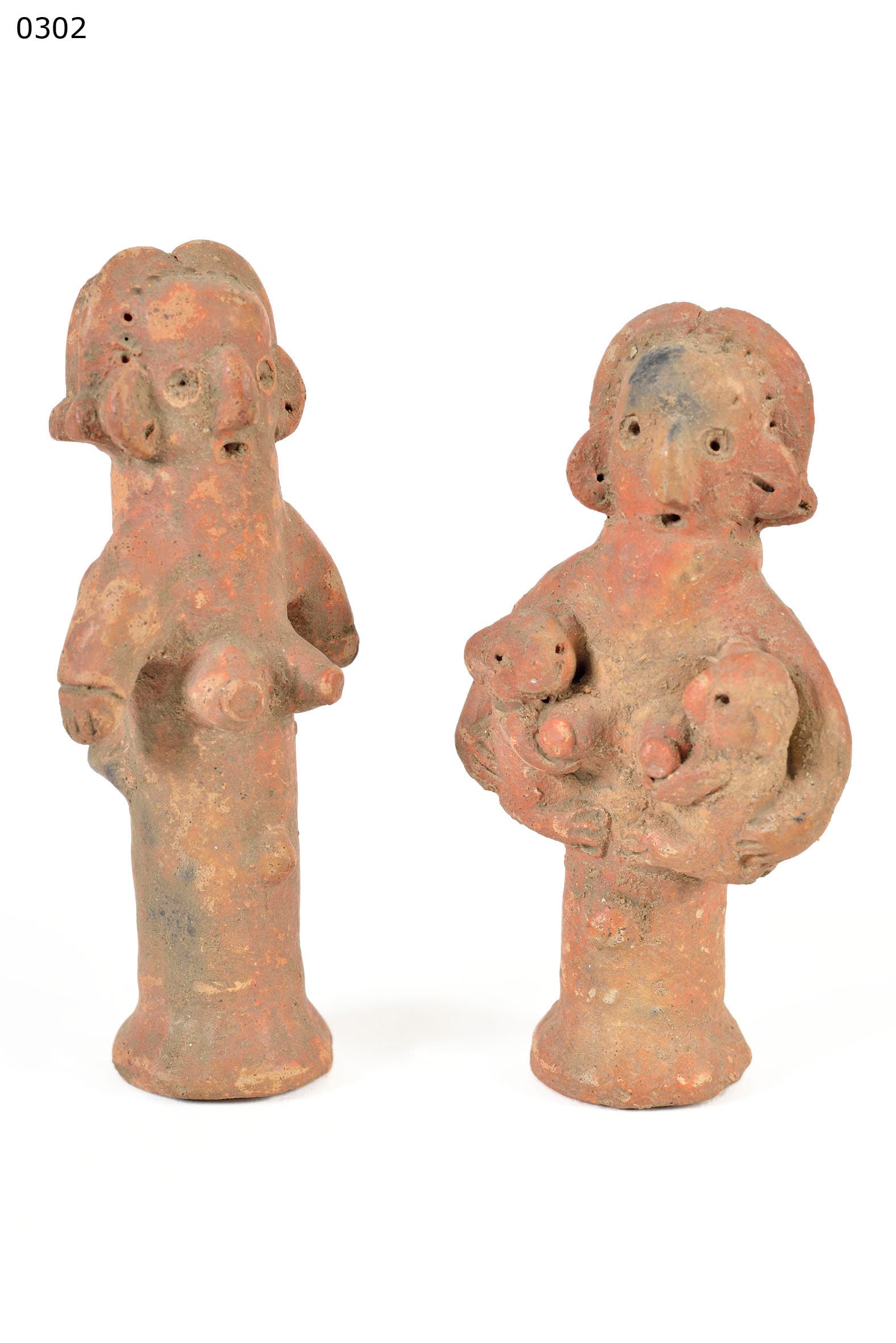
A pair of miniature Inland Niger Delta terracotta quadrupeds (12th–16th C., 14/15 cm) from Mali — stylized crude zoomorphic animals (likely rams or horses) defined by highly porous calcified clay surfaces deeply encrusted with the pale earth of the Malian floodplains.
1. Miniature zoomorphic works of Djenne and Bankoni
These small-scale zoomorphic figures represent the incredibly rich diverse ritual life of the ancient Inland Niger Delta civilization.
- Equally Vital at Small Scale: While large Djenne figures are well known, these miniatures are also significant components of the corpus.
- Crude Robust Vitality: The zoomorphic figures — often rams or horses — represent sacrificial surrogates or divine mounts, displaying a robust crude vitality rather than naturalistic polish.
2. Tumulus veneration and surrogacy
Due to their miniature scale, these objects were highly portable and intimately handled.
- Deposited in Tumuli: They were frequently deposited in massive quantities within tumuli (burial mounds) or placed in foundational caches beneath homes.
- Spiritual Armor: The zoomorphic figures acted as spiritual armor — ensuring the deceased were accompanied by protective familiars and abundant wealth in the afterlife.
3. Subterranean calcification
The physical condition of both figures is uniform, showing surface characteristics consistent with long-term burial.
- Floodplain Deposition: Long-term burial in the seasonally flooded mineral-rich mud of the Niger River is associated with chemical alteration of the clay.
- Cement-Like Crust: The surfaces are highly calcified — bearing a thick pale cement-like encrustation that fills the deep recesses of the limbs. This taphonomy is consistent with characteristics documented in ancient Malian excavations.
Summary
Capturing the intimate spiritual devotion of the ancient Inland Niger Delta, this pair of miniature zoomorphic figures represents a compelling archaeological find. Their crude vitality and subterranean calcification are characteristic of this regional tradition.
Written with AI assistance from the collection appraisal, object photography and our own research; editorially reviewed. Mistakes are possible — corrections are welcome. How we work →