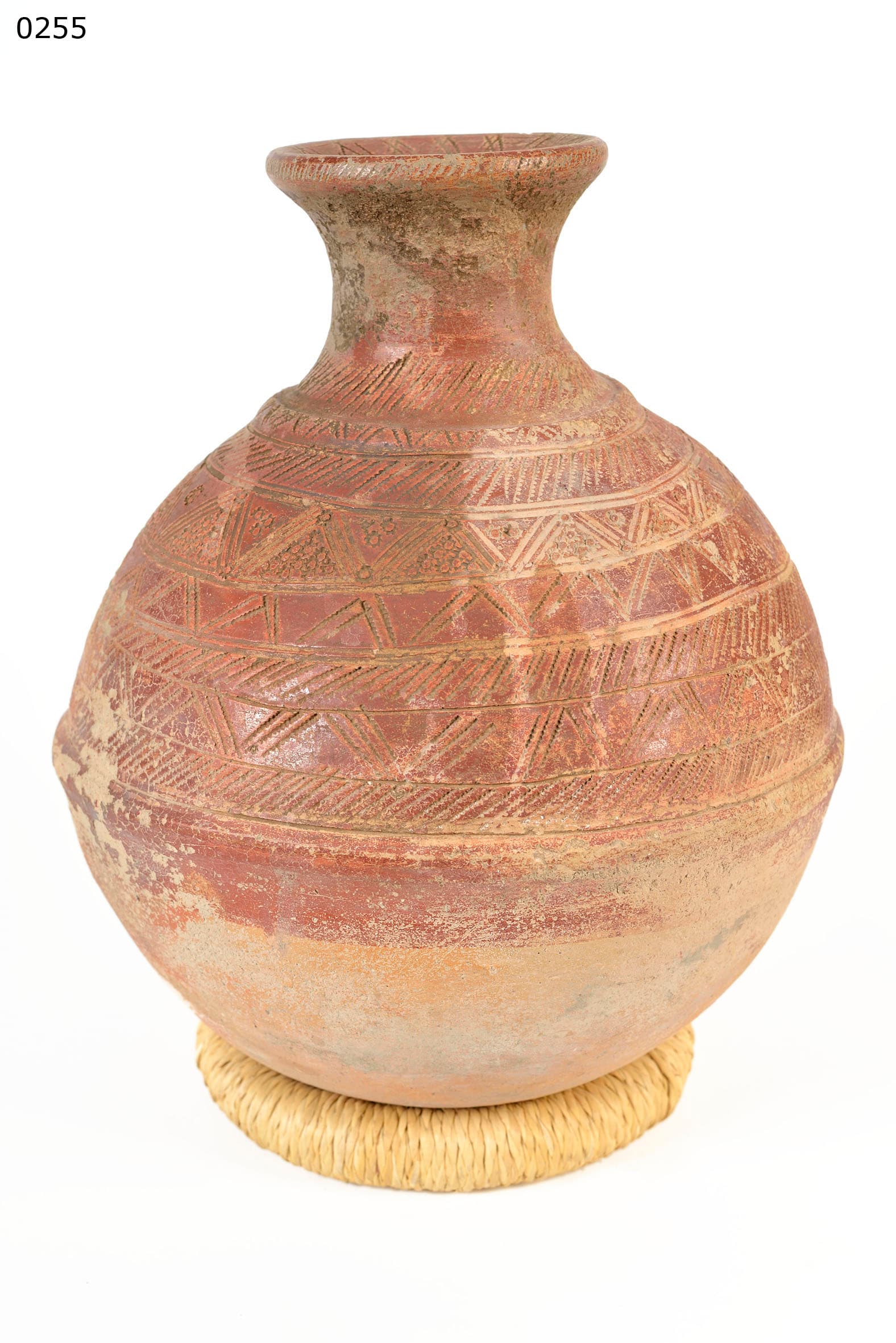
An elegant Inland Niger Delta terracotta vessel (12th–16th C., 39 cm) from Mali — bulbous body tapering into an elongated flared neck with traces of painted motifs, the heavily calcified earthy surface bearing centuries of burial chemistry.
1. The long-necked form
While the collection's sibling vessel emphasizes geometric surface incision, this 39 cm piece foregrounds silhouette.
- Fluid Profile: The elegant tapering flared neck transforms the vessel into a kinetic sculptural object beyond its utilitarian function.
- Painted Decoration: Faint traces of painted motifs remain visible — applied pigments over the fired clay once gave the vessel a chromatic register alongside its sculptural form.
2. Foundational caches and libation rituals
Long-necked vessels of this kind were the preferred form for specific ritual uses.
- Controlled Pour: The narrow flared neck allowed precise pouring of libations during memorial rituals — beer, water, or milk dispensed with ceremonial control.
- Foundational Deposits: Such vessels are frequently recovered from architectural foundations or secondary burial caches, consecrating new dwellings and invoking ancestral protection.
3. Painted pigments under soil chemistry
The surface tells a dual story of original decoration and subsequent burial.
- Faded Pigments: Centuries of soil contact have faded the original painted motifs, leaving only ghostly traces rather than full patterns.
- Calcified Envelope: Pale mineral deposits have bonded with the porous ceramic, matching the chemistry of its sibling and confirming the 12th–16th-century deposition context.
Summary
The long-necked counterpart in the Niger Delta vessel pair, this 39 cm piece balances fluid silhouette against faded polychrome. Its authenticated archaeological chemistry solidifies it as a prime example of elite Malian ceramic production.
Written with AI assistance from the collection appraisal, object photography and our own research; editorially reviewed. Mistakes are possible — corrections are welcome. How we work →
vessel

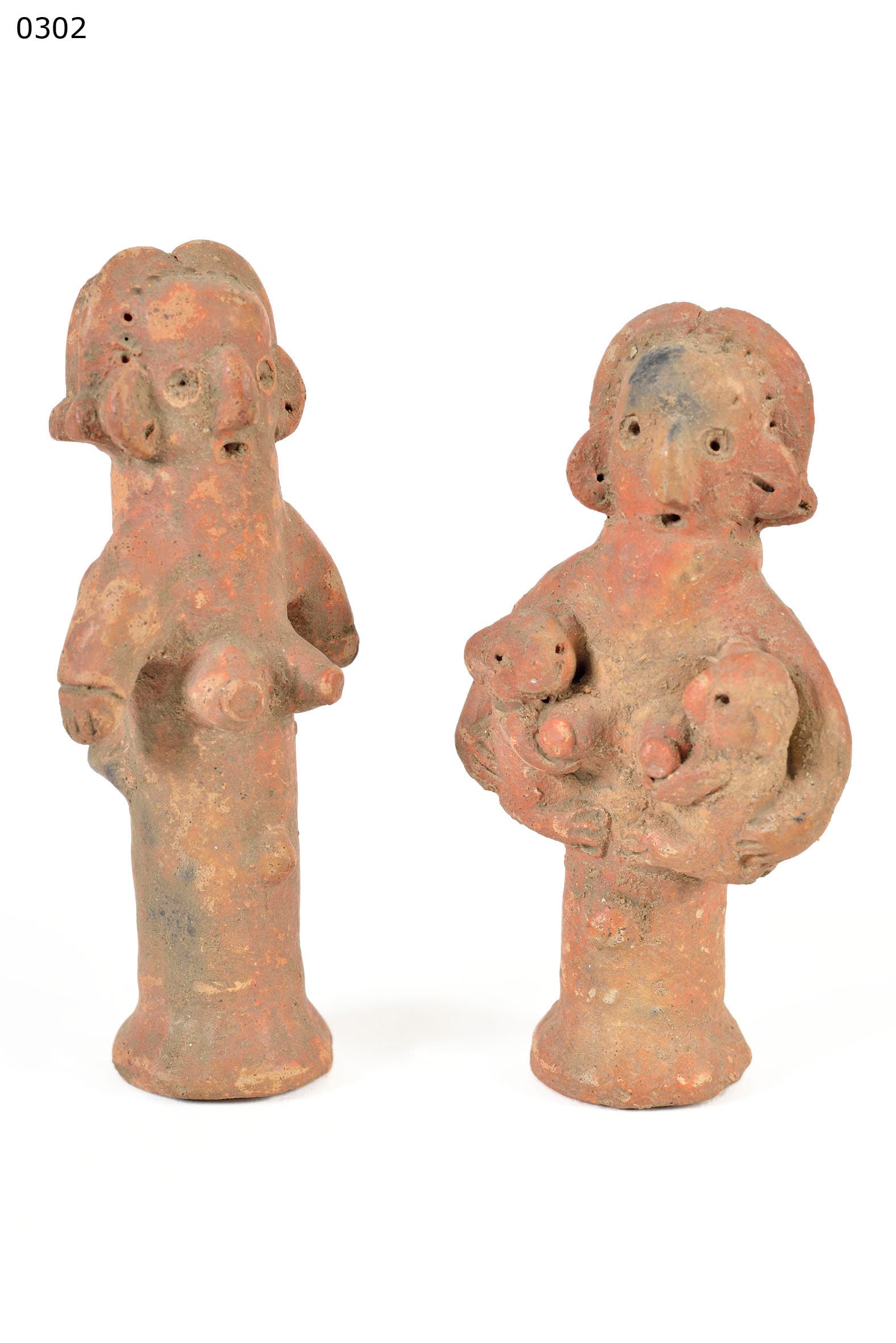
pair of zoomorphic tomb figures
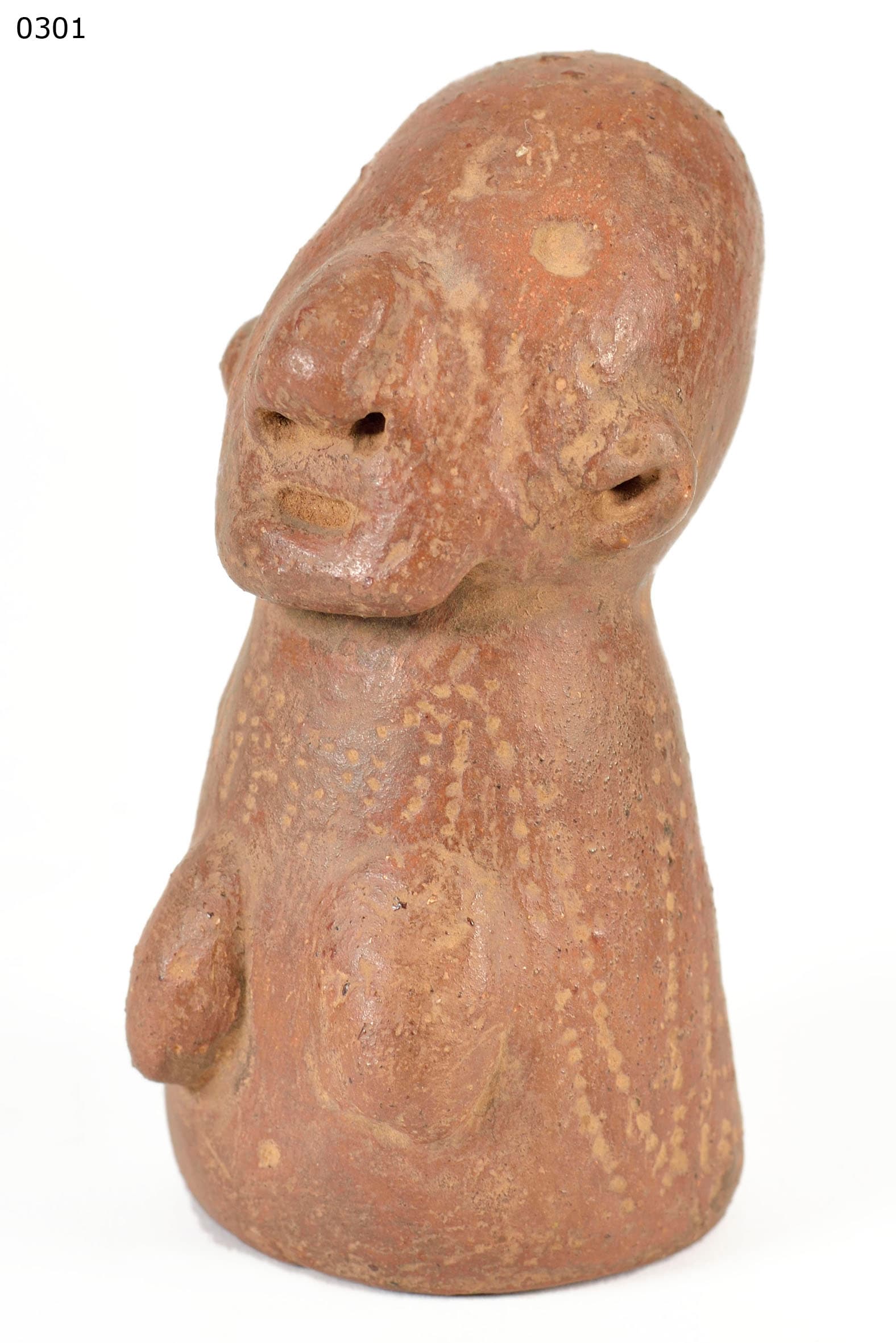
female tomb figure