A broad somewhat flattened Lobi terracotta (17th–19th C., 33 cm) from Burkina Faso — a wide mouth, horizontally slit eyes, and a prominent circular hollow opening at the crown of the head, the highly textured clay covered entirely in a thick dry pale-earth encrustation.
1. Rare terracotta abstraction in the voltaic region
The Lobi are universally famous for their wooden bateba figures — their terracotta ritual objects are exceedingly rare.
- Wood-to-Clay Translation: This head translates the somber heavy highly withdrawn aesthetic of Lobi woodcarving into fired clay.
- Slit-Eyed Vigilance: The wide flattened facial plane and horizontal slit-like eyes project the same aura of tense hyper-vigilant watchfulness seen in Lobi wooden shrines — prioritizing rigid spiritual geometry over naturalism.
2. Funerary receptacles and libations
The most striking feature is the large deliberate hollow opening carved into the crown.
- Active Vessel, Not Statue: This architectural detail reveals the head's function as an active ritual vessel rather than a solid memorial statue.
- Feeding the Ancestor: Placed on an ancestral grave or a dithil (family shrine), the open top allowed descendants to pour liquid libations (millet beer or water) directly "into" the ancestor's head — ensuring the spirit's continuous protection over the household.
3. Subterranean calcification
The physical condition points to prolonged burial or integration into an earthen shrine.
- Obscured Original Surface: The original ceramic surface is entirely obscured by a thick pale highly calcified crust.
- Mineral Bonding: This layer is formed by the chemical bonding of Burkina Faso's mineral-rich soil with the porous terracotta over several centuries — profound irreversible geological encrustation authenticating 17th–19th-century origins.
Summary
Translating the tense watchful power of Lobi animism into a rare ceramic medium, this funerary head is a vital piece of Voltaic art. Its unique libation hollow and thick ancient calcification mark it as an exceptional ethnographic antiquity.
Written with AI assistance from the collection appraisal, object photography and our own research; editorially reviewed. Mistakes are possible — corrections are welcome. How we work →
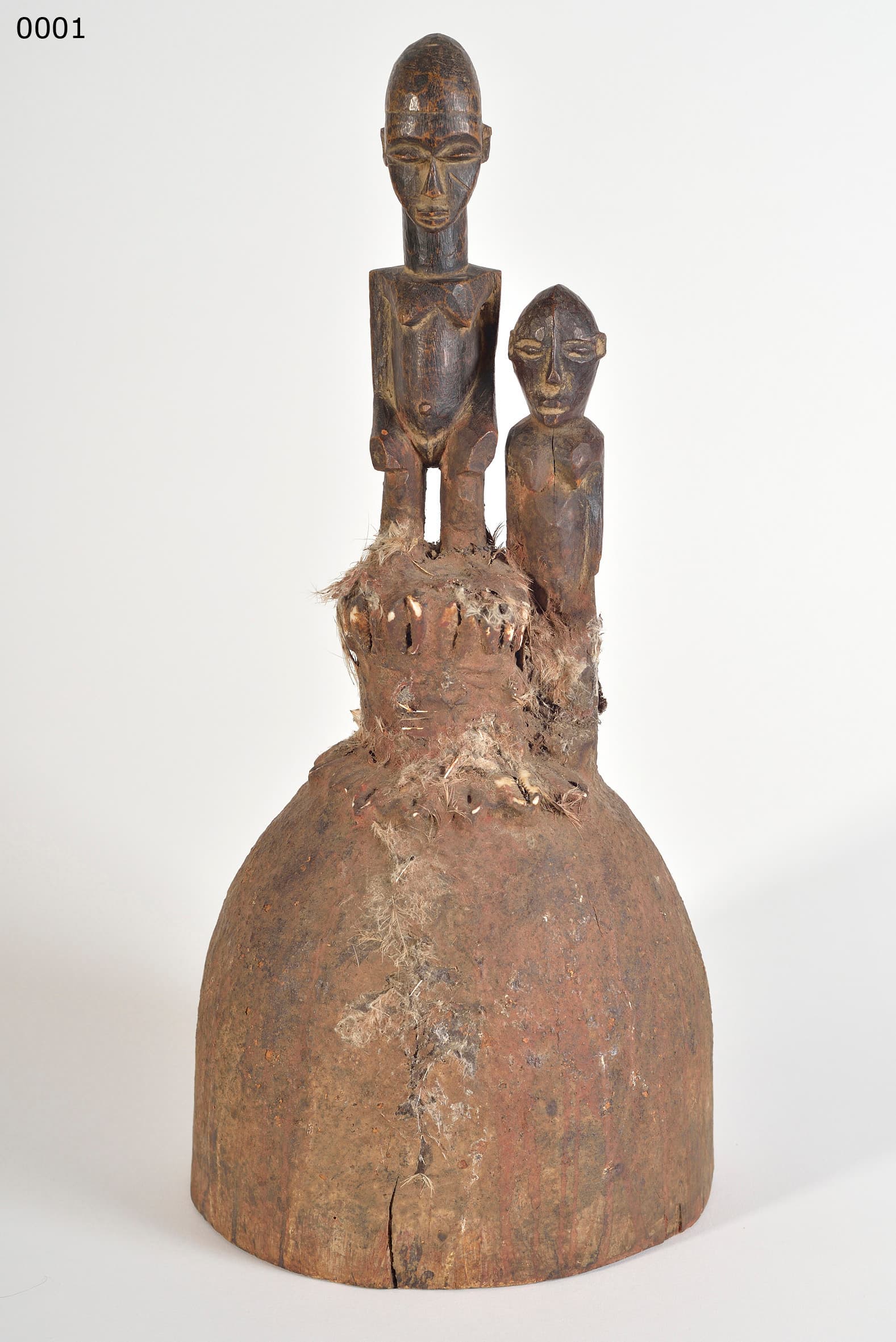
shrine altar with BATEKE couple
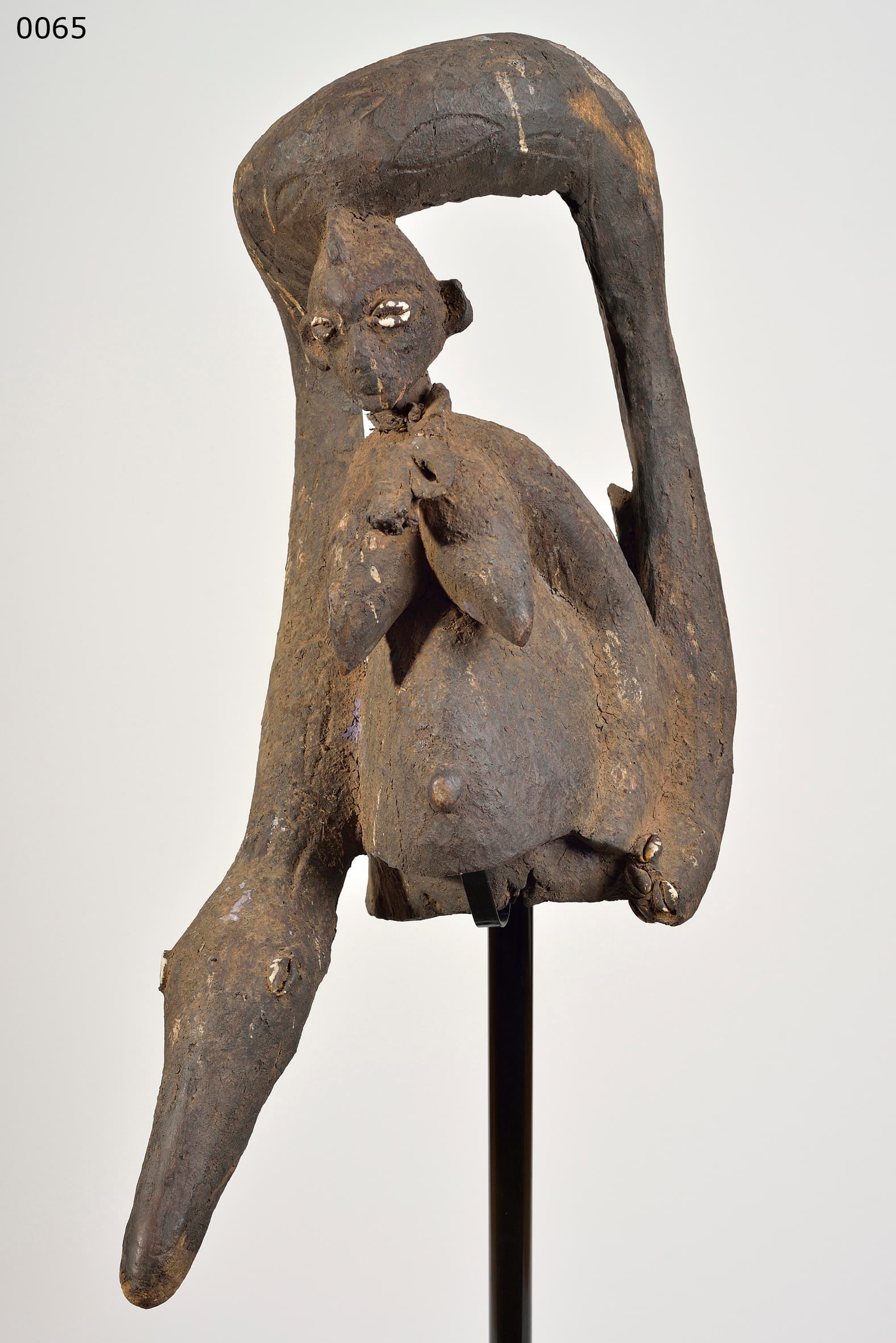
rare head crest mask
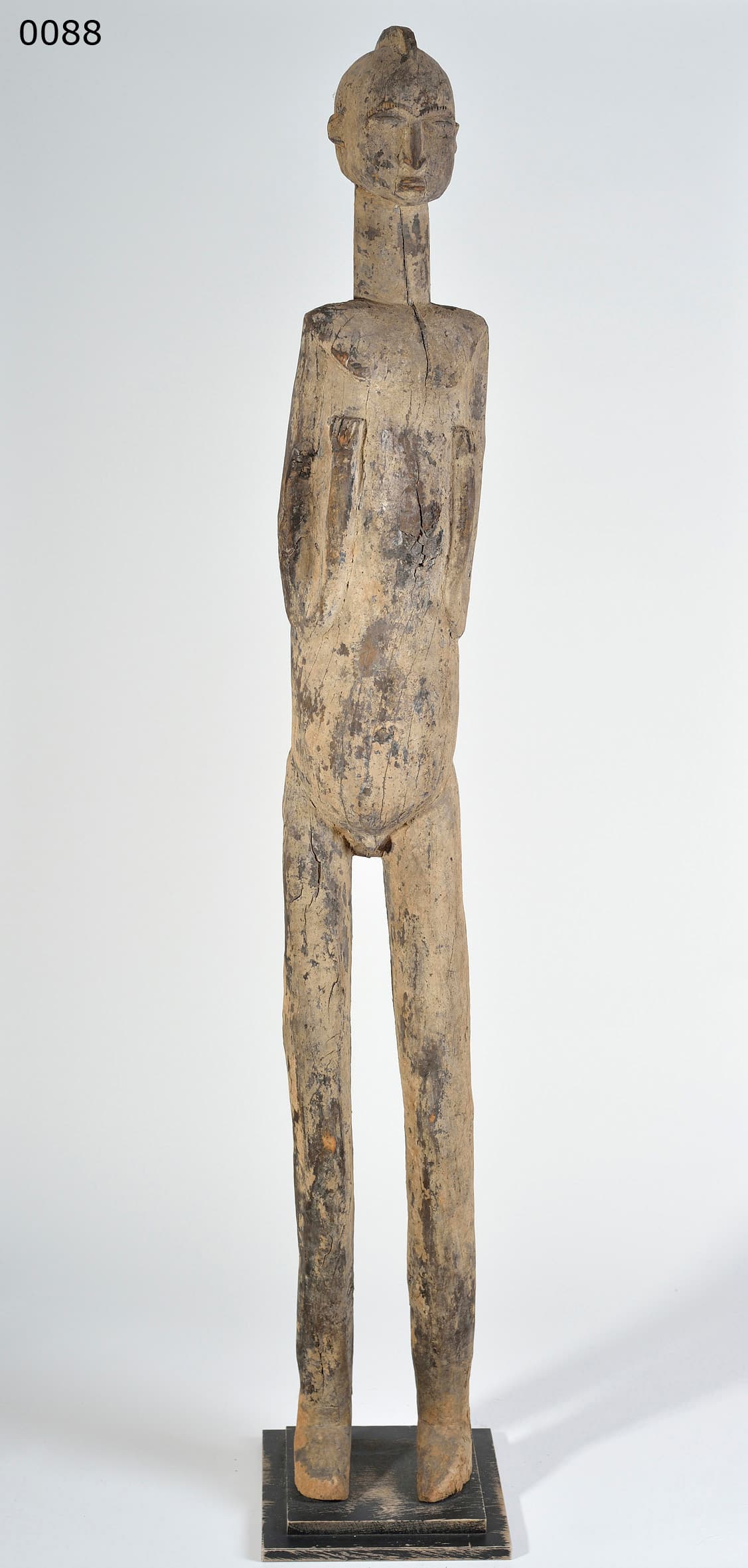
shrine figure representing a BATEBA spirit (unusually tall, rare)