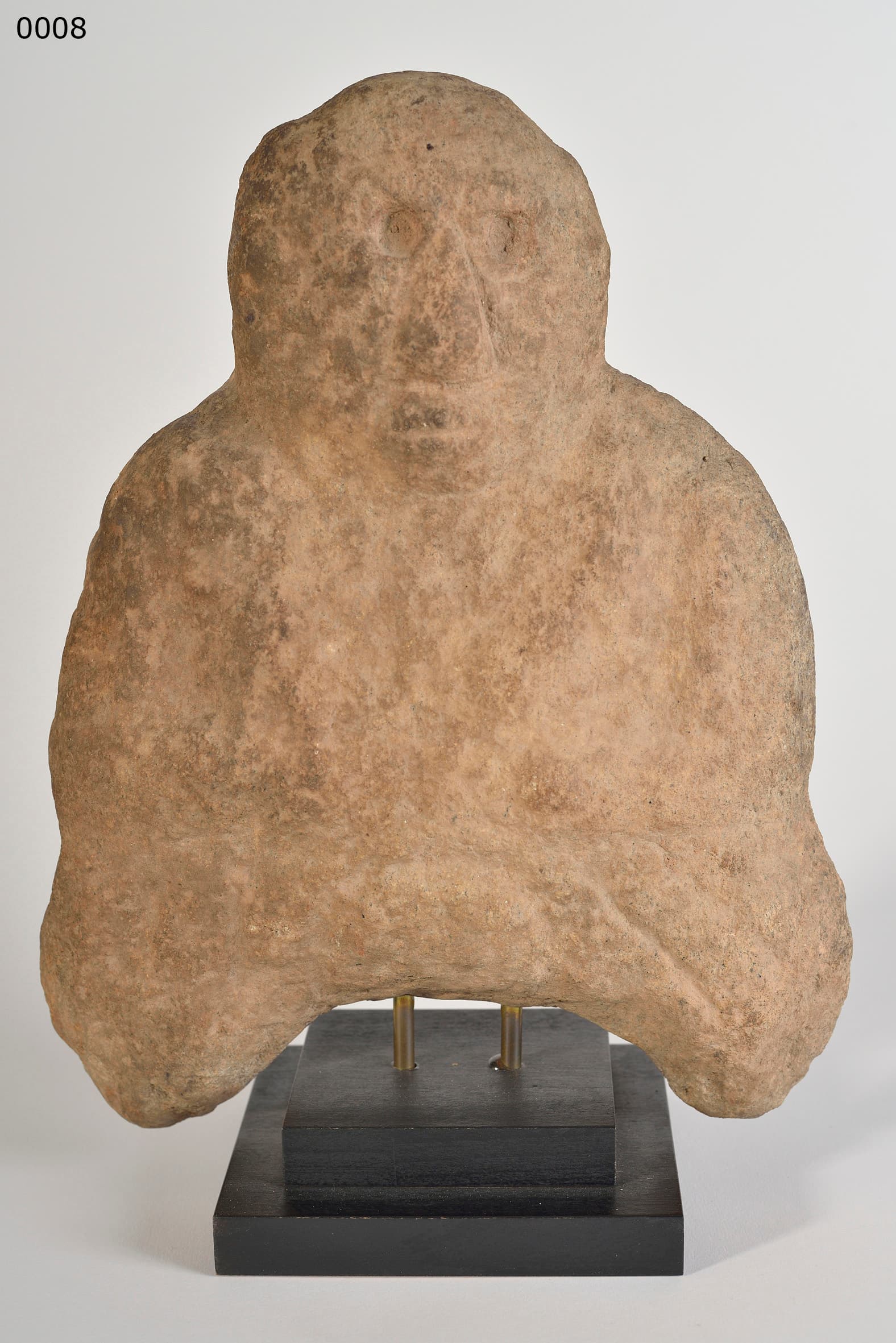
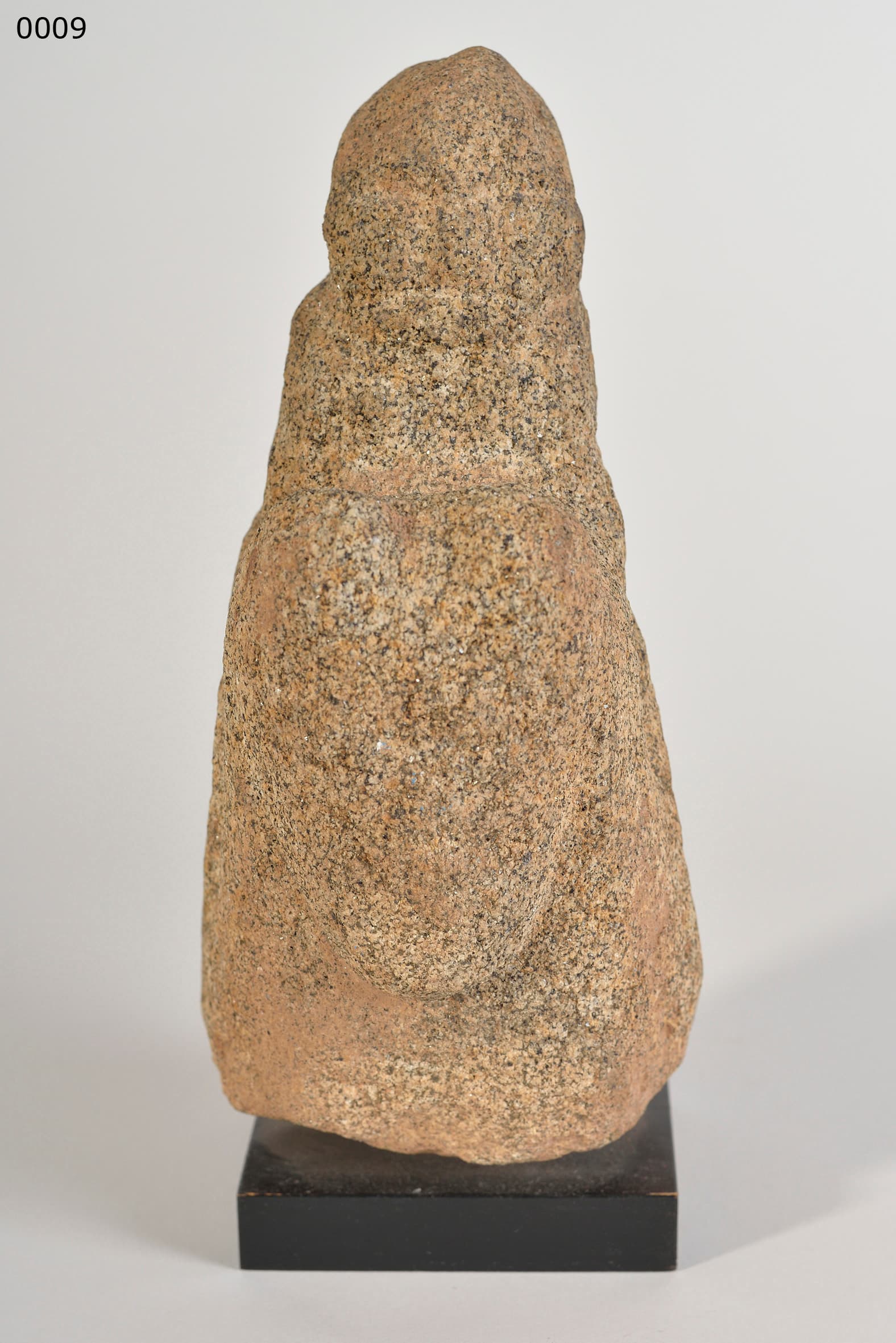
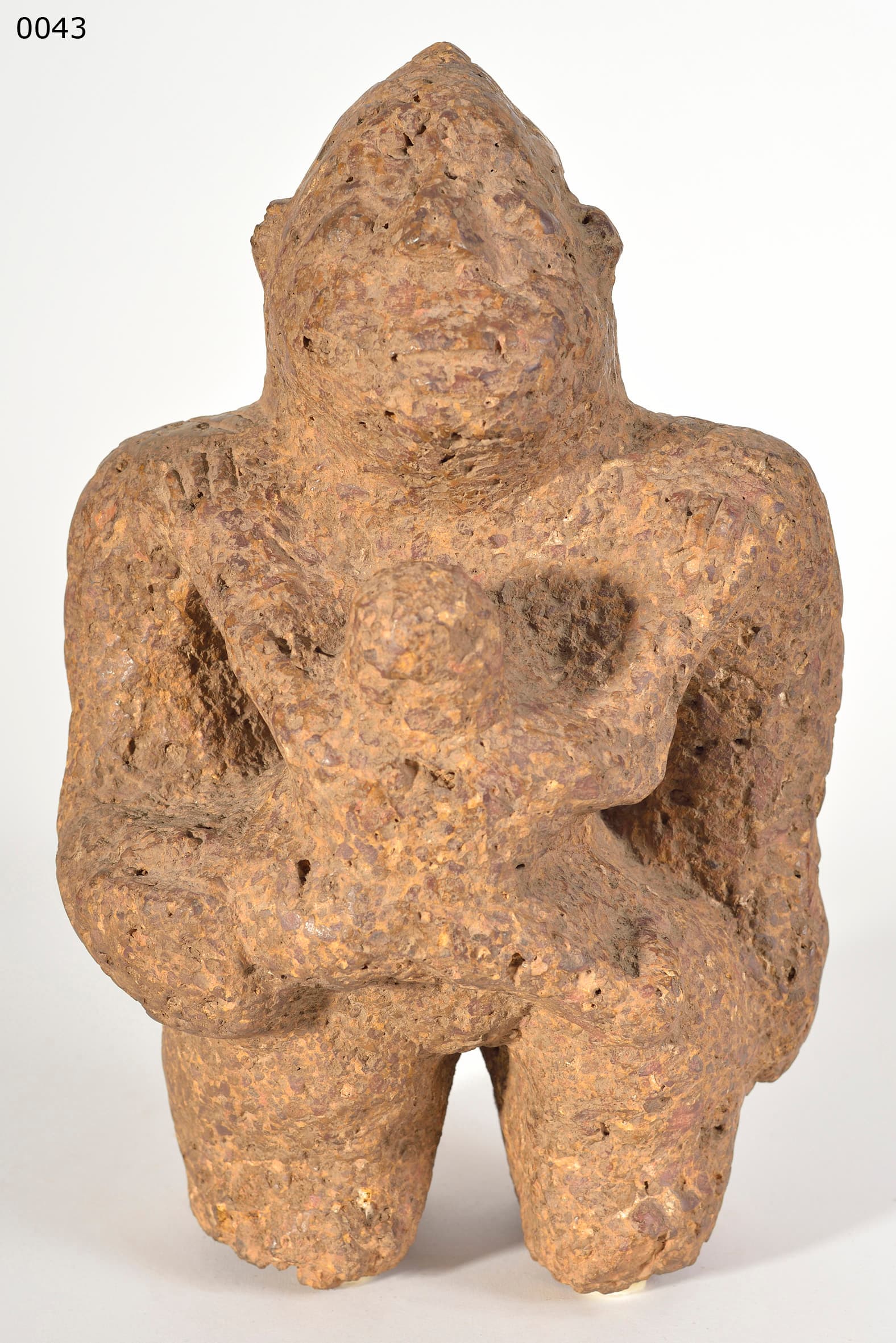
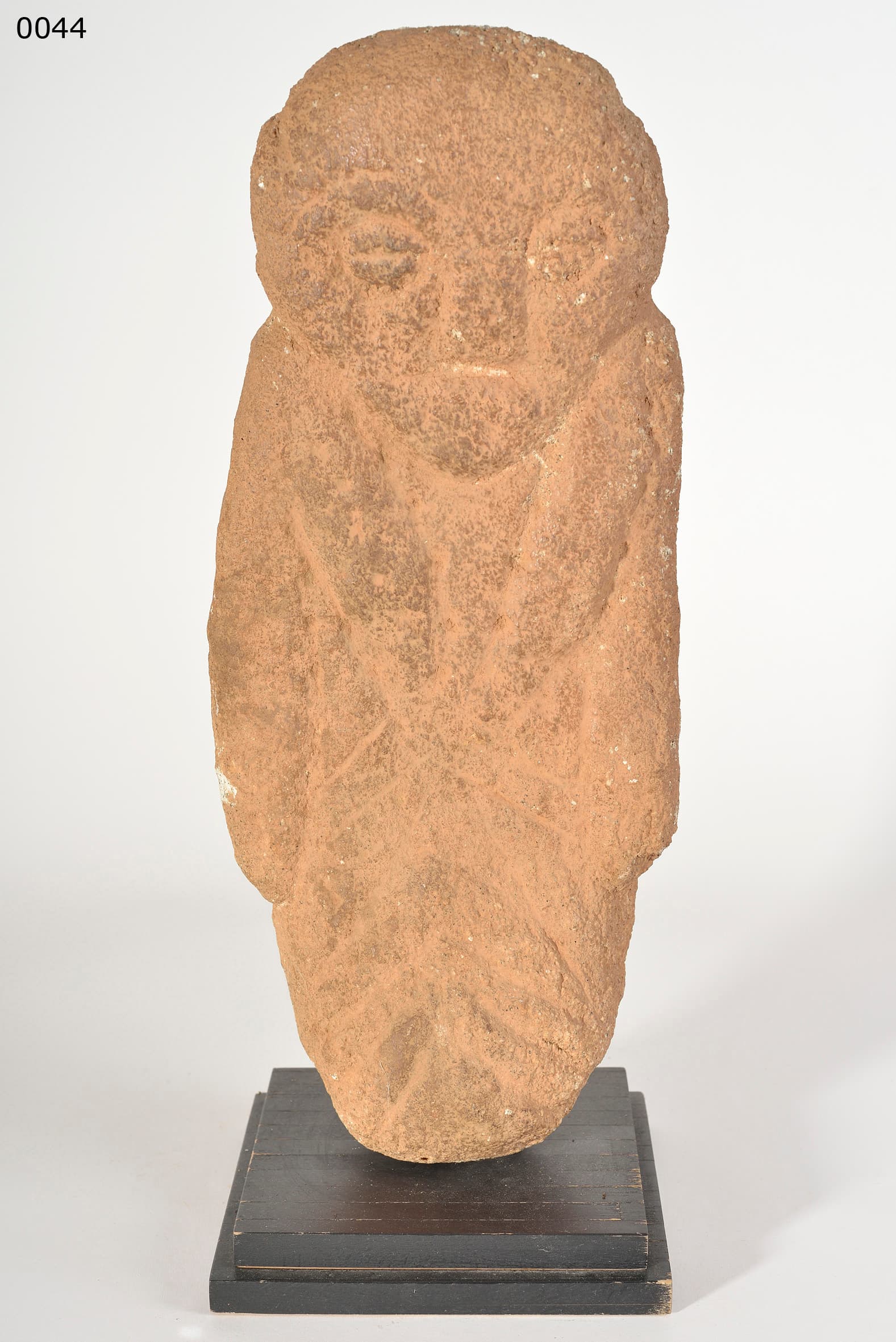
A companion Nyonyosi lithic tomb figure (12th–16th C., 21 cm) from Burkina Faso — carved from dense coarse-grained granite or sandstone, paired to 0304 in style and ritual role, with a stout highly abstracted body, oversized rounded head, pronounced brow ridges, and simplified limbs, the lithic surface showing significant smoothing, erosion, and mottled grey-brown weathering.
1. Monumental minimalism in lithic carving
The stone-carving tradition of the Nyonyosi — the ancient original inhabitants of the Burkinabe plateau, later assimilated by the Kurumba — is characterized by stark monolithic abstraction.
- Mass Over Detail: Unlike the highly detailed wood carving of later West African eras, Nyonyosi stone figures prioritize raw mass and geometric reduction.
- Head as Soul-Seat: The exaggerated proportions of the head relative to the body emphasize the cranial vault as the seat of the soul and ancestral intellect — a recurring motif in the earliest strata of Sahelian art.
2. Guardians of the necropolis
These heavy imposing lithic figures functioned as grave markers or tomb guardians.
- Anchoring the Soul: Erected on top of burial mounds or at the entrances of subterranean family crypts to anchor the soul of the deceased to its final resting place.
- Pacifying the Dead: By marking the threshold between the realm of the living and the necropolis, these figures pacified the dead — preventing restless spirits from wandering back into the village to cause illness or misfortune.
3. Elemental weathering and antiquity
The physical condition is consistent with significant antiquity.
- Soft Facial Erosion: Softening of facial features plus deep embedded soil and lichen accretions suggest continuous exposure to the harsh arid Burkina Faso climate over several centuries.
- Irreplicable Micro-Pitting: The specific type of micro-pitting on the stone's surface is difficult to replicate artificially, serving as a geological marker compatible with the 12th–16th-century age estimate.
Summary
Companion to 0304, this lithic sculpture shares the same stark abstraction and deep geological weathering — together forming a notable pairing that offers a glimpse into ancient pre-Islamic burial practices of the Sahelian plateau.
Written with AI assistance from the collection appraisal, object photography and our own research; editorially reviewed. Mistakes are possible — corrections are welcome. How we work →