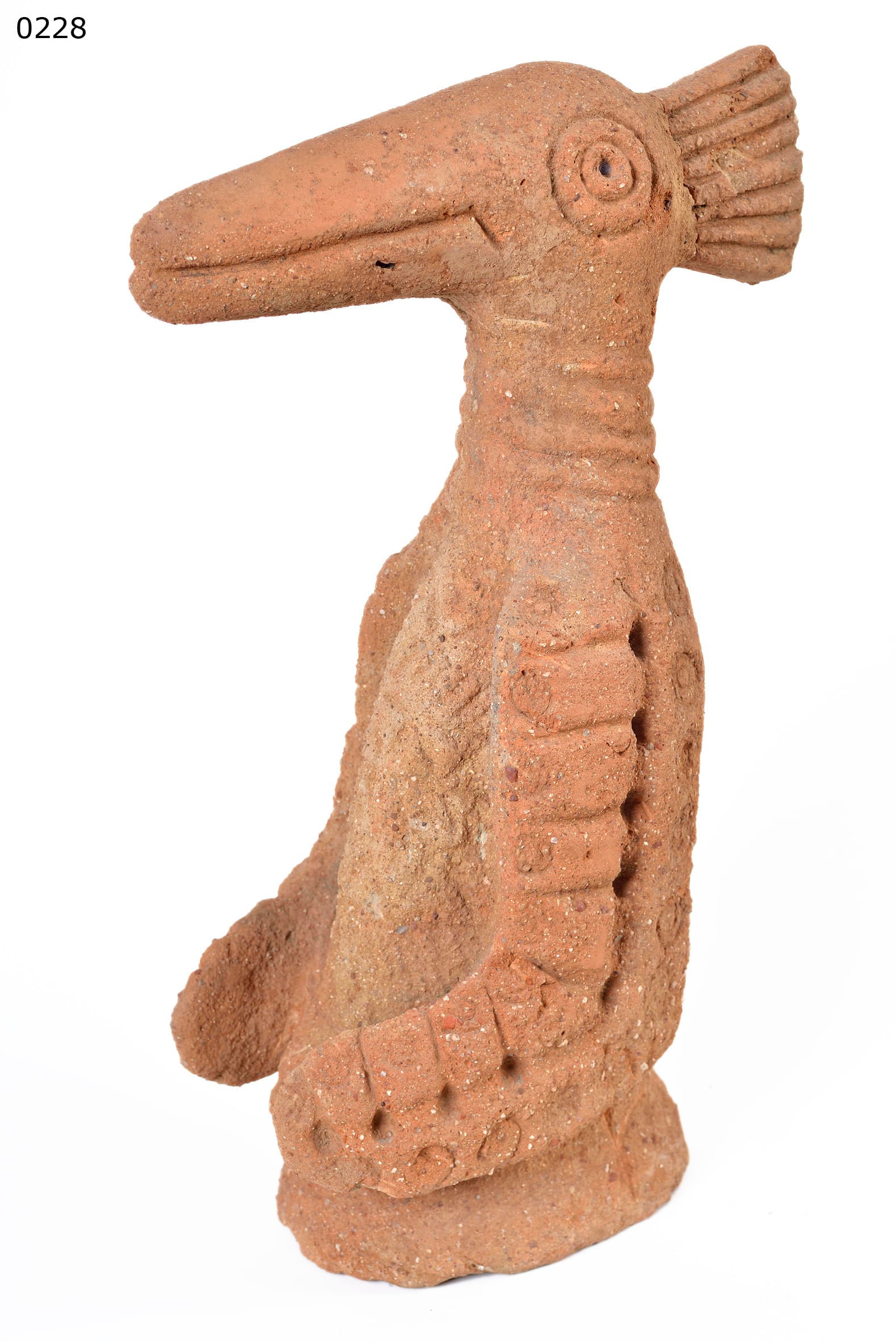
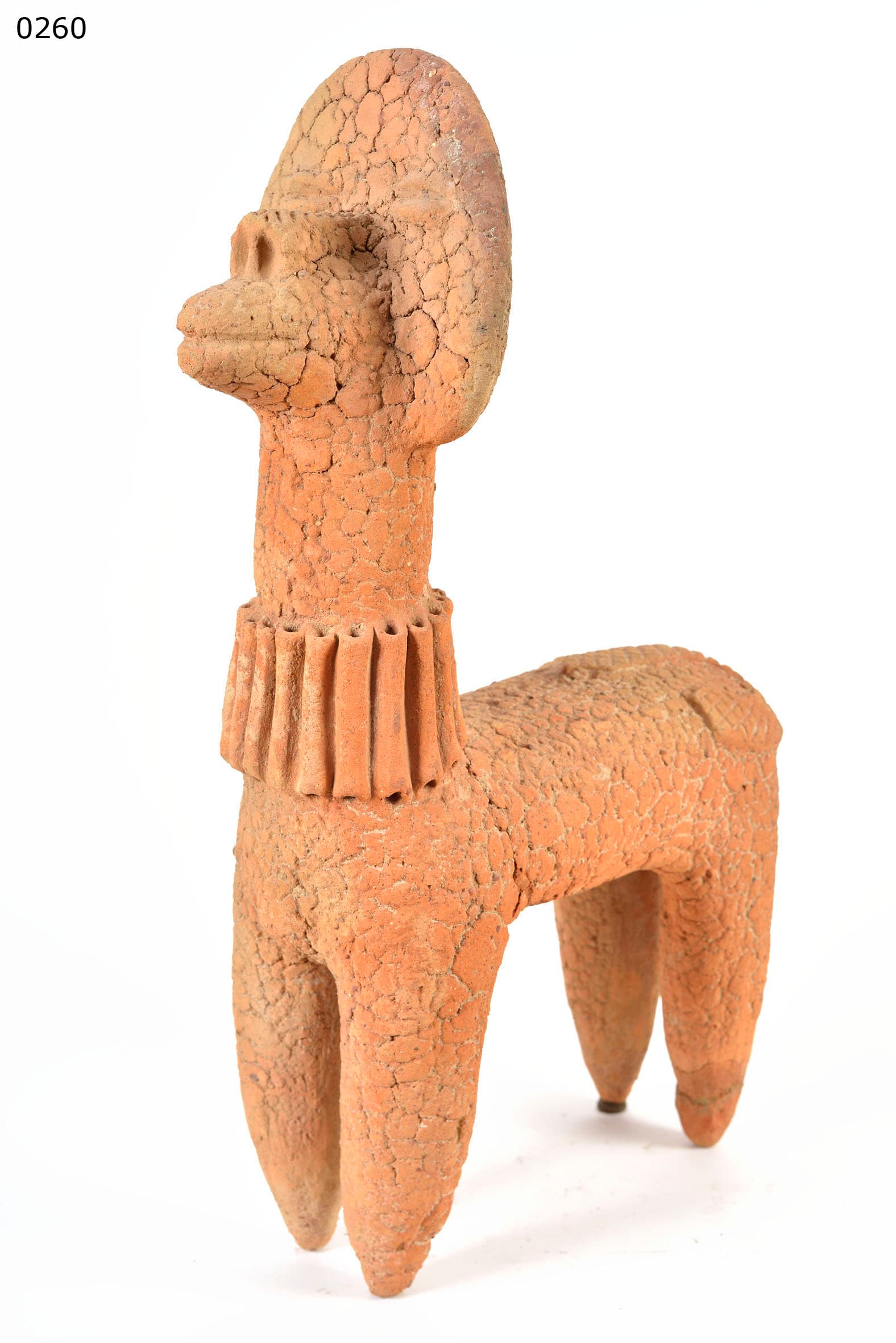
A Djenne maternity terracotta (9th–16th C., 26 cm) from Mali — idealized maternity in classic Inland Niger Delta style, with elongated face, bulging parallel-incised eyes, and pronounced scarification, depicted carrying a child, the surface heavily weathered by alluvial burial. Published in Arts d'Afrique Noire No. 29 (1979, p. 24). Paired with 0320.
1. The djenne-jeno maternity typology
Maternity figures from the Djenne-Jeno and broader Inland Niger Delta region are among the most revered and complex forms in medieval Malian art.
- Anatomical Exaggeration: The aesthetic centers on extreme physical tension and anatomical exaggeration — communicating spiritual rather than purely physical states.
- Appliqué Mastery: Intricate clay appliqué techniques construct heavy eyelids, chokers, bracelets, and keloid scarification patterns.
2. Fertility shrines and the concept of nyama
In Mande cosmological thought, women possessed significant nyama (spiritual life force), particularly regarding the perilous threshold of childbirth.
- Votive Shrine Objects: These figures were placed in fertility shrines or built into the mud-brick walls of elite dwellings.
- Dynastic Protection: They petitioned ancestral spirits for successful pregnancies, protected vulnerable newborns from malevolent forces, and ensured dynastic continuation of families navigating the harsh medieval Sahel.
3. Documented provenance and alluvial validation
This piece carries documented provenance.
- Arts d'Afrique Noire Publication: Published in the canonical Arts d'Afrique Noire No. 29 (1979, p. 24) — supporting its attribution and documented history.
- Complex Stratigraphy: The clay reveals a complex stratigraphy of calcified grey crusts, river sediment, and wear consistent with anaerobic Niger floodplain burial.
Summary
Capturing the intense spiritual and physical gravity of medieval Malian maternity cults and paired with a published provenance extending back to 1979, this figure is a significant example of the tradition.
Written with AI assistance from the collection appraisal, object photography and our own research; editorially reviewed. Mistakes are possible — corrections are welcome. How we work →