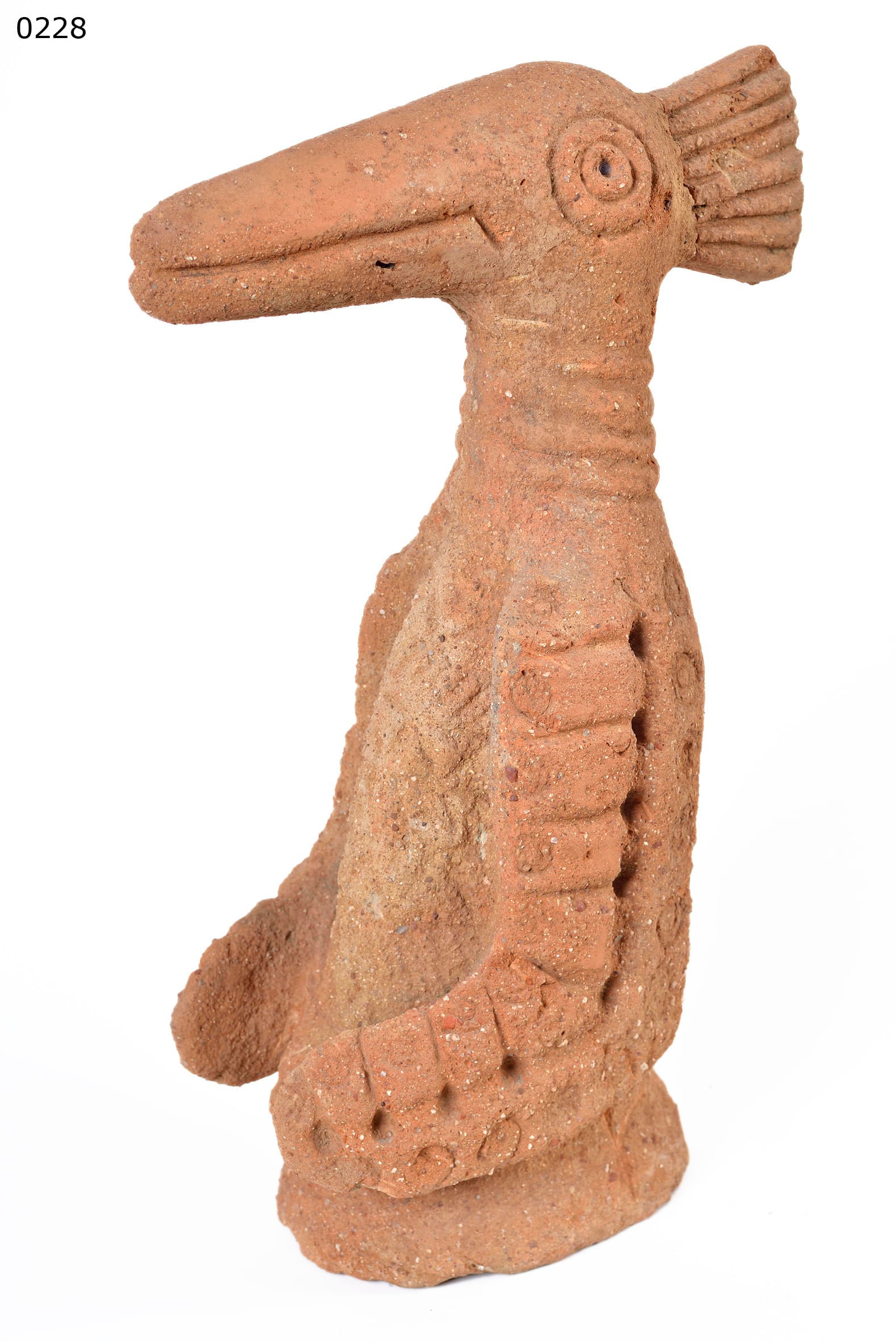
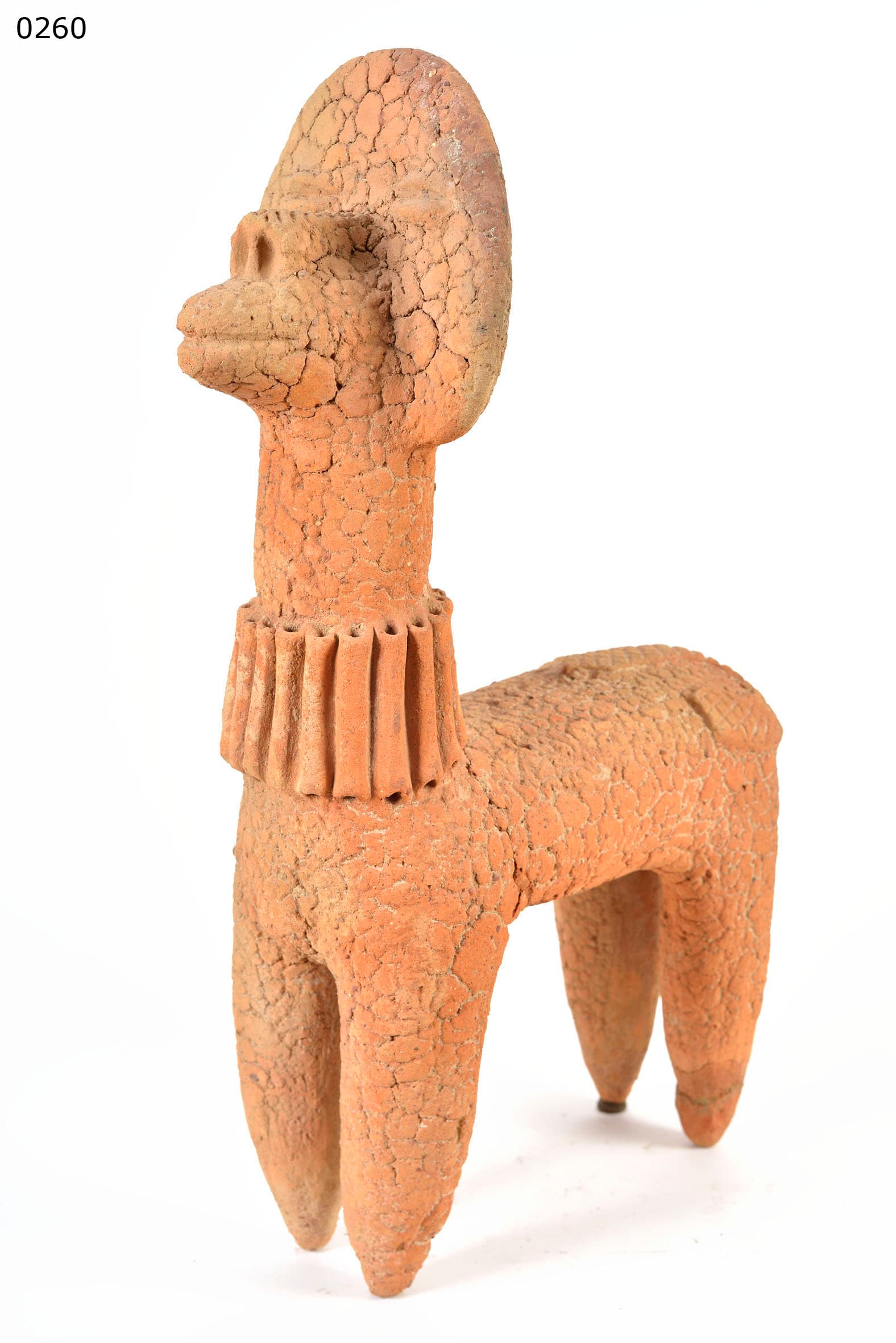
A monumental Djenne maternity terracotta (12th–16th C., 39 cm) from Mali — depicting a mother nursing twin infants with intricate anatomical and ornamental detail, featuring elongated face, bulging parallel-incised eyes, and pronounced scarification, the alluvial surface heavily weathered. Paired with 0314.
1. The djenne-jeno maternity typology
Maternity figures from the Djenne-Jeno and broader Inland Niger Delta region are among the most complex forms associated with medieval Malian art — and this 39 cm monumental piece is a significant example.
- Rare Twin-Nursing Motif: The depiction of a mother actively nursing two children is a rare motif — traditionally symbolizing ancestral blessing and lineage proliferation.
- Detailed Appliqué: Intricate clay appliqué constructs heavy eyelids, chokers, bracelets, and keloid scarification patterns — executed here with a high level of refinement.
2. Fertility shrines and the concept of nyama
In Mande cosmological thought, women possessed significant nyama (spiritual life force), particularly regarding the perilous threshold of childbirth.
- Votive Shrine Objects: These figures were placed in fertility shrines or built into the mud-brick walls of elite dwellings.
- Twin Symbolism: A twin-nursing figure amplifies the petition — invoking not just successful pregnancy but the blessing of dual-birth prosperity and dynastic continuation in the Sahel.
3. Alluvial validation
The patina is consistent with objects entombed in the anaerobic flood-prone mud of the Niger River delta.
- Complex Stratigraphy: The clay reveals a complex stratigraphy of calcified grey crusts, river sediment, and ancient libation wear.
- Monumental Survival: The survival of delicate appliqué elements at this 39 cm monumental scale suggests careful undisturbed burial in the soft Malian mud.
Summary
A significant work capturing the concept of twin nurturing at monumental scale, this Djenne maternity figure is a notable example of ceramic appliqué. Its rare iconography and state of preservation support its significance within the corpus of Inland Niger Delta art.
Written with AI assistance from the collection appraisal, object photography and our own research; editorially reviewed. Mistakes are possible — corrections are welcome. How we work →